 Anacortes Siding
 Decks in Bow Take a Different Kind of Beating
Bow sits close enough to the water that salt air is part of daily life, and far enough into Skagit County's rain belt that a deck here spends more of the year wet than dry. That combination is hard on outdoor structures in ways that don't show up right away. A deck built the same way you'd build one in a dry inland climate will often look fine for a season or two, then start showing soft spots, loose fasteners, and moss creep well ahead of schedule. Building a deck that actually holds up in Bow means designing for that reality from the framing up, not just picking a nice-looking decking board and calling it done.
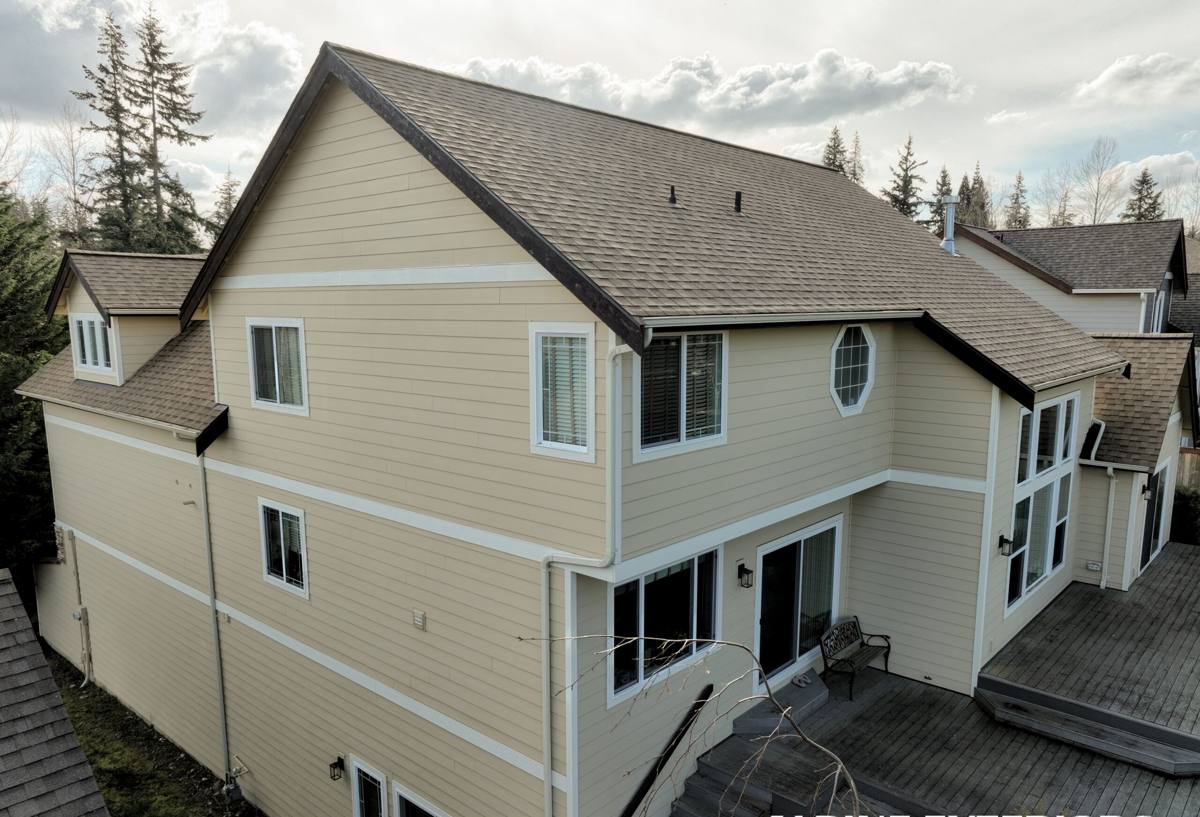
What Salt Air, Rain, and Moss Actually Do to a Deck
Each of these factors works on a deck differently, and a correctly built deck has to account for all three at once.
Salt Air
Being near Puget Sound and Samish Bay means airborne salt settles on every exposed surface, including metal fasteners, flashing, and structural hardware. Standard zinc-coated hardware corrodes faster in a salt-air environment than it would inland, and once a fastener starts rusting, it loses grip long before it visibly fails. This is why hardware selection matters more here than in a lot of other parts of the state.
Driving Rain
Rain in this part of Skagit County doesn't just fall straight down — wind off the water pushes it sideways, driving moisture into joints, ledger connections, and any gap where water can collect instead of shed. A deck design that relies on gravity alone to keep water out will let moisture in around fasteners and board ends.
Moss and Organic Growth
Long stretches of damp, shaded weather give moss and algae plenty of time to establish themselves on decking, especially on the north side of a house or under tree cover. Moss holds moisture against the wood surface, which accelerates rot in wood decking and can make composite and even some hardwood surfaces slick and slippery underfoot.
Choosing Decking Material for a Bow Property
There's no single "best" decking material — the right choice depends on how much maintenance a homeowner wants to do, budget, and how exposed the deck is to sun, shade, and moisture. Here's how the common options actually perform in this climate.
| Material | Moisture Behavior | Maintenance | Typical Lifespan Here |
|---|---|---|---|
| Pressure-treated pine | Resists rot when properly sealed; end cuts and fastener holes are vulnerable points | Needs re-sealing every 1-2 years in this climate | 15-20 years with upkeep |
| Cedar | Naturally rot- and insect-resistant; still needs finish protection against driving rain | Re-stain or seal every 2-3 years | 20-25 years with upkeep |
| Composite decking | Won't rot, but lower-quality composites can absorb moisture at cut edges and grow mold or moss on the surface if not cleaned | Periodic cleaning, no sealing required | 25-30+ years, brand-dependent |
| Tropical hardwoods (e.g., ipe) | Extremely dense and moisture-resistant, but installation is unforgiving of mistakes | Occasional oiling to maintain color; low rot risk either way | 30+ years |
We'll walk through these trade-offs honestly during a consult rather than pushing whichever product has the best margin. A homeowner who wants a low-maintenance deck and doesn't mind the upfront cost is usually better served by a quality composite; someone who likes the natural wood look and doesn't mind refinishing is often happier with cedar.
Framing and Substructure: Where Bow Decks Actually Fail First
The decking surface gets all the attention, but the framing underneath is what actually determines how long a deck lasts in this climate — and it's usually where problems start.
Ledger Board Attachment
The ledger board, where the deck attaches to the house, is the single most common failure point on decks in wet climates. If it's not flashed correctly to shed water away from the house band board, moisture gets trapped between the ledger and the siding, leading to rot that's invisible until it's serious. Proper flashing here isn't optional — it's the difference between a deck that lasts decades and one with a hidden structural problem in ten years.
Joists and Hardware
In a salt-air environment, we use fasteners and structural connectors rated for corrosion resistance beyond the basic minimum — this matters more here than it would 20 miles inland. Joist tops should also be protected with a flashing tape so water doesn't sit directly on cut lumber, which is one of the fastest ways framing rot starts.
Posts and Footings
Post bases need to keep wood off the concrete and off standing water, since a saturated ground contact point is a slow but steady rot risk through a wet Skagit County winter.
Drainage, Airflow, and Keeping Moss From Taking Over
A deck that can't shed water and breathe underneath is a deck that grows moss and rots from below, regardless of what decking material sits on top.
- Proper board spacing lets water drain through rather than pool on the surface
- Under-deck ventilation prevents the damp, stagnant air pocket that moss and mold need to establish
- Grading and drainage around footings keeps water moving away from the structure instead of sitting against posts
- Gutter placement and downspout routing near the deck matter — runoff dumped directly onto or under a deck accelerates every problem above
These details rarely show up in a deck estimate that's only pricing decking boards, but they're a large part of what separates a deck that needs major repair in eight years from one that's still solid in twenty-five.
Our Deck Building Process
We approach every deck project in Bow the same structured way, adjusted for the specific site conditions — sun exposure, tree cover, distance from the water, and how the existing structure is set up.
- On-site assessment — we look at grading, existing structure (for replacements), sun and shade patterns, and how close the site is to salt air exposure
- Material and design discussion — we go over decking options, railing style, and layout based on the homeowner's priorities and budget, with honest trade-offs explained up front
- Permitting — we handle the permit and inspection process required for the scope of work
- Demolition or site prep — for replacement projects, removing old decking and inspecting the substructure before deciding what's reused versus rebuilt
- Framing — ledger flashing, joist layout, corrosion-resistant hardware, and footings built for this ground and this climate
- Decking and railing installation — installed with proper spacing and fastening for drainage and long-term movement
- Final walkthrough — we go over maintenance expectations specific to the material chosen before we consider the job finished
Permits and Local Code Considerations
Deck projects in unincorporated Skagit County and near Bow typically require a permit once the structure exceeds a certain height or size, and guardrail and stair requirements are governed by building code rather than personal preference. Decks attached to the house also need to meet structural connection standards that an inspector will check specifically because ledger failures are a known problem in wet climates like ours. We handle the permit application and coordinate inspections as part of the build, so homeowners aren't left navigating that process alone.
Maintenance Checklist for Bow Homeowners
Even a well-built deck needs some seasonal attention in this climate. This is what we recommend regardless of which contractor built it:
- Sweep debris and standing leaves off the deck surface regularly, especially in fall
- Clean moss and algae off the surface at the first sign of growth rather than waiting until it's established
- Check railing posts and stair connections annually for looseness
- Inspect the ledger board flashing area for any signs of water staining on the siding above it
- Re-seal or re-stain wood decking on the schedule appropriate to the species
- Keep gutters and downspouts near the deck clear so runoff isn't draining onto or under it
- Confirm under-deck ventilation isn't blocked by stored items or overgrown landscaping
Why Hire a Crew That Already Works in Bow
A deck builder who mostly works drier inland jobs will still build something structurally sound, but they may not default to salt-air-rated hardware, proper ledger flashing for driving rain, or the drainage details that keep moss from taking hold here. A crew that already works in and around Bow knows these aren't upgrades — they're what a deck actually needs to hold up through a normal Skagit County winter. That local experience shows up in decisions made before a single board is cut, not just in the finished look.
If you're planning a new deck or need to replace one that's showing its age, we're happy to take a look and talk through honest options for your property. Request a free, no-pressure estimate using the form below.