 Anacortes Siding
 Deck Replacement Built for Bow's Climate
Bow sits in that stretch of Skagit County where the marine air off Samish Bay and the surrounding farmland humidity meet in a way that's tough on wood. If you own a home here, you already know the pattern: decks that looked fine five years ago start showing soft spots, green film, and loose fasteners well before they should. That's not bad luck. It's the combination of salt-tinged air, driving rain that comes in sideways off the water, and a moss season that can run eight months out of the year in a shaded yard.
A deck replacement done right for this area isn't the same job you'd do in a dry inland climate. The framing, the fasteners, the decking material, and even the gap spacing between boards all need to account for how much moisture this deck will see and how slowly it will dry out between rain events. We build decks in Bow and the surrounding Anacortes area with that reality in mind, not as an afterthought.
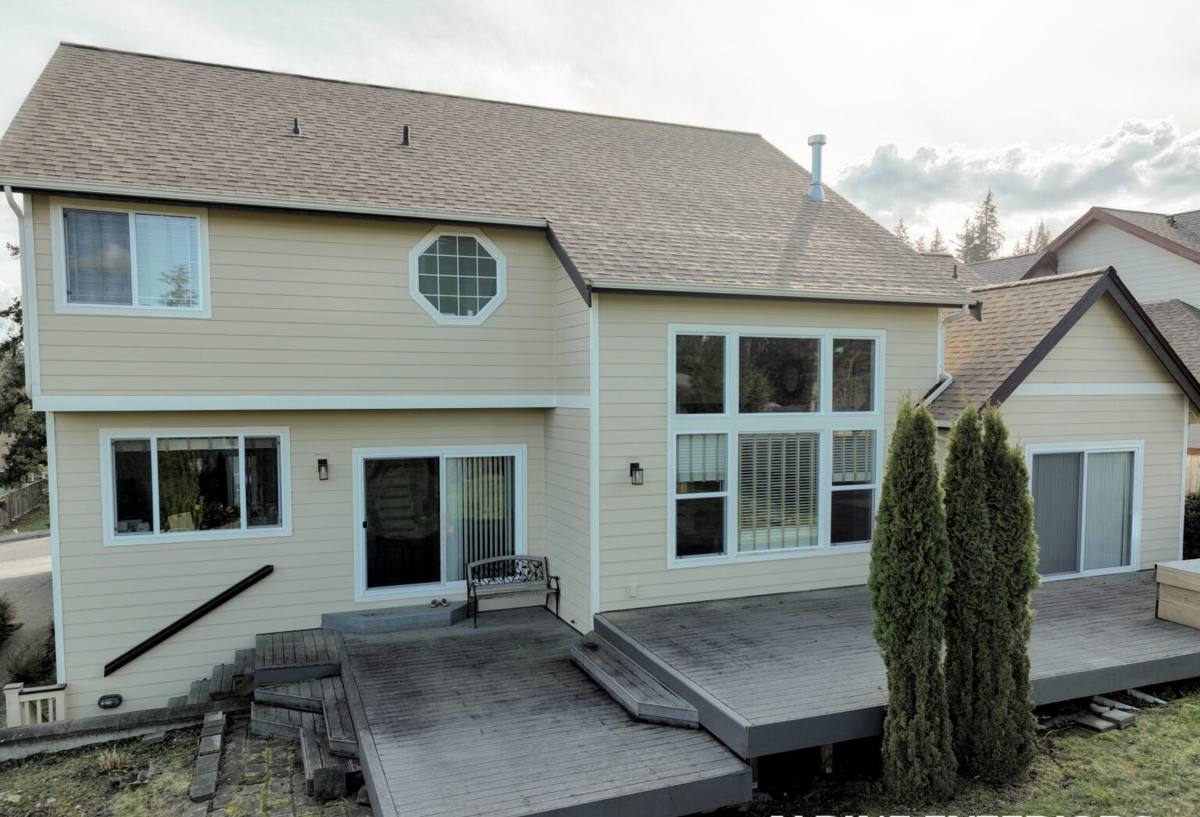
Why Decks Fail Faster Here Than Homeowners Expect
Most deck failures we find during replacement jobs aren't dramatic. They're slow, compounding problems that started small and got worse every wet season.
Moisture That Never Fully Leaves
Skagit County's shoulder seasons are long and gray. A deck in a shaded or tree-covered yard in Bow can stay damp for days after a storm passes, especially on the north side of a house or under mature evergreens. Wood that never gets a real chance to dry starts to break down from the inside, even if the surface still looks okay.
Salt Air and Metal Fasteners
Being close to Samish Bay and Padilla Bay means the air carries a fine salt content that accelerates corrosion on lower-grade screws, nails, and joist hardware. When fasteners corrode, they lose holding strength long before the wood around them fails, which is why an older deck can feel "loose" or start to squeak even though the boards themselves look fine.
Moss and Organic Buildup
Moss doesn't just look bad. It holds water directly against the decking surface and blocks airflow, which keeps that spot wet far longer than the rest of the deck. Over time this creates localized soft spots and accelerates rot in exactly the places you'd least expect, usually along the shaded edge of the deck or wherever leaf litter collects.
Signs a Bow-Area Deck Needs Replacing, Not Just Repair
Not every tired deck needs a full tear-off. But there's a point where patching individual boards stops making sense financially and structurally. Here's what we look for during an inspection:
- Soft or spongy decking boards, especially near the house or in shaded corners
- Visible gaps opening up between boards from wood shrinkage and swelling cycles
- Rust staining around fasteners or visible corrosion on joist hangers
- A ledger board (where the deck attaches to the house) that shows water staining or soft wood
- Railings that flex or posts that wiggle at the base
- Persistent moss or algae that comes back within weeks of cleaning
- A deck more than 15-20 years old that's never had the substructure inspected
If you're only seeing one or two of these, repair may still make sense. If you're seeing several, especially structural ones like a soft ledger board or corroded hangers, replacement is usually the more honest recommendation, and it's what we'll tell you even if a repair would be the easier sale.
What a Correct Deck Replacement Involves
A deck replacement is more than swapping old boards for new ones. In a climate like ours, most of what actually determines how long the deck lasts is hidden underneath the decking surface.
Framing and Ledger Attachment
The ledger board connection to your house is one of the most common failure points on any deck, and it's also a safety issue, since it carries a large share of the deck's structural load. We check flashing at this connection carefully, because a poorly flashed ledger is one of the fastest ways water gets into a house's rim joist, not just the deck itself.
Joist Protection
Exposed joist tops are a classic weak point. Even pressure-treated lumber will hold water and rot from repeated wetting if the top edge isn't protected. Joist tape or an equivalent barrier over each joist keeps water from soaking into the end grain, which is where rot starts fastest.
Fasteners Rated for Coastal Conditions
Given the salt air in the Bow and Anacortes area, we use corrosion-resistant fasteners and hardware rated for treated lumber and coastal exposure. Cutting corners here is one of the most common reasons a deck develops squeaks and loose boards within just a few years.
Decking Material Selection
This is where homeowners have real choices, and where the trade-offs matter most for a place like Bow.
| Material | How It Handles Our Climate | Maintenance |
|---|---|---|
| Pressure-treated lumber | Good moisture resistance when properly sealed and maintained; needs re-sealing every 1-2 years in this climate | Higher — regular cleaning and sealing |
| Cedar | Naturally rot-resistant but softer surface; benefits from finish maintenance to slow graying and moisture uptake | Moderate to high |
| Composite decking | Doesn't absorb water the way wood does, resists rot at the board level, holds up well against moss staining | Low — occasional cleaning |
| PVC decking | Fully synthetic, essentially immune to moisture absorption and rot; performs consistently in wet, shaded yards | Lowest |
There's no single "right" material for every home. A sunny, open lot in Bow with good drainage can do fine with well-maintained cedar or treated lumber. A shaded, moss-prone yard closer to the water is usually better served by composite or PVC decking, simply because it removes the moisture-absorption problem instead of asking you to stay on top of maintenance every year.
Substructure and Drainage Matter as Much as the Decking
A beautiful deck surface over a poorly built substructure is a short-term fix. We pay close attention to a few things that don't show up in photos but determine how the deck ages:
Post Footings and Ground Contact
Skagit County's clay-heavy soils in many areas hold water longer after rain, which affects how post footings should be set and how deck posts are protected from ground moisture. Footings that are too shallow or improperly set are a common issue we find on older decks during replacement.
Airflow Underneath the Deck
Low decks with poor ventilation underneath trap moisture against the framing. Where possible, we build in enough clearance and consider skirting choices that don't seal off airflow completely, since a deck that can breathe dries out faster after every rain event.
Board Spacing for Wet Climates
Gap spacing between deck boards is a small detail with a big effect. Too tight, and debris and moisture get trapped; too wide, and the deck feels unfinished. We set spacing based on the specific material's expansion behavior, since wood and composite decking move differently as they take on and release moisture through the seasons.
Our Process for a Bow Deck Replacement
We keep the process straightforward because a deck replacement shouldn't feel like a mystery.
- On-site evaluation. We inspect the existing deck, ledger connection, and framing to confirm whether replacement is actually the right call versus a targeted repair.
- Honest material walkthrough. We go over decking options based on your yard's sun exposure, shade, and how much upkeep you actually want to do, not just what's trendy.
- Tear-off and structural rebuild. Old decking, framing, and any compromised posts or footings come out, and the substructure is rebuilt to current standards with corrosion-resistant hardware.
- Flashing and moisture protection. Ledger flashing and joist protection go in before a single decking board is installed, since this is the part that's impossible to fix later without tearing the deck apart again.
- Decking, railing, and finish work. Boards, railings, and any stairs are installed to spec, with attention to fastener placement and board spacing suited to our climate.
- Final walkthrough. We go over the finished deck with you, including realistic maintenance expectations for whatever material you chose.
Why a Crew That Already Works in Bow Makes a Difference
Deck construction isn't one-size-fits-all across Washington. A crew used to building in a dry inland county will make different assumptions than a crew that works Skagit County's coastal microclimates regularly. Knowing which yards in this area tend to hold moisture, which exposures fight moss year-round, and how the salt air affects hardware choices isn't something you get from a general contracting background. It comes from doing this work here, on homes like yours, season after season.
That local experience shows up in small decisions throughout the project: which fasteners are worth the extra cost, where extra flashing attention pays off, and which decking material actually fits your yard instead of just looking good in a showroom. Those decisions are the difference between a deck that needs attention again in five years and one that holds up through many Skagit County winters.
Get a Free Estimate for Your Bow Deck Replacement
If your deck is showing its age or you're just not sure whether repair or replacement makes more sense, we're happy to take a look. We'll give you a straightforward assessment and a free, no-pressure estimate based on what your specific deck and yard actually need. Fill out the form below to get started.