 Anacortes Siding
 Bow sits in that quiet stretch of Skagit County where Samish Bay, farmland, and forested hillsides come together, and that setting is exactly what makes siding choice and installation quality matter more here than in a lot of places. Homes in and around Bow take on salt-laden air off the bay, wind-driven rain that hits walls sideways instead of falling straight down, and a moss season that stretches across much of the year. We install James Hardie fiber cement siding exclusively, and Bow is a good example of why: this is a climate that punishes shortcuts and rewards a product and an installation process built for sustained moisture exposure.
What Bow's Climate Actually Does to a Wall System
Salt air doesn't stay at the shoreline. It travels inland on wind, settles on siding, fasteners, and flashing, and accelerates corrosion in anything that isn't built to resist it. Combine that with driving rain — the kind that gets pushed into seams, laps, and corner details by wind instead of just running down a flat wall — and you get a wall assembly that's wet more often, and for longer stretches, than a comparable home in a drier or more sheltered part of Skagit County. Add in a moss season that can run from fall through spring in this part of Washington, and organic growth becomes a near-constant presence on north-facing walls and anything shaded by trees.
None of this makes siding in Bow a losing proposition. Plenty of homes here have held up for decades. But it does mean the margin for error is smaller. A siding product with an organic core, a finish that isn't fully sealed, or an installation with sloppy flashing details will show problems here years before it would somewhere milder — and once moisture gets behind siding in a climate like this, it doesn't dry out quickly between storms.
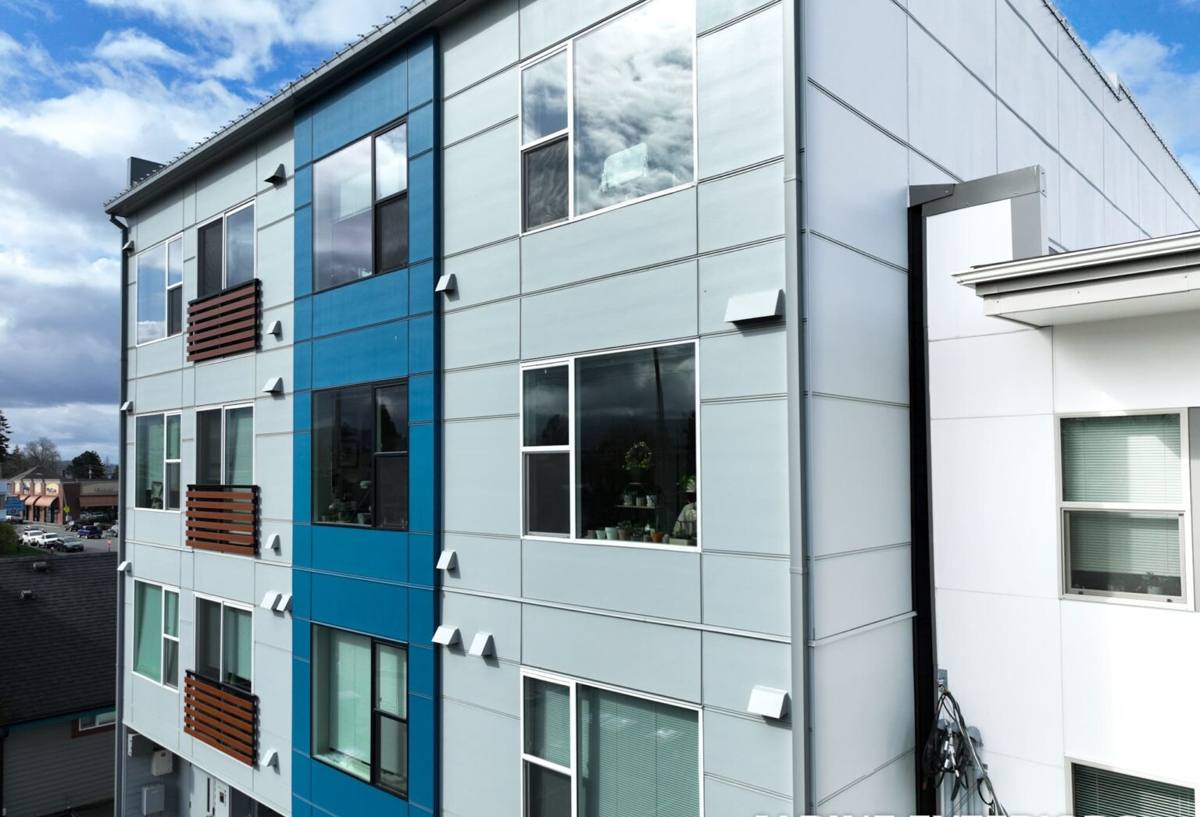
Why We Install James Hardie and Nothing Else
We install James Hardie fiber cement siding exclusively — not vinyl, not LP SmartSide or other engineered wood products, not primed spruce, not cedar. That's not a marketing position; it's a standard we settled on after weighing how each of those products actually performs under sustained coastal moisture.
The Products We Don't Install, and Why
- Vinyl siding relies entirely on the water-resistive barrier and flashing behind it staying intact, and it can become brittle with age under UV and salt exposure — a real concern on a home that's going to see decades of Skagit County weather.
- LP SmartSide and other engineered wood products use a wood-strand core. That core performs fine as long as moisture never reaches it, but any cut edge, fastener hole, or failed caulk joint becomes a point of vulnerability — and wind-driven rain finds those points more often here than in calmer climates.
- Primed spruce and cedar are real wood, and real wood needs an ongoing maintenance commitment: recoating, caulk renewal, and moss treatment on a schedule that only gets tighter in a wet, shaded, salt-exposed setting like Bow.
James Hardie fiber cement doesn't have an organic core for moisture to work into. It's made from cement, sand, and cellulose fiber, cured into a dense, stable board that doesn't rot, doesn't support pest activity, and doesn't warp the way wood-based products can when they take on and release moisture repeatedly. That combination of properties is a direct answer to what Bow's weather does to a house.
The Hardie Product Line That Fits Bow
James Hardie makes region-specific formulations under its HZ5 engineering, which is built for climates with more moisture exposure — the Pacific Northwest included. For a Bow home, that typically means:
- HardiePlank lap siding for the main wall areas, in a width and exposure that suits the home's style.
- HardieTrim for corners, fascia, and window and door surrounds, so the trim ages at the same rate as the field siding instead of becoming the first thing that fails.
- HardiePanel where a board-and-batten or panel look is called for, common on accent walls, gable ends, or shed-style outbuildings that are common on the larger, more rural lots around Bow.
All of it comes with a factory-applied ColorPlus finish, which matters more here than in a lot of markets. A finish baked on in a controlled factory environment resists fading and holds up to repeated wet-dry cycling better than a field-applied paint job, and it means touch-up work is limited to genuine damage rather than routine repainting.
Where Installation Quality Makes or Breaks the Job
James Hardie siding is only as good as the installation behind it. In a climate like Bow's, a handful of details separate a wall system that performs for decades from one that develops problems within a few years.
Flashing and Water Management
Every horizontal joint, window head, and penetration needs proper flashing that directs water out and away from the wall assembly — not just caulk covering a gap. Caulk fails; flashing, done correctly, doesn't depend on staying perfectly sealed to keep water out.
Fastener Placement and Corrosion Resistance
Hardie specifies fastener type, placement, and depth for a reason. Over-driven or under-driven fasteners create either crush damage or loose boards, and in salt air, using the wrong fastener material invites corrosion that can stain the siding and eventually fail structurally.
Clearances and Ventilation
Manufacturer-specified clearances — from grade, roofing, decks, and other surfaces — keep the bottom edge of the siding from sitting in standing water or splash-back. A rainscreen gap behind the siding also lets any moisture that does get past the cladding dry out instead of sitting against the wall sheathing, which matters even more in a climate that doesn't offer many extended dry stretches.
Joint Treatment and Caulking
Hardie's own installation guidelines call for specific joint treatment at butt joints and terminations. Skipping this or substituting a lesser sealant is one of the most common ways an otherwise good installation starts letting water in within a few years.
Our Process for a Bow Project
- On-site assessment. We walk the exterior, check existing siding and sheathing condition, and look specifically at how wind and rain hit the home given its orientation relative to the bay and prevailing weather.
- Product and color selection. We help you choose the right Hardie line, exposure, and ColorPlus color for the home's style and this climate — including which finishes hold up best against salt exposure over time.
- Tear-off and inspection. Once old siding comes off, we inspect the sheathing and water-resistive barrier underneath. Hidden moisture damage gets addressed before anything new goes up — covering a compromised wall doesn't fix it.
- Installation to manufacturer spec. Flashing, fastening, clearances, and joint treatment are done to James Hardie's published requirements, not shortcuts that only show up as problems years later.
- Final walkthrough. We go over the finished work with you, including any maintenance notes specific to the home's exposure.
Cost Factors for a Bow Siding Project
Every home is different, but the same handful of factors drive the price range on most Bow projects:
| Factor | Why It Matters Here |
|---|---|
| Tear-off and sheathing condition | Homes with moisture-damaged sheathing under old siding need repair before new Hardie goes up — common on older homes that have taken decades of coastal exposure. |
| Home size and wall complexity | More corners, dormers, and trim details mean more cutting, flashing, and labor time. |
| Product mix | HardiePlank alone costs less than a combination of plank, panel accents, and custom trim work. |
| Access and site conditions | Rural lots, longer driveways, and setback from the road can affect staging and material handling. |
| Color and finish selection | Standard ColorPlus colors versus premium or custom-match finishes carry different material costs. |
We give straightforward, itemized estimates so you can see exactly what's driving the number, rather than a single lump figure.
Signs a Bow Home's Siding Needs Attention
A quick self-check before calling anyone:
- Soft spots or visible swelling anywhere in the siding or trim, especially near ground level or under windows
- Persistent moss or algae growth that keeps coming back within weeks of cleaning
- Visible gaps, cracked caulk lines, or separated joints at corners and butt seams
- Rust streaking below fasteners or trim fasteners that look loose or popped
- Paint that's peeling or bubbling rather than just fading evenly
- A musty smell or visible staining on interior walls that share an exterior wall with problem siding
Any one of these can be minor on its own, but in a wet, salt-exposed setting they tend to compound quickly if left alone.
Why Hire a Crew That Already Works This Area
Installation details that work fine in a dry inland climate aren't automatically the right call on a bay-facing lot in Skagit County. A crew that regularly works Bow and the surrounding Chuckanut and Samish Bay area already knows to size up how a given lot sits relative to prevailing wind and rain, where moss tends to establish first on a given roof and wall orientation, and which fastener and flashing choices actually hold up under sustained salt exposure rather than just meeting a generic code minimum. That local experience shows up in the small decisions — where to add extra flashing, how tight to run clearances, which corners of a wall need the most attention — that add years to a siding job's service life.
If you're weighing a siding replacement or new construction siding for a home in Bow, we're happy to walk the property with you and put together a straightforward, no-pressure estimate — no obligation, just a clear look at what your home actually needs.