 Anacortes Siding
 Windows Built for Life on Guemes Island
Guemes Island sits right in the path of everything Puget Sound weather can throw at a house: salt-laden wind off the water, long stretches of driving rain, and a damp shoulder season that keeps moss and algae growing on anything shaded or north-facing for months at a time. Windows take the brunt of that exposure in ways many homeowners don't think about until a sash won't seal, a frame starts to chalk and pit, or a heating bill creeps up every winter. Energy-efficient windows done right on Guemes Island aren't just about a better U-factor on a spec sheet — they're about picking materials and installation details that hold up to this specific island climate, not just the general Pacific Northwest.
This page covers what actually matters for window work on Guemes Island: the climate stresses at play, what "energy-efficient" should mean for a marine environment like this one, how the installation itself protects (or undermines) the window's performance, and why working with a crew that already understands the logistics of getting quality work done on an island matters as much as the window itself.
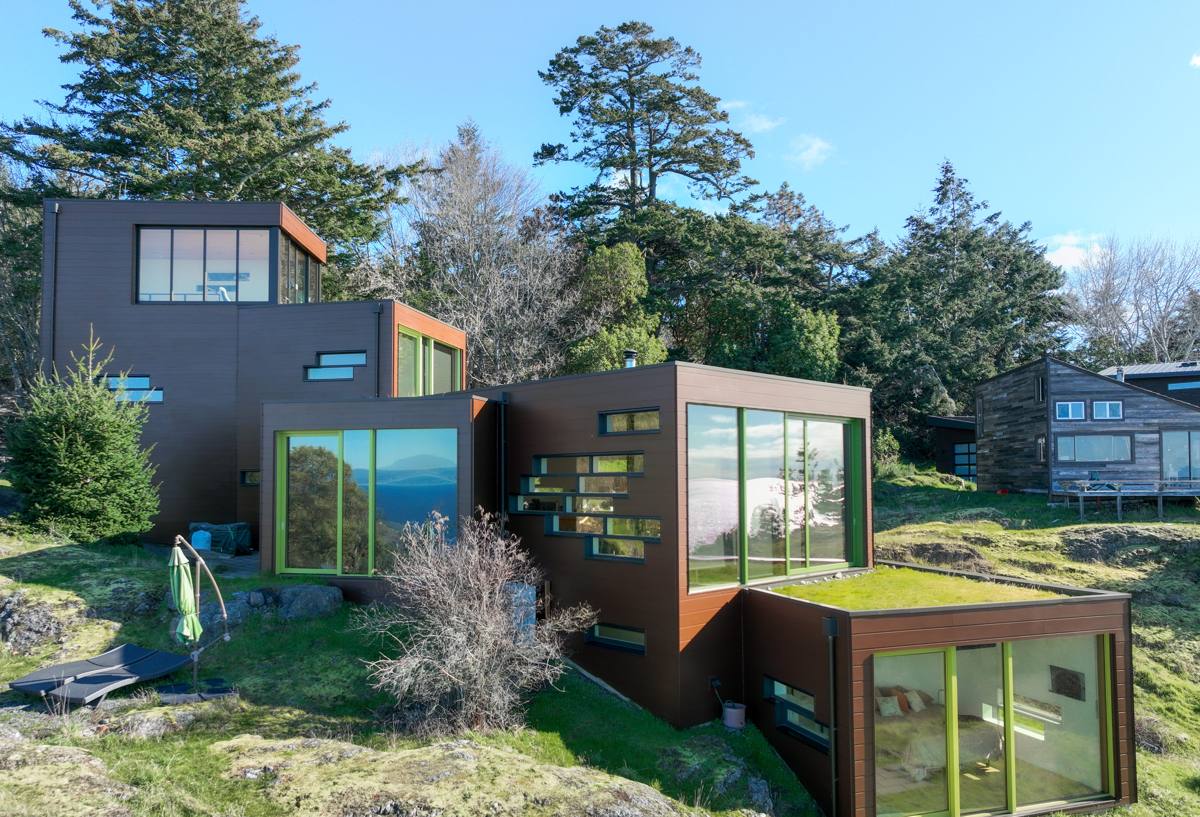
Why Guemes Island's Climate Puts Extra Demands on Windows
Salt Air and Corrosion
Being surrounded by saltwater means airborne salt is a constant, low-level presence on Guemes Island, especially for homes with any water exposure or elevation facing the Sound. Salt accelerates corrosion on unprotected metal — hinges, cranks, locks, and certain frame cladding — well before it would fail on a comparable inland home in Skagit County. Over years, that shows up as stiff or seized hardware, pitting on aluminum components, and finishes that dull and chalk faster than they should.
Driving Rain and Wind-Driven Moisture
Windows here don't just get rained on — they get rain pushed sideways into the frame joints and trim by wind gusts coming off open water. That kind of wind-driven rain finds any weak point in flashing, caulking, or window seals and pushes water where gravity alone never would. A window that would perform fine on a sheltered inland lot can leak on an exposed Guemes Island elevation if it wasn't installed with that wind loading in mind.
A Long, Damp Moss Season
Shaded and north-facing walls on the island stay damp for extended stretches, which is exactly the environment moss and algae need to take hold. On windows, that dampness shows up as black streaking on sills and trim, slower drying after storms, and — if water is getting behind the frame — hidden rot in the surrounding wall assembly that isn't visible until it's advanced. Windows on Guemes Island need to shed water fast and dry out completely between storms, not just resist the rain in the moment.
What "Energy-Efficient" Actually Means in This Climate
Energy-efficient windows are rated on a few core numbers, and not all of them matter equally in a maritime climate like Anacortes and Guemes Island. Understanding which ones to prioritize keeps you from overpaying for performance features your house doesn't actually need.
- U-factor — measures how well the window resists heat loss. This is the number that matters most here, since our climate is heating-dominant most of the year and homes lose far more energy to cold, damp air than they gain from summer heat.
- Solar Heat Gain Coefficient (SHGC) — measures how much solar heat passes through the glass. Moderate SHGC glass is usually the right call on Guemes Island; you want some winter solar gain on south and west exposures without overheating a sunroom or great room on the rare clear day.
- Air leakage rating — measures how much air passes through the assembled window, not just the glass. In a wind-exposed island setting, a tight air leakage rating is just as important as the glass performance, because a well-insulated window with a leaky frame still lets cold, salty air in around the edges.
- Condensation resistance — relevant for homes that run humidifiers, have a lot of glazing, or sit in low, damp pockets of the island where indoor-outdoor temperature swings are more pronounced.
A window with a strong U-factor and good air leakage numbers, installed correctly, will do more for comfort and heating costs on Guemes Island than a window chosen mainly for a high-end glass package that doesn't fit our climate.
Frame Material: The Decision That Matters Most Near Salt Water
Glass performance gets most of the attention, but frame material is usually what determines how a window holds up over 15-20 years of island exposure. Here's how the common options compare for a salt-air, high-moisture setting like Guemes Island:
| Material | Salt Air / Corrosion Resistance | Moisture Handling | Maintenance | Fit for Guemes Island |
|---|---|---|---|---|
| Vinyl | Excellent — doesn't corrode or rust | Good; won't rot, but relies on proper flashing at the frame | Low — occasional cleaning | Strong all-around choice for most exposures |
| Fiberglass | Excellent — very stable in salt and temperature swings | Very good; dimensionally stable in wet-dry cycling | Low | Best fit for the most exposed, wind-driven elevations |
| Wood-clad | Fair to good depending on cladding; wood core vulnerable if seals fail | Requires intact cladding and finish; failure points show as rot | Higher — finish and seal upkeep | Works with diligent maintenance; riskier on exposed sides |
| Aluminum | Poor to fair unmarine-grade; standard aluminum pits and corrodes in salt air | Prone to condensation without thermal breaks | Moderate to high | Generally not our recommendation for direct salt exposure |
We don't rule out any material outright, but on homes with real salt exposure — anything close to the water or regularly hit by wind off the Sound — we steer clients toward vinyl or fiberglass for the frame, and toward stainless or marine-rated hardware over standard hardware, because that's where the corrosion problems actually start.
Signs Your Current Windows Are Working Against You
Most homeowners don't replace windows because of one dramatic failure — it's a slow accumulation of small problems. Worth checking for before deciding whether repair or replacement is the right call:
- Drafts you can feel near the frame edges, especially during windy weather off the water
- Cranks, locks, or hinges that have gotten stiff, gritty, or hard to operate
- Visible condensation or fogging between panes, which means the seal has failed
- Black staining or soft wood at the sill or bottom corners of the frame
- Paint or finish that's chalking, bubbling, or peeling faster than the rest of the house
- Noticeably colder rooms near windows during winter storms
- Higher heating bills than similar-sized rooms elsewhere in the house would suggest
Any one of these on its own might just need a repair or a hardware swap. Several together, especially on an older single-pane or early dual-pane window, usually means replacement will pay for itself faster than continuing to patch it.
Why the Installation Matters as Much as the Window
A high-performance window installed poorly will underperform a mid-grade window installed correctly — that's especially true in a wind-driven-rain environment like Guemes Island. The manufacturer's energy rating assumes a properly flashed, properly sealed, properly shimmed installation. Skip any of that and you've bought performance you're not actually getting, plus a new leak path into the wall.
What a correct installation includes
- Removing and inspecting the old opening for hidden rot or water damage before anything new goes in
- Proper flashing sequencing (sill pan, side flashing, head flashing) so water is directed out and down, never trapped behind the frame
- A continuous weather-resistive barrier tie-in, not just caulk at the trim
- Correct shimming and squaring so the window operates smoothly and seals evenly for its full life, not just on day one
- Low-expansion, exterior-grade sealant at the right joints — and knowing which joints should not be sealed to allow drainage
- Interior air sealing and insulation of the gap between frame and rough opening, which is where a lot of the energy performance actually comes from
On an exposed Guemes Island wall, the flashing and drainage details matter more than they would on a sheltered inland home — there's simply more wind-driven water hitting that opening every winter, and any shortcut in the flashing sequence tends to show up as a leak within a few storm seasons rather than years.
Our Process for Guemes Island Projects
Working on an island adds real logistics that a mainland Anacortes job doesn't have — ferry scheduling, coordinating material deliveries, and planning crew time so a trip to the island is fully productive rather than half a day lost to the ferry schedule. Here's how we handle it:
- On-site assessment — we look at exposure direction, existing window condition, signs of past water intrusion, and what's driving your interest in replacement (comfort, energy bills, appearance, or repair).
- Product and material recommendation — matched to that specific wall's exposure, not a one-size answer for the whole house. A sheltered side and a water-facing side of the same home can reasonably get different specs.
- Scheduling built around the ferry — we plan material staging and crew days so the work isn't stretched out by avoidable extra trips, and so you're not waiting on us mid-project because of a logistics gap.
- Permitting — window replacement projects on Guemes Island fall under Skagit County jurisdiction; we handle what's required for your specific project so you're not chasing paperwork.
- Installation — full flashing and air-sealing detail as described above, with cleanup and haul-away included.
- Final walkthrough — operation, sealing, and appearance checked with you before we call it done.
Maintenance for a Moss-Season Climate
Even the best window benefits from a little seasonal attention on Guemes Island. Keeping weep holes and drainage tracks clear of debris and moss buildup prevents water from pooling where it shouldn't. A rinse of salt residue off frames and hardware once or twice a year, especially on water-facing sides, slows the corrosion process on hinges and locks. And catching a soft spot at a sill or a sticky operation early — rather than waiting — is almost always a small repair instead of a frame replacement.
Why a Crew That Already Works Guemes Island Matters
Window replacement done wrong on an exposed island wall doesn't just underperform — it can send water into a wall assembly that's expensive to fix and hard to catch early. A contractor who already works Guemes Island regularly understands the exposure differences from one side of the island to another, has already worked out the material and scheduling logistics so your project isn't paying for someone else's learning curve, and knows what Skagit County permitting on the island actually requires. That familiarity shows up in fewer surprises, fewer callbacks, and windows that are actually sealed for the wind and rain they're going to face.
If you're weighing repair versus replacement, or just want an honest read on what your current windows are costing you, we're glad to take a look. Reach out for a free, no-pressure estimate using the form below.