 Anacortes Siding
 Why March Point Roofs Wear Differently Than Roofs Farther Inland
March Point sits out where the weather has nothing to slow it down. Homes here take open exposure to wind and moisture that roofs in more sheltered parts of Skagit County simply don't see. That exposure doesn't ruin a roof overnight — it works slowly, through hundreds of freeze-thaw cycles, salt-laden fog, and wet winters, until small weaknesses turn into leaks. A repair done right on a March Point roof accounts for that environment from the start, not just the immediate hole or stain a homeowner noticed.
Salt Air and Metal Fatigue
Airborne salt from nearby marine water accelerates corrosion on anything metal: flashing, fasteners, gutter hangers, and the exposed nail heads on older shingle roofs. Galvanized fasteners that would last decades inland can start rusting through in half that time this close to the water. When we repair a roof out here, we look hard at every metal component, not just the shingles — a rusted-through flashing detail is one of the most common hidden causes of a leak that homeowners assume is coming from somewhere else.
Driving Rain and Wind-Driven Water
Skagit County gets plenty of straight-down rain, but the storms that do real damage to roofs are the ones that come in sideways. Wind-driven rain finds every gap in flashing, every lifted shingle tab, and every place where a roof penetration wasn't sealed correctly the first time. It pushes water uphill under normal circumstances, which is why a repair that only addresses the visible damage — without checking the surrounding flashing and underlayment — often fails again in the next big blow.
The Long Moss Season
Between the marine moisture and the shade many March Point lots get from mature trees, moss has a long growing season here — often close to year-round. Moss holds water against the roofing material, works its way under shingle tabs, and lifts them just enough to let water in. Left alone, a mossy roof ages faster than a clean one, and what would have been a simple maintenance item turns into an actual repair.
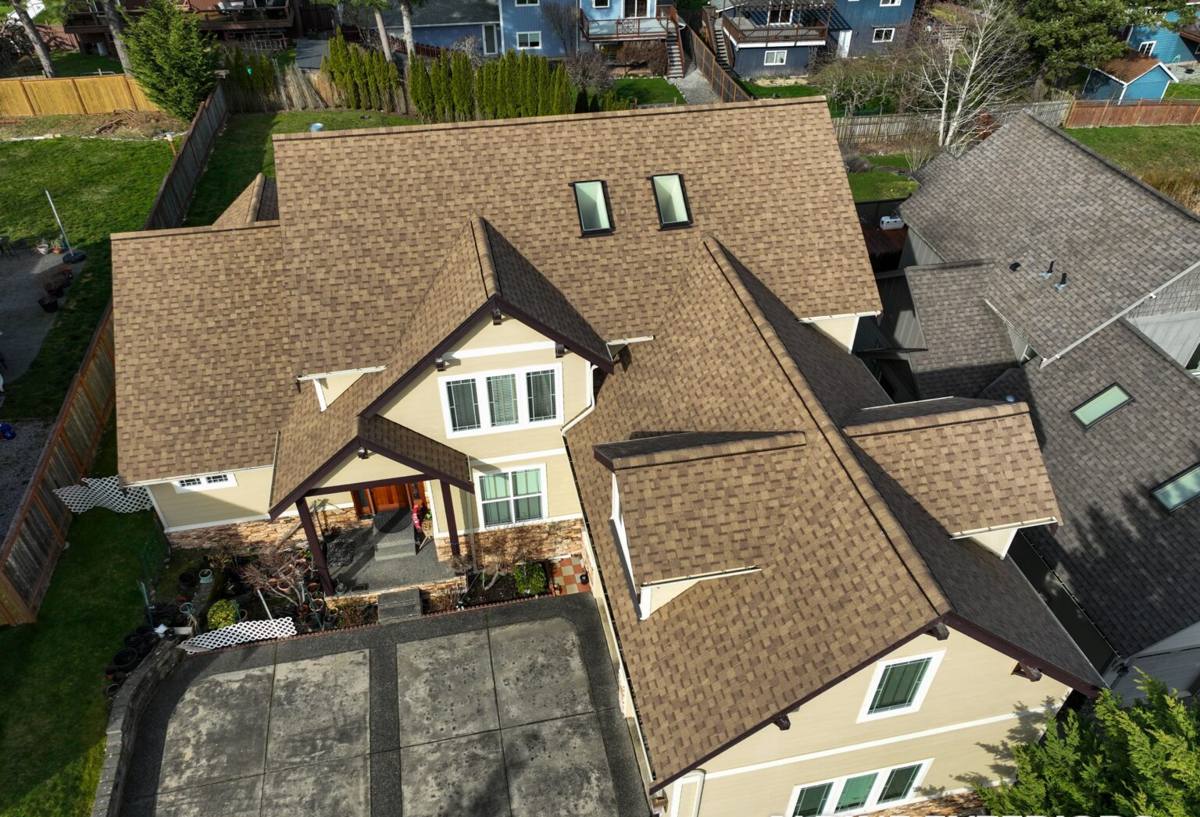
Signs a March Point Roof Needs Repair, Not Replacement
Most roofs don't fail all at once. They show warning signs first, and catching them early is usually the difference between a repair bill and a full re-roof. Walk your property and check for the following:
- Granules collecting in gutters or at downspout outlets, which signals shingle wear
- Dark streaking or green-black patches, especially on north-facing slopes that stay shaded and damp
- Curling, cracking, or lifted shingle tabs, particularly around ridges and edges
- Rust staining below flashing at chimneys, vents, or skylights
- Soft spots or sagging when walked on, which can point to decking damage underneath
- Daylight visible through the roof deck from inside an attic space
- Water stains on interior ceilings, especially ones that appear only during wind-driven storms
- Moss or algae buildup thick enough to hold visible moisture after a dry day or two
Any one of these on its own might just need a targeted fix. Several at once, or damage that's spread across a large area, usually points toward a bigger conversation about the roof's remaining service life.
What a Correct Roof Repair Actually Involves
Diagnosis Before Patching
A repair that only covers the spot where water is showing up inside the house often misses the actual entry point, since water travels along the underlayment and rafters before it drips somewhere visible. A correct diagnosis means getting on the roof, tracing the damage back to its source, and checking the surrounding area — not just the exact spot that's leaking.
Matching Materials and Flashing Details
Mismatched shingles, the wrong flashing metal, or fasteners that aren't rated for coastal exposure all shorten the life of a repair. We match existing materials as closely as possible, use corrosion-resistant fasteners given the salt air, and rebuild flashing details — step flashing, counter-flashing, valley metal — to shed water correctly rather than just caulking over a gap and hoping it holds.
Sealing Without Over-Sealing
Caulk and roofing cement have their place, but they're not a substitute for proper flashing and shingle work. Overusing sealant is a common shortcut that traps moisture, hides the real problem, and often needs to be redone within a year or two. We use sealant to finish a detail correctly, not to cover for skipped flashing work.
Repair vs. Replacement: What Actually Drives That Decision
Homeowners often ask whether it's worth repairing an older roof or better to start planning for replacement. There's no single answer, but these are the factors that carry the most weight:
| Factor | Leans Toward Repair | Leans Toward Replacement |
|---|---|---|
| Roof age | Under 15-18 years (asphalt) | Approaching or past manufacturer's expected service life |
| Extent of damage | Isolated to one area or detail | Spread across multiple slopes |
| Decking condition | Solid, no rot or soft spots found | Soft, delaminated, or water-damaged in multiple spots |
| Repair history | First or second repair on this roof | Third or more repair in a short span |
| Granule loss | Minimal, mostly at wear points | Widespread, shingle surface visibly bare |
We'll tell you honestly which side of that table your roof falls on. If a repair is the right call, that's what we'll recommend and price — we don't push replacement on a roof that has good years left in it.
Our Process for March Point Roof Repairs
- On-roof inspection. We physically get on the roof rather than relying on ground-level or gutter-level guesswork, checking flashing, penetrations, and the areas around any reported leak.
- Written scope and price. You get a clear explanation of what's actually wrong, what we're fixing, and what it costs before any work starts — no vague line items.
- The repair itself. Damaged materials come out, decking gets checked and replaced if needed, and new shingles, underlayment, and flashing go in to match the surrounding roof.
- Site cleanup. Old material, nails, and debris get cleared from the roof, gutters, and ground before we consider the job finished.
- Documentation. You get a record of what was done and what was used, so there's a paper trail if a similar issue ever comes up again.
Common Roofing Materials on March Point and How Repairs Differ by Type
Asphalt Composition Shingles
The most common roofing material in the area, and generally the most straightforward to repair as long as the shingle color and profile can be matched closely enough that a patch doesn't stand out. Older architectural shingles sometimes require sourcing a close match rather than an exact one, since manufacturers phase out colors over time.
Cedar Shake and Shingle
Cedar roofs need repairs that respect the material's natural movement and drying behavior. We avoid sealing cedar with products that trap moisture against the wood, since that speeds up rot rather than preventing it — a real concern given how much moisture this area sees.
Metal Roofing
Metal roofs handle wind-driven rain well when their seams and fastener penetrations are intact, but a compromised seam or a failed fastener seal lets water travel a long way before it shows up as a leak. Repairs on metal require matching panel profile and finish, and paying close attention to galvanic compatibility between the panel and any replacement fasteners — mixing incompatible metals accelerates corrosion in a salt-air environment.
Moss, Algae, and Debris: The Maintenance That Extends a Repair
A repair is only as good as the maintenance that follows it. Given how long the moss season runs here, a roof that gets cleared of debris and treated for moss growth on a regular schedule will consistently outlast one that's left alone between emergencies. This isn't about aggressive pressure washing, which can strip granules and shorten a shingle's life — it's gentle removal, appropriate treatment products, and keeping gutters and valleys clear so water has somewhere to go. We can talk through a maintenance schedule that fits your roof type and the amount of shade your property gets.
Why Local Experience with March Point Homes Matters
A roof repair crew that mostly works dry-climate jobs will approach a March Point roof differently than one that works this exact stretch of Skagit County regularly. Knowing which flashing details tend to fail first in salt air, which shingle brands hold up best against sustained moss exposure, and how wind off the water typically drives rain into a roof isn't something you get from a general repair checklist — it comes from doing this work, on these roofs, in this specific climate, repeatedly. That's the difference between a repair that holds and one you'll be calling about again next winter.
If you're dealing with a leak, storm damage, or just want an honest read on where your roof stands, we're happy to take a look. Fill out the form below for a free, no-pressure estimate — we'll tell you exactly what we find and what we'd recommend, whether that's a simple repair or something bigger.