 Anacortes Siding
 Storm Damage Roof Repair for Bow Homes
Bow sits in the rural stretch of Skagit County between Anacortes and Bellingham, close enough to open water that salt-laden air is part of daily life for every roof in the area. Add in the long, wet Pacific Northwest storm season and the shaded, moisture-holding tree cover common on Bow properties, and you have a climate that is genuinely hard on roofing. Wind gusts off the water loosen shingles and flashing, driving rain finds every gap a storm has opened, and moss works quietly in the background all year, lifting materials that wind and rain haven't already damaged. Storm damage repair here isn't a one-time emergency fix so much as it's an ongoing part of owning a home in this corner of Skagit County.
This page covers what storm damage roof repair actually means for a Bow property, what a correct repair involves, how we handle the job from first call to final inspection, and why it matters to hire a crew that already knows this specific stretch of coastline and country road.
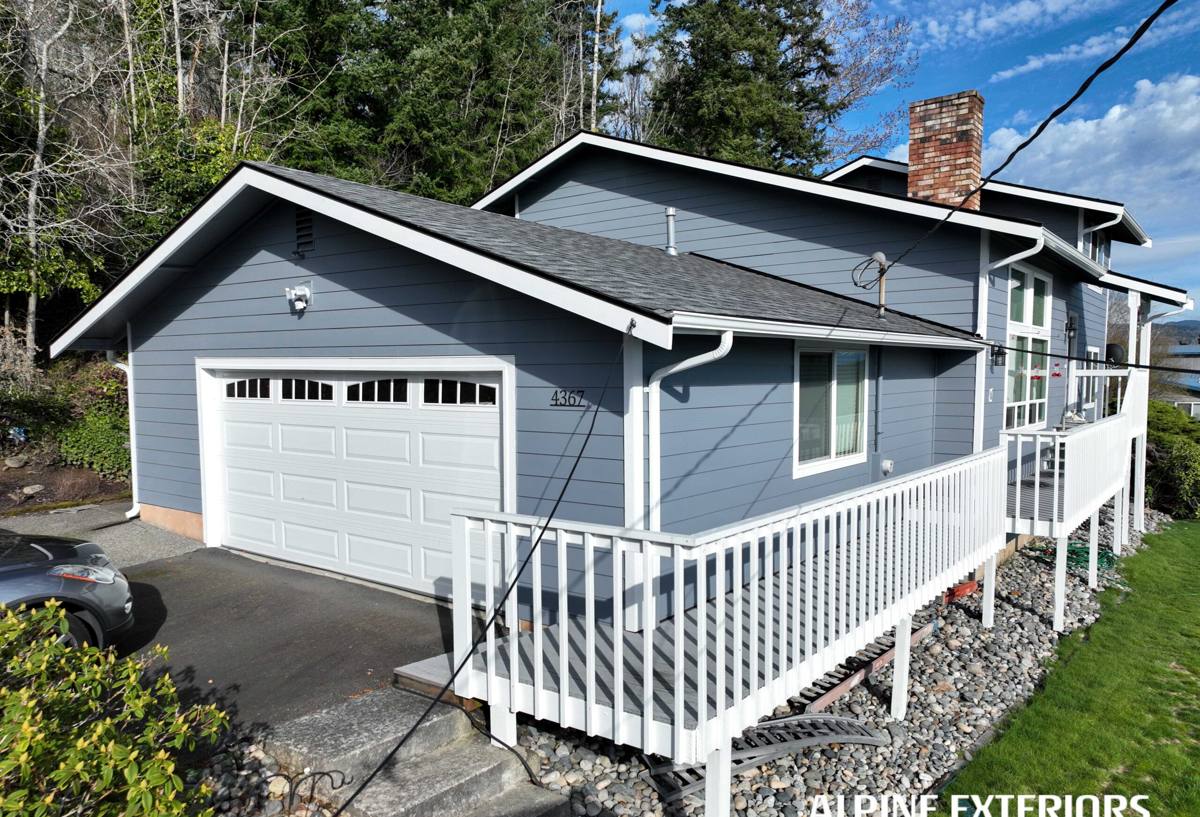
What Storm Damage Actually Looks Like in Bow
Not all storm damage is obvious. A tree limb through the roof deck is easy to spot; a handful of lifted shingle tabs after a windstorm is not. Because Bow gets a mix of exposed, wind-driven weather near the water and shaded, tree-covered lots further inland, the damage pattern varies a lot from property to property.
Common damage types we see after Skagit County storms
- Wind-lifted or torn-off shingles, especially along ridge lines and roof edges where uplift is strongest
- Flashing pulled loose or bent around chimneys, skylights, and roof-to-wall transitions
- Granule loss from wind-driven rain and hail, which thins a shingle's protective layer without an obvious hole
- Moss and organic debris damming water at valleys and eaves, forcing it back under shingles
- Fastener backout, where repeated wind flexing works nails loose over time
- Gutter and downspout damage that redirects water onto fascia and siding instead of away from the house
- Soft or discolored roof decking where a small leak has gone unnoticed for a season or more
The tricky part is that several of these can exist on the same roof at once. A homeowner might call about a single visible gap, and we'll find two or three smaller issues nearby that a storm caused but that haven't leaked into the house yet.
Why Bow's Climate Makes This a Different Job Than Elsewhere
Salt air and material fatigue
Homes closer to the water in Skagit County deal with a slow, steady corrosive effect on exposed metal — flashing, fasteners, gutter hardware, and vents. Salt air doesn't cause dramatic failures on its own, but it accelerates rust and weakens the metal components a roof depends on to shed water at its most vulnerable points: valleys, penetrations, and edges. A storm repair that ignores corroded flashing is a repair that fails again within a season or two.
Driving rain finds the smallest opening
Wind-driven rain off the water doesn't just fall straight down — it pushes sideways and even slightly upward under shingle tabs and around flashing laps. A gap that would stay dry in a calm rain can leak during a Skagit County windstorm. Any storm repair has to account for wind direction and exposure, not just patch the visible hole.
Moss season is nearly year-round
Between the tree cover common around Bow and the consistently damp climate, moss growth isn't confined to a short window — it's a near-constant maintenance factor. Moss holds moisture against the roof surface long after a storm has passed, lifts shingle edges as it grows, and clogs the valleys and gutters that are supposed to carry storm water away. A lot of "storm damage" we're called out for is really storm damage layered on top of moss damage that had already been softening the roof.
What a Correct Storm Damage Repair Involves
A rushed storm repair — a tarp, a few new shingles, done — treats the symptom and leaves the cause. A correct repair addresses the whole system at the damaged area, not just the spot where water is visibly getting in.
1. Full inspection, not just the reported spot
We walk the roof (or use a ladder and close visual inspection where walking isn't safe) and check the attic or crawlspace from the inside where accessible. Water rarely enters exactly where it shows up on a ceiling, so we trace the path back to the actual failure point.
2. Deck assessment
If water has been getting in for any length of time, the plywood or OSB decking underneath may be soft, delaminated, or rotted. Shingles installed over damaged decking won't lay flat and won't hold fasteners properly — this is a step that gets skipped by crews trying to move fast, and it's the step that determines whether a repair lasts.
3. Flashing and underlayment repair, not just shingles
Most leaks trace back to flashing or underlayment, not the shingles themselves. We replace corroded or bent flashing at valleys, chimneys, and penetrations, and repair or replace underlayment in the affected section so the roof has a proper water barrier underneath the surface layer.
4. Matching materials where possible
For a localized repair, we match shingle type, profile, and color as closely as the market allows so the repair blends in rather than creating an obvious patch. Some color variation is normal, especially on an older roof, and we'll be upfront about that before starting.
5. Cleanup and moss treatment where relevant
If moss contributed to the damage, we address it as part of the repair — clearing debris from valleys and gutters and treating growth on the repaired section — rather than fixing the leak and leaving the underlying moss problem to cause the same failure again.
Our Process, Start to Finish
Step 1: Contact and initial questions
We ask what you're seeing — a leak, missing shingles, debris on the roof, water stains — and how recent the storm event was. This helps us prioritize active leaks over cosmetic damage.
Step 2: On-site inspection and honest assessment
We inspect the roof and, where possible, the attic space. You get a plain explanation of what's damaged, what's causing it, and whether it's a targeted repair or something that points to a larger roof issue.
Step 3: Written scope and estimate
Before any work starts, you get a clear description of what will be repaired and why, so there's no ambiguity about scope once the crew is on the roof.
Step 4: The repair
We work efficiently but don't cut corners on decking, flashing, or underlayment to save time. Storm repairs on occupied homes are done with care around landscaping, gutters, and anything below the work area.
Step 5: Final walkthrough
We show you the completed repair and explain what was done, including anything we'd recommend watching going forward — for example, a nearby section of roof that's aging and worth monitoring.
Repair vs. Replacement: How We Help You Decide
Not every storm-damaged roof needs to be replaced, and not every repair is the right long-term call. The decision usually comes down to the roof's age, the extent of damage, and how much of the roof is affected relative to its remaining service life.
| Factor | Leans toward repair | Leans toward replacement |
|---|---|---|
| Roof age | Roof is under roughly two-thirds of its expected lifespan | Roof is near or past its expected lifespan |
| Extent of damage | Damage is localized to one section or slope | Damage is spread across multiple sections or slopes |
| Decking condition | Decking under the damage is sound | Widespread soft or rotted decking found during inspection |
| Shingle match | Matching material is available and blends reasonably | Discontinued material or heavy fading makes matching impractical |
| Prior repair history | First significant repair on this roof | Roof has needed several repairs in recent years |
We'll tell you honestly which side of this table your roof falls on. Recommending a full replacement when a repair would genuinely hold up doesn't serve you or us — a repair that fails in a year hurts our reputation with your neighbors, which matters a great deal in a community the size of Bow.
Cost Factors for Storm Damage Repair
Every roof and every storm is different, so we don't quote a number without seeing the damage. In general, cost is driven by a small number of factors:
- How much of the roof is affected — a single damaged slope costs far less than multiple sections
- Whether decking needs to be replaced, which adds material and labor beyond the surface repair
- Roof pitch and access — steep or high roofs take longer and require more safety setup
- Flashing and metal work involved, especially around chimneys and valleys
- Material availability if an exact shingle match is needed
A small, localized repair can run a few hundred dollars; a repair involving significant deck replacement or extensive flashing work can run into the low thousands. We'll give you a specific number after inspecting the actual damage, not a phone-quote guess.
Insurance and Storm Damage
Many storm damage repairs in Skagit County are covered in whole or part by homeowners insurance, depending on your policy and the cause of damage. We're happy to document the damage with photos and a written scope that you can submit to your insurer, and to walk your adjuster through the roof if needed. We don't handle the claim itself or promise a specific coverage outcome — that's between you and your insurance company — but we make sure the documentation reflects what's actually there.
What to Do Right After a Storm
- Check your attic or top-floor ceilings for new stains, drips, or damp spots
- Look at the ground and gutters for shingle granules, torn shingle pieces, or bent flashing
- Note any visible gaps, lifted shingles, or debris on the roof from the ground — avoid climbing up yourself after a storm
- Clear debris away from downspouts so water can keep draining while you wait for inspection
- Take photos of any visible exterior damage for your records
- Call for an inspection sooner rather than later — a small gap left through several more rain events tends to become a decking problem
Why a Crew That Already Works in Bow Matters
Storm damage repair is a job where local knowledge shows up in the details. A crew that regularly works Skagit County properties knows to check corroded flashing before assuming a shingle is the only problem, knows how aggressively moss can undercut a repair if it's ignored, and knows what wind-driven rain off the water does to roof edges that inland crews rarely have to think about. That familiarity means fewer surprises, a more accurate first inspection, and a repair built for the conditions your roof will actually face again next storm season — because in Bow, there's always a next one.
If you've got storm damage on your Bow home — or you're not sure whether what you're seeing is storm damage or just wear — we're glad to take a look. Reach out for a free, no-pressure estimate using the form below, and we'll give you a straight answer about what your roof needs.