 Anacortes Siding
 Building a Deck That Can Handle Cap Sante's Waterfront Climate
Cap Sante sits right where Anacortes meets saltwater — elevated lots overlooking the marina, ferry traffic, and the channel beyond. That view comes with a trade-off: decks up here take a harder beating than decks built a few miles inland in Skagit County. Salt-laden air off the water, driving rain that comes in sideways during fall and winter storms, and a long stretch of shaded, damp weather that grows moss on anything that holds moisture all work against an outdoor structure. A deck built to a generic spec sheet, without accounting for this exposure, will show corrosion, soft spots, and slick surfaces years before it should.
We've built and repaired decks around Anacortes long enough to know which shortcuts show up first in a place like Cap Sante. This page covers what that actually means for material choice, fastener selection, framing, and the build process itself — not marketing language, just what holds up here.
Salt Air and Corrosion
Airborne salt from the marina and surrounding waterways settles on every exposed surface, including a deck's structural connectors. Standard zinc-coated fasteners and joist hangers that hold up fine on an inland deck can start showing surface rust within a couple seasons this close to the water. Corrosion at a joist hanger or ledger bolt isn't cosmetic — it's a structural connection point, and once it weakens, the deck's load path weakens with it.
Driving Rain and Moisture Intrusion
Anacortes gets plenty of rain that doesn't fall straight down — wind off the water pushes it sideways into ledger boards, fascia, and any gap where flashing was skipped or done poorly. Water that gets behind a ledger board or trapped between decking boards doesn't dry out quickly in our climate, and that's where rot starts, usually hidden until a board fails underfoot.
Moss Season and Shade
Between the marine layer, tree cover on many Cap Sante lots, and our long wet season, moss and algae find a foothold on almost any horizontal wood surface that doesn't get much sun. Beyond looking bad, a mossy deck surface is a slip hazard, and moss holds moisture against the wood underneath it, accelerating decay in exactly the spots you'd least expect — under railings, along the north side of the house, in corners that never fully dry.
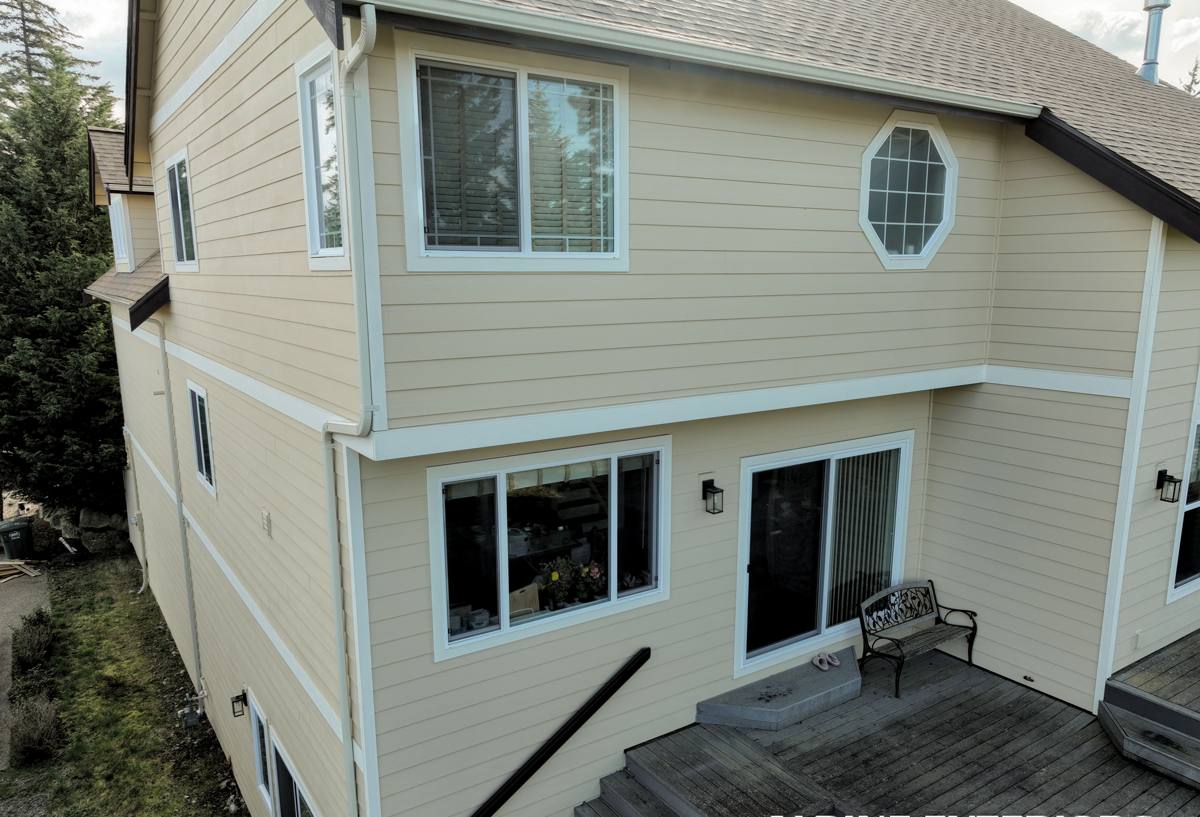
What a Correctly Built Deck Looks Like in This Environment
A deck that's going to last on a Cap Sante lot needs a few things done right at the structural level, before anyone talks about decking material or railing style.
Ledger Attachment and Flashing
The ledger board — where the deck attaches to the house — is the single most common failure point we see on older decks in wet climates. It needs to be through-bolted, not just lag-screwed, into solid framing, and it needs proper flashing that directs water out and away from the house sheathing rather than relying on a bead of caulk. Done wrong, this is the detail that leads to hidden rot behind siding, which is a much bigger repair than the deck itself.
Footings on Sloped and Elevated Lots
Cap Sante's terrain isn't flat. Many lots slope toward the water or sit on fill, which means footing depth and placement matter more here than on a level backyard elsewhere in Skagit County. Footings need to reach undisturbed soil below the frost line and be sized for the actual load and height involved — a deck perched several feet up on a view lot carries different structural demands than a ground-level patio deck.
Fasteners and Hardware Grade
Given the salt air, we treat hardware grade as a real decision, not an afterthought. Stainless steel fasteners and connectors cost more up front but resist corrosion in a way standard coated hardware simply can't match this close to saltwater. On a structure meant to last decades, the difference in hardware cost is small compared to the cost of pulling decking to replace a corroded hanger ten years in.
Choosing a Decking Material for Salt Air and Moss
There's no single right answer here — it depends on budget, maintenance appetite, and how much shade and moisture exposure the specific spot on the lot gets. Here's how the common options actually perform in a Cap Sante-type setting:
| Material | How it handles salt air | How it handles moss/moisture | Maintenance |
|---|---|---|---|
| Pressure-treated wood | Fine if hardware is upgraded; the wood itself tolerates salt air well | Needs regular cleaning and sealing or moss takes hold quickly | Highest — annual cleaning, periodic staining/sealing |
| Cedar | Naturally resists rot and holds up well | Still needs cleaning; moss will grow on unmaintained cedar too | Moderate to high — resealing every 1-2 years to hold color and protection |
| Composite decking | Handles salt air well; no wood fibers to corrode or absorb salt | Won't rot, but can still grow surface moss/algae in shaded, damp spots — needs occasional washing | Low — periodic washing, no staining or sealing |
| PVC decking | Fully synthetic, unaffected by salt exposure | Similar to composite — surface growth is a cleaning issue, not a decay issue | Low |
For a lot with a lot of shade and moisture — common on the tree-covered side of Cap Sante — we usually steer homeowners toward composite or PVC decking, simply because moss and algae become a cleaning problem instead of a rot problem. For an open, sunnier spot with good airflow off the water, a well-built cedar or treated wood deck can perform just fine if the owner is willing to keep up with cleaning and sealing.
What Drives the Cost of a Deck Project Here
Deck pricing comes down to size, material, and a handful of site-specific factors — and on a Cap Sante lot, some of those factors carry more weight than they would on a flat, inland site elsewhere in Skagit County.
| Cost factor | Why it matters here |
|---|---|
| Height / elevation change | Sloped and view lots often need taller support posts, deeper footings, and stairs — all add material and labor beyond a simple ground-level deck |
| Decking material | Treated wood costs least up front; cedar and composite/PVC cost more but shift long-term maintenance the other way, which matters given what this climate does to exposed wood |
| Ledger vs. free-standing frame | A free-standing deck, needed when ledger attachment isn't sound or advisable, requires its own full support structure instead of tying into the house |
| Railing style | Cable and glass systems that preserve a marina or water view cost more than standard picket railing, in both materials and install time |
| Hardware grade | Upgrading to stainless steel fasteners and connectors for salt-air resistance adds a modest amount to material cost, spread over the life of the structure |
| Permit and engineering complexity | Steep or elevated lots sometimes need engineered footing or post designs to satisfy permit review, adding design time before construction starts |
We won't have real numbers for your project until we've seen the lot, but this gives you a sense of which decisions move the price the most — and which ones are worth spending on given how hard this location is on a deck over time.
Framing and Substructure Choices
The framing underneath rarely gets discussed, but it matters as much as the decking on top. We build substructures using lumber rated for the moisture exposure involved, with joist tape or a comparable flashing product over the top of every joist to keep water from soaking directly into the cut fibers where deck screws penetrate. That single detail — capping the joists — is one of the cheapest ways to add years to a deck's structural life in a wet climate, and it's frequently skipped on lower-bid jobs because it adds labor and material cost that doesn't show once the decking is down.
Joist spacing and blocking also matter more here than in a dry climate: tighter spacing and proper blocking reduce deck bounce and give composite or PVC decking the support specified by the manufacturer, which matters for warranty coverage.
Railings, Guards, and Code Considerations for View Lots
Many Cap Sante decks are built to take advantage of marina and water views, which usually means more height off the ground than a typical backyard deck — and that triggers guardrail height and baluster spacing requirements under the building code. Beyond meeting code, railing choice affects the view itself: cable rail and glass panel systems preserve sightlines better than solid picket railing, though they come with their own upkeep near salt air, including cable tensioning and glass cleaning. We'll walk through the trade-offs for your specific lot and view angle rather than defaulting to one railing style.
Our Deck Building Process
Every deck we build in the Cap Sante area follows the same core process, adjusted for the specific lot and design:
- On-site assessment of slope, soil, sun/shade exposure, and existing structure for replacement or attached decks
- Design and material selection based on your budget, maintenance preference, and the lot's exposure to sun, wind, and moisture
- Permit application and inspection scheduling through the City of Anacortes
- Footing excavation to undisturbed soil, sized and placed for the deck's height and load
- Ledger installation with proper through-bolting and flashing, or a free-standing frame where ledger attachment isn't appropriate
- Framing with joist protection tape and hardware rated for the exposure level of the site
- Decking installation per manufacturer spacing and fastening specs
- Railing installation meeting current guard height and spacing code
- Final walkthrough covering maintenance expectations specific to the material chosen
We pull permits and schedule inspections as a standard part of the job, not an upsell. A deck built without permits can create real problems at resale, and inspections catch structural issues before they're buried under decking.
Why a Crew That Already Works Cap Sante Matters
A contractor who's only worked inland jobs will often spec a deck the same way regardless of where it sits — same hardware, same framing details, same decking recommendations. That's not because they're careless; it's that the failure modes specific to a marina-adjacent, moss-prone, wind-exposed lot don't show up until years later, usually after the crew that built it is long gone. Working in and around Anacortes and Skagit County's waterfront neighborhoods regularly means we've seen which details actually matter here — where moss takes hold first, which ledger flashing details fail, and how much extra corrosion resistance is worth paying for on a given lot. That's not something you get from a spec sheet; it comes from repairing decks that were built without it.
Maintenance and Warning Signs to Watch For
Seasonal Maintenance
Whatever material you choose, a little seasonal attention goes a long way in this climate. Clear leaves and debris out of gaps between boards before wet weather sets in, since trapped organic matter is what feeds moss and holds moisture against wood. A yearly wash — plain soap and water or a deck-safe cleaner, not a high-pressure blast that can damage wood fibers or composite surfaces — keeps moss from establishing and keeps salt residue from building up on hardware and railings. Wood decks need resealing on a regular cycle to keep water out of the fibers; composite and PVC decks mainly need that periodic wash to stay looking and performing the way they should.
Signs an Existing Deck Needs Repair
If you're not building new but wondering whether your current deck is holding up, a few warning signs show up earlier in a climate like ours than they would elsewhere:
- Soft, spongy, or bouncy spots underfoot, especially near the ledger or at board ends
- Rust streaks running down from fasteners, hinges, or hardware
- Persistent moss or dark staining that comes back within weeks of cleaning
- Gaps, cracking, or separation where the ledger meets the house siding
- Railings or posts that feel loose or flex more than they used to
- Standing water that doesn't drain between boards after rain
None of these mean the whole deck needs to be torn out — sometimes it's a hardware and flashing repair, sometimes it's a full rebuild. It's worth having someone look at it before a soft board turns into a fall hazard.
If you're planning a new deck or replacing one that's showing its age in the Cap Sante area, we're happy to take a look and talk through what makes sense for your specific lot. Fill out the form below for a free, no-pressure estimate.