 Anacortes Siding
 Cap Sante Decks Face a Tougher Climate Than Most
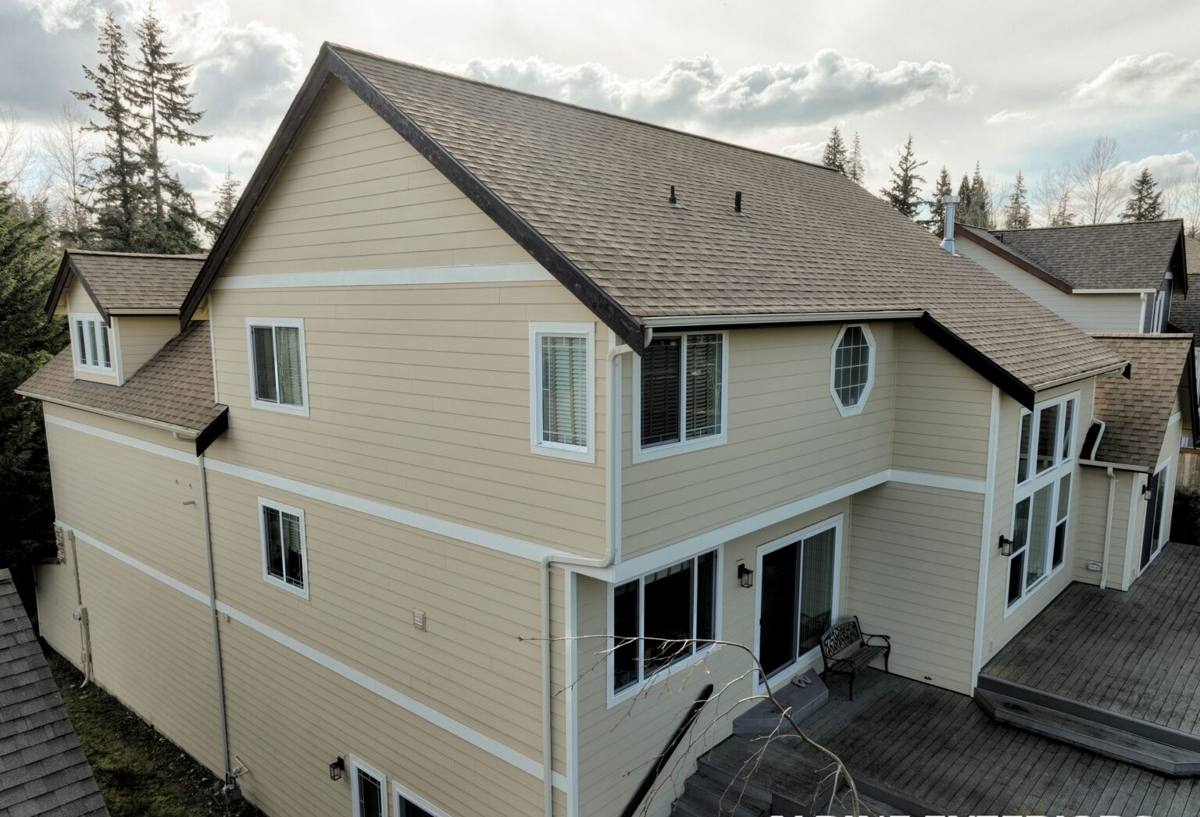
Cap Sante sits up on the high ground above the Anacortes waterfront, and that elevation and marine exposure come with a trade-off. The views are excellent, but the air moving off the water carries salt, and that salt finds its way into every exposed fastener, hinge, and joint on an outdoor deck. Add in Skagit County's long wet season, driving rain that comes in sideways off Rosario Strait and Guemes Channel, and the shade many of these lots get from mature evergreens, and you get a near-perfect environment for wood rot, corroded hardware, and a moss layer that never fully dries out between October and May.
None of this means a deck in Cap Sante is doomed. It means the deck has to be built and repaired with that climate in mind — the right fasteners, the right flashing details, and a maintenance rhythm that accounts for how slowly things dry out up there compared to a drier inland town. We work on decks around Anacortes regularly, and the failure patterns we see on Cap Sante properties are consistent enough that we can usually tell you what's likely going on before we even get up on the deck.
How to Tell If You Need a Repair — Not a Full Rebuild
Most homeowners call us because something feels off: a board that gives a little underfoot, a railing that wiggles more than it used to, or a dark stain creeping across the decking near the house. The good news is that a lot of deck problems are localized. The bad news is that the visible symptom is rarely where the actual damage is.
Common warning signs
- Soft or spongy spots when you walk across the decking
- Railings or posts that flex or wobble when pushed
- Persistent green or black staining that pressure washing doesn't fully remove
- Gaps opening up between the deck and the house siding or ledger board
- Rust streaks running down from screws, nails, or metal connectors
- A hollow or spongy sound when you tap on stair stringers or support posts
- Standing water that takes more than a day to dry after rain
Any one of these on its own might be a simple fix. Several of them together, especially near the ledger board where the deck attaches to the house, usually mean water has been getting into the structure for a while and the repair needs to go deeper than the surface.
What a Correct Deck Repair Actually Involves
A repair that only replaces what's visibly damaged often leaves the cause of the damage untouched, which means you're paying for the same repair again in a few years. A repair done right addresses both the damaged material and whatever let water in to begin with.
Structure first
Before we touch decking boards, we check the framing underneath: joists, beams, posts, and especially the ledger board where the deck meets the house. This connection is the single most common failure point on older decks in wet coastal climates, because it's where two building systems meet and where flashing is easiest to skip or install poorly. If the ledger isn't properly flashed to shed water away from the house framing, rot can spread into areas that are expensive to access and expensive to fix.
Fasteners and hardware
In a marine-air environment like Cap Sante, standard hot-dip galvanized fasteners can start showing corrosion well before a comparable deck further inland. We check hardware condition as part of any repair and upgrade to stainless steel or a higher corrosion-resistance rating where it makes sense, particularly on structural connectors, ledger bolts, and anything near ground level or close to the water side of the property.
Flashing and water management
Most of what separates a deck that lasts from one that doesn't comes down to where water is allowed to go. Proper flashing at the ledger, drip edges on fascia boards, and adequate gapping between decking boards so water doesn't pool are all things we address during a repair, not just cosmetic decking replacement.
Moss and surface treatment
Moss isn't just unsightly — it holds moisture against the wood surface and accelerates decay underneath it. Part of a proper repair includes clearing organic growth and, where the deck's layout and shade pattern make moss a recurring problem, talking through drainage or trimming adjustments that reduce how much moisture sits on the surface going forward.
Repair or Replace? What Actually Drives That Decision
We get asked this on nearly every deck job. The honest answer depends on how much of the structure is still sound, not just how the deck looks. Here's how we generally think through it:
| Factor | Repair Usually Makes Sense | Replacement Usually Makes Sense |
|---|---|---|
| Framing condition | Joists and beams are solid, damage is limited to a few boards | Widespread soft or rotted framing, especially at the ledger |
| Age of structure | Under 15-20 years, built to a reasonable code standard | Older deck with outdated framing spacing or footings |
| Extent of damage | Isolated to one area — stairs, a railing section, a few boards | Damage spread across multiple systems (decking, framing, and posts) |
| Fastener condition | Localized corrosion, easily swapped during board replacement | Widespread hardware failure throughout the structure |
| Design and layout | Current footprint and use still work for the household | Family wants a different size, shape, or added features |
Cost is obviously part of the conversation too, but we'd rather give you an honest read on the structure than push a bigger job than you need. If a repair will hold up, we say so. If we think you're a year or two away from needing a rebuild anyway, we say that too, so you can decide whether to spend on a patch now or plan for a full replacement.
Decking Material: What Holds Up in This Climate
When boards do need to be replaced, the material choice matters more here than it would in a drier climate. We'll walk through the trade-offs honestly rather than push one product line.
Pressure-treated wood
Lower upfront cost and easy to source, but it needs consistent upkeep — cleaning, sealing, and periodic inspection — to hold up against the moss and moisture cycle Anacortes sees for much of the year. Skipping maintenance is where wood decks in this climate get into trouble.
Cedar
Naturally more rot- and insect-resistant than most treated lumber and a common regional choice, but it's a softer wood and still needs regular sealing to keep its resistance to moisture intact over time.
Composite decking
Higher upfront cost, but far less maintenance burden — no sealing, better moisture resistance, and it won't develop the same soft spots wood does when moisture gets trapped underneath. The trade-off is that composite still needs proper ventilation underneath and correct fastening; installed wrong, it can trap moisture against the framing just like wood can. We're upfront about that installation sensitivity rather than treating composite as maintenance-free.
There's no universally "right" answer — it depends on your budget, how much upkeep you want to do, and how the deck is used. We'll give you our honest read for your specific situation rather than a one-size answer.
Our Repair Process
- On-site assessment. We inspect the decking surface, framing, ledger connection, posts, and hardware — not just the areas you flagged as a concern.
- Honest scope and estimate. You get a clear breakdown of what's failing, what's still sound, and what a repair versus a fuller fix would cost.
- Address the cause, not just the symptom. Flashing, drainage, and fastener upgrades happen alongside any board or structural replacement.
- Rebuild damaged sections to current standards. Replaced framing and connections are brought up to a proper structural standard, even if the rest of the deck is older.
- Final walkthrough. We check the repair is solid, review what maintenance we'd recommend going forward, and answer any questions before we leave.
Why a Crew That Already Works Cap Sante Matters
Deck repair isn't complicated in theory, but doing it right in a marine climate depends on recognizing failure patterns quickly and not treating every deck like it's in a dry inland neighborhood. A crew that's worked on homes around Cap Sante and the rest of Anacortes has already seen how salt air chews through standard hardware, how shaded lots hold moss longer, and where ledger flashing tends to get skipped on older builds. That experience shortens the diagnosis and helps avoid a repair that looks fine for a season and then reopens the same problem.
There's also a practical side to hiring local: shorter response times for estimates and follow-up, familiarity with the permitting and inspection expectations in Skagit County, and accountability to a community we actually work in, not a one-time job we drive off from.
Simple Maintenance That Extends the Life of a Repair
A good repair buys you years, but a little seasonal attention buys you more. Here's what we recommend to Cap Sante homeowners between visits:
- Sweep leaves and debris off the deck surface regularly, especially in fall
- Rinse off moss and algae buildup before it has a chance to establish, particularly in shaded corners
- Check that gaps between boards are clear so water can drain instead of pooling
- Look at the ledger board area once or twice a year for any dark staining or gaps
- Reseal wood decking on the manufacturer's recommended schedule, not just when it looks dry
- Tighten or replace any hardware showing early rust before it spreads
Get a Straight Answer on Your Deck
If your Cap Sante deck has soft spots, a wobbly railing, or staining that won't wash off, it's worth having someone look at the framing before it gets worse. We'll give you a straightforward, no-pressure estimate and an honest opinion on whether you're looking at a repair or something bigger — just fill out the form below and we'll get back to you.