 Anacortes Siding
 Cap Sante Homes Face a Tougher Exterior Environment Than Most of Skagit County
Homes in and around Cap Sante sit close to open water, which means more direct exposure to salt-laden marine air, wind-driven rain, and the kind of persistent shade and dampness that keeps moss and algae established year-round. That combination is harder on exterior siding than what you'll find on a similar home ten or fifteen miles inland. Salt air accelerates corrosion on exposed fasteners and hardware. Driving rain off the water pushes moisture sideways into laps, seams, and trim joints that a calmer inland site would never test. And the long Pacific Northwest moss season keeps north- and west-facing walls damp for weeks at a stretch, which is exactly the condition that lets organic growth take hold on siding that can't shed water and dry out quickly.
None of this means Cap Sante homes need something exotic. It means the siding system, the installation details, and the finish all have to be chosen and executed with that exposure in mind. Get any one of those wrong and you're looking at premature caulk failure, staining, soft trim, or paint that won't hold — even if the siding material itself is sound.
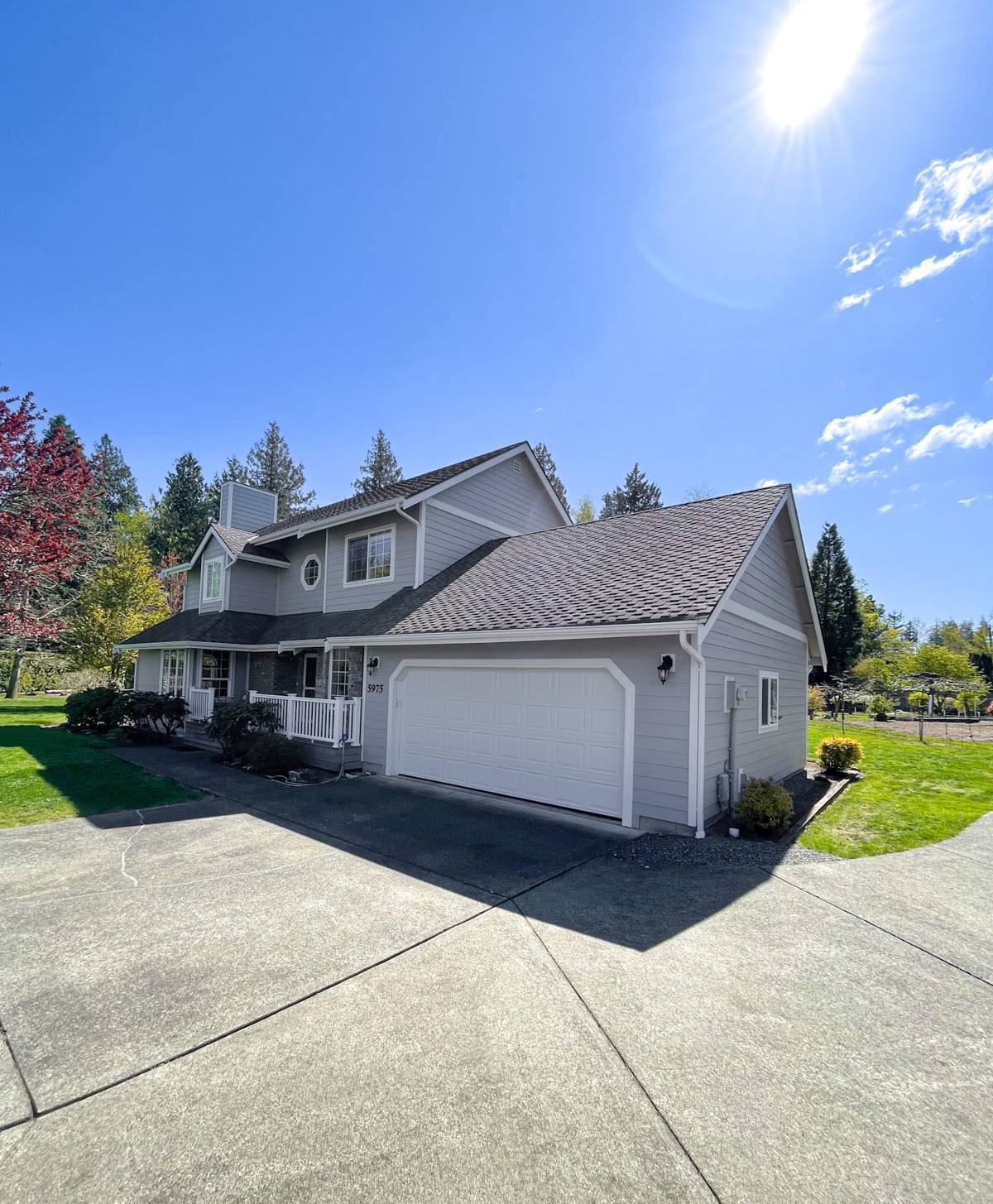
Why We Only Install James Hardie in This Climate
We install James Hardie fiber cement exclusively, and Cap Sante is a good example of why. James Hardie's HZ5 product line is engineered specifically for climates like the Pacific Northwest — freeze-thaw cycling, sustained moisture, and coastal exposure. It's a cement-based product, so it doesn't absorb water the way wood-based siding does, and it won't rot, delaminate, or feed mold and fungus growth the way engineered wood products can when a seal fails. That matters more on a marine-exposed wall than almost anywhere else in the county.
It's also non-combustible, which is a real advantage during wildfire season even in a coastal town, and it holds paint and factory finish far better over time than wood-based alternatives because it doesn't swell and shrink with moisture the same way. We don't install LP SmartSide, vinyl, Cemplank, Allura, primed spruce, or cedar. Every one of those products has legitimate uses, but none of them hold up to close, honest scrutiny against Hardie's moisture behavior, fire performance, and long-term finish durability — and on a site like Cap Sante, those differences show up faster than they would on a sheltered inland lot.
ColorPlus Factory Finish vs. Field-Applied Paint Near Salt Water
This is one of the most important, least understood decisions on a coastal siding job. James Hardie's ColorPlus finish is baked on in a controlled factory environment, multiple coats, cured before the board ever reaches the site. Field-painted siding — whether it's Hardie primed board or any wood-based product — depends on weather conditions, prep, and coat thickness on the day it's painted, and then has to survive its first few seasons of salt air and rain before it's truly cured. On a wind-exposed wall near open water, that difference shows up as chalking, fading, and peeling years sooner on field-applied finishes than on ColorPlus.
What a Correct Installation Actually Involves Here
Fiber cement siding is only as good as the details underneath it, and that's doubly true when the wall is going to see driving rain on a regular basis. A correct install on a Cap Sante home includes:
- A continuous weather-resistant barrier behind the siding, lapped correctly, with no gaps at penetrations
- Rainscreen or drainage gap furring where the wall assembly calls for it, so moisture that does get behind the cladding can actually drain and the wall can dry
- Proper flashing at every window, door, deck ledger, and roof-to-wall intersection — the majority of siding failures we're called out to inspect trace back to flashing, not the siding material
- Correct fastener type, spacing, and penetration depth per the Hardie install spec, using fasteners rated for coastal/corrosive exposure
- Minimum clearance gaps at grade, roof lines, and deck surfaces so the bottom edge of the siding never sits in standing water or trapped debris
- Caulking only where Hardie's spec calls for it — over-caulking traps moisture just as often as under-caulking lets it in
Any one of these done wrong will eventually cause a problem, even with the best siding material on the market. This is where the installer matters as much as the product.
Why Ventilation and Drainage Get Extra Attention on This Site
On a wall that stays damp longer because of shade, wind direction, or proximity to water, the wall's ability to dry out matters as much as its ability to shed rain in the first place. We pay close attention to drainage plane continuity and, where the existing wall assembly allows for it, a rainscreen gap behind the siding on the sides of the home that take the worst of the weather. That gap lets bulk water drain and lets airflow dry out any moisture that does get past the cladding, instead of letting it sit against the sheathing.
Common Problems We See on Older Cap Sante Siding
When we're called out to look at siding that's failing on a home in this area, it's almost always one of a handful of things: caulk that's cracked and pulled away at trim joints, letting water track behind the boards; moss and algae staining on north-facing walls that never fully dry between rain events; corroded or rust-streaking fasteners on older installations that used the wrong hardware for a marine environment; and soft or delaminating trim where wood-based products were used around windows and corners. Each of these is preventable with the right material and the right installation details from the start — which is the whole reason we standardized on one product system instead of offering several.
Our Process for a Cap Sante Hardie Siding Project
1. On-Site Assessment
We walk the exterior, check for hidden moisture damage behind the existing siding, evaluate the current drainage plane and flashing, and note which elevations take the worst weather exposure so we can plan the install sequence and product accordingly.
2. Tear-Off and Sheathing Check
Old siding comes off down to the sheathing so we can actually see what's underneath — this is the step that catches hidden rot or moisture damage before it's covered up again for another twenty years.
3. Weather Barrier and Flashing
We install a continuous weather-resistant barrier and flash every window, door, and penetration correctly before a single piece of siding goes up. This step gets rushed more than any other in the industry, and it's the one that determines whether the wall stays dry.
4. James Hardie Installation to Spec
Boards, fasteners, gaps, and caulk locations all follow James Hardie's published installation instructions for this climate zone — not a shortcut version.
5. Final Walkthrough
We inspect the finished job against the same checklist we used to plan it, and walk the homeowner through what maintenance (if any) the ColorPlus finish will need going forward.
Maintenance in a Moss-Prone, Salt-Air Environment
One of the practical advantages of a correctly installed Hardie system here is how little ongoing maintenance it asks for compared to wood-based siding — but "little" isn't "none." A short annual routine goes a long way toward protecting the investment:
- Rinse salt residue and grime off exterior walls once or twice a year, especially on sides facing open water
- Keep gutters clear so overflow doesn't run down the face of the siding and feed moss growth
- Trim back vegetation and tree cover that's keeping any wall shaded and damp for extended periods
- Inspect caulk joints at trim and penetrations annually and have any cracked sections redone before winter rains set in
- Address any moss or algae staining with a gentle wash rather than pressure-washing directly into laps and seams
Cost Factors on a Cap Sante Siding Project
| Factor | Why It Affects Cost |
|---|---|
| Tear-off condition | Hidden rot or moisture damage found at tear-off adds sheathing repair before new siding can go on |
| Wall exposure | Elevations facing open water or prevailing wind may warrant added drainage detailing |
| Home size and complexity | Corners, dormers, and trim details add labor time beyond flat wall square footage |
| Siding profile and color | Lap width, texture, and ColorPlus color selection affect material pricing |
| Access | Multi-story walls, tight lot lines, or steep grade can add staging and labor time |
Every project gets a written estimate based on an actual walk of your home — we don't quote coastal jobs off square footage alone, because the exposure and existing wall condition matter too much to guess at.
Why a Crew That Already Works Cap Sante Is Worth Choosing
A contractor who's worked this specific stretch of coastline already knows which elevations of a home are going to take the worst of the weather before they even start the assessment. They know what moisture damage looks like when it's been building quietly behind old siding for years, and they don't have to relearn coastal detailing on your project. That familiarity shows up in fewer surprises during tear-off and a install that accounts for this environment from the first flashing detail, not as an afterthought.
If you're weighing a siding replacement on a Cap Sante home, we're happy to walk the exterior with you, point out anything we see that needs attention, and put together a straightforward, no-pressure estimate for a correctly installed James Hardie system built for this exact climate. Use the form below to get started.