 Anacortes Siding
 Why Cap Sante Roofs Wear Differently
Homes on and around the bluff at Cap Sante sit in one of the more exposed spots in Anacortes. The elevation and open water views that make the area desirable also mean roofs here take a steadier beating than roofs a few miles inland in Skagit County. Salt-laden air off Fidalgo Bay and Guemes Channel accelerates corrosion on fasteners, flashing, and any metal component that isn't rated for a marine environment. Wind off the water drives rain sideways under poorly lapped shingles and undersized flashing, and the region's long, wet shoulder seasons keep roof surfaces damp for weeks at a stretch, which is exactly the condition moss and algae need to take hold.
None of this means a Cap Sante roof needs to be exotic or over-built. It means the details that get skipped on an easier job — fastener choice, underlayment type, flashing sequencing, ventilation balance — matter more here than they would on a roof set back from the water in a calmer part of town. A replacement done to a generic standard will show its weaknesses in this location faster than it would almost anywhere else in the county.
What a Correct Roof Replacement Actually Involves
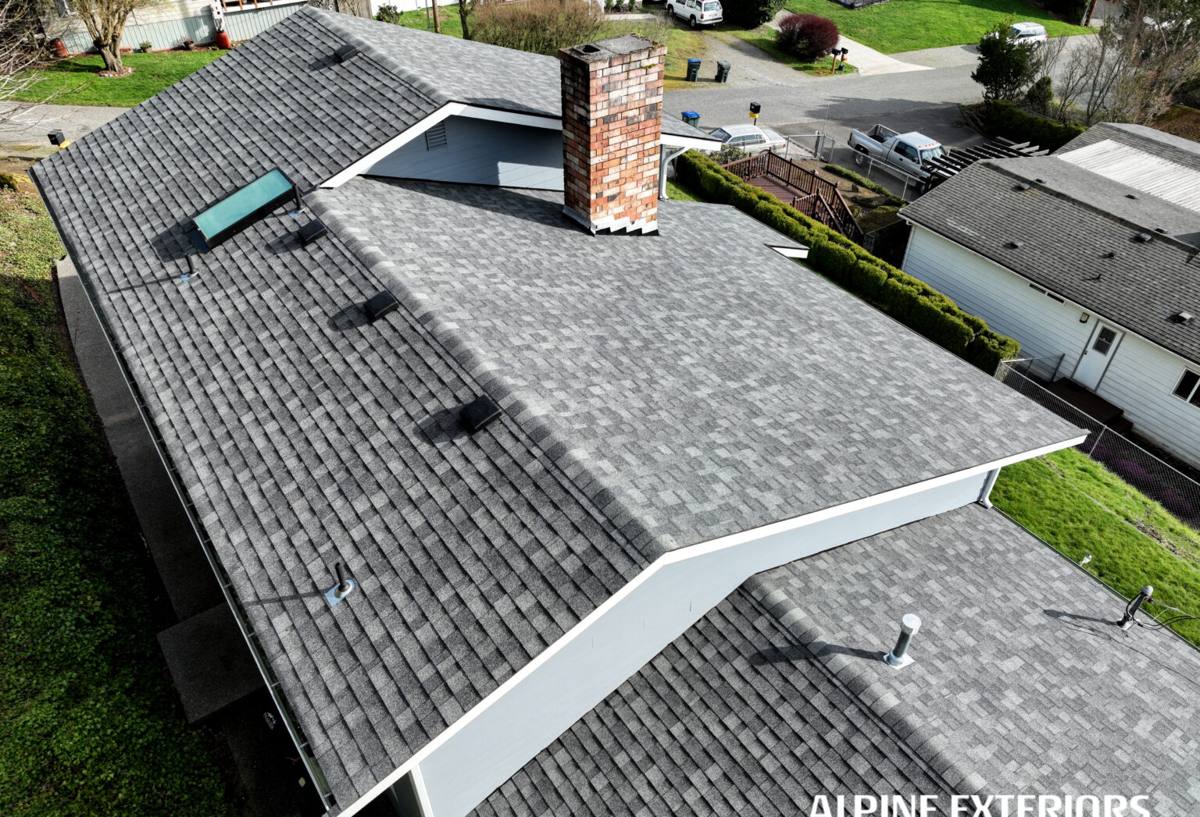
A roof replacement is more than stripping old shingles and nailing down new ones. Done right, it's a system of layered components that each have to perform for the specific conditions the roof will face. On a Cap Sante home, that system needs to account for wind uplift, sustained moisture, and salt exposure from day one.
Deck Inspection and Repair
Once the old roofing is off, the sheathing underneath gets inspected board by board. Salt air doesn't just affect the surface — long-term moisture intrusion from old flashing failures can soften decking in ways that aren't visible from the attic side. Any soft, delaminated, or water-stained sheathing gets replaced before anything new goes down. Skipping this step is one of the most common ways a roof replacement fails early, and it's not something you can verify after the fact without tearing the new roof back off.
Underlayment Built for Wet Cycles
In a climate where the roof deck can stay damp for extended stretches, we use synthetic underlayment rather than older felt products, and we add self-adhered ice-and-water membrane at the vulnerable spots — eaves, valleys, and any roof-to-wall transition — even though Anacortes doesn't see the ice damming that colder inland climates deal with. The membrane earns its keep here by sealing around fasteners and resisting the wind-driven rain that's common on exposed lots near the water.
Flashing That Matches the Exposure
Flashing failures, not shingle failures, are the number one cause of roof leaks. Around chimneys, skylights, dormers, and sidewalls, we use corrosion-resistant flashing and step-flash every course rather than relying on caulk or a single continuous piece bent to fit. In a salt-air environment, cheaper galvanized flashing corrodes faster than it would inland, so material choice at these details matters as much as the installation technique.
Ventilation That Balances Intake and Exhaust
A roof deck that can't breathe traps moisture from the inside, which compounds the problem of wet weather from the outside. We check that intake at the soffits and exhaust at the ridge or roof vents are balanced, not just present. Under-ventilated attics in this climate tend to show it first as sheathing rot and premature shingle aging from underneath.
Material Options for a Salt-Air, Moss-Prone Roof
There's no single "best" roofing material for Cap Sante — the right choice depends on your budget, your roof's slope and exposure, and how much long-term maintenance you're willing to take on. Here's how the common options actually perform in this specific climate.
| Material | Moss & Algae Resistance | Wind / Salt-Air Performance | Typical Lifespan | Relative Cost |
|---|---|---|---|---|
| Standard asphalt composition shingle | Moderate — needs periodic cleaning and moss treatment | Good with proper nailing pattern and sealed fasteners | 20–25 years | Lowest |
| Algae-resistant (AR) composition shingle | Better — copper or zinc granules slow algae/moss growth | Good, same installation requirements as standard shingle | 25–30 years | Low-moderate |
| Standing seam metal | Very good — smooth surface sheds moss more easily | Excellent when fasteners and finish are marine-rated | 40–50+ years | Highest |
| Synthetic composite (shake/slate look) | Good, varies by product | Good, lighter weight than natural shake | 30–50 years depending on product | Moderate-high |
We steer most Cap Sante homeowners toward algae-resistant shingle or metal, specifically because of how much of the year this area spends damp. Standard shingle without algae resistance isn't a bad product, but on a shaded or north-facing slope near the water it can develop visible moss streaking within just a few years, which becomes a recurring maintenance item rather than a one-time install decision. Whatever material you choose, fastener quality matters as much as the shingle or panel itself — we use corrosion-resistant fasteners rated for coastal exposure rather than standard galvanized nails.
Our Roof Replacement Process
- On-site assessment — we inspect the existing roof, attic ventilation, and any visible signs of leak history before quoting anything.
- Written estimate — a clear scope of work and material selection, no vague allowances.
- Permitting — we handle the City of Anacortes permit where required so you don't have to track it down yourself.
- Tear-off and deck inspection — old roofing removed, sheathing checked and repaired as needed.
- Underlayment and flashing installation — the moisture-management layer goes in before any finish material is visible.
- Roofing material installation — installed to manufacturer spec, which is what keeps material warranties valid.
- Ventilation check and cleanup — intake and exhaust confirmed balanced, job site cleared of debris and nails.
- Final walkthrough — we review the finished roof with you before calling the job done.
Signs Your Cap Sante Roof Needs Replacing, Not Just Repair
Not every roof problem calls for a full replacement, but ignoring the wrong signs can turn a repair-scale problem into a full tear-off. Watch for:
- Shingles that are curling, cupping, or losing granules in patches rather than isolated spots
- Moss buildup that returns quickly after cleaning, especially on shaded or north-facing slopes
- Soft or spongy decking felt through the roof surface or visible sagging from the ground
- Daylight visible through the roof boards from inside the attic
- Water staining on interior ceilings that shows up after wind-driven rain specifically
- Flashing that's visibly rusted, lifted, or separated from the roof plane around chimneys and walls
- A roof that's approaching or past the manufacturer's expected lifespan for its material
What Drives the Cost of a Cap Sante Roof Replacement
Every roof is different, and we don't publish blanket per-square pricing because it isn't honest without seeing the roof. That said, the main factors that move the price up or down are consistent:
- Roof size and number of planes — more cuts, valleys, and hips mean more labor and material waste.
- Roof pitch and access — steep or hard-to-access roofs, common on bluff-facing lots, take longer and require more safety setup.
- Deck condition — sheathing replacement is priced as-found once the old roofing is off.
- Material selection — standard shingle, algae-resistant shingle, and metal carry different material and labor costs.
- Layers of existing roofing — a roof with a prior layer left on requires full tear-off, which adds labor.
- Flashing and ventilation scope — older homes often need more flashing detail work than newer construction.
Why Local Cap Sante Experience Matters
A crew that already works this specific area knows things a generalist roofing company from outside Skagit County has to learn on your dime. We know which slopes in the Cap Sante area take the worst of the wind off the water, which lots hold moisture longest into the summer, and how to sequence a tear-off around this region's unpredictable weather windows so your home isn't exposed overnight when it doesn't need to be. We're also familiar with the City of Anacortes permitting process, which keeps your project moving instead of stalled on paperwork. That local familiarity shows up less in any single dramatic decision and more in a dozen small ones — fastener spec, flashing detail, material recommendation — that add years to a roof's service life in this particular climate.
Protecting Your Investment After Replacement
A correctly installed roof still benefits from basic upkeep in this climate. Keep gutters and downspouts clear so water isn't backing up under the eaves. Have moss growth addressed early with a proper treatment rather than pressure washing, which can strip granules and shorten shingle life. A quick visual check after major windstorms — looking for lifted shingles or displaced flashing — catches small problems before they become interior water damage. None of this is heavy maintenance, but skipping it entirely is how a well-installed roof underperforms its expected lifespan.
If your roof is showing its age or you just want an honest read on its condition, we're happy to take a look. Fill out the form below for a free, no-pressure estimate on your Cap Sante home.