 Anacortes Siding
 Building a Deck That Holds Up in Old Town Anacortes
Old Town Anacortes sits close to the water, and that proximity shapes everything about how a deck should be built here. Salt-laden air moves in off the water and settles on every exposed surface, driving rain comes in sideways more often than it falls straight down, and the wet season stretches long enough that moss and algae get a real foothold on anything that stays damp. A deck built the way it might be built forty miles inland, away from Skagit County's marine air, will show its age here years ahead of schedule. A deck built for this specific setting can go the distance.
This page covers what we look at when we build or rebuild a deck for a home in Old Town Anacortes: material choices, framing details, drainage, hardware, and the maintenance realities that come with living this close to saltwater. None of this is exotic. It's mostly about not skipping the details that a marine climate punishes.
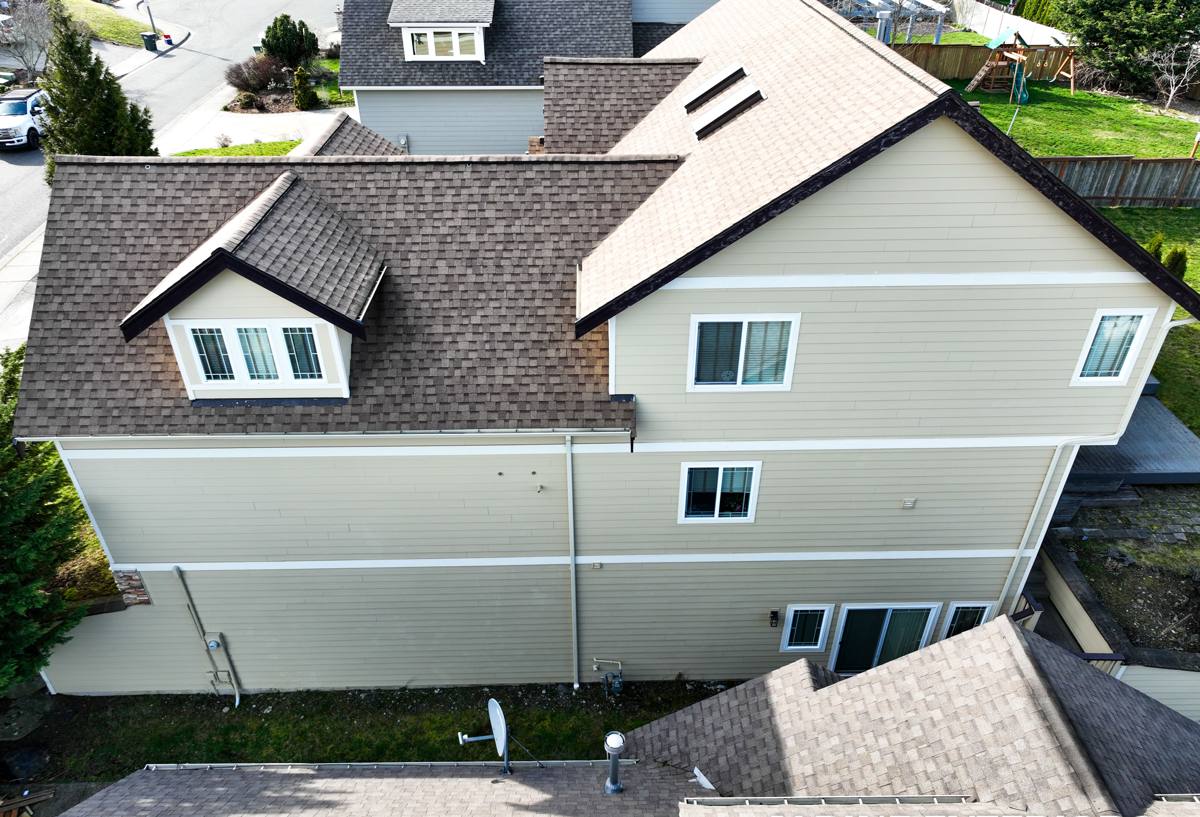
What Salt Air and Driving Rain Do to a Deck Over Time
Salt air is corrosive to metal, full stop. Fasteners, joist hangers, post bases, and railing hardware that aren't rated for coastal exposure will start showing rust streaks and pitting well before an inland deck's hardware would. Once a fastener starts to corrode, it loses holding strength quietly — you often don't see the problem until a board lifts or a railing feels loose.
Driving rain adds a second layer of stress. Wind-blown rain doesn't just fall on the deck surface; it gets pushed sideways into ledger connections, under railing posts, and into any gap where flashing wasn't detailed correctly. Water that gets behind a ledger board or into a post base and can't drain back out is one of the most common reasons we find rot in decks that otherwise look fine from a distance.
Add in the region's long stretch of overcast, damp weather, and you get surfaces that rarely get a chance to fully dry out between rain events. That's the combination — salt, wind-driven moisture, and slow drying — that a properly built deck in this neighborhood has to be designed around.
Framing and Structure: Getting the Bones Right
Ledger Attachment and Flashing
The ledger board — where the deck attaches to the house — is the single most important connection on the whole structure, and it's also the spot most vulnerable to water intrusion. We flash it properly with a continuous drainage plane so any water that reaches that joint sheds away from the house rather than soaking into the rim joist. This is one detail that's genuinely hard to fix after the fact without pulling decking, so it has to be right the first time.
Footings and Post Bases
Footings need to be sized and set to local frost depth and soil conditions, and post bases need to hold the post up off the concrete so it never sits in standing water. In a climate this wet, that gap between wood and concrete is what keeps post bottoms from wicking moisture for months at a time.
Joist Protection
Joist tops take a beating from standing water and sun-and-rain cycling. We use joist tape or another moisture barrier along the top of every joist before decking goes down, which meaningfully slows down the rot that otherwise starts exactly where the deck boards are fastened.
Choosing Decking Material for a Marine Climate
There's no single "correct" decking material for every project — it depends on budget, how much maintenance a homeowner wants to take on, and how the deck will be used. Here's how the common options actually perform close to Skagit County's saltwater and moss-prone conditions.
| Material | Moisture & Salt Air Behavior | Maintenance | Typical Cost Position |
|---|---|---|---|
| Pressure-treated fir/hem-fir | Good rot resistance when properly sealed; hardware corrosion is the main risk factor | Needs re-sealing every 1-2 years in this climate | Lowest upfront cost |
| Western red cedar | Naturally rot- and insect-resistant; still needs finish maintenance against gray-out and moss | Regular cleaning and refinishing to keep appearance and protection | Mid-range |
| Composite decking | Doesn't rot, but can grow surface algae/moss in shaded, damp spots without cleaning | Low — periodic washing, no sealing or staining | Higher upfront, lower long-term labor |
| PVC/capped polymer decking | Fully sealed surface resists moisture intrusion and salt staining well | Lowest — occasional washing | Highest upfront |
We'll walk through these trade-offs honestly for your specific deck — there isn't a product we push regardless of fit. What matters more than the brand name on the board is whether the framing underneath, the fasteners holding it together, and the drainage beneath it are built to the same standard.
Fasteners and Hardware: The Detail That Gets Skipped Most Often
This is where corners get cut on a lot of decks, and it's the corner that matters most in a salt-air environment. Standard galvanized fasteners can start corroding within a few years this close to the water. We build with stainless steel or heavy hot-dip galvanized fasteners and connectors rated for coastal/corrosive exposure, and we make sure hardware is compatible with whatever decking and framing material is used — mixing incompatible metals accelerates corrosion in both.
- Stainless steel or coastal-rated hot-dip galvanized structural connectors (joist hangers, post bases, hurricane ties)
- Corrosion-resistant deck screws matched to the decking material manufacturer's fastener specification
- Flashing and ledger hardware rated for continuous moisture exposure, not just splash contact
- Railing post hardware sized and fastened to meet current structural requirements, not just what was allowed decades ago
Moss, Algae, and the Long Wet Season
Anacortes' extended damp season means moss and algae growth on deck surfaces isn't a matter of if but when, especially on the shaded or north-facing side of a house. A deck can be built to slow this down considerably:
Spacing and Ventilation
Proper gapping between boards and adequate airflow underneath the deck lets surfaces dry between rain events instead of staying damp for days. Decks built too low to the ground or without enough under-deck ventilation are the ones we see with the worst moss buildup.
Surface Texture and Grain Direction
Some decking profiles hold onto grime and moisture in surface grooves more than others. We factor this into material selection when a homeowner tells us moss control is a priority.
Realistic Maintenance Expectations
No deck in this climate is maintenance-free. Even the lowest-upkeep composite and PVC products benefit from an occasional wash-down to keep organic growth from getting established. We'll tell you upfront what kind of maintenance schedule to expect with whatever material you choose, rather than let a "low-maintenance" label create the wrong expectation.
Our Deck Building Process
Whether it's a new deck or a rebuild of an aging one, our process for Old Town Anacortes projects looks like this:
- On-site assessment of the existing structure (for rebuilds) or the site conditions and drainage patterns (for new builds)
- Material and layout consultation, including honest trade-offs between options for your budget and maintenance preferences
- Permit handling through the City of Anacortes where required for the scope of work
- Demolition and disposal of the old structure, if applicable, with attention to what the existing ledger and framing reveal about moisture history
- Framing, ledger flashing, and footing work built to current code and coastal-exposure hardware standards
- Decking, railing, and stair installation
- Final walkthrough covering the maintenance schedule specific to the materials installed
Railings, Stairs, and Code Requirements
Railing height, baluster spacing, guard requirements, and stair geometry are governed by current building code, and these requirements get enforced during permitted work in Anacortes. Older decks in Old Town were often built to whatever standard was current decades ago, and a rebuild is a natural point to bring railings and stairs up to current code — particularly important on decks with any real height above grade, which is common on homes situated on sloped lots near the water.
We also pay attention to how railing posts are fastened, since this is another spot where corrosion-prone hardware or an under-built connection shows up as a safety issue down the road, not just a cosmetic one.
Signs Your Existing Deck Needs Attention
If you're not sure whether your current deck needs a repair, a partial rebuild, or a full replacement, these are the signs worth checking before the wet season sets in:
- Soft or spongy spots in the decking, especially near the ledger board or post locations
- Rust staining running down from fasteners, hangers, or railing posts
- Visible gaps or separation where the deck meets the house
- Persistent moss or dark staining that keeps returning shortly after cleaning
- Railings or stair stringers that feel loose or flex under weight
- Wood that's gone gray and splintery with no protective finish left
- Ledger flashing that's cracked, missing, or was never installed correctly
Why Local Experience in Old Town Anacortes Matters
A deck built for a dry inland climate and a deck built for a home exposed to Skagit County's marine air aren't the same project, even if they look identical from the street. A crew that already works in Old Town Anacortes knows what the salt air does to standard hardware over five years, knows which sides of a house tend to hold moss the longest, and knows how to sequence a build around this area's wet stretches so framing doesn't sit exposed to rain any longer than necessary. That familiarity shows up in fewer callbacks and a deck that still looks and performs well well past the point where a corner-cut version would be showing problems.
If you're planning a new deck or thinking about whether your existing one needs a repair or rebuild, we're happy to take a look and give you a straightforward assessment. There's no pressure and no cost to get an estimate — just a clear picture of what your deck needs and what it would take to build it right for this climate.