 Anacortes Siding
 Why West Anacortes Decks Wear Out Faster Than the Manual Says
Every deck manufacturer publishes a lifespan estimate, and almost none of those numbers were calculated with Fidalgo Island weather in mind. West Anacortes sits close enough to the water that salt-laden air is a daily fact of life, not an occasional event. That air finds every exposed fastener, every joist hanger, and every cut end of lumber that wasn't sealed before it went into the ground or against a ledger board. Combine that with Skagit County's long, wet winters and the shoulder-season drizzle that can linger for weeks, and you get decks that hold moisture far longer each year than the same structure would in a drier climate.
Then there's moss. Anacortes homeowners already know it colonizes roofs, but it's just as happy on a shaded deck surface, especially under trees or on the north side of a house where sun rarely reaches. Moss and algae hold moisture against the decking material, and on wood surfaces that moisture retention accelerates rot from the top down, not just from the underside where most people think to check.
None of this means a deck in West Anacortes is doomed. It means a deck built or replaced here needs details — flashing, fastener choice, ventilation, drainage — that a generic install in a milder or drier region can get away with skipping.
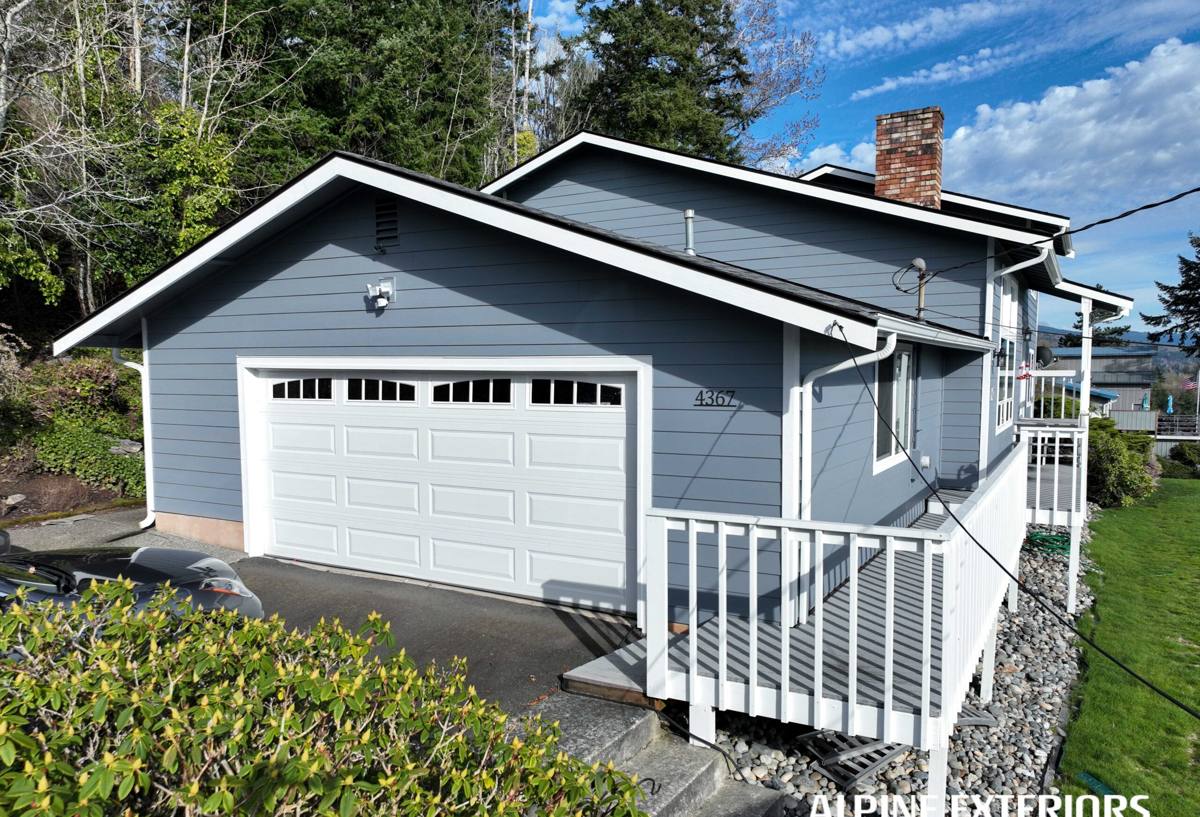
Signs a Deck Needs Replacement, Not Another Repair
We get called out plenty of times to look at a deck the owner assumed just needed a board swapped or a re-stain. Sometimes that's true. Often, once we're actually down at ledger level or checking the posts, it isn't. Here's how to tell the difference before you spend money on the wrong fix.
- Soft or spongy spots underfoot, especially near the house or stair stringers
- Rust streaking or crumbling around joist hangers and structural screws
- Gaps or separation where the deck ledger meets the house — a common moisture entry point
- Persistent green or black staining that returns within weeks of cleaning
- Posts that feel loose or show soft wood when probed with a screwdriver at the base
- A deck older than 15–20 years that has never had the substructure inspected
Surface-level problems — faded stain, a few cracked boards, loose railing balusters — are usually repairable. Structural problems at the ledger, posts, footings, or joists are the point where replacement becomes the honest recommendation, because patching a compromised frame just delays a bigger failure.
What a Correct Deck Replacement Actually Involves
The Ledger Connection
The board that attaches the deck to your house is the single most important — and most commonly under-built — part of the whole structure. In a climate that sees as much driving rain as this one, the ledger needs proper flashing that sheds water away from the house sheathing, not just a bead of caulk and a hope. We treat this connection as the first thing we inspect and the last thing we cut corners on.
Footings and Posts
Footings need to sit below frost depth and bear on undisturbed, stable soil. On a lot with heavier clay or poor drainage — not unusual around Anacortes — that sometimes means larger or deeper footings than a cookie-cutter plan calls for. Post bases should hold the post above the decking surface and off standing water, always.
Framing and Fasteners
In a salt-air environment, fastener choice isn't a minor spec — it's the difference between hardware that lasts and hardware that streaks rust through your decking within a couple of years. We use corrosion-resistant, coated fasteners and hangers rated for the treated lumber or composite framing being used, and we space joists to match whatever decking material goes on top.
Drainage and Airflow
A deck that can't breathe underneath traps moisture no matter how good the materials are. Grading under the deck, gapping between boards, and keeping vegetation clear of the underside all matter more here than in a dry-summer climate, because the ground stays damp for a much larger share of the year.
Choosing a Decking Material for This Climate
There's no single "best" decking material — there's a best fit for your budget, your maintenance appetite, and how much shade and moss exposure your specific site gets. Here's how the common options actually compare once you factor in West Anacortes conditions.
| Material | Moisture Behavior | Maintenance | Typical Lifespan Here |
|---|---|---|---|
| Pressure-treated lumber | Absorbs and releases moisture; needs sealing to manage swelling/checking | Annual cleaning, re-sealing every 1–3 years | 10–15 years with upkeep |
| Cedar | Naturally rot-resistant but still absorbs moisture without finish | Regular sealing, more prone to moss staining if unmaintained | 15–20 years with upkeep |
| Composite decking | Doesn't absorb water into the board itself; surface can still hold moss film | Periodic cleaning, no staining/sealing | 25+ years, varies by brand and core type |
| PVC decking | Fully moisture-resistant board material | Lowest maintenance; occasional cleaning | 25+ years |
Our honest take: in a climate this wet, the ongoing maintenance burden of sealing and staining wood is the real cost most homeowners underestimate. Composite and PVC cost more up front but remove that yearly obligation. Cedar still has a place where the look matters more than long-term upkeep and the owner is committed to staying on top of it. We'll walk through the trade-offs for your specific site rather than push one product line.
How We Handle a Replacement Project
- On-site assessment — we inspect the existing structure down to the ledger, posts, and footings, not just the surface, so you know what's actually driving the decision to replace.
- Scope and material walkthrough — we go over decking, railing, and fastener options against your budget and how the space gets used and shaded.
- Permitting — deck replacements of significant size or height typically require a permit through the City of Anacortes or Skagit County depending on the property; we handle that process rather than leaving it on you.
- Demo and disposal — full removal of the old structure, checked for any hidden rot at the house connection before framing begins.
- Rebuild — ledger flashing, footings, framing, decking, and railing installed to code and to the details this climate actually requires.
- Final walkthrough — we go over the finished deck with you, including what maintenance (if any) the material you chose will need going forward.
What Drives the Cost of a Deck Replacement
| Factor | Why It Matters |
|---|---|
| Deck size and height | Larger square footage and multi-level decks require more material and framing complexity |
| Decking material chosen | Wood, composite, and PVC carry different material costs per square foot |
| Substructure condition | Rotted footings, posts, or ledger framing add rebuild scope beyond the surface |
| Railing and stairs | Style, material, and code-required height/spacing affect labor and materials |
| Site access | Tight lots, slopes, or limited equipment access can add labor time |
| Permit requirements | Larger or elevated decks typically require inspection at multiple build stages |
We won't quote a number without seeing the site, but these are the variables that actually move the price — worth knowing before you compare estimates.
Why Hiring a Crew That Already Works West Anacortes Matters
A deck built to a generic national code minimum will pass inspection. Whether it holds up here depends on details that a crew learns from working this specific coastline year after year — which fastener finishes actually resist the salt air, which yards need extra footing depth because of drainage, where moss takes hold fastest and how to design around it. We're an Anacortes-based crew, and Skagit County's climate is the only climate we build for. That's not a marketing line — it's the reason we default to certain flashing and fastener choices that a crew from a drier region might treat as optional.
Questions Worth Asking Any Contractor Before You Hire
- Will you inspect the ledger, posts, and footings, or just replace the visible decking?
- What fastener and flashing details do you use specifically for coastal moisture exposure?
- Who pulls the permit, and is that included in the quote?
- What's the actual maintenance schedule for the material you're recommending?
- Can you explain footing depth and spacing for this specific lot's soil, not just a standard plan?
If your deck in West Anacortes is showing its age, or you just want an honest opinion on whether it needs repair or full replacement, we're happy to take a look. Reach out for a free, no-pressure estimate — use the form below to get started.