 Anacortes Siding
 Asphalt Shingle Roofing in Edison, Washington
Edison sits low in the Skagit Valley, close enough to Samish Bay and the tidal flats that salt-laden air is a constant companion to anything on a roofline. Add in Western Washington's long wet season and the shade from mature trees that ring so many Edison properties, and you have a climate that is genuinely hard on asphalt shingles compared to drier inland areas. We install and replace asphalt shingle roofs for homes in Edison and the surrounding rural Skagit County area, and we build every roof around what actually wears these systems out here: moisture that lingers, moss that takes hold in shaded valleys, and wind-driven rain that finds any weak point in flashing or underlayment.
This page covers what an asphalt shingle roof needs to hold up in Edison's conditions, what a properly done installation or replacement actually involves, and how we approach the job from first look to final walk-through.
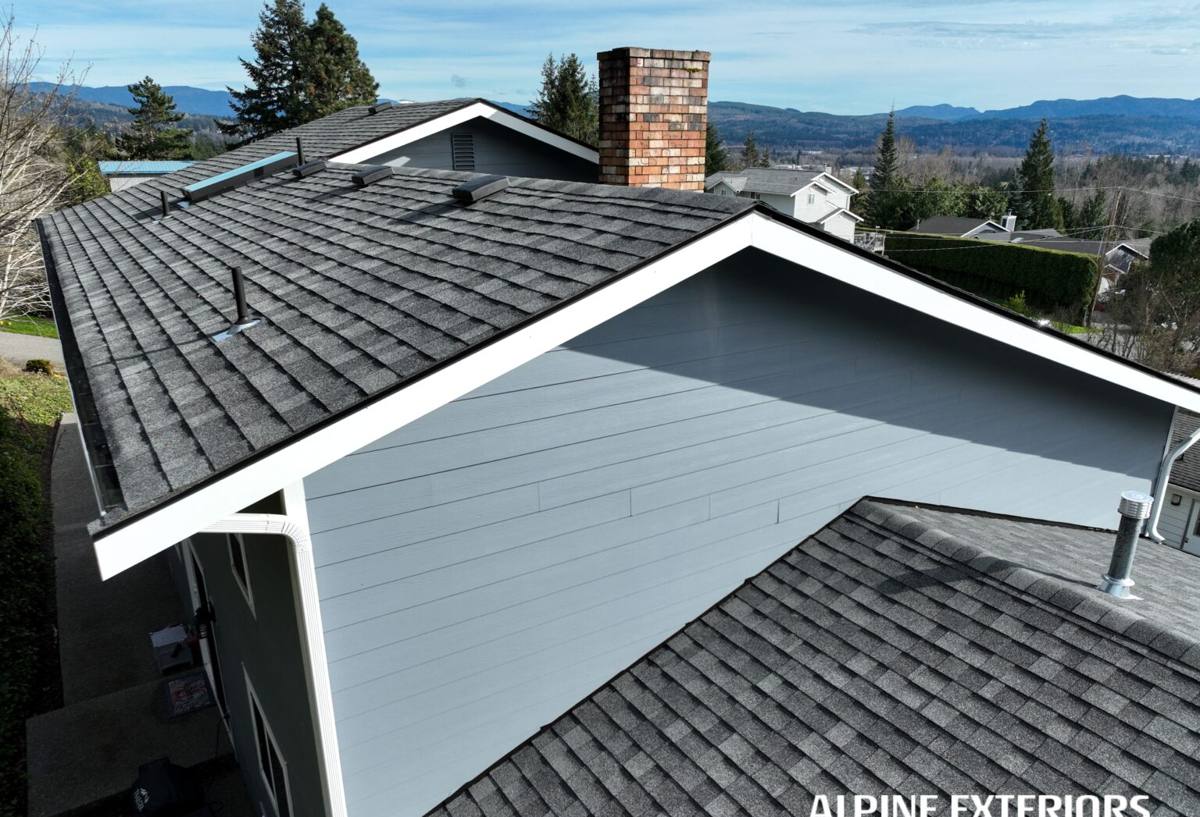
Why Edison's Climate Is Tougher on Shingles Than It Looks
Asphalt shingles are a proven, cost-effective roofing product across most of the country, but they perform very differently depending on exposure. A few things stack up against roofs in Edison specifically:
- Salt air corrosion: Being close to Samish Bay means metal components — flashing, fasteners, vent stacks, drip edge — face accelerated corrosion compared to roofs further inland. Cheap or mismatched metal fails faster here.
- Moss and shade: Edison's mix of open farmland and tree-lined properties means many roofs sit in partial shade for large parts of the day. Shaded, north-facing slopes stay damp longer after rain, which is exactly what moss and algae need to establish.
- Driving rain: Storms coming off the water tend to push rain sideways rather than straight down. That matters for how shingles are lapped, how deep nails are driven, and how much attention flashing gets around valleys, chimneys, and wall intersections.
- Extended wet season: Long stretches of low-intensity rain from fall through spring mean a roof rarely gets a true dry-out period. Any small gap in the system has more time to do damage before anyone notices.
None of this means asphalt shingles are the wrong choice for Edison — they remain one of the most practical, budget-sensible roofing materials available, and a well-installed system handles this climate fine for decades. It does mean the installation details matter more here than they would in a drier region, and cutting corners shows up sooner.
What a Correct Installation Looks Like
Starting Below the Shingles
The shingles themselves get most of the attention, but the layers underneath do most of the work keeping water out during a coastal storm. A correct install for this area includes:
- Synthetic or felt underlayment installed with proper overlap, run in the correct direction relative to typical wind-driven rain
- Ice-and-water shield style membrane at eaves, valleys, and around any roof penetration — the spots where wind-driven rain is most likely to work its way underneath
- Properly lapped and sealed flashing at every chimney, skylight, and wall intersection, using metal that won't corrode quickly in salt air
- Correct nailing pattern and nail depth — overdriven or underdriven nails are one of the most common causes of early shingle failure and wind loss
- Balanced attic ventilation, so moisture from inside the home isn't adding to what the roof deck already deals with from outside
Shingle Selection for This Area
We generally steer homeowners toward algae-resistant shingle lines for Edison properties, particularly on shaded roof slopes. These shingles use copper-containing granules that slow algae and moss growth compared to standard shingles. It's not a permanent fix — nothing is, given how much moisture this area sees — but it meaningfully extends the time between cleanings and reduces staining. We'll talk through weight class, wind rating, and warranty structure based on your roof's exposure, rather than defaulting to whatever is cheapest.
Our Process, Start to Finish
- On-site inspection: We look at the roof deck condition, existing ventilation, flashing points, and how much shade and moss exposure each slope actually gets — not just a drive-by estimate.
- Honest scope and pricing: You get a written estimate that spells out materials, tear-off (if needed), and any deck repair that shows up once old shingles come off.
- Tear-off and deck check: Old material comes off down to the deck so we can actually see the wood underneath. Soft or rotted decking gets replaced before anything new goes down — no roofing over hidden damage.
- Underlayment and flashing first: This is where the real weatherproofing happens, and it's the step that's easiest to rush and hardest to inspect after the fact.
- Shingle installation: Installed to manufacturer spec for nailing pattern, exposure, and starter course — the details that determine wind performance down the road.
- Cleanup and walk-through: Job site cleared of debris and nails, and we walk the finished roof with you before calling it done.
Repair, Replacement, or Maintenance — Knowing Which You Need
Not every roof issue in Edison means a full replacement. A lot of what we see is fixable with targeted repair or a maintenance visit, especially if it's caught before water gets past the shingles into the deck. Signs worth having looked at:
| What You're Seeing | Likely Cause | Typical Response |
|---|---|---|
| Dark streaking on north-facing slopes | Algae growth from prolonged dampness | Soft wash and inspection; algae-resistant shingles at next replacement |
| Green/thick moss patches | Shaded areas holding moisture too long | Careful moss removal, gutter and debris clearing, possible flashing check |
| Granules collecting in gutters | Normal aging or wear from wind-driven rain | Inspection to determine remaining shingle life |
| Curling or cupped shingles | Age, heat cycling, or ventilation issues | Localized repair if isolated, replacement if widespread |
| Water staining on interior ceilings | Flashing failure or worn underlayment | Prompt inspection — this one shouldn't wait |
| Missing or lifted shingles after a storm | Wind damage, often at ridges or edges | Repair, usually straightforward if addressed quickly |
If you're not sure which category your roof falls into, that's a reasonable thing to have us look at rather than guess about. Catching a flashing problem early is a repair; ignoring it through another wet season can turn it into a deck replacement.
Maintenance That Actually Extends Roof Life Here
Given how much moss and moisture pressure Edison roofs deal with, a bit of regular attention pays off more here than in drier climates. A practical maintenance routine:
- Clear gutters and downspouts at least twice a year — clogged gutters back water up under the shingle edge
- Trim back overhanging branches to cut down on shade and debris buildup on the roof
- Have moss removed properly rather than scraped, which can lift granules and shorten shingle life
- Schedule a walk-on inspection after any major windstorm, not just when a leak shows up
- Keep an eye on flashing around chimneys and skylights, since these are the first points to fail in salt-air corrosion
What a Roof Costs Here — Honest Ranges
Pricing depends heavily on roof size, pitch, number of penetrations, tear-off complexity, and shingle grade chosen, so we won't quote a number without seeing the roof. In general terms, asphalt shingle replacement costs scale with square footage and complexity — a simple, accessible gable roof runs less than a steep roof with multiple valleys, dormers, and chimneys. Algae-resistant and heavier-weight shingle lines cost more upfront than basic three-tab shingles but typically make sense for shaded Edison properties given how much they reduce moss and algae maintenance over the roof's life. We'll walk through the actual trade-offs for your specific roof during the estimate rather than push a particular price point.
Why a Crew That Already Works Edison Matters
Edison is a small, spread-out community, and roofing here isn't identical to roofing in downtown Anacortes or further inland in Skagit County. A crew that regularly works this specific area already knows which slopes tend to hold moss, how far salt-air corrosion typically travels from the water, and what kind of storm exposure to expect from Samish Bay weather patterns. That local familiarity shows up in small decisions — which flashing metal to spec, where to add extra underlayment protection, how aggressively to ventilate an attic — that a crew unfamiliar with the area might not think to prioritize. It also means we're not learning the local building department's expectations or permit process for the first time on your project.
Get a Straightforward Estimate
If your Edison roof is showing moss, staining, or storm damage, or you're simply due for a replacement, we're glad to come take an honest look. There's no pressure and no obligation — just a clear assessment of what your roof actually needs and straightforward pricing to go with it. Use the form below to request your free estimate.