 Anacortes Siding
 Windows Built for Edison's Particular Kind of Weather
Edison sits low in the Samish Flats, close enough to the bay that salt air is just part of the daily weather, and open enough that wind-driven rain comes through with nothing much to slow it down. Add in a wet, shaded season that keeps moss and algae going most of the year, and you've got a climate that is genuinely harder on windows than a lot of other parts of Skagit County. Homes here take a beating that homes twenty miles inland simply don't.
We work on houses throughout Anacortes and the surrounding Skagit County communities, and Edison's older farmhouses, converted outbuildings, and mixed-vintage homes are some of the trickiest window jobs we see — not because the work itself is exotic, but because the existing openings, framing, and siding conditions are rarely standard. Custom windows aren't a luxury upgrade out here; they're often the only way to get a window that actually fits, seals, and survives.
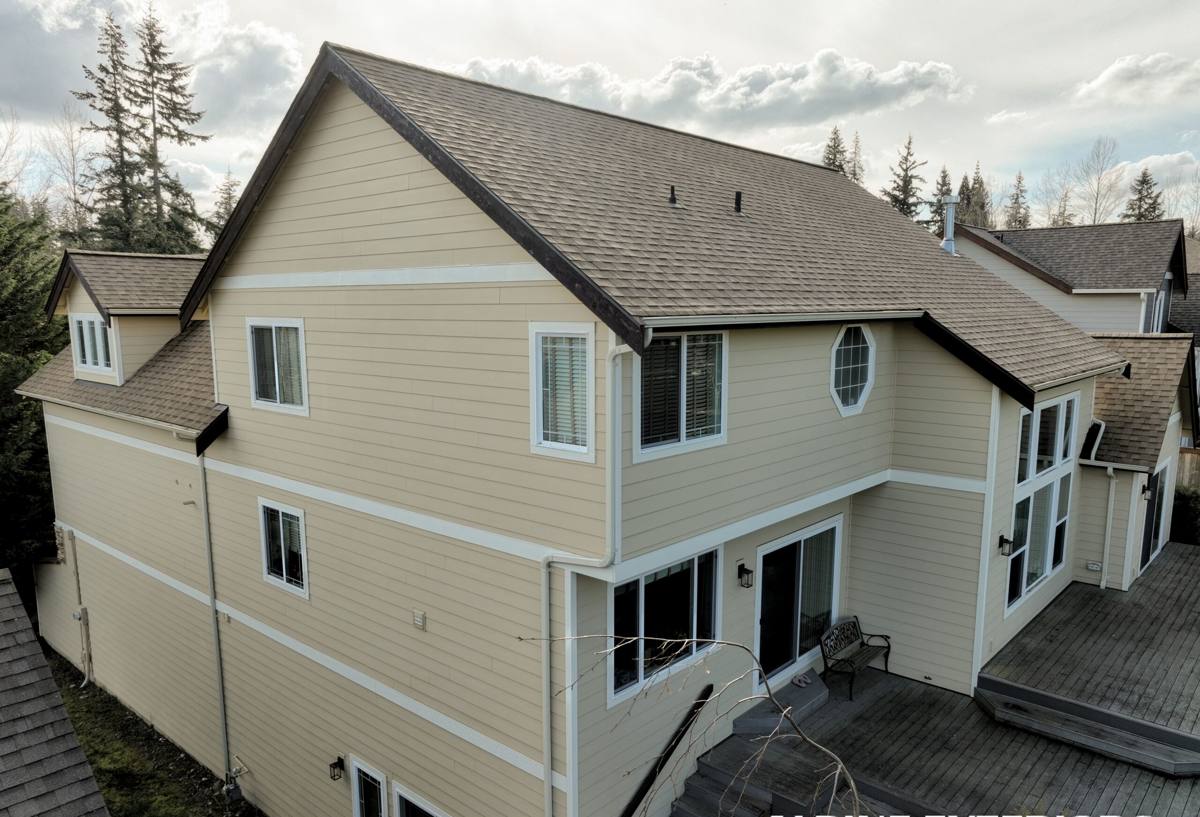
What Salt Air, Rain, and Moss Actually Do to a Window
Salt Air and Metal Fatigue
Airborne salt from the bay settles on everything, including window hardware, screen frames, and any exposed fasteners. Over years, it accelerates corrosion on lower-grade hardware, pits aluminum components, and can work its way into weep holes and tracks. It's slow damage — you don't see it happen — but it shows up eventually as stiff locks, pitted sills, and hardware that won't operate smoothly.
Driving Rain and Wind-Loading
Edison's open exposure means rain rarely falls straight down. It hits window faces at an angle, under pressure, especially during winter storms. A window that would perform fine in a sheltered neighborhood can leak here if the flashing detail, sill pan, or sealant isn't matched to that horizontal force. This is one of the most common reasons we get called out to older homes: not a bad window, but a window installed for a gentler climate than the one it's actually in.
Moss, Algae, and Trapped Moisture
Long wet seasons and shaded sites keep moisture sitting on wood trim, sills, and lower sash rails longer than in drier parts of Skagit County. That constant dampness is exactly what moss and algae need to take hold, and once they're established on wood trim they hold even more moisture against the surface. On older wood-frame windows this is frequently the actual cause of rot — not one bad storm, but years of moss holding water against wood that was never sealed to handle it.
Why "Custom" Matters More in Edison Than in a New Subdivision
A lot of the housing stock in and around Edison predates modern standard window sizing. Farmhouses, older cottages, and buildings that have been added onto or repurposed over the decades often have openings that are slightly out of square, non-standard dimensions, or built around framing that's shifted over time. Ordering a stock-size replacement window for one of these openings usually means either forcing a bad fit or building out a frame with extra material that creates new gaps and new places for water to get in.
Custom-sized and custom-built windows solve this the right way: the window is built to match the actual opening, not the other way around. That matters even more here because every gap, shim, or improvised fill point is a future leak path in a climate that's already testing every seam in your building.
Choosing Frame Materials for a Salt-Air, High-Moisture Environment
Not every window material handles this climate the same way. We talk homeowners through the real trade-offs rather than pushing one product line, because the right choice depends on the specific home, its exposure, and the look you're going for.
| Frame Material | Salt Air / Corrosion | Moisture & Rot Resistance | Maintenance |
|---|---|---|---|
| Vinyl | Very good — no metal corrosion | Good; won't rot | Low — occasional cleaning |
| Fiberglass | Excellent — highly stable | Excellent; minimal expansion/contraction | Low |
| Wood-clad | Good on the exterior clad face | Depends heavily on install and sealing | Higher — interior wood, seams need monitoring |
| Bare aluminum | Poor without upgraded finish/hardware | Fair; prone to condensation | Higher near salt air |
We generally steer homes with direct bay exposure toward vinyl or fiberglass for the frame, with attention paid to the hardware grade specifically — cheaper hinges and locks are the first thing salt air attacks, regardless of what the frame is made of. If a homeowner wants the look of wood on the interior, wood-clad options can still work, but only when the exterior cladding and flashing details are done correctly, because that's the piece that actually faces the weather.
What a Correct Installation Actually Involves
The Opening Comes First
Before any window goes in, we check the framing for square, look for existing rot or water staining, and confirm the opening is solid. Installing a new window into a compromised opening just hides a problem instead of fixing it — and in this climate, hidden moisture problems don't stay hidden for long.
Flashing and Sill Pan Details
This is the detail that matters most for wind-driven rain. A proper sill pan and correctly lapped flashing direct any water that gets past the window itself back outside the wall assembly, rather than letting it sit against framing. It's not a visible part of the finished job, but it's the part that determines whether the window is still dry in ten years.
Sealing Without Trapping Moisture
Sealant matters, but so does knowing where not to seal. A window assembly needs to shed water outward, and sealing every possible gap can trap moisture inside the wall instead of letting it drain. We build in the right drainage path first, then seal the joints that are supposed to be sealed.
Our Process for Edison Custom Window Jobs
- On-site assessment — we measure the actual openings, check framing condition, and look at sun/wind/rain exposure for that specific side of the house.
- Material and style discussion — we walk through frame material, glass options, and styling based on your home's exposure and your budget, honestly flagging trade-offs rather than upselling.
- Custom fabrication — windows are built to the true opening dimensions rather than forced into a stock size.
- Removal and opening prep — old windows come out carefully, and we address any rot, moss staining, or framing issues we find before anything new goes in.
- Installation with proper flashing and sill pans — the part that actually determines long-term performance.
- Final sealing, hardware check, and walkthrough — we confirm smooth operation and go over basic care with you before we leave.
Why a Crew That Already Works Edison Matters
Window installation isn't the same job everywhere in Skagit County. A crew that mostly works drier, more sheltered inland areas may not think twice about a detail that's genuinely load-bearing for a home exposed to Samish Bay wind and salt air. We work across Anacortes and the surrounding communities, and Edison's exposure is something we plan for specifically — not as an afterthought, but as the starting point for material choice and installation detail.
That local pattern recognition also shows up in diagnosis. When a homeowner calls about a window that's fogging, sticking, or showing moss at the sill, knowing the area means we usually have a good idea what we're looking at before we even arrive, because we've seen the same climate cause the same problems on similar homes nearby.
What Drives the Cost of a Custom Window Job
Every home is different, but a few factors consistently move the price up or down:
- Opening condition — rot repair or framing correction adds labor before the window ever goes in.
- Non-standard sizing — true custom dimensions cost more than stock sizes but avoid forced fits.
- Frame material — fiberglass and higher-grade vinyl typically cost more upfront than basic vinyl or aluminum but need less attention over time.
- Number and location of windows — bay-facing and wind-exposed windows may warrant upgraded flashing details.
- Glass package — double vs. triple pane, and any coatings for glare or heat, affect both comfort and price.
- Access and site conditions — second-story or hard-to-reach windows add labor time.
We give straightforward, itemized numbers so you know what you're paying for and why, rather than a single lump figure that hides where the cost is actually going.
Keeping New Windows Performing in This Climate
A well-installed custom window still benefits from a little seasonal attention, especially given the salt air and moss pressure Edison sees:
- Rinse salt residue off exterior frames and hardware a couple of times a year, more often if the home faces open water directly.
- Keep gutters and downspouts clear so runoff isn't sheeting down across window heads.
- Check weep holes at the base of the frame periodically to make sure they're not clogged with debris or moss.
- Trim back vegetation or anything shading the window that's keeping moisture sitting on the frame or sill.
- Operate locks and hardware periodically even on windows you don't open often, so salt air doesn't get a chance to seize them up unnoticed.
If you're weighing whether to repair, replace, or fully customize the windows on an Edison-area home, we're happy to take a look and give you a straight read on what the openings actually need. Fill out the form below for a free, no-pressure estimate.