 Anacortes Siding
 Siding Replacement Built for Edison's Weather, Not Just Any Weather
Edison sits in the low, open farmland of Skagit County, close enough to Samish Bay and Padilla Bay to catch the same marine air, driving rain, and long gray moss season that shapes homes all along this stretch of the Anacortes area. Siding here isn't just a cosmetic layer — it's the thing standing between a house and a climate that never really dries out for long. A siding replacement done right in Edison looks different from one done in a dry inland town, and that difference shows up in the materials we use, the details we flash, and the way we sequence the job.
This page covers what siding replacement actually means for a home in and around Edison: what the local climate does to siding over time, what a correct installation involves, and why we've standardized on one product system instead of offering a menu of options.
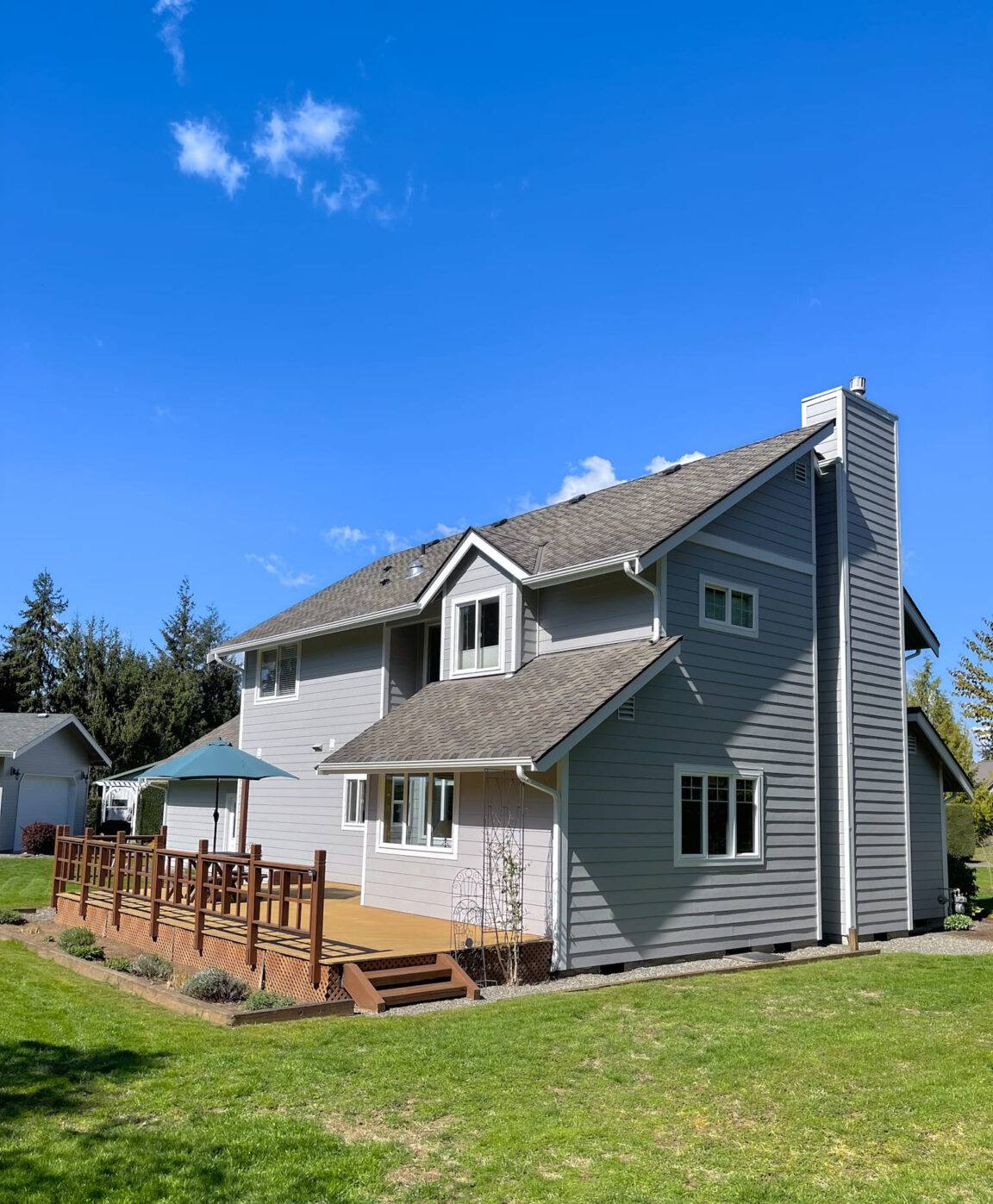
What Salt Air, Rain, and Moss Actually Do to Siding
Homeowners in this part of Skagit County deal with three climate stressors working together, not separately:
Salt-Laden Air
Proximity to Samish Bay and Puget Sound means the air carries fine salt particulate, especially on windier days. Over years, that salt film accelerates corrosion on exposed fasteners and metal trim, and it works into any small crack or seam in a siding surface, holding moisture there longer than plain rainwater would.
Driving Rain
Rain in this region rarely falls straight down. Wind off the water pushes it sideways into wall assemblies, which means the water-resistive barrier, flashing, and lap details behind the siding matter as much as the siding itself. A product that looks fine on the surface can still let water track behind it if those details were rushed.
Moss and Sustained Dampness
Shaded sides of a house, especially north- and west-facing walls near trees or outbuildings common on Edison's rural lots, can stay damp for weeks at a stretch during fall and winter. Moss and algae take hold on porous or textured surfaces that hold moisture, and once established, they keep the substrate underneath wetter than it should be.
Any one of these is manageable on its own. Together, over 15-20 years, they're what turns a minor siding issue into a full tear-off.
Signs an Edison Home Is Due for Siding Replacement
Not every siding problem means a full replacement — but these are the signs that patching won't hold:
- Soft or spongy spots when you press on the siding, especially near the bottom courses or below windows
- Paint that won't hold — repeated peeling or bubbling within a few years of repainting
- Visible gaps opening at butt joints, corners, or trim where caulk has failed repeatedly
- Persistent moss or algae staining that returns within a season of cleaning
- Warping, bowing, or delamination visible along wall planes, particularly on shaded or wind-facing sides
- Interior signs — musty smell, staining, or soft drywall near exterior walls — that point to moisture getting behind the cladding
- Siding material that's simply past its realistic service life (old untreated wood, deteriorated hardboard, or brittle vinyl that's cracked in the cold)
If a home is showing two or more of these, it's worth a real inspection rather than another round of caulk and paint.
Why We Only Install James Hardie Fiber Cement
We don't offer vinyl, LP SmartSide, Cemplank, Allura, or primed wood siding as options — not because those products don't have a place in the market, but because we've made a professional decision to install one system we can stand behind fully, on every home, in this exact climate.
James Hardie fiber cement is non-combustible, dimensionally stable in wet-dry cycling, and factory-finished with ColorPlus coating that's baked on before the boards ever reach a job site — which matters in a climate where field-applied paint has to fight moisture and cool temperatures to cure properly. Hardie also engineers specific product lines (their "HZ" system) for different climate zones, so the boards specified for the Pacific Northwest are formulated for the moisture and temperature profile we actually get, not a generic national spec.
None of this means other products are junk. Vinyl is inexpensive and low-maintenance in the right application. LP SmartSide has genuine fans and a real warranty. But each comes with a trade-off — heat sensitivity, seam behavior, moisture absorption at cut edges, or long-term appearance — that we've decided isn't worth carrying on homes we install and stand behind. Hardie's trade-offs (weight, cutting dust, install labor) are ones we manage well with the right crew and tools.
What a Correct Siding Replacement Job Actually Involves
The siding itself is maybe half the job. The other half is everything underneath it, and it's the part that determines whether a replacement lasts 10 years or 40.
Tear-Off and Substrate Check
Full removal of the old siding down to the sheathing, with an actual inspection of what's underneath — not an assumption. This is where hidden rot, old flashing failures, or framing damage from years of trapped moisture get found and addressed before anything new goes on.
Water-Resistive Barrier and Flashing
A new WRB (weather-resistive barrier) goes on correctly lapped, shingle-style, so water always drains outward and down. Every window, door, and penetration gets flashed to shed water past that opening, not into it. Given how much of Edison's weather comes in sideways, this layer is arguably more important to long-term performance than the siding brand on top of it.
Proper Fastening and Clearances
Hardie specifies exact fastener types, spacing, and minimum clearances from grade, roof lines, and other surfaces. Skipping these to save time is the single most common cause of premature siding failure we see on homes that weren't installed by a Hardie-experienced crew.
Trim, Caulking, and Paint Details
Factory-finished ColorPlus boards need touch-up paint only at cut edges and fastener heads — matched, sealed, and done with the manufacturer's specified caulk and touch-up product so the finish behaves the way the factory coating does.
How the Job Runs on an Edison Property
Rural and semi-rural lots around Edison often mean more linear footage of siding per house, longer driveways for material staging, and sometimes septic systems or wellheads to work around rather than a simple city lot. We plan the material drop, dumpster placement, and crew staging around those realities before the first board comes off the wall, so the job doesn't stall waiting on logistics half-way through.
We also build in weather buffer. A tear-off should never leave a wall open and exposed overnight in this climate if it can be avoided — we sequence work in sections so any exposed sheathing gets protected or closed in the same day, not left to catch an unexpected marine push of rain.
Our Process, Start to Finish
- On-site inspection and honest assessment of what's actually driving the siding failure
- Written estimate covering material, tear-off, disposal, and any substrate repair contingencies
- Material order and staging plan suited to the property's access and layout
- Tear-off and substrate inspection, with photos of anything hidden that needs repair before we re-side
- WRB, flashing, and trim installed to manufacturer and code specification
- Hardie siding installed with correct fastening, clearances, and joint treatment
- Final walk-through so you know exactly what was done and what maintenance, if any, it needs going forward
What Drives the Cost of a Siding Replacement
Every home is different, but the same handful of factors move the price up or down on nearly every Edison-area project:
| Cost Factor | Why It Matters |
|---|---|
| Total wall square footage | Larger rural footprints mean more material and labor hours, straightforward math |
| Condition of the sheathing underneath | Hidden rot found during tear-off adds repair scope that can't be priced until the old siding is off |
| Number of corners, windows, and trim details | Cutting and fitting around openings takes far more time than flat wall runs |
| Siding profile and color | Lap width, texture (smooth vs. cedar-grain), and custom colors affect material cost |
| Access and staging | Long driveways, slopes, or tight clearance to structures can add setup time |
| Removal and disposal of old material | Old vinyl, hardboard, or wood siding disposal volume varies and affects dumpster/haul-off cost |
Anyone quoting a whole-house number before seeing the property, or before the tear-off reveals what's underneath, is guessing. We'd rather give you a real number based on what we actually find.
Choosing the Right Hardie Line for a Marine Climate
Hardie's HZ5 product formulation is built for regions like ours — freeze-thaw cycling combined with sustained moisture exposure — as opposed to the HZ10 formulation used in hot, dry southern climates. For an Edison home, that means the lap siding, panels, and trim we spec are matched to the actual conditions the wall will face, not a generic national default. Color selection also matters more here than in drier climates: darker colors on sun-exposed walls handle fine, but on shaded, moisture-prone elevations, lighter ColorPlus finishes tend to show less algae staining over time and make maintenance easier to spot early.
Keeping New Siding Looking Right for the Long Haul
A correctly installed Hardie system is low-maintenance, not no-maintenance. A short annual routine keeps it performing the way it's supposed to:
- Rinse the exterior once or twice a year, focusing on shaded or north-facing walls where moss and algae take hold first
- Keep gutters clear so overflow doesn't run down the siding face repeatedly in the same spot
- Trim back vegetation and tree cover that keeps a wall section shaded and damp longer than the rest of the house
- Touch up any chip or scratch at cut edges promptly, using matched touch-up paint, so the factory finish stays sealed
- Have caulking at trim joints and penetrations checked every few years and refreshed if it's cracking or pulling away
If you're seeing early wear, moisture damage, or you're just planning ahead for a home in the Edison area, we're glad to take a look and give you a straightforward, no-pressure assessment of what your siding actually needs. Use the form below to request a free estimate.