 Anacortes Siding
 Why Edison Homes Ask More of Their Windows
Edison sits out on the flats near Samish Bay, in the open, wind-exposed farmland between Anacortes and Bow. There's little in the way of tree cover or terrain to break up weather moving in off the water, which means homes here take a steadier beating from wind-driven rain than houses tucked into town. Add in the salt air coming off the bay, long stretches of overcast humidity, and a moss season that runs longer than most people expect in Skagit County, and you've got a climate that's hard on window frames, seals, and glazing year-round.
Energy-efficient windows aren't just about a lower power bill in Edison — they're about keeping bulk water out of the wall assembly, keeping frames from corroding or rotting prematurely, and keeping a home comfortable through the damp, drafty months that make up most of the year here. A window that's rated well on paper but installed without the local climate in mind will underperform fast.
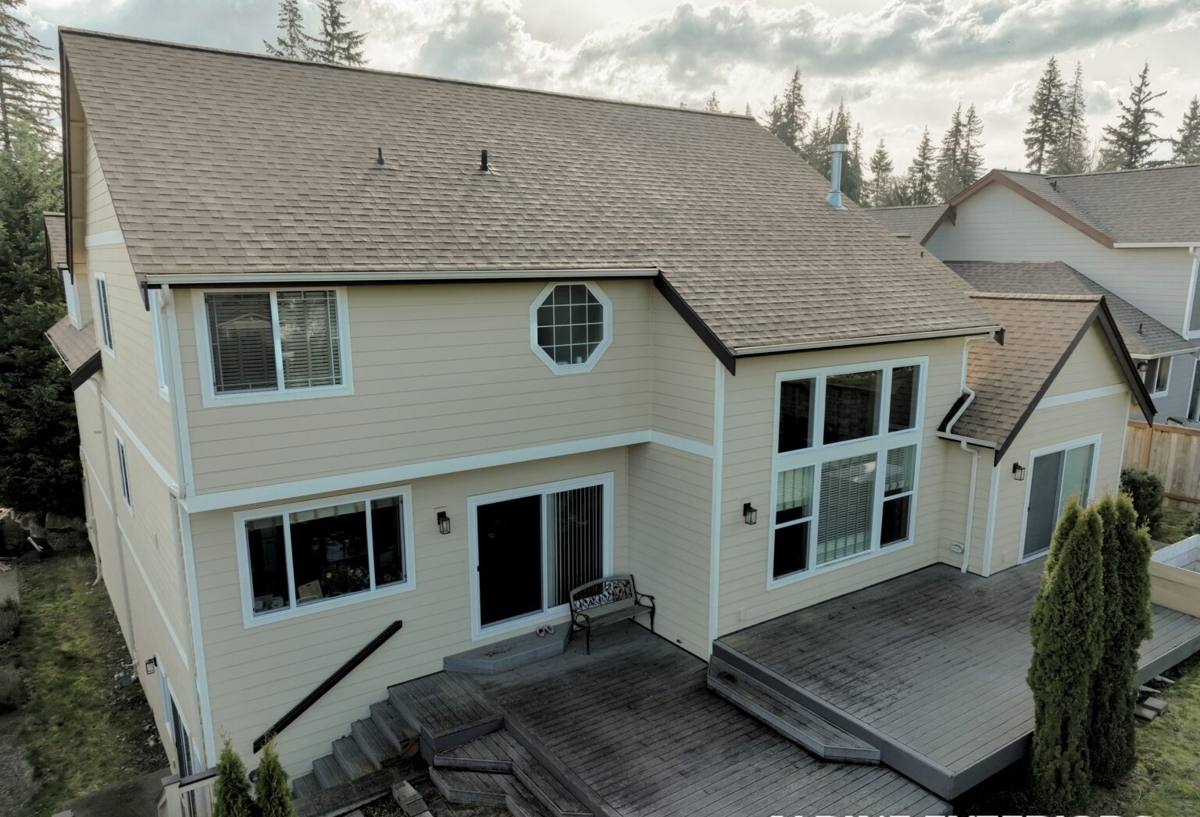
Signs Your Current Windows Are Losing the Battle
Windows fail gradually, and a lot of homeowners live with the symptoms for years before connecting them to the windows themselves. In Edison's climate, watch for:
- Fogging or a milky haze between the panes (a sign the seal has failed and the gas fill is gone)
- Noticeable drafts near the frame, especially during wind events off the bay
- Sashes that stick, won't latch fully, or have gone soft or spongy at the corners
- Moss or dark staining building up on sills and lower frames, especially on shaded or north-facing walls
- Visible pitting, chalking, or corrosion on metal frames or hardware
- A steady rise in heating costs without any other explanation
- Condensation forming on the inside of the glass during cold, humid stretches
Any one of these can be a minor fix. Several at once, especially on a home more than 15-20 years old, usually means it's time to talk about replacement rather than repair.
What "Energy-Efficient" Actually Means for This Climate
Energy efficiency in a window comes down to a handful of measurable factors, and in Edison's marine climate, some matter more than others.
U-Factor and Solar Heat Gain
U-factor measures how well a window resists heat loss — lower is better for our cool, wet winters. Solar heat gain coefficient (SHGC) matters less here than it would in a sunnier climate, since Skagit County doesn't deal with the same cooling-season sun load as inland regions. We weight window selection toward low U-factor performance first.
Glazing and Gas Fill
Dual-pane windows with a low-E coating and argon gas fill are the baseline for energy performance today. Triple-pane glass adds another layer of insulation and can help with sound and comfort near drafty, wind-exposed walls, but it also adds weight and cost. We'll walk through whether that upgrade makes sense for a specific home rather than selling it as a blanket recommendation.
Air and Water Sealing
A window can carry a great efficiency rating on the label and still perform poorly if it isn't sealed and flashed correctly against wind-driven rain. In Edison, installation quality matters as much as the product spec sheet.
Frame Materials: What Holds Up Near Salt Air and Driving Rain
Frame material has a direct effect on how a window ages in this environment. Here's how the common options compare for a home exposed to bay salt air and open-field wind:
| Frame Material | Performance in This Climate | Our Take |
|---|---|---|
| Vinyl | Doesn't corrode, low maintenance, good insulator | Solid, cost-effective default for most Edison homes |
| Fiberglass | Very stable in temperature swings, excellent moisture resistance | Best long-term durability, higher upfront cost |
| Wood-clad | Good insulator, needs consistent maintenance on exposed cladding seams | Fine on protected elevations, higher upkeep near open wind exposure |
| Aluminum | Conducts heat and cold, more prone to pitting and corrosion in salt air over time | We steer most Edison clients away from it as a primary frame choice; it's a maintenance and longevity trade-off, not a defect claim |
None of these are wrong choices in every situation — a covered porch window facing away from prevailing weather has different needs than an exposed wall catching wind straight off the bay. We look at each elevation of the house separately rather than applying one frame choice to the whole project.
Full-Frame Replacement vs. Retrofit (Pocket) Replacement
There are two basic approaches to swapping out old windows, and picking the wrong one is one of the most common ways a project underperforms.
Retrofit (Pocket) Replacement
The new window is installed inside the existing frame, leaving the old frame and exterior trim in place. It's faster and less invasive, and it works well when the existing frame is sound, square, and free of rot or moisture damage.
Full-Frame Replacement
The old frame is removed down to the rough opening, exposing the wall framing and flashing underneath. This is the right call whenever there's any sign of water intrusion, wood rot, or moss and mildew staining around the opening — all of which show up more often in Edison than in drier parts of the state. Full-frame replacement also lets us correct flashing and drainage details that may have never been right in the first place.
We don't default to the faster, cheaper option just because it's easier to sell. If we open a wall and find damage, we'll show you what we found and explain the honest options before moving forward.
What a Correct Installation Involves
The product matters, but installation is what actually determines whether a window keeps water out through a Skagit County winter. A correct job includes:
- Removing old windows carefully and checking the rough opening for hidden rot or moisture damage before installing anything new
- Proper flashing integration with the existing water-resistive barrier, lapped correctly so water sheds outward and downward
- Sill pan flashing at the base of every opening, so any water that does get past the window has somewhere to go besides into the wall
- Shimming and fastening the frame square and true, so the window operates and seals correctly for its full service life
- Flexible, weather-rated sealant at the exterior joints, chosen for its ability to move with temperature and moisture cycling rather than crack and let water in
- Interior air sealing and insulation around the frame, not just exterior caulk
- Reinstalling or replacing exterior trim so the finished look matches the rest of the home
Skip any one of these steps and you can end up with a window that looks fine and still lets water into the wall over time — a problem that often isn't discovered until siding or interior finishes start showing damage.
Our Process, Start to Finish
We keep the process straightforward and give you real information at each step rather than surprises after the fact.
- On-site assessment — we look at every window opening, note existing damage, wind exposure by elevation, and condition of trim and siding around each one
- Product selection — we recommend frame material, glazing package, and full-frame vs. retrofit approach per opening, not as a blanket decision for the whole house
- Written estimate — clear scope, so you know what's included before work starts
- Removal and inspection — old windows come out carefully, and any hidden rot or moisture damage gets flagged and discussed before we proceed
- Installation — flashing, sealing, shimming, and fastening done to a consistent standard on every opening
- Trim and finish work — exterior trim and interior finishes brought back to match the home
- Final walkthrough — every window operated and checked with you before we call the job done
What Drives the Cost of a Window Project
Costs vary widely based on scope, so we'd rather explain the factors than throw out a number that doesn't apply to your home. Broadly, a straightforward retrofit replacement runs less per window than a full-frame replacement with rot repair, and pricing climbs from there with frame material, glazing upgrades, and access difficulty.
| Factor | How It Affects Cost |
|---|---|
| Retrofit vs. full-frame | Full-frame costs more but is often necessary once rot or water damage is present |
| Frame material | Vinyl is typically the most affordable; fiberglass and wood-clad cost more upfront |
| Glazing package | Triple-pane and specialty coatings add cost over standard low-E dual-pane |
| Number and size of openings | Larger or custom-sized windows cost more than standard sizes |
| Hidden damage | Rot repair, re-flashing, or structural framing repair adds labor once a wall is opened |
| Access and site conditions | Second-story or hard-to-reach openings take more time and equipment |
We'll always separate "what the windows cost" from "what any repair work costs" so you can see exactly where your money is going.
Why Hire a Crew That Already Works in Edison
A lot of window and siding contractors work Skagit County broadly without spending much time in the smaller communities in between. Edison's exposure — open farmland, wind off Samish Bay, and a longer moss and moisture season than you'd get closer to town — calls for judgment calls that come from having actually worked houses out here before. Knowing which elevations take the worst of the weather, recognizing older farmhouse construction details common to the area, and having the right corrosion-resistant fasteners and flashing materials on hand as standard practice all come from local experience, not a general checklist.
We also don't treat every home the same. A house that's been re-sided recently has different needs than one where the windows and siding are both original. We look at the whole picture before recommending a scope of work.
Get a Straight Answer for Your Home
If your windows are drafty, fogging, or showing wear around the frames, we're happy to take a look and give you an honest read on whether you're looking at a simple repair or a full replacement — no pressure, no upsell. Fill out the form below for a free estimate, and we'll walk the property with Edison's climate in mind from the start.