 Anacortes Siding
 Similk Beach's Exterior Climate Is Tougher Than It Looks
Similk Beach sits along the water on Fidalgo Island, close enough to Similk Bay and the surrounding Skagit County shoreline that homes here take on a steady diet of salt-laden air, wind-driven rain, and shade from mature evergreens. That combination is hard on siding in ways that don't always show up right away. Salt air accelerates corrosion on fasteners and trim metal. Wind off the water pushes rain sideways into wall assemblies that were only designed to shed water falling straight down. And the tree cover that makes this area beautiful also keeps siding damp longer after every storm, which is exactly what moss and algae need to take hold.
None of this means siding is doomed here — it means the material and the installation both have to be chosen with this specific environment in mind. A siding product that performs fine in a drier inland part of Skagit County can struggle at a waterfront property like this one, and a siding job that looks fine on day one can fail early if it wasn't detailed for salt exposure and sustained moisture.
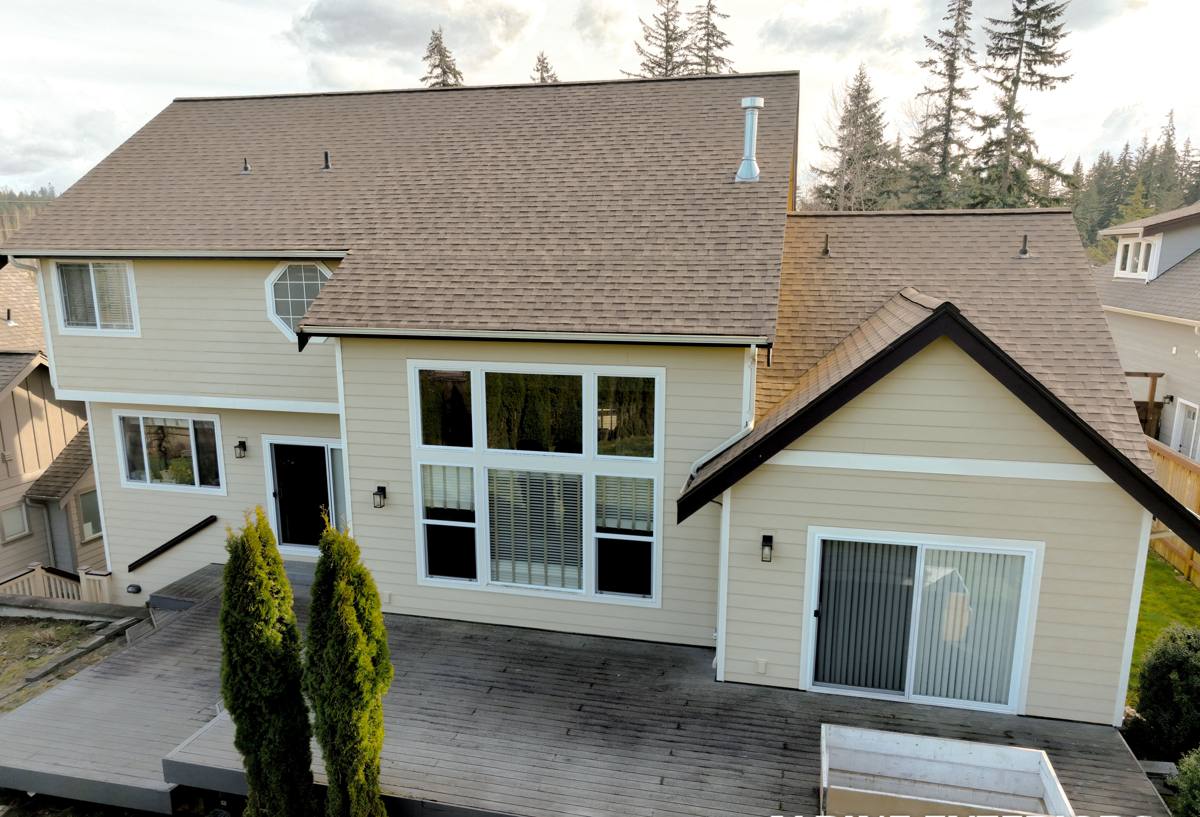
Why Fiber Cement Fits This Environment
Fiber cement siding is a mix of cement, sand, and cellulose fiber, pressed and cured into planks and panels. It doesn't rot, it isn't attractive to insects, and it doesn't expand and contract with moisture the way wood-based products do. For a property exposed to salt air and driving rain, those are the qualities that matter most:
- It resists moisture-driven swelling and delamination that plagues wood composite and some engineered wood sidings in coastal-adjacent climates.
- It's non-combustible, which matters for insurance and peace of mind regardless of proximity to the water.
- It holds paint and factory finishes far longer than wood, which reduces how often a homeowner has to get on a ladder to maintain it.
- It stands up to the freeze-thaw and wet-dry cycling that's common in Pacific Northwest winters.
We install James Hardie fiber cement exclusively, and for a location like Similk Beach we specifically look at Hardie's HZ5 climate-engineered formulation, built for wetter, harsher weather zones rather than the drier HZ10 formulation meant for hot, arid regions. That distinction sounds minor but it isn't — the moisture-resistance additives in the HZ5 formula are there for exactly the kind of weather this property sees most weeks of the year.
Factory Finish vs. Field-Painted Siding
James Hardie's ColorPlus finish is baked on at the factory under controlled conditions, which gives a harder, more consistent finish than siding painted on site after installation. In a salt-air environment, this matters because field-applied paint is more prone to uneven adhesion, especially if the substrate wasn't fully dry during installation — a real risk during Anacortes's wetter months. A factory finish also comes with its own dedicated warranty coverage for finish integrity, separate from the substrate warranty.
What a Correct Fiber Cement Installation Involves
Fiber cement is a forgiving material in terms of durability, but it is not forgiving of sloppy installation. Most of the siding failures we get called out to inspect trace back to installation details, not the material itself. For a home exposed to wind-driven rain, these details matter even more than usual:
- Weather-resistive barrier and flashing first. Correct water management behind the siding — proper house wrap, window and door flashing, and kick-out flashing at roof-to-wall intersections — has to be right before a single piece of siding goes up. Siding is the second line of defense, not the only one.
- Proper clearances. Hardie siding needs minimum clearance from grade, roof lines, and decks or patios to keep splash-back and standing water away from the bottom edge of the panels. In a shaded, wetter lot, skimping on these clearances shortens the siding's effective life considerably.
- Correct fastening. Corrosion-resistant fasteners, placed and spaced according to Hardie's published installation specs, keep panels secure without over-driving nails that can crack the material or create entry points for moisture.
- Field-cut edge sealing. Every cut edge made on site needs to be sealed per manufacturer instructions. An unsealed cut edge is a direct path for moisture into the panel core, and it's one of the most common shortcuts we see from crews that don't install Hardie regularly.
- Joint and seam treatment. Butt joints, trim intersections, and penetrations (vents, hose bibs, light fixtures) all need proper sealant and flashing details, not just caulk smeared over a gap.
Skip any one of these steps and the siding can still look acceptable for a year or two before problems show up as staining, soft trim, or paint failure at the seams — usually right around the areas that took the most rain exposure.
Moss, Algae, and Shade: The Similk Beach Maintenance Reality
Homes tucked under tree cover near the water deal with moss and algae more than homes in open, sunny lots. Fiber cement doesn't feed mold and moss the way wood does, but anything sitting outside in a damp, shaded microclimate will collect surface growth over time. The good news is that fiber cement's hard factory finish makes this mostly a cosmetic issue rather than a structural one — a gentle low-pressure rinse and, where needed, a soft wash treatment keeps growth from building up, without damaging the finish the way pressure-washing wood siding can.
What we watch for during any service call in this area is less the moss itself and more whether caulking at joints and trim has stayed intact underneath it. Persistent moss cover holds moisture against seams longer, so those are the spots worth checking each year.
Our Process for a Similk Beach Siding Project
| Step | What Happens |
|---|---|
| Site assessment | We walk the exterior, check existing water management, note shade patterns, wind exposure, and any areas with visible moisture damage or moss buildup. |
| Product and color selection | We help you choose the right Hardie plank profile, texture, and ColorPlus color for the home, factoring in HOA guidelines where they apply and how the color will read under tree shade versus open sun. |
| Prep and tear-off | Removal of old siding, inspection and repair of sheathing, and correction of any existing flashing or barrier issues before new material goes up. |
| Installation | Hardie panels installed to manufacturer clearance, fastening, and joint-sealing specifications, with attention to every penetration and trim intersection. |
| Final inspection and walkthrough | We review the finished job with you, confirm caulking and paint touch-up at cut edges, and go over basic care specific to a shaded, waterfront-adjacent property. |
Cost Factors for This Kind of Project
Every home is different, but the main variables that move the price of a fiber cement job in this area are fairly consistent:
| Factor | Why It Matters Here |
|---|---|
| Amount of tear-off and substrate repair | Homes with prior moisture intrusion from wind-driven rain often need sheathing repair before new siding goes on. |
| Trim and detail complexity | Homes with more corners, dormers, and roof-to-wall intersections need more flashing and joint work, which adds labor. |
| Access and site conditions | Waterfront lots, steep grades, or limited equipment access can affect scheduling and labor time. |
| Panel profile and finish selection | Different Hardie plank styles and ColorPlus finishes carry different material costs. |
We're upfront that a correct installation on a home exposed to this much wind and moisture usually costs more than a quick recover on a sheltered inland lot — the extra flashing, clearance, and sealing work is what keeps the siding performing for the long haul rather than needing early repairs.
Why It Matters That We Already Work This Area
A crew that installs siding across a wide range of climates without adjusting for local conditions will often use the same specs everywhere. For a property near the water in Skagit County, that's a real risk — the clearance, flashing, and product formulation choices that work fine in a dry inland neighborhood are not automatically correct for a shaded, salt-air, high-rainfall lot like this one. Working in and around Anacortes regularly means we've seen how homes in this specific setting age over years, not just how they look on installation day.
Questions Worth Asking Before You Hire Anyone
- Do they install fiber cement full-time, or is it one of several siding products they rotate through?
- Will they specify HZ5 (or the correct climate zone formulation) rather than defaulting to whatever they have on the truck?
- Do they seal every field cut, and will they show you that step during the job?
- Do they check and correct existing flashing and moisture barriers before installing new siding, or just cover over what's there?
- Can they explain the clearance requirements for grade, roofline, and decking specific to your home?
If a contractor can't answer these clearly, that's worth pausing on before signing anything — especially on a property with this much moisture exposure.
Get a Straightforward Look at Your Home
If you're weighing a siding replacement for a home in Similk Beach, we're happy to come take a look, walk the exterior with you, and give you an honest read on what your home needs given its exposure, shade, and current condition. There's no pressure and no obligation — just a clear estimate and a straight answer about what a correct job looks like for your property. Use the form below to request your free estimate.