 Anacortes Siding
 Asphalt Shingle Roofing Built for Fidalgo Island Conditions
Fidalgo Island sits surrounded by saltwater, which means every roof here deals with a combination of stresses that inland Skagit County homes simply don't see as often. Salt-laden air off the surrounding waters, wind-driven rain that comes in sideways during winter storms, and a moss season that can stretch for most of the year all work against a roof at the same time. Asphalt shingle roofing can absolutely hold up to this environment, but only when the materials, ventilation, and installation details are matched to what this specific location throws at a house.
This page covers what a shingle roof on Fidalgo Island actually needs to perform well, what a correct installation looks like, and how we approach the job when we're called out to a home in this area.
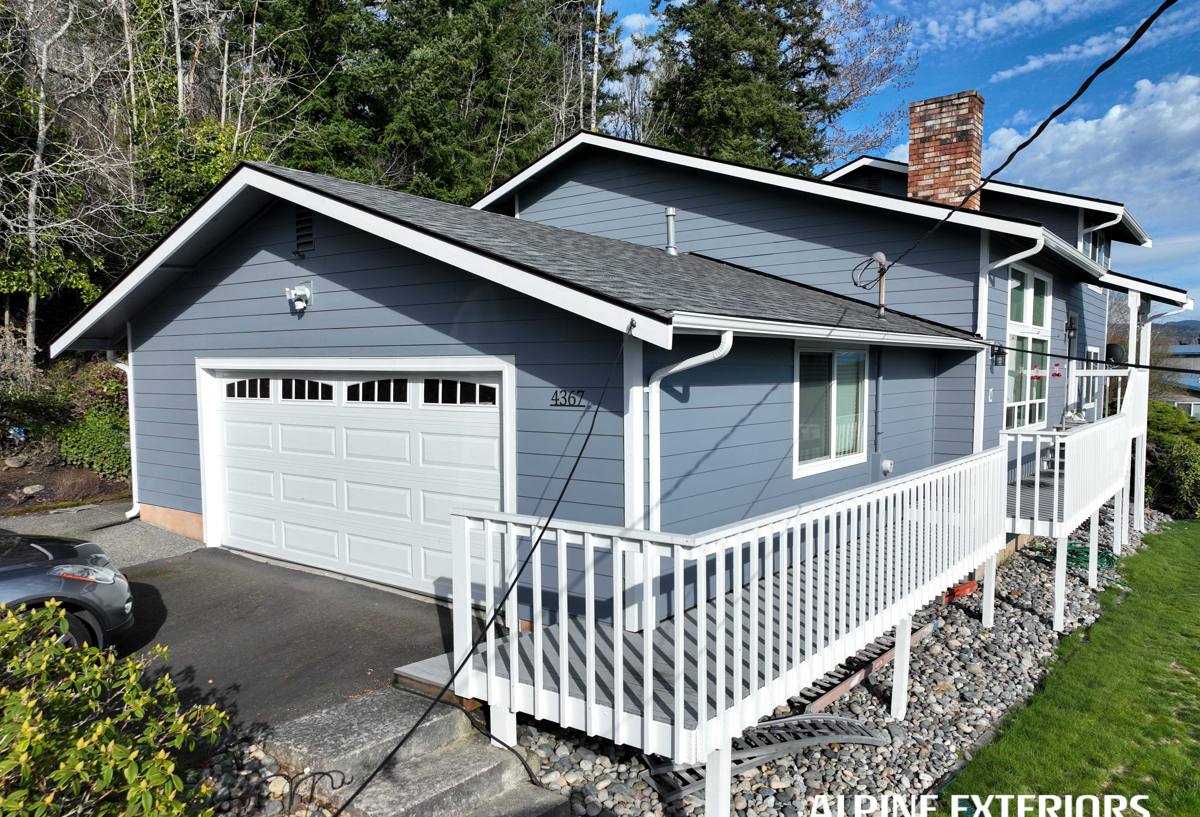
Why This Climate Is Harder on Shingles Than People Expect
Three factors compound on Fidalgo Island in a way that shortens the useful life of a poorly built or poorly maintained shingle roof:
Salt Air
Airborne salt from the surrounding waterways accelerates corrosion on exposed metal — flashing, fasteners, and vents in particular. Standard-grade metal components can start showing rust and pitting years before they would on a roof further inland, and once flashing corrodes, water finds its way underneath the shingles rather than off the roof.
Driving Rain and Wind
Storms moving through the San Juan and Rosario Strait area often bring wind-driven rain, not just straight-down rain. That matters because wind-driven water gets pushed sideways and upward under shingle edges, into valleys, and around any flashing detail that isn't sealed and lapped correctly. A roof that would shed water fine in a calm rain can leak in a wind event if the underlayment and flashing weren't installed with that in mind.
A Long Moss Season
Western Washington's wet season is long, and Fidalgo Island's tree cover and humidity keep roofs damp for extended stretches. Moss and algae thrive in that environment, and once moss gets established under shingle tabs, it lifts them, holds moisture against the roof deck, and works against the shingle's ability to shed water — even on a roof that's otherwise in decent shape.
What a Correctly Installed Shingle Roof Needs Here
A shingle roof that's going to hold up on Fidalgo Island needs more than just shingles nailed to a deck. The details underneath and around the shingles do most of the actual work:
- Ice-and-water shield at eaves, valleys, and around penetrations — the first line of defense where wind-driven rain is most likely to get pushed under the shingle line
- Synthetic underlayment across the full roof deck as a secondary water barrier beneath the shingles
- Corrosion-resistant flashing and fasteners at chimneys, skylights, sidewalls, and any roof-to-wall transition, given the salt air exposure
- Correct nailing pattern matched to the shingle manufacturer's wind-rating specifications, not just a generic four-nail pattern
- Balanced attic ventilation (intake at the eaves, exhaust at the ridge) so moisture from inside the home doesn't condense against the roof deck and add to the moisture load from outside
- Proper drip edge at eaves and rakes so water is directed into the gutters instead of running behind the fascia
Skip any one of these and the roof is still going to look fine on installation day — the problems just show up two, five, or ten years later, usually as a leak or premature granule loss.
Choosing the Right Shingle for a Fidalgo Island Home
Not every asphalt shingle product is built the same way, and the differences matter more here than in a drier, inland climate. The table below outlines how the common tiers compare for this environment.
| Shingle Type | Wind Rating | Algae Resistance | Typical Lifespan | Best Fit |
|---|---|---|---|---|
| Standard 3-tab | Lower (60-70 mph range) | Only if AR-rated | 15-20 years | Budget-conscious projects, secondary structures |
| Architectural / dimensional | Higher (110-130 mph range) | Widely available AR-rated | 25-30 years | Most Fidalgo Island homes, especially wind-exposed sites |
| Impact-resistant / premium | Highest available | AR-rated standard | 30+ years | Waterfront or fully wind-exposed homes, longer-term investment |
We favor algae-resistant (AR) architectural shingles for most homes on the island — the copper-infused granules resist algae growth, the thicker profile handles wind better than 3-tab, and the higher wind rating matters on a site that gets direct exposure off the water. For homes in more sheltered, tree-covered spots, a solid architectural shingle without the premium impact rating is often the more sensible choice, since cost and benefit should match the actual exposure of the site.
Moss and Algae: Managing the Long Wet Season
Moss doesn't just sit on top of a shingle roof — it grows into the tab overlaps, holds water against the surface, and lifts shingles enough for wind-driven rain to get underneath. On Fidalgo Island, where tree cover and dampness keep roofs from drying out quickly, moss can become a real problem faster than homeowners expect.
A few practical points on managing it:
- Zinc or copper strips installed near the ridge release trace metal ions with every rain, which suppresses new moss growth over time without chemical treatment
- Gutters should be checked and cleared regularly — clogged gutters keep water sitting against the lower courses of shingles, which is exactly where moss tends to start
- Overhanging branches should be trimmed back where practical, since shade and falling debris both feed moss growth
- Pressure washing a shingle roof is not the answer — it strips protective granules and can shorten the shingle's life faster than the moss itself would
If moss is already established and thick, a roof inspection is worth doing before deciding between a treatment-and-clean approach and a full replacement — heavy, long-term moss growth sometimes points to decking damage underneath that cleaning alone won't fix.
Our Process for Fidalgo Island Shingle Roofing
Whether the job is a full replacement or a significant repair, we work through the same sequence so nothing gets missed:
- Inspection — we walk the roof (and the attic, where accessible) to assess the deck, existing flashing, ventilation, and the actual condition of the shingles, not just their age
- Tear-off and deck check — old material comes off down to the deck so we can see and repair any soft or rotted decking before anything new goes down
- Underlayment and ice-and-water shield — installed at eaves, valleys, and penetrations per the details above
- Flashing and ventilation — new or corrosion-resistant flashing where needed, and ventilation corrected or upgraded if the existing setup is undersized
- Shingle installation — installed to manufacturer wind-rating specifications, not a generalized nailing pattern
- Cleanup — full site cleanup including a magnetic sweep for stray nails
- Walk-through — we go over the finished roof and the workmanship warranty with the homeowner before calling the job done
Signs Your Fidalgo Island Roof Needs a Look
Given the conditions here, it's worth having a roof checked sooner rather than later if any of the following show up:
- Granules collecting in the gutters or at the base of downspouts
- Shingle edges curling or cupping upward
- Visible moss or dark algae streaking across the roof surface
- Missing or lifted shingles after a windstorm
- Rust staining running down from flashing or vent pipes
- Water stains on interior ceilings or attic sheathing
- Soft or spongy spots when walking the roof surface
- Daylight visible through the roof deck from inside the attic
None of these mean a roof is beyond saving on its own — but each one is worth a professional look before it turns into a bigger repair.
What Affects the Cost of a Shingle Roof on Fidalgo Island
Every roof is priced based on its own specifics, but the factors below are the ones that most often move the number up or down for homes in this area.
| Cost Factor | Why It Matters |
|---|---|
| Roof size and pitch | Steeper roofs take longer and require more safety setup and material handling |
| Number of existing layers | Tear-off of multiple old layers adds labor and disposal cost versus a single-layer strip |
| Decking condition | Rotted or soft decking found during tear-off needs to be replaced before new shingles go down |
| Ventilation upgrades | Adding proper intake or exhaust ventilation where the original system is undersized |
| Shingle tier selected | Standard versus architectural versus premium impact-rated products carry different material costs |
| Site access | Waterfront lots, steep driveways, or tight setbacks common on parts of the island can affect staging and equipment access |
Why Hire a Crew That Already Works Fidalgo Island
A roofing crew that regularly works Fidalgo Island homes already understands the wind exposure differences between a sheltered, tree-covered lot and a site with a direct line to the water — and prices and builds accordingly instead of guessing. That local familiarity also extends to permitting through the City of Anacortes and Skagit County, so paperwork doesn't become a delay on the project.
Just as important is accountability. A contractor based and working in this area has a reputation to maintain with neighbors, not just a single job to finish and leave. That's worth factoring in alongside price when comparing quotes, especially for a system — the roof — that's meant to protect the house for decades.
Get a Free, No-Pressure Estimate
If your Fidalgo Island home's shingle roof is showing its age, dealing with moss, or you're planning ahead rather than reacting to a leak, we're happy to take a look and walk you through what we see — no pressure, no obligation. Use the form below to request a free estimate.