 Anacortes Siding
 Windows Built for Flounder Bay's Marine Climate
Flounder Bay sits close enough to the water that its houses live with weather most inland Skagit County neighborhoods never see. Salt-laden air moves through window hardware and finishes year-round, wind-driven rain finds its way into any gap that isn't sealed correctly, and the long gray stretch from fall through spring keeps moss and algae established on north- and west-facing walls for months at a time. Windows in this pocket of Anacortes are not just a comfort upgrade — they're one of the main things standing between your framing and that environment.
When we talk about custom windows for a Flounder Bay home, we mean units sized and specified for the actual openings in your house, installed with flashing and sealant details matched to a marine climate, not a generic install pulled from a big-box template. The difference shows up five, ten, and twenty years later, when a correctly installed window is still performing and a cut-corner one has already let moisture into the wall cavity.
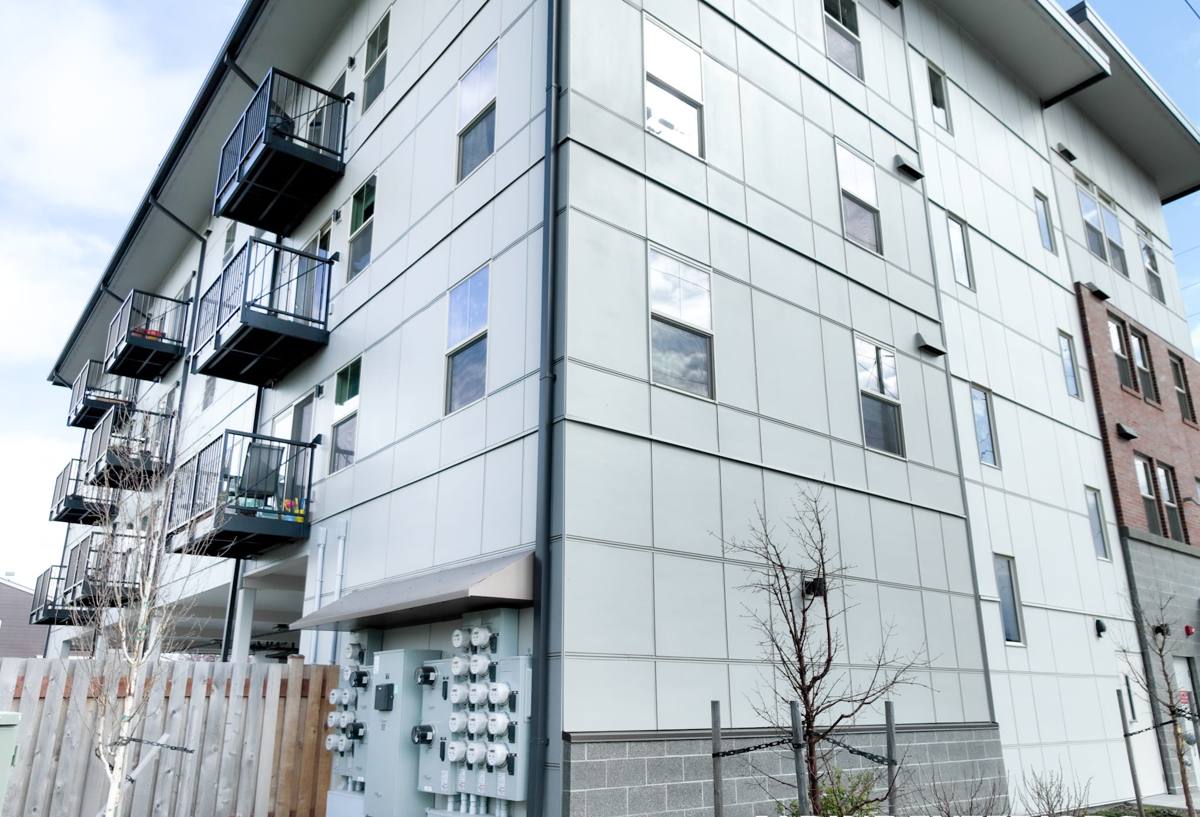
What Salt Air and Driving Rain Actually Do to a Window
It helps to understand the specific failure modes we're designing against, because they're different from what a contractor in Wenatchee or Spokane worries about.
Salt air and hardware corrosion
Airborne salt accelerates corrosion on exposed metal — hinges, cranks, locks, and screws — faster than it would a few miles inland. Cheaper hardware finishes chalk, pit, or seize up well before the glass unit itself has any problems. This is why hardware grade matters as much as glass grade on a job this close to the water.
Wind-driven rain and water intrusion
Anacortes gets rain that doesn't just fall — it's pushed sideways against west- and southwest-facing walls during winter storms off the Strait. A window that relies on caulk alone, without proper flashing and a drainage path, will eventually let water past the frame. That water doesn't show up as a visible leak right away; it tracks down inside the wall and shows up later as rot, stained drywall, or a musty smell nobody can pin down.
Moss, algae, and prolonged dampness
Skagit County's long wet season keeps shaded surfaces damp for extended stretches, which is exactly what moss and algae need to get established. On windows, that dampness lingers longest around sills, corners, and anywhere water can pool instead of shed — which is a design and installation detail, not bad luck.
What a Correct Custom Window Job Involves
"Custom" starts with accurate measurement and ends with a sealed, flashed, properly shimmed unit that sheds water the way the wall assembly around it is designed to. In between, several things have to happen in the right order.
Accurate measurement and sizing
Older Anacortes homes, especially anything built before modern standardized openings, are rarely perfectly square or a stock size. We measure each opening individually — width, height, and diagonal to check for square — rather than assuming a catalog size will fit. A window built to the actual opening installs tighter and seals better than one forced to fit.
Flashing before the window ever goes in
Flashing tape and pan flashing at the sill go down before the window is set, so any water that does get past the exterior seal has a path to drain back out instead of pooling against the framing. This step is invisible once the job is done, which is exactly why it's the step most likely to get skipped by a crew in a hurry.
Sealing and drainage, not just caulk
A correct install uses sealant at the right layers — house wrap integration, flashing laps, and a compatible exterior sealant bead — so water is directed out, not trapped in. Caulk smeared over the outside trim without flashing underneath is a cosmetic fix that fails first in exactly this climate.
Shimming and fastening for a true, square fit
A window that's out of square binds, doesn't lock tight, and stresses the seal over time. Proper shimming at the right points keeps the frame square and the sash operating smoothly for years, not just on install day.
Interior and exterior trim finished to shed water
Exterior trim gets back-caulked and finished so water runs off it rather than sitting against the window frame. Interior trim is set only after the installer confirms the unit is air- and water-sealed — not before.
Choosing Materials for a Waterfront-Adjacent Home
Material choice matters more here than in a drier, inland part of the county. Below is an honest comparison of the main options we work with, based on how each one holds up specifically to salt air, moisture, and the maintenance homeowners actually want to keep up with.
| Material | How it handles salt air & moisture | Maintenance | Best fit |
|---|---|---|---|
| Vinyl | Won't rot or corrode; hardware quality varies by manufacturer | Low — occasional rinse and hardware check | Budget-conscious replacement, rental or secondary homes |
| Fiberglass | Very stable in temperature and moisture swings; dimensionally tough | Low | Primary residences wanting a long-term, low-fuss window |
| Wood-clad (exterior-clad, wood interior) | Good if cladding and flashing details are done right; the wood core is the vulnerable point at any breach | Moderate — depends on cladding integrity over time | Homeowners prioritizing interior wood look with reasonable durability |
| Solid wood, uncladded | Highest maintenance burden this close to salt air and driven rain | High — regular refinishing and inspection | Historic or character-driven projects where the look is the priority |
We'll talk through these trade-offs honestly rather than pushing whatever's easiest to install. A solid wood window can be the right call for a specific look, but we'll tell you upfront what that means for upkeep in a Flounder Bay location. Aluminum-clad and fiberglass hardware also matters as much as the frame material — ask what hardware finish is spec'd, not just what the frame is made of.
Signs Your Current Windows Are Losing the Battle
Most window failures near the water show themselves gradually. Here's what to check for before it becomes a bigger repair:
- Sticky or hard-to-operate cranks, locks, or sashes — often an early sign of hardware corrosion
- Fogging or condensation between panes, meaning the seal on the glass unit itself has failed
- Soft or discolored trim or sill wood around the window frame
- A musty smell near a window that doesn't go away with cleaning
- Visible daylight or a draft you can feel with your hand along the frame edge
- Moss or dark staining building up on the sill or lower frame that keeps coming back after cleaning
- Paint or finish that's bubbling, peeling, or chalking faster on window trim than on the surrounding siding
Any one of these on its own isn't necessarily an emergency, but two or more on the same window is usually a sign the seal or flashing has already been compromised.
Our Process for a Flounder Bay Custom Window Job
We keep the process straightforward and communicate what's happening at each stage, since most homeowners are trusting us with a hole in their wall for a few hours.
- On-site assessment — we look at each opening, check for existing water damage or rot around the frame, and measure precisely rather than estimating.
- Material and product discussion — we walk through frame material, glass package, and hardware options suited to a marine-exposed location, with honest trade-offs on each.
- Removal of the existing unit — done carefully to check the condition of the framing and sheathing behind it before anything new goes in.
- Repair of any hidden damage — if we find rot or moisture damage behind the old window, we address it before installing the new one. Sealing a new window over damaged framing just hides the problem.
- Flashing and installation — pan flashing, proper shimming, air sealing, and fastening to manufacturer and code specification.
- Exterior and interior trim finish — trimmed, caulked, and finished to shed water on the exterior and sealed cleanly on the interior.
- Final walkthrough — we test operation, check the seal, and walk the homeowner through anything they should know about care going forward.
Energy Performance in a Marine Climate
Skagit County's coastal microclimate is milder than the rest of Washington in raw temperature swings, but the combination of persistent damp cold, wind, and long overcast stretches still puts real demand on heating systems from fall through spring. A well-sealed, properly glazed window reduces drafts and cold-radiating glass surfaces, which is often what makes rooms near large windows feel uncomfortable even when the thermostat reads fine.
Glass package matters here: a double-pane unit with a low-E coating and argon fill is a solid baseline for most Flounder Bay homes, while triple-pane makes more sense on a wall that takes direct wind off the water or in a room where comfort near the glass has been a persistent complaint. We'll size the recommendation to the specific wall and exposure rather than upselling the same package everywhere.
Condensation and interior humidity
Better-sealed windows also change how a house handles interior humidity — a tighter envelope can mean more condensation on glass if ventilation isn't adequate, especially in kitchens and bathrooms. We'll flag this during the estimate if your home's ventilation setup makes it a relevant consideration.
Why It Matters to Hire a Crew That Already Works Flounder Bay
Window installation isn't uniform across a region — the right approach for a dry inland lot isn't the right approach a few blocks from the water. A crew that regularly works Flounder Bay and the rest of Anacortes' waterfront-adjacent neighborhoods already knows which exposures take the worst of the wind-driven rain, which hardware finishes actually hold up to salt air over years rather than months, and how the older housing stock in this part of Skagit County tends to be framed and sided.
That familiarity shows up in small decisions during the job — how much flashing lap to use on a west-facing wall, which sealant actually stays flexible through a wet Anacortes winter, when to recommend a hardware upgrade even though the customer didn't ask about it. None of that is guesswork when it's the tenth job in the same few square miles instead of the first.
Living With New Windows Through Moss Season
A correct install reduces maintenance, but it doesn't eliminate it — no window in this climate is fully maintenance-free. A little seasonal attention keeps a well-installed window performing for its full service life:
- Rinse frames and sills periodically to clear salt residue before it accumulates on hardware and finishes
- Keep gutters and downspouts clear so runoff isn't sheeting directly across window heads
- Check and lightly lubricate cranks and locks on operable windows once or twice a year
- Clean moss or algae off sills promptly rather than letting it sit through a wet season
- Inspect exterior caulking annually and have any cracked or separated beads redone before winter rains set in
If you're planning custom windows for a home in Flounder Bay or elsewhere in Anacortes, we're glad to take a look and give you a straightforward, no-pressure estimate — including an honest read on what your current windows actually need versus what they don't. Use the form below to get started.