 Anacortes Siding
 Why Flounder Bay Decks Wear Out Faster Than Homeowners Expect
Flounder Bay sits right up against the water, and that proximity is exactly what makes deck replacement a different job here than it is a few miles inland. Salt-laden air accelerates corrosion on fasteners, hardware, and any metal connectors hidden inside the structure. Driving rain off the strait doesn't just fall straight down — wind-driven moisture gets pushed sideways into ledger connections, end grain, and any gap where two pieces of decking meet. And Anacortes' long, damp moss season, which can stretch from fall through spring, keeps organic growth and trapped moisture sitting on deck surfaces for months at a time.
None of this means a deck can't last in Flounder Bay. It means the deck has to be built for these conditions from the ground up, not just refinished every couple of years and hoped along. A deck that was built to a generic spec, or built decades ago before flashing and fastener standards caught up with what we now know about marine-climate wear, is usually the one that fails early.
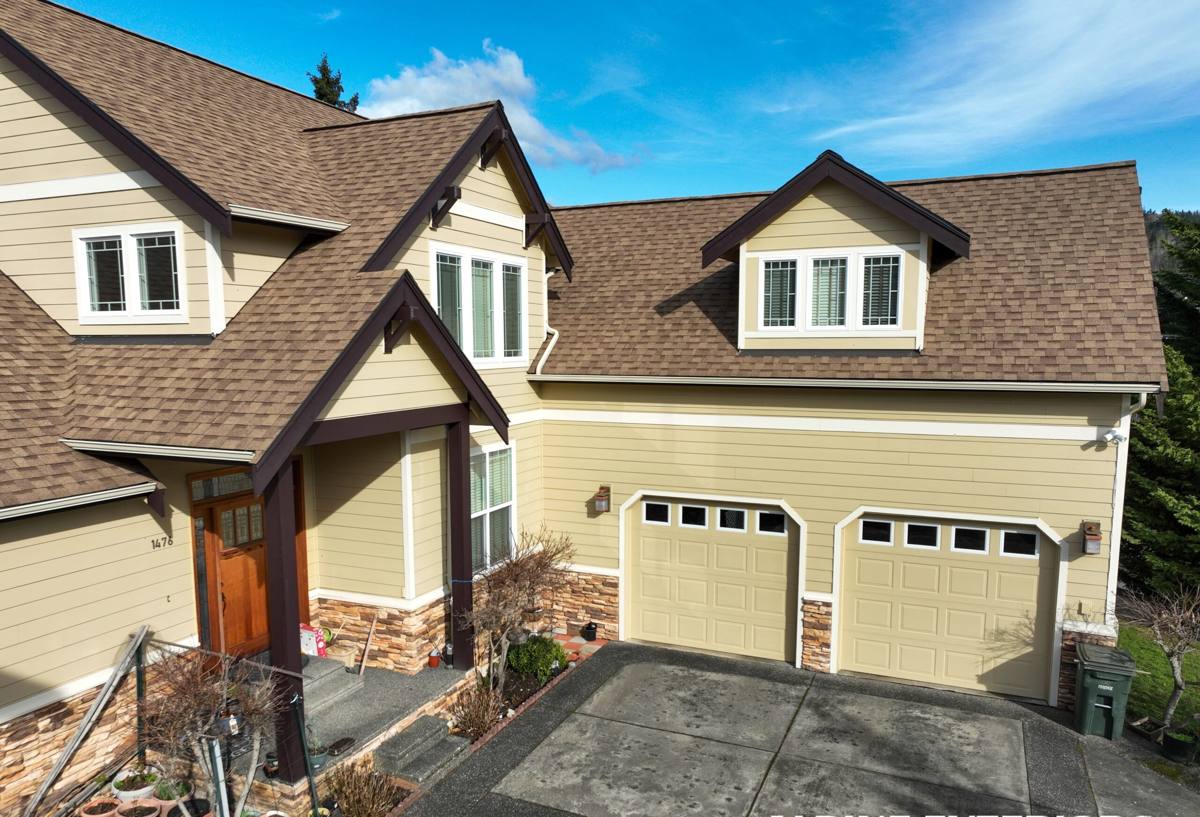
Repair or Replace? How to Tell
Not every tired-looking deck needs a full replacement. But in Skagit County's wet, salty air, certain signs mean patching individual boards is just delaying the inevitable — and sometimes masking a structural problem underneath.
- Boards that feel soft, spongy, or spring back slowly when you step on them
- Rust streaks bleeding out from screw heads or joist hangers
- Visible rot or soft wood where the deck attaches to the house (the ledger board)
- Gaps between boards that have widened noticeably, or fasteners backing out on their own
- A railing that wobbles or flexes when you lean on it
- Persistent green or black staining that comes back within weeks of cleaning
If you're seeing more than one or two of these, especially anything at the ledger connection, it's worth having someone look at the framing before you spend money on surface-level fixes.
What a Correct Deck Replacement Actually Involves
Tear-Off and Structural Inspection
A proper replacement starts with removing the old decking and railing down to the framing, then actually inspecting what's underneath — joists, beams, posts, and footings. This is the point where hidden rot or undersized framing gets caught, before it's covered back up by new boards. Skipping this step is how a deck ends up looking brand new on top while the structure underneath is still failing.
Ledger Board and Flashing
The ledger — the board that bolts the deck to your house — is where the majority of serious deck failures in this region start. If it isn't flashed correctly to shed water away from the house sheathing, driving rain will find its way behind it over time, leading to rot in both the ledger and the wall framing behind it. Correct ledger flashing, proper fastener spacing, and a small gap or flashing tape system to keep water moving away from the structure aren't optional extras — they're the difference between a deck that lasts and one that quietly rots from the inside.
Framing, Joists, and Hardware
In a salt-air environment, fastener and hardware choice matters more than it does inland. Standard galvanized hardware can corrode faster near the water; stainless or higher-rated coated fasteners and connectors hold up longer and are worth the modest upcharge over the life of the deck. Joist spacing and beam sizing should also be confirmed against current code, not just matched to whatever was there before — older decks are frequently under-built by today's standards.
Decking Surface and Railing
Once the structure is sound, the decking material and railing system go on. This is the visible part of the job, but it's the last decision, not the first — it only performs as well as what's underneath it.
Choosing a Decking Material for a Marine Climate
There's no single "best" decking material — it depends on how much maintenance you want to take on and how long you want to go before major work again. Here's how the common options compare for a home exposed to salt air and heavy seasonal moisture:
| Material | Moisture & Salt-Air Behavior | Maintenance | Typical Lifespan |
|---|---|---|---|
| Pressure-treated wood | Prone to cupping, splintering, and fastener corrosion staining over time | Annual cleaning and periodic sealing/staining | 10–15 years before major repair |
| Cedar | Naturally rot-resistant but still needs sealing against driving rain and moss | Regular cleaning and re-sealing | 15–20 years with upkeep |
| Composite (capped) | Doesn't absorb moisture the way wood does; resists moss staining better | Occasional washing, no sealing/staining | 25+ years, per manufacturer warranty |
| PVC decking | Fully synthetic, very stable in wet/salt conditions | Lowest maintenance of the group | 25+ years, per manufacturer warranty |
We install what fits your budget and how much upkeep you're willing to do — but we're honest about trade-offs. Wood costs less upfront and can look great, but in a climate with this much rain and moss pressure, it asks for more of your time every year. Composite and PVC cost more initially but shift the maintenance burden way down, which matters if the deck is somewhere hard to reach or you'd rather spend weekends doing something other than sealing boards.
Our Deck Replacement Process
- On-site assessment of the existing deck, including a look at the ledger, framing, and any visible rot or corrosion
- Honest recommendation — repair, partial rebuild, or full replacement, with reasoning explained plainly
- Written estimate covering materials, structural work, and railing/code items separately so you know what you're paying for
- Tear-off and disposal of the old deck
- Framing repair or rebuild, with corrosion-resistant hardware appropriate for a coastal setting
- Ledger flashing done correctly, since this is the step most likely to be rushed on lower-quality jobs
- Decking and railing installation to your chosen material
- Final walkthrough so you know how to maintain the deck going forward
Permits and Code Considerations
Deck replacement work — especially anything involving new framing, a raised deck, or railing changes — typically requires a permit and inspection through the applicable local building authority for Anacortes and Skagit County. Requirements can vary depending on deck height, size, and whether the footprint is changing, so we handle the permit conversation as part of the estimate rather than leaving you to figure it out. Guardrail height, baluster spacing, and stair requirements are also governed by current building code, which is worth confirming even if you're only replacing decking boards on an otherwise sound structure — an old railing that was fine when it was built may no longer meet current safety standards.
Maintenance That Actually Extends Deck Life Here
A new deck is only as good as the upkeep it gets afterward, and in this climate that upkeep matters more than in drier parts of the state. A few habits go a long way:
- Clear leaves and debris from between boards before moss season sets in each fall
- Rinse or sweep off moss and organic buildup regularly rather than letting it sit and hold moisture
- Check the ledger flashing and railing connections once a year for early signs of water intrusion
- Reseal or restain wood decking on the schedule your product calls for — don't wait until it looks obviously dry
- Keep planters, rugs, and furniture feet from trapping moisture directly against the deck surface
- Address any loose or rusting fasteners promptly rather than waiting for the next season
Why It Matters to Hire a Crew That Already Works Flounder Bay
A deck built to a generic, one-size-fits-all spec can look fine for a year or two anywhere. What separates a deck that holds up in Flounder Bay from one that doesn't is whether the crew building it actually accounts for the salt exposure, wind-driven rain, and moss pressure specific to this stretch of the Anacortes waterfront. That means knowing which fastener grades hold up, how to detail ledger flashing so it actually sheds water instead of trapping it, and which materials are worth the extra cost given how much moisture this area sees.
It also means understanding the practical side of working in this community — site access on waterfront lots, protecting existing landscaping and shoreline features during tear-off, and working efficiently around a property that may have limited staging space. A crew that's done this work up and down Skagit County isn't guessing at any of it.
Ready for an Honest Look at Your Deck?
If your deck is showing its age, or you just want a second opinion before spending money on repairs that won't hold, we're happy to take a look and give you a straight answer. Reach out for a free, no-pressure estimate using the form below.