 Anacortes Siding
 Guemes Island Roofs Work Harder Than Roofs on the Mainland
Guemes Island sits right in the path of Rosario Strait weather — open water on multiple sides, salt-laden air, and wind that doesn't get slowed down by the tree cover and terrain that shelter a lot of inland Skagit County homes. An asphalt shingle roof on Guemes Island is dealing with a combination most mainland Anacortes roofs don't see in the same intensity: constant salt exposure, driving wind-blown rain, and shaded, damp conditions that turn into a long moss season almost every year. None of that means asphalt shingles are the wrong choice for the island — they're still one of the most practical, cost-effective roofing systems available, and a well-installed shingle roof performs well out here. But "well-installed" carries more weight on an island roof than it does on a sheltered lot, and that's the standard we build to.
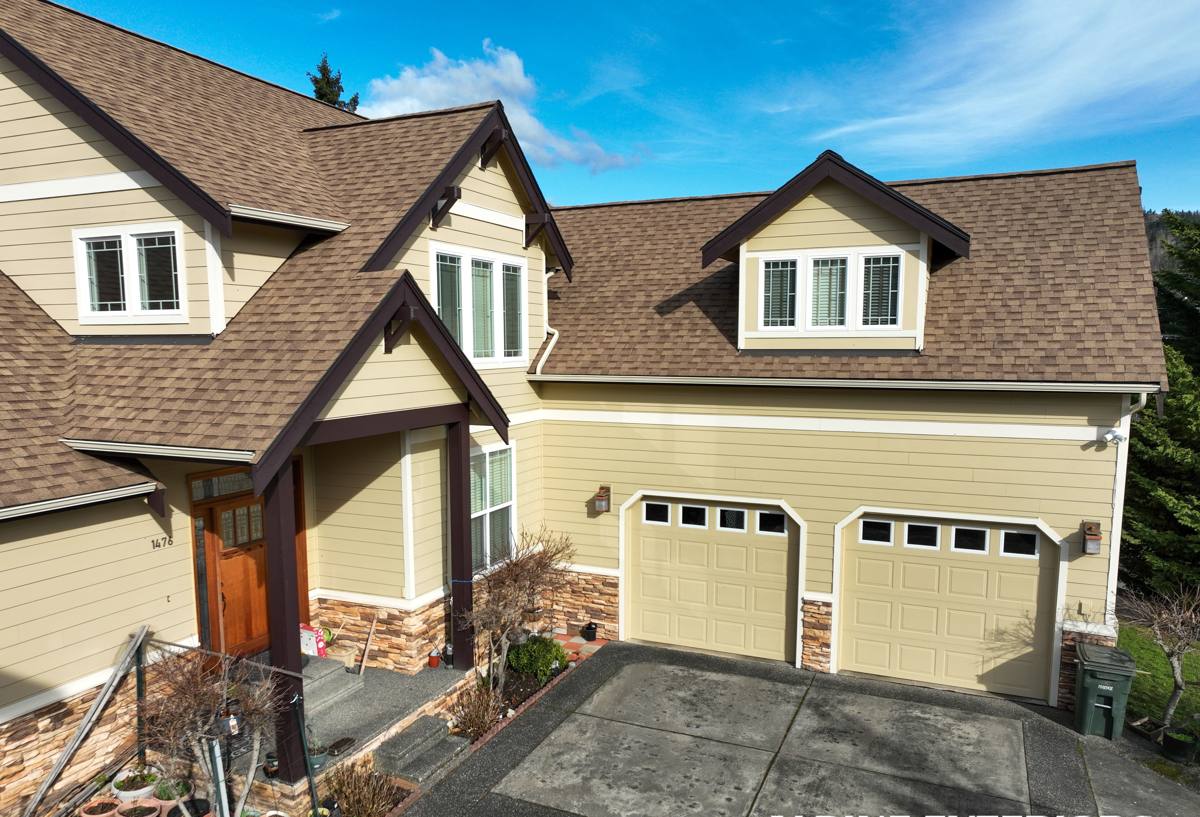
What Salt Air and Moisture Actually Do to a Shingle Roof
Salt air is corrosive to metal, and a shingle roof has more exposed metal in it than most homeowners realize — nails, flashing, drip edge, vent stacks, and any exposed fasteners on ridge caps. Over time, salt-laden moisture accelerates corrosion on lower-grade or improperly protected metal components, which is exactly where roof leaks tend to start: not through the shingles themselves, but around the metal details that tie them together.
Wind-driven rain adds a second problem. On a sheltered roof, rain mostly falls straight down and sheds off the shingle surface the way it's designed to. On an exposed island roof, rain can be pushed sideways and even slightly upward under the shingle tabs during a real blow. If the underlayment, sealant strips, and nailing pattern weren't installed correctly, wind-driven rain finds those gaps. This is why roofing details that are "good enough" on a calm inland lot aren't good enough on Guemes Island — the margin for error is smaller.
Why This Matters More Here Than in a Typical Anacortes Neighborhood
Skagit County as a whole gets plenty of rain, but exposure varies a lot from block to block, let alone from the mainland to an island. A roof on Guemes Island with a clear view of open water is going to see higher wind loads and more consistent salt exposure than a similar roof tucked into a wooded Anacortes neighborhood. That's not a reason to overbuild every detail — it's a reason to be deliberate about which details actually matter for this specific site, and to not treat every roof on the island the same way.
Choosing the Right Shingle System for an Island Home
Not every asphalt shingle product is built for the same conditions. For Guemes Island homes, we generally steer homeowners toward products and specs that hold up better under sustained wind and moisture exposure rather than whatever is cheapest per square. That usually means a laminated (architectural) shingle with a higher wind rating, algae-resistant granules, and a sealant strip designed to bond fully even in cooler, damper install conditions.
| Shingle Type | Typical Wind Rating | Algae Resistance | Best Fit for Guemes Island |
|---|---|---|---|
| Standard 3-tab | Lower | Usually none unless specified | Sheltered secondary structures only |
| Architectural / laminated | Higher | Often available with AR granules | Recommended for most main roofs |
| Impact-rated architectural | Higher, plus impact class | Often available with AR granules | Good option for maximum durability, higher upfront cost |
We don't push the most expensive option on every job — a lot of island homes do perfectly well with a solid mid-tier architectural shingle. The point is matching the product to the actual exposure of that particular roof, not defaulting to whatever's cheapest or whatever a homeowner saw advertised without regard to where the house sits.
What a Correct Asphalt Shingle Installation Involves
The shingles themselves get most of the attention, but they're actually the last layer of a system. On an exposed roof like the ones common to Guemes Island, every layer underneath the shingles matters as much or more.
The Layers That Do the Real Work
- Deck inspection and repair — any soft, delaminated, or water-damaged sheathing gets replaced before anything goes back on, not covered up.
- Ice-and-water shield at eaves, valleys, and around penetrations — this self-adhering membrane is what stops wind-driven rain that gets past the shingle surface.
- Synthetic underlayment across the full deck — a consistent, correctly lapped water and wind barrier under the shingles.
- Drip edge and flashing at eaves, rakes, valleys, chimneys, and any wall intersections, sized and lapped to shed water outward, not just placed for appearance.
- Correct nailing pattern — proper nail count, placement, and depth per the manufacturer's high-wind installation instructions, not a standard pattern applied regardless of exposure.
- Ridge and hip caps sealed and fastened to resist uplift at the roof's most wind-exposed lines.
Skipping or rushing any one of these doesn't usually cause an immediate problem — it causes a problem two or three winters later, after the sealant strips have been tested by enough storms to find the weak point. That's the pattern we see most often on repair calls: a roof that looked fine going up, installed with shortcuts that only show themselves under real wind and rain.
Roof Ventilation and Attic Moisture on a Marine-Climate Roof
Ventilation gets overlooked constantly, and it matters more near the water than most homeowners expect. A roof deck that can't breathe traps moisture underneath the shingles from the inside — condensation from household humidity working its way up into a cold attic space. Combine that with the ambient moisture load of a marine climate, and an under-ventilated roof deck on Guemes Island can develop rot, mold, and premature shingle failure from below, even if the shingles themselves are holding up fine from above.
Balanced ventilation means intake at the eaves (soffit vents) and exhaust at or near the ridge, sized to move air through the entire attic space rather than just in one corner. When we're re-roofing a home, we check existing ventilation as a matter of course — it's a lot cheaper to correct while the roof is already open than to diagnose later as a mystery leak or a mold problem in the attic.
Moss, Algae, and Keeping a Guemes Island Roof Clean
Shaded, damp roof sections — north-facing slopes, areas under overhanging trees, valleys that hold moisture longer — are where moss and algae take hold first. Once moss establishes itself, it does more than look bad: it holds moisture against the shingle surface, works its way under tabs as it grows, and can lift shingles enough to let water in underneath. Algae staining is mostly cosmetic, but heavy moss growth is a real durability issue if it's left unaddressed for years.
What Actually Helps
Algae-resistant (AR) shingles, mentioned above, use copper-containing granules that slow algae growth over the life of the roof — worth specifying on most Guemes Island jobs. Zinc or copper strips installed near the ridge let rainwater carry trace metal down the roof slope, which helps suppress moss and algae regrowth over time. Neither of these eliminates the need for occasional gentle roof cleaning, but both reduce how often it's needed and how aggressive that cleaning has to be.
What we don't recommend is pressure washing asphalt shingles. High-pressure water strips the protective granules right off the shingle surface, which shortens the roof's life rather than extending it — it trades a cosmetic fix now for reduced UV protection and faster wear later. Soft washing with the right approach, or simply keeping overhanging branches trimmed back to reduce shade and debris buildup, does more good with less risk to the roofing material.
How Our Process Works for Island Jobs
Working on Guemes Island isn't the same logistically as working a job in town, and we plan for that up front rather than treating it as an afterthought.
Before We Start
We inspect the existing roof in person, check the deck condition where accessible, look at ventilation, and talk through material options based on the specific exposure of that roof — a home with an open water view on the west side gets a different conversation than one tucked into trees on a sheltered lot. We also account for ferry access when scheduling material delivery and crew transport, since getting a full load of shingles, underlayment, and equipment onto the island takes more coordination than a mainland job.
During the Job
We watch the weather window closely. Tear-off exposes the deck, and on an island roof that can catch weather quickly, we don't leave a roof open longer than necessary — sections are torn off and dried in the same day whenever conditions allow, rather than leaving a partial roof exposed overnight. Debris and old materials are contained and hauled off the island along with the crew, not left staged for a second trip.
After the Job
We walk the finished roof and the property for stray nails and debris, review the ventilation and flashing details we installed, and go over basic care with the homeowner — including realistic expectations for moss and algae given the specific shading and exposure of that roof.
Why Hiring a Crew That Already Works Guemes Island Matters
A roofing crew that hasn't worked the island before is learning ferry logistics, weather timing, and material staging on your job. That's not a reason to distrust every out-of-area contractor, but it is a real cost — delays, scheduling surprises, and sometimes shortcuts taken to avoid a second ferry trip. A crew that already builds island logistics into its scheduling treats a Guemes Island roof as a normal job, not a special-case headache, and that shows up in how carefully the work gets done.
Local experience also means we've seen how different exposures on the island actually perform over time — which slopes hold moss longest, which orientations take the worst of the wind, which older roofs on the island had ventilation or flashing shortcuts that caused problems down the line. That's the kind of judgment that only comes from doing the work here repeatedly, not from a generic install checklist.
What Affects the Cost of a Guemes Island Shingle Roof
Every roof is different, so we won't quote a number without seeing the actual job, but these are the main factors that move the price on an island re-roof:
| Factor | Why It Matters |
|---|---|
| Roof size and pitch | More surface area and steeper slopes mean more material and labor time |
| Number of layers to remove | Tearing off an existing layer (or two) adds labor and disposal cost |
| Deck condition | Rotted or delaminated sheathing needs replacement before shingles go on |
| Shingle grade chosen | Architectural and impact-rated products cost more than basic 3-tab |
| Flashing and ventilation upgrades | Correcting old or undersized details adds material and labor |
| Access and logistics | Ferry scheduling and material transport factor into project timing |
Broadly speaking, a straightforward architectural shingle re-roof runs in the mid-to-upper range compared to basic 3-tab, with the final number driven mostly by size, deck condition, and how much flashing and ventilation work is needed. We'll walk through the real numbers for your roof during an on-site estimate rather than guessing over the phone.
Maintenance Checklist for Guemes Island Homeowners
- Have gutters and downspouts cleared at least twice a year — clogged gutters back water up under the eave edge
- Trim back branches that overhang the roofline to cut down on shade, debris, and moss-friendly conditions
- Look for moss buildup on north-facing or shaded slopes each fall and address it before winter rains set in
- After major windstorms, do a visual check (from the ground or with binoculars) for lifted or missing shingles
- Check attic ventilation isn't blocked by insulation or storage that's crept in front of soffit vents
- Have a roofer inspect flashing around chimneys, vents, and valleys every few years rather than waiting for a leak
If you're weighing a re-roof or just want an honest read on how much life is left in your current shingles, we're glad to come take a look. Estimates are free, there's no pressure, and you'll get a straight answer about what your roof actually needs — use the form below to get started.