 Anacortes Siding
 Decks on Guemes Island Take More Punishment Than Most
Guemes Island sits right in the path of Rosario Strait weather — salt-laden wind, long stretches of driving rain, and a moss season that can run from fall through spring. A deck here is doing more work than a deck built ten miles inland in Skagit County, and it shows in how fast fasteners corrode, how quickly moss and algae take hold on north-facing boards, and how much moisture gets driven up under railings and ledger boards during a hard blow off the water.
Most of the deck repair calls we get on the island aren't dramatic structural failures. They're the slow, cumulative kind: a soft spot near the house where the ledger board meets siding, fasteners that have started to bleed rust through the decking, or a railing post that's gone spongy at the base. Left alone through another wet Pacific Northwest winter, small problems like these turn into expensive ones. Caught early, most are a straightforward, affordable fix.
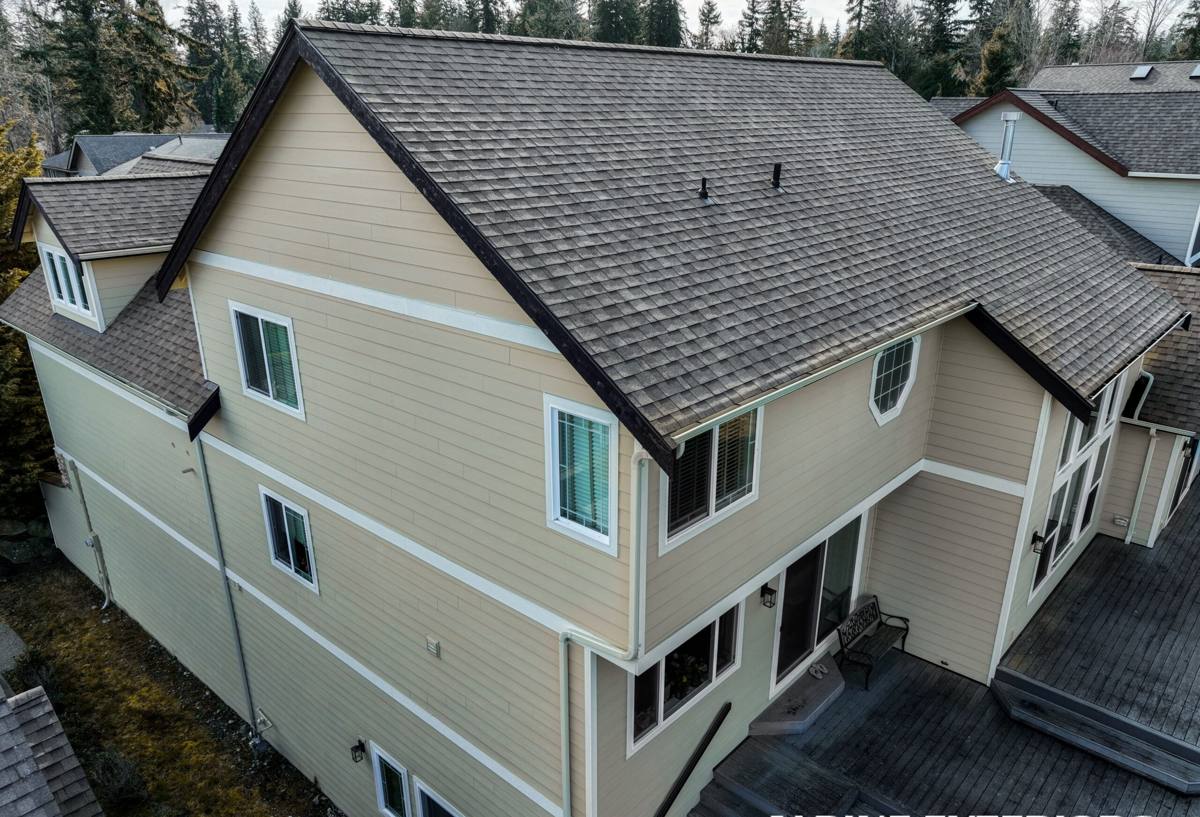
Signs Your Deck Needs Repair
You don't need to be a contractor to spot the early warning signs. Walk your deck on a dry day and look for these:
- Soft, spongy, or bouncy spots underfoot, especially near the house or stair landings
- Boards that have cupped, split, or pulled away from their fasteners
- Rust streaks bleeding out from screws or nails — a sign the fastener itself is failing
- Green or black film on shaded boards that doesn't scrub off easily (moss and algae holding moisture against the wood)
- Gaps or separation where the ledger board meets the house, or flashing that's visibly cracked or missing
- Railings or posts that flex more than they used to, or show cracking at the base
- Standing water that doesn't drain within a few hours after rain
Any one of these on its own might just mean routine maintenance. Two or three together, especially near the ledger connection, usually means it's time for a real inspection.
The Ledger Board Is the One We Check First
The ledger board — where the deck attaches to the house — is the single most common point of failure we find on island homes, and it's also the most consequential. Water that gets behind flashing at this joint doesn't just rot decking; it can work its way into the rim joist and even the house framing behind the siding. On a property exposed to wind-driven rain off the strait, this connection deserves attention every year, not just when something visibly goes wrong.
What a Correct Deck Repair Actually Involves
A repair that just replaces the board you can see and calls it done is a repair that gets called back out in two years. We work from the structure outward.
Structure First
Before touching decking boards, we check the framing underneath: joists, beams, posts, and footings. Wood-framed decks on the island are vulnerable to rot at joist ends and post bases where moisture collects and doesn't dry out between rain events. Any compromised framing gets sistered, reinforced, or replaced before anything goes back on top of it — patching decking over soft framing just hides the problem.
Flashing and Water Management
If the ledger connection is part of the repair, correct flashing is non-negotiable. That means proper ledger flashing that directs water away from the house, not caulk alone trying to do a flashing's job. Caulk fails; flashing, installed correctly, doesn't need to work as hard.
Fasteners and Hardware
Salt air is hard on metal. We use stainless steel or high-grade coated fasteners and structural hardware rated for exterior, coastal-adjacent exposure — not the standard hardware that's fine sixty miles inland but starts corroding here within a few seasons. This is one of the most common corners cut in budget deck repairs, and it's usually the reason a "repaired" deck needs the same fasteners replaced again in a few years.
Decking Material Match
Whether your deck is pressure-treated lumber, cedar, or composite, repairs need to match the existing material's behavior — expansion, moisture movement, and finish — so the new sections age consistently with the old rather than standing out or creating uneven wear patterns.
Repair or Replace? How We Help You Decide
Not every deck problem calls for a full rebuild, and not every deck is worth patching indefinitely. We give you a straight answer based on what we find in the framing, not just what's visible on the surface.
| Situation | Usually Repair | Usually Replace |
|---|---|---|
| Framing and posts | Solid, no rot found on inspection | Widespread rot at joists, beams, or posts |
| Decking condition | Isolated boards damaged or worn | Most boards cupped, split, or fastener-failed |
| Ledger connection | Sound, flashing intact or easily corrected | Rot has spread into rim joist or house framing |
| Age of deck | Under 15-20 years, built to code | Older, undersized framing, or non-permitted original build |
| Railings | Isolated post or baluster damage | System-wide flex, cracking, or code non-compliance |
When the framing is sound, targeted repair is almost always the more cost-effective and faster path. When rot has spread through the structural members, patching around it just delays a bigger job — and can become a safety issue.
What Drives the Cost of a Deck Repair
Every deck and every problem is different, so we don't quote sight-unseen. But these are the factors that generally move the price:
| Cost Factor | Why It Matters |
|---|---|
| Extent of framing damage | Sistering a joist is a fraction of the cost of replacing a beam or footing |
| Ledger and flashing work | Proper flashing replacement involves removing siding trim and doing the water management right |
| Decking material | Composite and cedar cost more per board than standard pressure-treated lumber |
| Railing scope | Isolated post repair versus full railing system replacement for code compliance |
| Access and site conditions | Elevated decks, tight side yards, or limited staging space add labor time |
| Material and ferry logistics | Getting the right materials to the island on schedule affects project timing more than base cost |
Broadly, small fastener and board repairs are a modest, same-day type of job. Ledger, flashing, or framing repairs run higher because of the demo and rebuild involved. We'll walk you through exactly what we found and what it costs before any work starts — no surprise change orders.
Why Island Logistics Change How We Schedule the Job
Working on Guemes Island means working around the ferry, not against it. We plan material deliveries and crew trips to land everything in as few crossings as possible, which keeps the job moving efficiently and keeps costs predictable instead of padded for extra ferry runs. It also means we do a thorough job-site walk-through and take precise measurements up front, so we're not discovering we need one more board or one more piece of flashing after the ferry's already left for the day. Crews that don't regularly work the island tend to underestimate this — it shows up as delayed timelines or rushed, incomplete repairs.
Our Deck Repair Process
Every repair follows the same sequence, whether it's a single board or a full framing rebuild:
- Inspection. We check framing, ledger connection, flashing, fasteners, and decking condition, and explain what we find in plain terms.
- Written scope and estimate. You know what's being repaired, why, and what it costs before we start.
- Structural work first. Any compromised framing, posts, or footings get addressed before cosmetic work begins.
- Flashing and water management. Correct ledger flashing and drainage detailing, not caulk shortcuts.
- Decking, railing, and hardware repair or replacement. Matched materials, coastal-grade fasteners.
- Final walk-through. We show you the completed work and flag anything worth watching going forward.
Why Hire a Crew That Already Works Guemes Island
Deck repair sounds like a commodity job until you factor in a marine climate and an island job site. A crew that regularly works Guemes Island and greater Anacortes already knows what salt exposure does to fasteners and hardware over time, how moss behaves on shaded decking through a Skagit County winter, and how to plan a job around ferry schedules so your project isn't stretched out over extra weeks waiting on materials. That experience shows up in fewer callbacks and a repair that actually holds up to the next few winters of wind off the strait, not just the drive-home inspection.
Keeping Your Deck in Good Shape After the Repair
A correctly done repair still needs basic seasonal upkeep to get its full lifespan out of a coastal environment. A simple routine goes a long way:
- Sweep debris and standing water off the deck surface regularly, especially in fall
- Treat moss and algae on shaded boards before it builds up a slick, moisture-holding layer
- Check the ledger flashing and railing connections once a year for early signs of movement or corrosion
- Re-seal or re-stain wood decking on the manufacturer's recommended cycle, sooner if it sees direct salt spray
- Keep gutters and downspouts near the deck clear so runoff isn't dumping extra water onto the structure
If you're not sure whether what you're looking at is a maintenance item or a repair, that's exactly the kind of question worth asking before it becomes the more expensive kind of problem.
If your Guemes Island deck has soft spots, rust-streaked fasteners, moss buildup, or a ledger connection you're not sure about, we're happy to take a look and give you a straight, no-pressure assessment of what it actually needs. Use the form below to request a free estimate.