 Anacortes Siding
 Why Guemes Island Decks Wear Out Faster Than You'd Expect
If you own a home on Guemes Island, you already know your deck doesn't live the same life as a deck fifty miles inland. The combination of salt-laden air off the water, driving rain that comes in sideways during winter storms, and a moss season that can stretch from fall through spring puts a different kind of stress on wood, fasteners, and finishes than most manufacturers design for. We work on homes across Anacortes and Skagit County, and the island properties are consistently the ones where we see decking, framing, and hardware fail years ahead of their rated lifespan — not because the homeowner did anything wrong, but because the deck wasn't built or finished for this specific exposure.
A deck replacement out here isn't just swapping old boards for new ones. It's a chance to correct the details that let moisture and salt do their damage in the first place, so the next deck actually lasts.
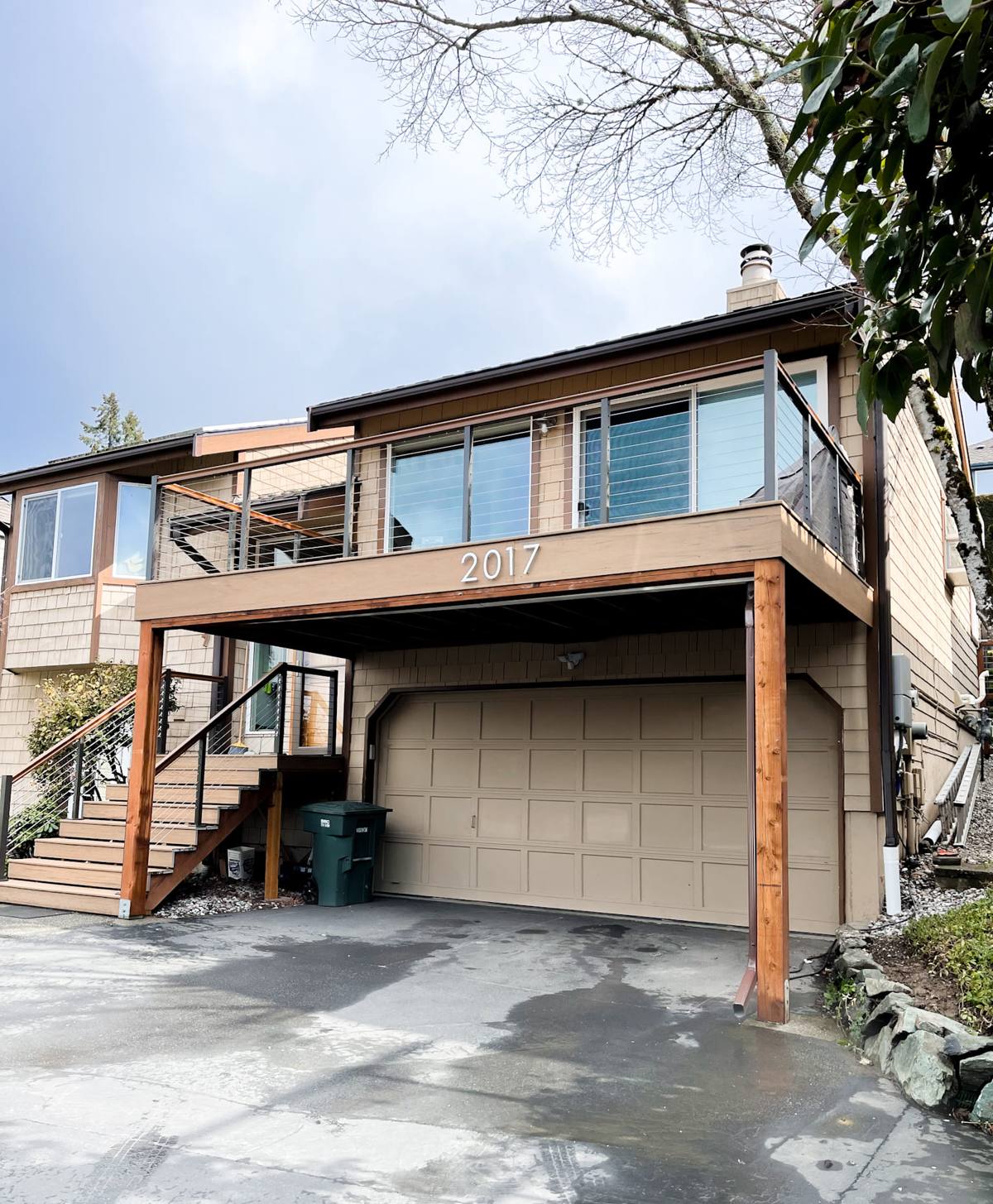
How Salt Air, Rain, and Moss Attack a Deck
Salt Air and Metal Fasteners
Airborne salt accelerates corrosion on nails, screws, joist hangers, and structural connectors. Once a fastener starts to corrode, it loses holding strength long before the corrosion is visible from the surface. On an older deck, this often shows up as rust streaking down the face of the boards or a hanger that's crumbling at the edges when you finally pull the decking to inspect it.
Driving Rain and Water Intrusion
Wind-driven rain doesn't fall straight down — it gets pushed sideways and up under boards, around ledger connections, and into any gap in the flashing. Over time this means water sitting in places it was never supposed to reach: end grain, fastener holes, and the ledger-to-house connection, which is the single most common source of hidden rot on older decks.
Moss and Constant Dampness
A long moss season means the deck surface, especially in shaded or north-facing areas, rarely gets a full dry-out between rain events. Moss and algae hold moisture against the wood and make the surface slick and slippery underfoot. Left untreated, that constant dampness accelerates rot in real wood decking and can stain and degrade the surface of composite products too.
Signs a Guemes Island Deck Needs Replacement, Not Just Repair
Not every tired-looking deck needs to come out entirely. But there's a point where patching individual boards is just delaying a bigger problem. Some signs we look for:
- Soft or spongy spots in the decking, especially near the house or at board ends
- Rust stains bleeding from screw heads or joist hangers
- Visible gaps, cracking, or checking in the ledger board where it meets the house
- Persistent moss or black staining that comes back within weeks of cleaning
- Railing posts that flex or feel loose when pushed
- A structure that was never properly flashed at the house connection to begin with
If the framing underneath is still sound, sometimes a resurfacing makes sense. But once we find rot in the joists, ledger, or posts, a full replacement is almost always the more honest recommendation — patching over structural rot just hides the problem for a season or two.
What a Correct Deck Replacement Actually Involves
A deck that's going to hold up on Guemes Island needs more attention paid to the parts you can't see than the decking boards you can. Our replacements cover:
Ledger and Flashing
Where the deck attaches to the house is the most important connection on the whole structure. We install proper flashing that directs water away from the house sheathing rather than letting it sit against the ledger board — a detail that's frequently missing or done poorly on older decks in this area.
Framing and Fasteners
We use fasteners and structural hardware rated for coastal, high-corrosion exposure rather than standard interior-grade hardware. It costs a little more upfront and it's the difference between hangers that are still solid in fifteen years and hangers that are rusting through in five.
Ventilation Under the Deck
Trapped moisture underneath a deck accelerates rot from below. Where the site allows it, we build in airflow so the underside of the structure can actually dry out between storms instead of staying damp all winter.
Surface Material and Fastening Pattern
How the decking boards are spaced and fastened affects how well the deck sheds water and resists moss buildup. Tighter, poorly-spaced boards trap debris and moisture; correct gapping lets the deck drain and dry.
Decking Material Choices for This Exposure
There's no single "best" decking material for every home — it depends on budget, maintenance tolerance, and how much sun versus shade the deck gets. Here's how the common options actually perform in salt air, rain, and moss conditions:
| Material | Salt/Moisture Resistance | Moss Resistance | Maintenance | Typical Lifespan Here |
|---|---|---|---|---|
| Pressure-treated lumber | Good if properly sealed and maintained | Needs regular cleaning | Annual cleaning, periodic resealing | 10–15 years |
| Cedar | Naturally decay-resistant, but softer surface | Needs regular cleaning | Regular oiling/sealing to hold color and resist moisture | 12–18 years |
| Capped composite | Excellent — won't rot or absorb moisture | Better resistance, still needs washing | Occasional washing, no sealing | 25+ years |
| Uncapped composite | Good, but surface can absorb moisture over time | More prone to staining in shaded areas | Periodic cleaning, watch for moisture wicking at cut ends | 15–20 years |
On shaded, north-facing, or heavily wooded lots on the island, we generally steer homeowners toward capped composite or well-sealed cedar because the moss and moisture problem is worse in those spots. On more open, sun-exposed decks, a well-maintained pressure-treated deck can perform just fine at a lower upfront cost. We'll walk your specific site with you rather than push one material as the automatic answer.
Our Process for Guemes Island Jobs
Scheduling Around the Ferry
Working on the island means building material deliveries and crew scheduling around the Guemes Island ferry rather than treating it like any mainland job. We plan our material staging and crew days in advance so we're not making unnecessary extra trips, which keeps the project moving efficiently and keeps costs predictable.
Site Assessment First
Before we quote a replacement, we get under the existing deck and check the framing, ledger connection, and any visible rot or corrosion. That tells us whether you're looking at a full tear-out or whether some structural elements can be reused.
Tear-Out and Disposal
Old decking, framing, and hardware are removed and hauled off. We also use this stage to check the house's siding and sheathing behind the ledger for any hidden moisture damage before we close it back up.
Rebuild to Code
New framing, flashing, fasteners, and decking go in to current code requirements, including railing height and spacing where applicable, before finish work.
Permits and Local Code Considerations
Deck replacements on Guemes Island fall under Skagit County building requirements, and depending on the size, height, and scope of the project, a permit may be required — particularly for structural framing changes or decks attached to the house above a certain height. We handle the practical side of figuring out what's needed for your specific project rather than leaving you to sort out county requirements on your own. Getting this step right up front avoids problems later if you ever sell the home or need work reinspected.
Keeping a New Deck Healthy: A Maintenance Checklist
A correctly built deck still needs some seasonal attention out here — the climate doesn't let anything coast on a "set it and forget it" basis. After a replacement, we walk homeowners through a simple maintenance routine:
- Sweep debris and standing leaves off the deck surface regularly, especially in fall
- Clean moss and algae buildup before it stains or gets slick, particularly in shaded corners
- Check and clear gaps between boards so water can drain instead of pooling
- Inspect the ledger flashing and house connection once a year for gaps or damage
- Reseal wood decking on the manufacturer's recommended schedule — don't wait for it to look dry and gray
- Look over railing posts and connections for looseness after winter storm season
Why Hiring a Crew That Already Works on Guemes Island Matters
A contractor who's never built on the island can still frame a deck, but they're guessing at the details that matter here — the flashing details that hold up against driving rain, the fastener grade that won't rust out in salt air, and the practical logistics of getting materials and crew to and from the island efficiently. We work throughout Anacortes and the surrounding Skagit County area, including Guemes Island, and we bring that exposure-specific knowledge to every replacement rather than treating it as a standard mainland deck project. That matters most in the parts of the job you won't see again once the decking is down — the framing, the flashing, and the fasteners holding it all together.
If your deck is showing rust stains, soft spots, persistent moss, or you're just not sure whether it's a repair or a replacement, we're happy to take a look. Reach out for a free, no-pressure estimate using the form below, and we'll walk the site with you and give you a straight answer about what your deck actually needs.