 Anacortes Siding
 Siding Built for Life on Guemes Island
Guemes Island sits right in the path of everything Puget Sound weather can throw at a house: salt-laden air off the water, wind-driven rain that hits siding sideways instead of straight down, and a long, damp moss season that keeps north-facing walls wet for months at a time. Homes here take a different kind of beating than a house a few miles inland in Anacortes proper, and the siding on them needs to be chosen and installed with that in mind, not treated like a generic exterior upgrade.
We install James Hardie fiber cement siding exclusively, and Guemes Island is exactly the kind of environment that James Hardie's engineering was built to handle. This page walks through what the island's climate actually does to siding over time, what a correct Hardie installation looks like out here, and why the crew you hire matters as much as the product you choose.
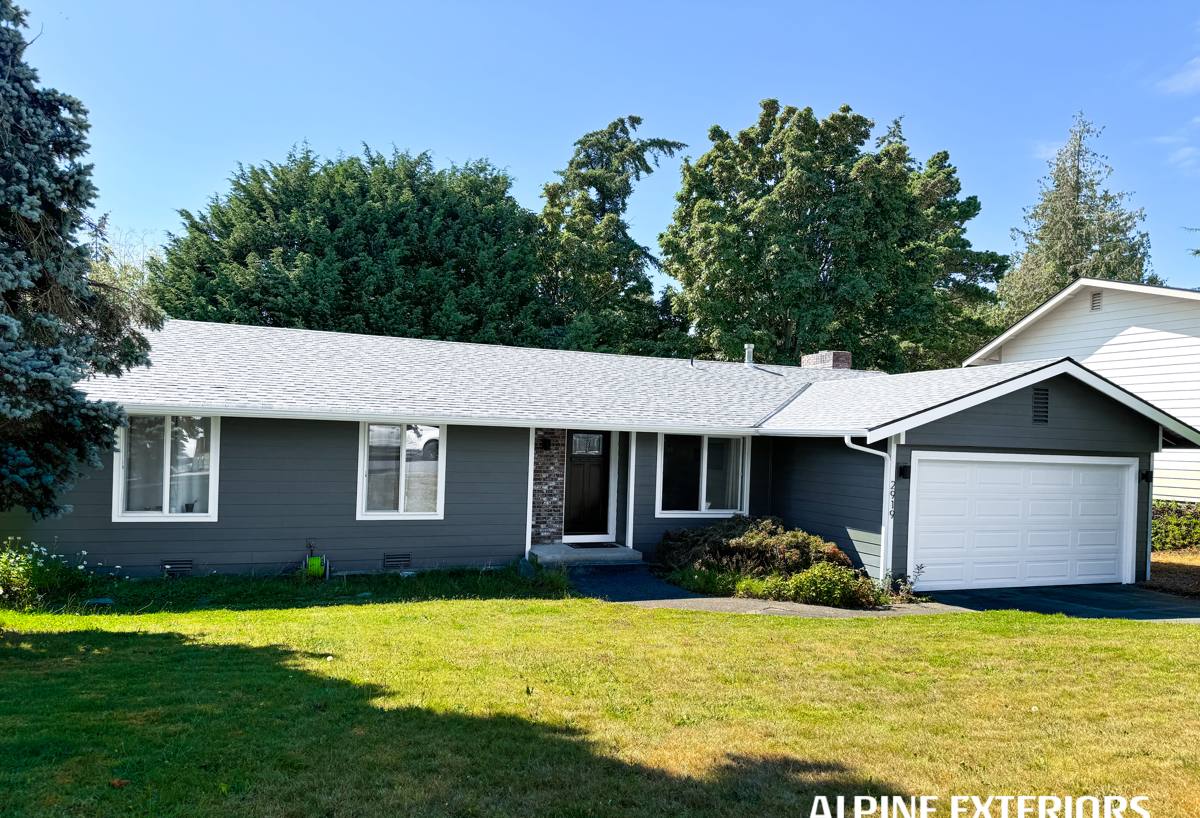
What Guemes Island's Climate Does to Siding
Salt Air and Corrosion
Being surrounded by saltwater means airborne salt settles on every exterior surface, including siding, trim, and fasteners. Salt is corrosive to metal components and accelerates the breakdown of finishes that aren't formulated to resist it. Over years, cheaper or poorly protected siding systems chalk, fade, and develop surface degradation faster near the water than they would inland.
Wind-Driven Rain
Guemes Island gets exposed to wind off the Sound that drives rain into wall assemblies at angles a typical rain screen wasn't designed for. That means water finds its way into lap joints, corner trim, and butt seams that aren't properly flashed and caulked. The siding material itself matters less here than the installation detailing — this is where most siding failures on exposed island lots actually start.
Moss, Mildew, and Prolonged Moisture
Shaded, tree-covered lots and north or west-facing walls on the island can stay damp for extended stretches, especially through fall and winter. That constant moisture is what feeds moss and mildew growth on siding surfaces, and it's what causes wood-based or improperly sealed products to swell, cup, or rot from the inside out over time.
Why James Hardie Is the Right Answer Out Here
James Hardie fiber cement siding is cement-based, not wood-based, which means it doesn't absorb and swell with moisture the way wood, wood-composite, or some engineered wood products do. It won't rot, and it's non-combustible, which matters on an island where emergency response can take longer than it does on the mainland. The ColorPlus factory finish is baked on under controlled conditions and is formulated to hold up against UV and weather exposure significantly better than field-applied paint, which matters a great deal in a salt-air environment that's hard on any painted surface.
James Hardie also builds regionally engineered product lines (HZ5 for harsher, wetter climates) specifically because siding performance isn't the same in Phoenix as it is on Puget Sound. That climate-specific engineering is a real, practical reason we standardized on this product rather than the other fiber cement or composite options on the market.
How Hardie Compares to Other Common Choices
| Factor | James Hardie Fiber Cement | Vinyl Siding | Wood / Engineered Wood |
|---|---|---|---|
| Moisture & rot resistance | Cement-based, does not rot | Doesn't rot, but seams and panels can warp/buckle | Vulnerable to rot without perfect maintenance |
| Salt air / coastal durability | Engineered HZ5 lines for coastal climates | Can chalk and become brittle over time | Finish breaks down faster near salt air |
| Fire resistance | Non-combustible | Melts/deforms under heat | Combustible |
| Finish longevity | Factory-baked ColorPlus finish | Color can fade, cannot be easily repainted to match | Requires repainting/resealing on a maintenance cycle |
| Typical warranty | Long-term, transferable | Varies by product tier | Varies; finish often separately warrantied and shorter |
What a Correct Installation Involves
Fiber cement siding is only as good as the installation behind it. On Guemes Island specifically, the details that make or break long-term performance are the ones dealing with water management, because the wind-driven rain here punishes shortcuts that would go unnoticed on a more sheltered lot.
Weather Barrier and Rain Screen
A correctly detailed weather-resistant barrier behind the siding, with a drainage gap where the exposure calls for it, gives any water that does get past the cladding a way out instead of a place to sit against the sheathing.
Flashing at Every Penetration
Windows, doors, hose bibs, vents, and any other wall penetration need proper flashing integrated with the weather barrier before siding goes on. On an exposed island lot, a missed flashing detail is often the single point of failure years down the road.
Fastening and Clearances
James Hardie specifies fastener type, spacing, and placement, along with minimum clearances from grade, roof lines, and decks. Skipping these specs to save time is one of the most common ways installers void the manufacturer's warranty without the homeowner ever knowing it happened.
Caulking and Joint Treatment
Butt joints, corners, and trim transitions need the right sealant applied correctly — not just for appearance, but because these are the exact spots wind-driven rain targets first.
Why Hiring an Island-Familiar Crew Matters
Guemes Island is ferry-access only, which changes the practical side of a siding project in ways that matter to how it gets done. Materials, crews, and equipment all have to be staged around ferry schedules, and a contractor who hasn't planned around that ends up rushing details to make a sailing, or leaving a job half-finished and exposed to the weather for longer than it should be. A crew that already routinely works the island knows how to sequence delivery, staging, and crew logistics so the work moves efficiently without cutting corners on installation quality.
There's also a familiarity factor with the specific exposure conditions on island lots — waterfront-facing walls, heavily wooded interior lots, and everything in between — that only comes from having actually installed and serviced siding in that environment before.
Our Process for Guemes Island Projects
- On-site assessment — we look at wall exposure, existing moisture damage, moss buildup, and current flashing/trim condition before quoting anything.
- Product and color selection — matched to the home's exposure, including HZ5 product selection where the climate calls for it.
- Logistics planning — material staging and crew scheduling planned around ferry access so the job proceeds without unnecessary weather exposure.
- Removal and substrate check — old siding comes off and the sheathing underneath gets inspected for hidden rot or moisture damage before anything new goes on.
- Weather barrier and flashing installation — done to manufacturer spec at every penetration and joint.
- Hardie siding installation — fastened, spaced, and finished to James Hardie's published installation requirements so the manufacturer's warranty stays intact.
- Final walkthrough — trim, caulking, and finish details reviewed with the homeowner before we consider the job done.
Signs Your Guemes Island Home May Need Siding Attention
- Persistent moss or dark streaking on north or west-facing walls
- Visible cupping, warping, or soft spots in existing siding
- Paint that's chalking, peeling, or fading faster than expected
- Gaps or cracking at corner trim, window trim, or butt joints
- Soft or discolored sheathing visible at outlets, vents, or siding seams
- Rising energy bills that may point to a compromised wall assembly
Maintenance Expectations for Island Properties
One advantage of fiber cement siding on a property that isn't visited or maintained on a tight schedule is that it doesn't demand the frequent upkeep that wood or wood-composite siding does. That said, no siding is maintenance-free. On Guemes Island in particular, periodically rinsing off salt residue and checking shaded walls for moss buildup goes a long way toward protecting the finish and keeping the surface from staying wet longer than it should. Caulked joints and trim transitions are worth a visual check each year, since that's where wind-driven rain finds its way in first if a seal starts to fail.
Cost Factors for Guemes Island Siding Projects
| Factor | Why It Affects Cost |
|---|---|
| Ferry logistics | Material and crew transport must be scheduled around sailings, affecting project timeline and staging |
| Existing damage | Rotted sheathing or hidden moisture damage found during removal adds repair scope |
| Home exposure | Waterfront-facing or highly exposed walls may call for heavier-duty HZ5 product selections |
| Trim and detail complexity | More corners, windows, and rooflines mean more flashing and finish work |
| Access and site conditions | Wooded lots, steep grades, or limited staging space affect labor time |
If you're dealing with aging or damaged siding on a Guemes Island home, we're happy to take a look and walk you through what we're seeing and what it would take to do the job right. Reach out for a free, no-pressure estimate using the form below.