 Anacortes Siding
 Roofing on Guemes Island Is Its Own Job
Guemes Island sits just across the water from Anacortes in Skagit County, reached only by ferry. That short crossing changes more than the commute — it changes what a roof has to withstand and what it takes to replace one correctly. Homes on the island sit closer to open water, take more direct salt-laden air, and often sit under heavy stands of fir and cedar that keep roof surfaces damp long after mainland roofs have dried out. A roofing job that holds up fine in a drier inland neighborhood can fail early here if it wasn't designed for this exposure from the start.
This page covers what actually goes into a roof replacement done right for a Guemes Island home: the climate factors at work, the materials that make sense here, the steps of a correct install, and the logistics of getting a crew and materials to an island job without cutting corners.
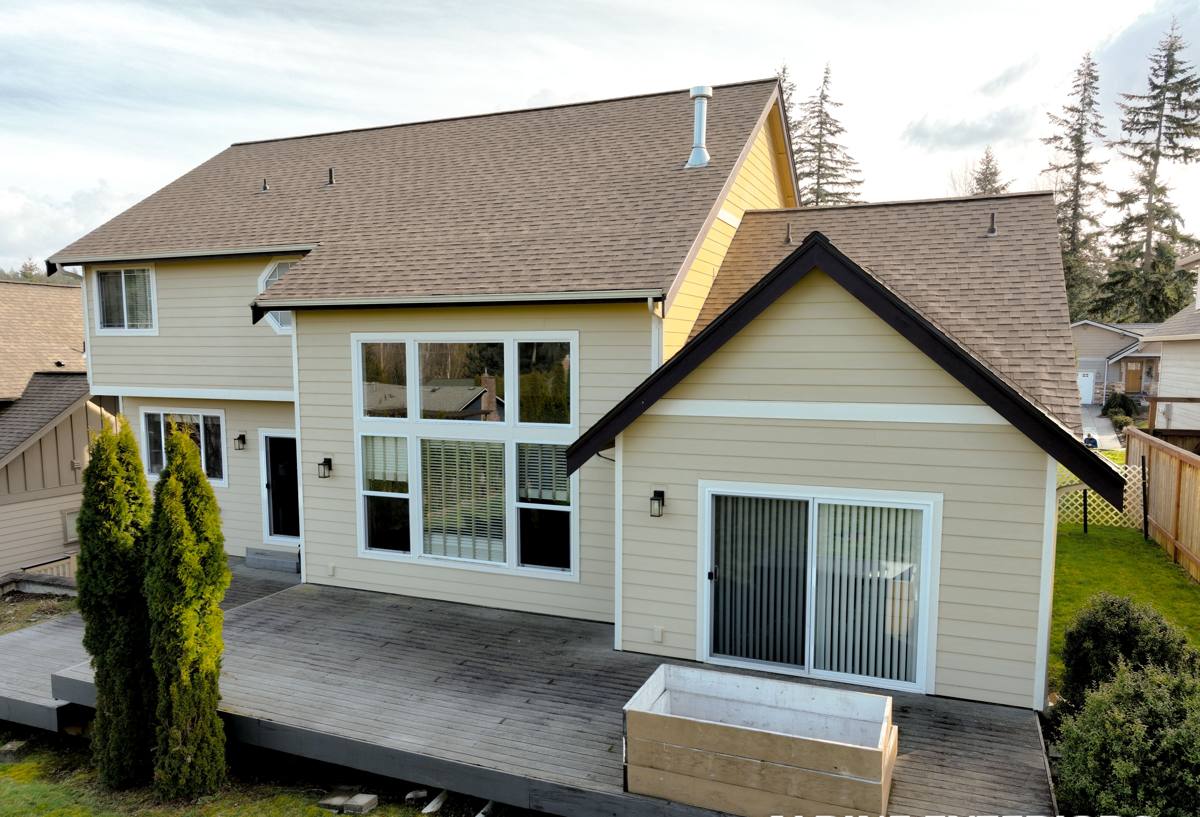
What Guemes Island's Climate Does to a Roof
Salt Air and Corrosion
Marine air carries salt that accelerates corrosion on any exposed metal — fasteners, flashing, gutters, vent stacks. Lower-grade or electroplated fasteners rust out well before the shingles around them wear out, and a corroding nail loses its grip, which is how shingles start lifting or blowing loose in wind. Flashing that isn't rated for this kind of exposure streaks, pits, and eventually leaks at the seams. Materials and fasteners chosen for inland use simply don't hold up the same way this close to the water.
Driving Rain and Wind-Driven Water
Weather moving in off the Strait doesn't always fall straight down — wind pushes rain sideways and up under shingle edges, around chimneys, and into any gap in the flashing. A roof with a thin or partial underlayment, or flashing that was installed to a minimum standard, can pass fine on a calm day and still leak the first time a real storm rolls through. Wind-driven rain finds the weak point, not the obvious one.
Moss, Shade, and a Long Damp Season
Mature conifer cover keeps shaded and north-facing roof slopes wet for days after a storm, which is exactly the environment moss and algae need to take hold. Moss doesn't just look bad — it holds moisture against the roof surface, works its way under shingle tabs and into fastener holes, and lifts edges that then let water underneath. On a lot with heavy tree cover, moss control has to be part of the plan from day one, not something dealt with after it's already established.
Signs a Guemes Island Roof Is Due for Replacement
- Granule loss or bald patches, especially on sun-exposed slopes
- Shingles curling, cupping, or losing their flat profile
- Thick moss mats, particularly on shaded or north-facing sections
- Soft spots, sagging, or a spongy feel underfoot on the roof deck
- Daylight, staining, or damp insulation visible in the attic
- Rusted, pitted, or loose flashing around chimneys, vents, and skylights
- Shingles missing or lifted after a windstorm, even a modest one
- An asphalt composition roof approaching 20-25 years old
Any one of these on its own might just need a repair. Several together, or a roof already past its expected service life, usually means replacement is the more honest recommendation than another round of patching.
Choosing a Roofing Material for Island Exposure
There's no single "best" material for every Guemes Island home — it depends on tree cover, roof pitch, and budget. What matters is picking with the actual exposure in mind rather than defaulting to whatever is cheapest to install.
| Material | Moss/Algae Resistance | Salt-Air Durability | Maintenance | Typical Lifespan |
|---|---|---|---|---|
| Architectural asphalt shingle (algae-resistant) | Good, with treated cap granules | Good, when paired with corrosion-rated fasteners and flashing | Low to moderate; periodic wash and gutter care | 25-30 years |
| Standing seam metal | Very good; sheds moss and debris rather than holding it | Very good with proper coating and fastener selection | Low | 40-50+ years |
| Cedar shake / shingle | Fair; needs regular moss removal under heavy shade | Fair; sensitive to repeated wet-dry and salt cycling without upkeep | High; periodic treatment and good attic ventilation required | 20-30 years with consistent maintenance |
For most homes on the island, a well-installed algae-resistant architectural asphalt shingle is the practical middle ground — solid moss resistance, reasonable cost, and a long track record in this climate when the install is done right. Metal is worth considering on steep pitches or heavily shaded lots where shedding moss and debris outweighs the higher upfront cost. Cedar has real appeal and a traditional look that fits the island, but it's an honest trade-off: it asks for more ongoing maintenance here than the other two options, and we make sure homeowners understand that commitment before we quote it, rather than after.
What a Correct Roof Replacement Involves
Tear-Off and Deck Inspection
We tear off down to bare decking rather than laying new shingles over old — it's the only way to actually see what's underneath. Given how much moisture this island's shaded, damp conditions can trap over the years, checking the deck for rot or soft spots before anything new goes down isn't optional. Any damaged sheathing gets replaced before the underlayment goes on.
Underlayment and Water Protection at Vulnerable Points
With wind-driven rain a real factor here, full synthetic underlayment coverage matters more than it might in a calmer inland setting. We also run self-adhered ice-and-water membrane at eaves, valleys, and around penetrations — the spots where wind-pushed water is most likely to find a way in if the underlayment alone is asked to do all the work.
Flashing and Fastening
Flashing at chimneys, vents, valleys, and wall intersections is sized and fastened for marine exposure, and fasteners are chosen to resist the corrosion that plain electroplated nails can't hold up against this close to salt water. Nailing follows the manufacturer's spec for pattern and placement — not a faster, looser pattern that happens to pass a quick look.
Ventilation
Balanced intake and exhaust ventilation keeps the underside of the roof deck dry, which matters even more under heavy tree cover where ambient humidity lingers. A roof can have every other detail right and still fail early if trapped moisture is rotting the deck from underneath — ventilation is part of a correct install, not an upsell.
The Logistics of Roofing on an Island
Getting a crew, materials, a dumpster, and haul-away equipment to Guemes Island means planning around the ferry, not just around the homeowner's calendar. Materials need to be ordered and staged ahead of the crossing. Crew transport, delivery trucks, and dumpster placement all have to be sequenced so the job doesn't stall waiting on the next available ferry slot or end up making extra, costly crossings mid-project.
A contractor who hasn't priced island logistics before tends to either underbid the job and cut corners to make up the difference, or discover the real cost partway through and pass it to the homeowner as a change order. We build ferry logistics, material staging, and haul-away into the estimate itself, so what's quoted is what gets billed.
Why a Crew That Already Works Guemes Island Matters
Experience on the island isn't just about convenience — it shows up in the estimate and the finished roof. A crew that's already done the logistics knows how to schedule around ferry timing without padding the price to cover uncertainty. They're familiar with how tree cover and wind direction off the Strait actually behave on specific parts of the island, not just in general terms. And a full roof replacement in Skagit County typically requires a permit — a contractor used to working here handles that as a normal part of the job rather than something the homeowner has to chase down separately.
Our Roof Replacement Process
- On-site inspection and assessment of the current roof, decking, and ventilation
- Written estimate covering materials, scope of work, and island logistics up front
- Material ordering and delivery staged around ferry scheduling
- Full tear-off and deck inspection, with any needed repairs identified before covering
- Underlayment, flashing, and new roofing material installed to manufacturer spec
- Site cleanup and full haul-away of old material and debris
- Final walkthrough so you can see the completed work before we call the job done
Maintaining Your New Roof Against Salt and Moss
A correctly installed roof still benefits from a little ongoing attention in this climate. Keep gutters clear of fir and cedar needles, which pile up fast under tree cover and can back water up under the roof edge. Plan for periodic moss treatment and a gentle roof wash rather than pressure washing, which strips protective granules and shortens shingle life. Where it's practical, trimming back overhanging limbs reduces both shade and debris buildup. After any significant windstorm, a quick look at flashing points around chimneys and vents can catch a small issue before it becomes a leak.
If your Guemes Island roof is showing its age or you're planning ahead for a replacement, we're happy to take a look and walk you through your options honestly. Reach out below for a free, no-pressure estimate.