 Anacortes Siding
 Skyline Sits Right in the Path of Fidalgo Island's Weather
Homes in the Skyline area of Anacortes get the full benefit of living on Fidalgo Island — water views, marine air, and a setting that's hard to beat. The exterior of the house pays for that view. Wind off Rosario Strait and the surrounding waters carries salt-laden moisture onto siding, trim, and fascia year-round. Add Skagit County's long, wet fall-through-spring stretch of driving rain, and a shaded, moisture-friendly moss season that can run several months, and you have one of the more demanding siding environments in western Washington.
None of that is a reason to avoid living there. It's a reason to be deliberate about what goes on the walls and how it's installed. This page is about one thing specifically: installing James Hardie fiber cement siding on Skyline homes, done in a way that actually holds up to this climate.
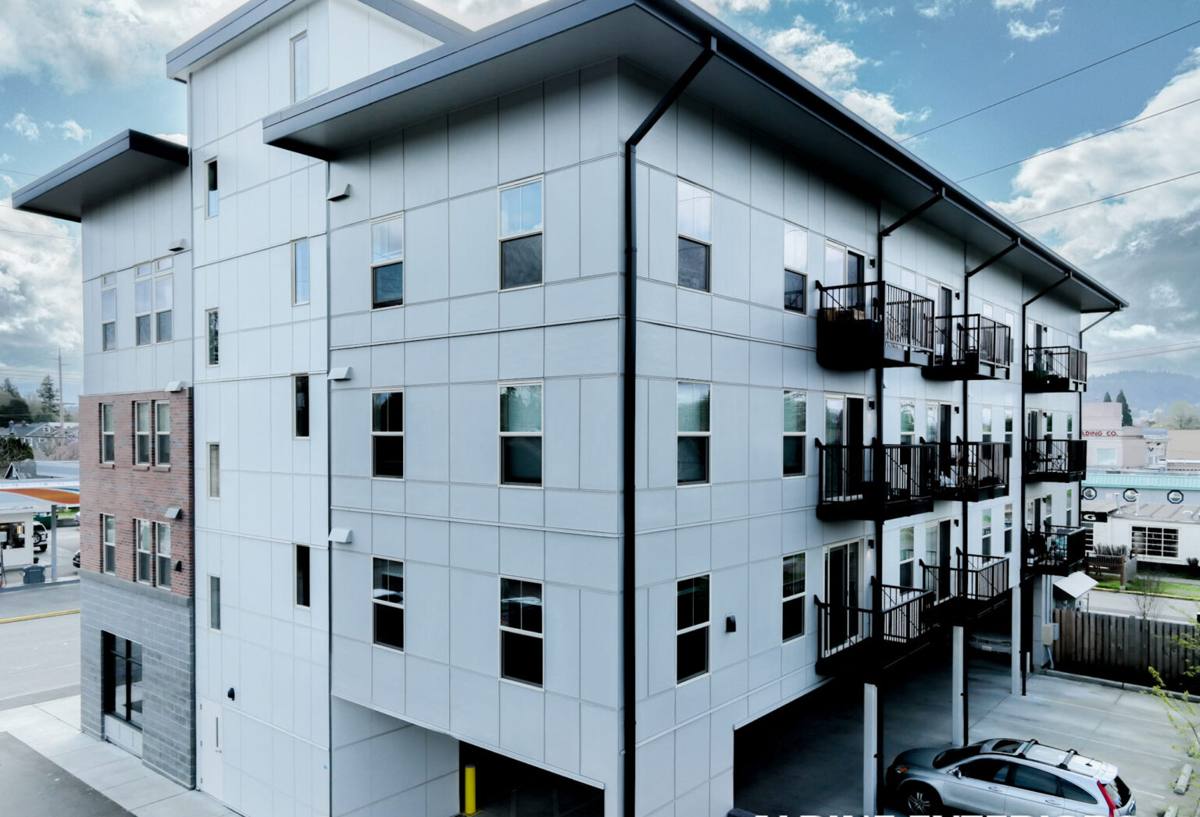
What Salt Air, Rain, and Moss Actually Do to Siding
Salt air
Airborne salt is corrosive to exposed metal fasteners, flashing, and hardware, and it accelerates the breakdown of finishes that aren't built to resist it. Over years, a siding product with a weak factory finish will chalk, fade, or degrade faster on a home exposed to marine air than the same product would inland.
Driving rain
Wind-driven rain doesn't just wet the surface of a wall — it pushes moisture sideways and upward, testing every seam, joint, and piece of trim. A siding system is only as good as its weakest transition point: around windows, at inside and outside corners, and where siding meets trim, roofline, or foundation.
Moss and sustained damp
Shaded lots, tree cover, and long stretches of overcast, damp weather are ideal conditions for moss and algae growth on north-facing and shaded walls. Beyond the cosmetic issue, sustained moisture sitting against a wall surface is exactly what breaks down materials that aren't dimensionally stable or that absorb water into their core.
Why We Only Install James Hardie Fiber Cement
We don't install vinyl, LP SmartSide, Cemplank, Allura, primed spruce, or cedar. That's a deliberate standard, not a sales pitch, and it matters more in a climate like Skyline's than it would somewhere dry and mild.
- Vinyl can warp, buckle, or become brittle over time, and its seams and J-channels give wind-driven rain more opportunities to find a way behind the cladding.
- Wood-based products (cedar, primed spruce, LP SmartSide) rely on an intact factory or field-applied coating to keep moisture out of the wood fiber. In a marine climate with a long damp season, any coating failure — a scratch, a poorly sealed cut end, a nail pop — gives moisture a path into material that swells, rots, or delaminates.
- James Hardie fiber cement is non-combustible and dimensionally stable — it doesn't absorb and release moisture the way wood does, and it isn't prone to the heat-and-cold expansion issues that affect vinyl. That stability is exactly what a coastal, high-moisture site needs from a cladding material.
We'd rather explain honestly why we standardized on one product than sell whatever a homeowner already has in mind. Hardie isn't magic — it still has to be installed correctly to perform — but it gives us a material that's built for exactly the conditions Skyline throws at it.
Which Hardie Products Make Sense for This Site
James Hardie engineers its siding by climate zone (its "HZ" system), and homes in the Pacific Northwest fall into the wetter, cooler HZ5 zone. That matters: HZ5 products are formulated and warrantied specifically for regions with sustained moisture exposure, which is the correct spec for a Skyline home rather than a generic national product.
| Product | Where it's used | Why it fits this climate |
|---|---|---|
| HardiePlank lap siding (HZ5) | Primary wall cladding | Moisture- and impact-resistant profile engineered for wet, coastal climates |
| HardieTrim boards | Corners, window and door casing, fascia | Dense, stable trim that resists the swelling and rot common at exposed edges |
| HardiePanel vertical siding | Accent walls, gables | Clean modern look with the same fiber cement moisture performance |
| ColorPlus factory finish | All exposed siding and trim | Baked-on, UV- and salt-air-resistant finish that outperforms field-applied paint |
ColorPlus finish is worth calling out on its own. Because it's cured at the factory under controlled conditions rather than brushed or sprayed on site, it holds color and resists the chalking and fading that marine air accelerates in ordinary field-applied paint — and it comes with its own finish warranty separate from the substrate warranty.
What a Correct Installation Actually Involves
The product is only half the equation. Most siding failures we see — on any brand — trace back to installation shortcuts, not the material itself. On a Skyline home, a few details matter more than they would somewhere drier:
- Drainage plane and weather-resistive barrier installed and lapped correctly, so any moisture that does get behind the siding has a way out instead of sitting against the wall sheathing.
- Rainscreen gap (a furring strategy that creates a small air space behind the siding) to let walls dry out between rain events — especially valuable on shaded or north-facing walls where moss and lingering dampness are worst.
- Correct fastener type and placement — corrosion-resistant fasteners driven per Hardie's spec, not overdriven or underdriven, since a compromised fastener is a direct path for water.
- Flashing at every penetration — windows, doors, hose bibs, light fixtures, and any roof-to-wall intersection — installed to shed water down and out, not just caulked over.
- Proper clearances at the foundation, roofline, and any deck or patio surface, so siding isn't sitting in standing water or constant splash-back.
- Factory-cut edges kept intact where possible, and any field cuts sealed per Hardie's instructions, since cut edges are the one place the factory finish doesn't already protect the material.
Skip any one of these and you can end up with a home wearing a premium material that still fails early — which is exactly the outcome a Hardie installation is supposed to prevent.
Our Process on a Skyline Home
Every job starts with a walk of the exterior, not a generic quote. We look at sun and shade exposure on each elevation, existing moisture damage or moss buildup, the condition of the current water-resistive barrier if it's exposed during tear-off, and any drainage or grading issues at the foundation. Homes closer to open water or with heavy tree shade get extra attention on the drainage plane and rainscreen detailing, since those are the walls that will see the most sustained dampness.
From there we spec the Hardie product line, profile, and ColorPlus color, handle tear-off and disposal of the old cladding, address any sheathing or framing issues we find underneath before they get covered up, and install to manufacturer spec — not a shortcut version of it. If your property is part of a community with its own architectural or color guidelines, we're glad to work within them; just have those requirements on hand when we scope the job.
Living With Hardie Siding Through the Wet Season
One of the practical advantages of fiber cement in this climate is how little upkeep it asks for. It doesn't need repainting on the schedule wood siding does, and it won't warp or crack the way vinyl can in temperature swings. That said, a few habits keep any siding performing well through Skagit County's damp months:
- Rinse shaded or north-facing walls periodically to keep moss and algae from taking hold — a garden hose is usually enough; avoid high-pressure washing directly at seams and joints.
- Keep gutters clear so overflow doesn't run down the wall face repeatedly in heavy rain.
- Trim back vegetation and tree limbs that keep a wall section shaded and damp longer than the rest of the house.
- Have caulking at trim and penetration points checked every few years — caulk is a maintenance item on any siding system, Hardie included.
Cost Factors to Expect
Every home is different, but the same variables tend to drive the price on Skyline projects:
| Factor | Why it affects cost |
|---|---|
| Home size and number of stories | More square footage and height mean more material and labor, plus added scaffolding or lift needs |
| Existing wall condition | Rot or sheathing damage found during tear-off adds repair scope before new siding goes on |
| Siding profile and trim detail | Vertical accents, wider trim boards, and multiple colors add labor and material cost over a simple lap siding job |
| Site access | Tight lots, slopes, or limited staging area on some Skyline properties can affect equipment and labor time |
| Tear-off vs. overlay | Full removal of old siding costs more up front but lets us inspect and fix what's underneath |
We give straightforward, itemized estimates rather than a single lump number, so you can see what's driving the cost.
Why It Matters That We Already Work This Area
A crew that already installs on Fidalgo Island knows how a north-facing wall on a shaded Skyline lot behaves differently than a south-facing wall two streets over, and specs the drainage and rainscreen detailing accordingly instead of treating every wall the same. That familiarity with local exposure, plus a straight answer about why we only install one product system, is what we bring to every estimate.
If you're weighing a siding replacement or repair on a Skyline home, we're happy to walk the property, look at what's driving any current problems, and give you a clear, no-pressure estimate for doing it right the first time. Use the form below to get started.