 Anacortes Siding
 Why La Conner's Climate Is Hard on Windows
La Conner sits low and close to the water, on the edge of the Swinomish Channel and the flat farmland of the Skagit Valley. That location is beautiful, and it's also rough on the outside of a house. Salt-laden air off the channel works into aluminum hardware and steel fasteners over time. Driving rain, pushed sideways by wind off the water and the open delta, finds any gap in flashing or sealant a normal rainstorm would never reach. And the long gray stretch of fall through spring here means wood trim, sills, and shaded north-facing walls stay damp long enough to grow moss and mildew for months at a stretch.
None of that is dramatic on its own. It's the accumulation — season after season — that shows up as fogged glass, swollen sashes, soft sills, and heating bills that creep up even though the thermostat hasn't changed. Windows are one of the first places it shows, because they're full of moving parts, seals, and seams.
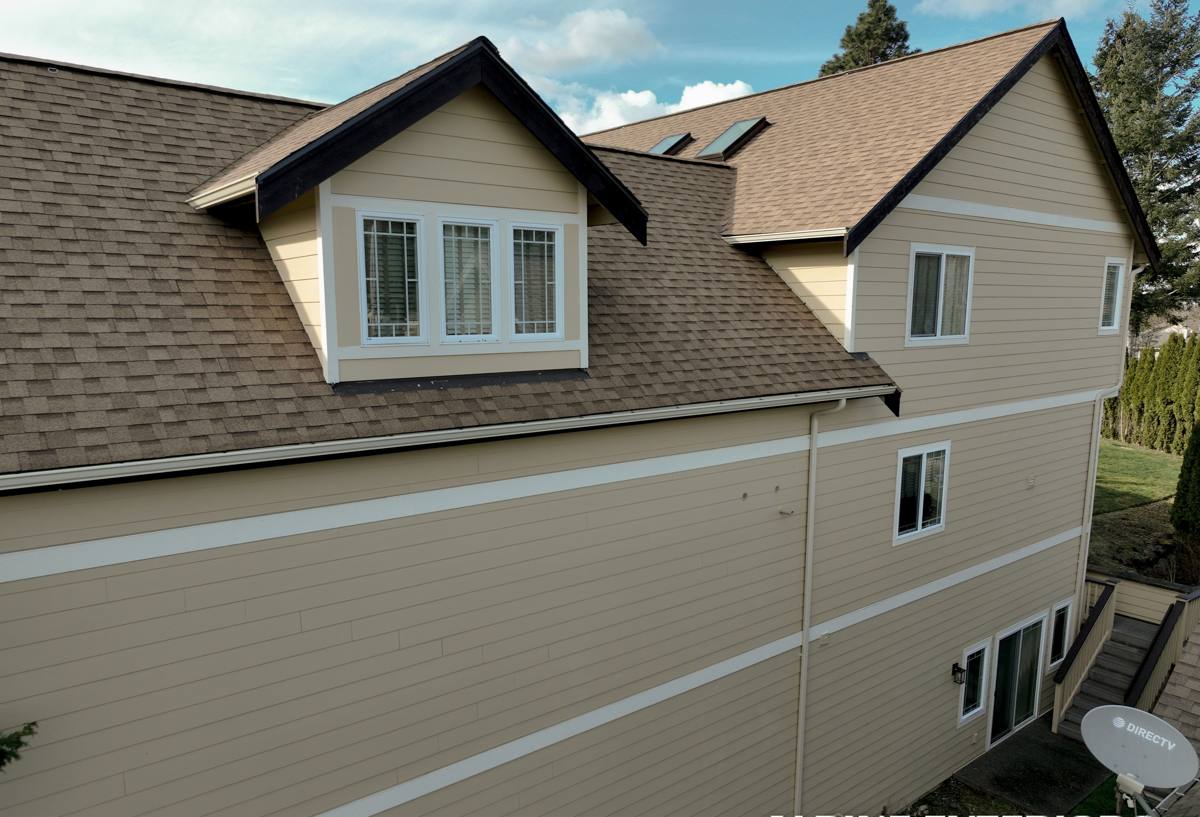
What "Energy-Efficient" Actually Means for a Window
"Energy-efficient" gets used loosely in this industry. For a homeowner comparing options, three numbers do most of the work:
- U-factor — how well the window resists heat loss. Lower is better. This is the number that matters most in a climate like ours, where keeping heat in during the wet months is the main job.
- SHGC (Solar Heat Gain Coefficient) — how much solar heat passes through the glass. Less critical here than in sunnier climates, but still relevant on south- and west-facing walls.
- Air leakage rating — how much air moves through the window assembly itself, independent of the glass. This is where driving rain and wind off the channel expose a poorly built or poorly installed window fast.
Look for the NFRC label on any window you're quoted — it's the independent rating sticker, not a manufacturer's marketing number. A window with strong lab ratings that's installed carelessly will still leak air and eventually water. The reverse is also true: even a well-installed builder-grade window has a ceiling on how much it can do. Both the product and the install have to be right.
Glass and Gas Fill
Nearly every energy-efficient window today is double-pane with a low-E (low-emissivity) coating and an inert gas fill — usually argon — between the panes. The low-E coating reflects heat back into the room in winter without noticeably darkening the glass. Argon fill slows heat transfer compared to plain air. Triple-pane glass exists and performs better still, but it adds weight, cost, and is rarely necessary for a typical La Conner home unless you're dealing with a particularly exposed, wind-facing wall.
Frame Materials: What Holds Up Near the Water
Frame material matters as much as the glass package in a marine climate. Here's how the common options compare for homes exposed to salt air and sustained damp:
| Material | How It Handles Salt Air & Moisture | Maintenance | Typical Fit |
|---|---|---|---|
| Vinyl | Won't corrode or rot; performs well in coastal air | Low — occasional cleaning | Most homes; budget to mid-range |
| Fiberglass | Excellent — very stable, resists warping and pitting | Low | Higher-exposure walls, long-term owners |
| Wood (clad exterior) | Good if the cladding is intact; exposed wood suffers | Higher — watch seals and paint/stain | Historic or character homes wanting a wood interior |
| Aluminum | Poor without a thermal break; hardware corrodes faster in salt air | Moderate to high | Rarely our first recommendation here |
We generally steer homeowners in this area away from bare aluminum frames and toward vinyl, fiberglass, or clad-wood, simply because uncoated metal and salt air don't get along — it's a maintenance burden more than a failure, but it's one we'd rather help you avoid than have you discover in year six.
Installation Is Where Efficiency Is Actually Won or Lost
A window's lab rating describes the product in a controlled test, not how it will perform on your house. Most of the problems we get called out to fix in this area aren't glass failures — they're installation failures that let water or air past a window that was otherwise fine. Near the channel, with wind-driven rain, the details matter more than they would in a drier, more sheltered spot:
- Flashing that directs water out and away from the rough opening, lapped correctly with the house wrap or building paper — not just caulked and hoped for.
- Sill pans under the window opening so any water that does get past the frame has somewhere to drain instead of soaking into framing.
- Backer rod and sealant sized and applied correctly around the perimeter — too much sealant traps moisture, too little leaves gaps.
- Proper shimming and squaring so the sash operates and seals evenly for the life of the window, not just on install day.
- Insulation in the gap between frame and rough opening, without over-packing it in a way that bows the frame.
This is the part of the job that doesn't show up in a brochure, and it's the part that determines whether you get twenty-plus years of performance or a callback in three winters for a soft sill and a foggy pane.
Replacing Windows in Older and Character-Style Homes
La Conner has its share of older farmhouses and homes with real architectural character — narrow trim profiles, divided-light patterns, and proportions that a generic replacement window can flatten out if you're not paying attention. Energy-efficient windows don't have to mean losing that look. Options like simulated divided lites, custom trim matching, and frame profiles sized to match your existing openings let you upgrade performance without the house looking re-done.
On older homes we also pay close attention to what's around the window opening — old trim, sheathing, and framing can be softened by decades of moisture, especially on walls that catch the weather off the water. Part of a proper replacement is checking that substrate before the new window goes in, not covering up a problem with a new frame.
Our Window Replacement Process
- On-site assessment — we look at each window opening, not just the glass: framing condition, existing flashing, sill condition, and how that wall is exposed to wind and rain off the channel.
- Measurement and product selection — accurate measurements, and a frame/glass package matched to that wall's exposure and your budget, not a one-size answer for the whole house.
- Removal and opening prep — old window comes out, we inspect and repair the rough opening and sheathing as needed before anything new goes in.
- Installation — sill pan, flashing, proper shimming, insulation, and sealant, done in the sequence that actually keeps water out.
- Interior and exterior finish — trim, caulking, and a final check that every sash operates and seals correctly.
- Walkthrough — we show you what was done and what to watch for, especially if your home has multiple exposures with different weather loads.
Keeping Efficient Windows Performing in This Climate
Even a well-installed window benefits from a little seasonal attention in a place with this much rain and moss pressure. A simple annual routine goes a long way:
- Wipe down tracks and weep holes so they aren't blocked by moss, debris, or salt residue
- Check exterior caulking and sealant beads for cracking or separation, especially after a hard winter
- Look at sills and trim for soft spots or paint failure, which often shows up before a leak does
- Operate every sash at least once each season so hardware doesn't seize up from disuse and damp
- Rinse salt residue off frames and hardware near the water a couple of times a year
None of this is difficult, but it's easy to skip — and skipping it is usually how a small, cheap fix turns into a frame replacement a few years later.
Why Hiring a Crew That Already Works in La Conner Matters
A window contractor who mostly works inland or in drier parts of Skagit County can still sell you a good product — but they may not think about sill pan drainage, salt exposure on hardware, or how a west-facing wall on the channel takes weather differently than a sheltered wall three miles inland. We work on homes throughout Anacortes and the surrounding Skagit County waterfront, and that means the flashing details, frame material recommendations, and maintenance advice we give are based on what actually holds up here — not on a generalized checklist written for a different climate.
It also matters for something as basic as scheduling and sequencing the work around actual weather windows, rather than a calendar that assumes dry, mild conditions most of the year.
What Affects the Cost of a Window Replacement Project
| Factor | Why It Matters |
|---|---|
| Frame material | Vinyl is typically the most affordable; fiberglass and clad-wood cost more upfront but often mean less long-term maintenance |
| Glass package | Standard double-pane low-E vs. upgraded coatings or triple-pane changes both material and performance |
| Number and size of openings | More straightforward per-window pricing at scale; large or custom-shaped windows cost more individually |
| Condition of existing openings | Rot or moisture damage found during removal adds repair scope before the new window can go in |
| Trim and finish work | Matching existing interior/exterior trim, especially on older or character homes, adds labor |
| Access and exposure | Upper-story or hard-to-reach windows, and walls with heavier weather exposure, can affect labor and detailing needs |
We give honest, itemized estimates rather than a single flat number for "windows," because the factors above genuinely change the price from one house to the next.
If your La Conner home has windows that feel drafty, fog between the panes, or stick in damp weather, we're happy to come take a look. Reach out for a free, no-pressure estimate using the form below — we'll walk the openings with you and give you a straight answer on what your home actually needs.