 Anacortes Siding
 Why La Conner Roofs Wear Differently Than Roofs Inland
La Conner sits right on the water, and that changes what a roof has to deal with day to day. Homes here face a mix of conditions that inland Skagit County properties simply don't see in the same combination: airborne salt spray off the Swinomish Channel, wind-driven rain that gets pushed sideways under poorly sealed edges, and a long, damp moss season that runs from fall through spring. Any one of these on its own is manageable. Together, over years, they shorten the life of a roof that wasn't built and installed with this specific exposure in mind.
We install roofs across Anacortes and the surrounding Skagit County waterfront, and La Conner homes get a specific set of recommendations because of where they sit. A roofing crew that only works drier, inland neighborhoods can put on a technically fine roof that still underperforms here, because the details that matter in a marine environment aren't the details that matter fifty miles east.
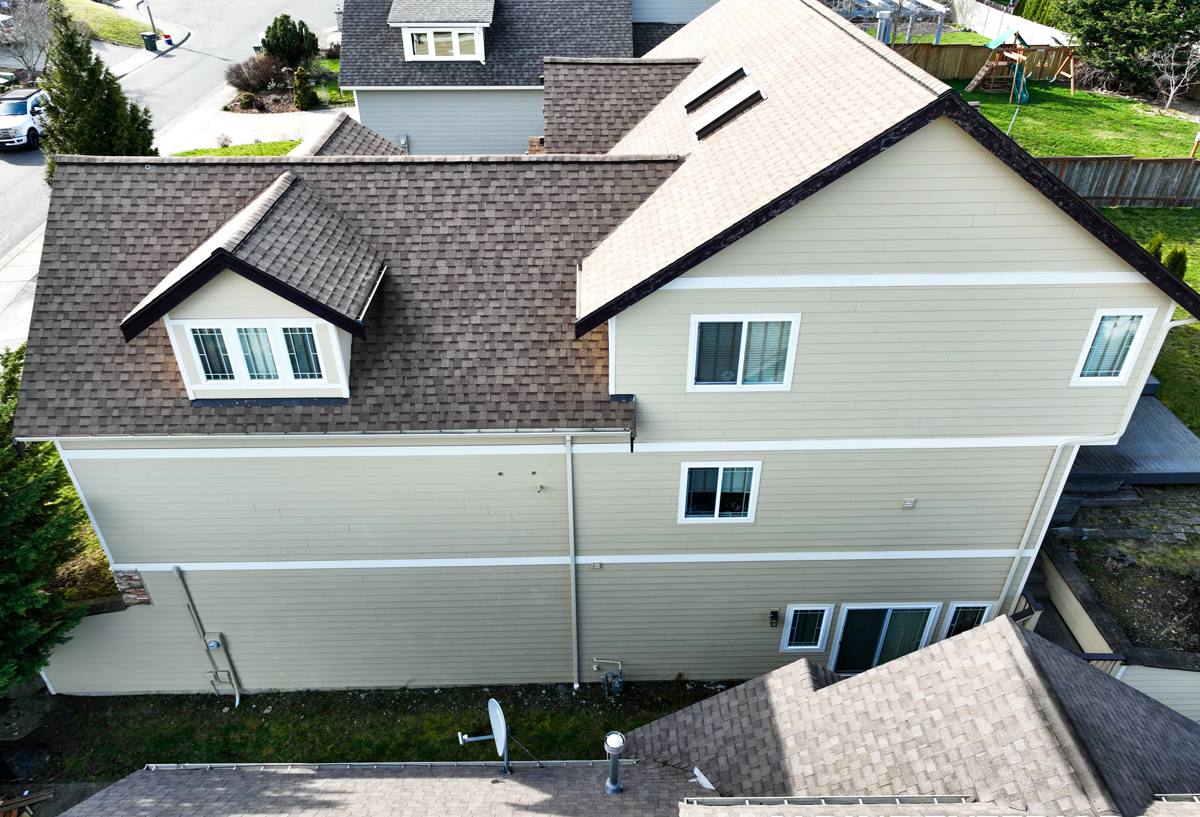
What Salt Air, Driving Rain, and Moss Actually Do to a Roof
Salt Air and Metal Fatigue
Salt-laden air accelerates corrosion on anything metal on your roof: flashing, fasteners, vents, gutters, and metal roofing panels themselves if they're not rated for coastal exposure. Standard fasteners and untreated flashing can start showing rust and pitting well before they would inland. This is one of the most common causes of early leaks we find on La Conner homes — not the roofing material itself failing, but the metal components around it corroding first.
Wind-Driven Rain
Rain that falls straight down is easy to shed. Rain that's being pushed sideways by wind off the water finds every gap, every under-lapped shingle, and every flashing detail that was installed to a minimum standard instead of a coastal standard. Roof valleys, chimney flashing, and the edges around dormers and skylights are where wind-driven rain does its damage, because water is being forced uphill and sideways instead of just running down.
Moss and Moisture Retention
The Pacific Northwest's long wet season gives moss and moss-friendly algae plenty of time to establish on north-facing slopes and shaded areas. Moss isn't just cosmetic — it holds moisture directly against the roofing surface, works its root structure under shingle edges, and can lift material enough to let water underneath. A roof with poor ventilation or the wrong underlayment traps that moisture instead of letting the assembly dry out between storms, which is when granule loss, rot in the decking, and premature aging show up.
What a Correct New Roof Installation Includes Here
A new roof for a La Conner property should be built as a system, not just a layer of shingles or panels. Every component matters, and skipping or downgrading any one of them is usually where early failures start.
- Corrosion-resistant fasteners and flashing rated for marine/coastal exposure, not standard-grade hardware
- Ice-and-water shield or a full synthetic underlayment at eaves, valleys, and penetrations, sized for wind-driven rain, not just standard code minimums
- Balanced intake and exhaust ventilation so the roof deck can actually dry out between wet spells instead of staying damp
- Properly lapped and sealed step flashing and counter-flashing at chimneys, walls, and dormers
- Drip edge and gutter apron detailing that directs water away from fascia and soffits instead of letting it wick back in
- Material selection matched to the home's exposure — sun, shade, wind direction, and proximity to the water all factor in
None of this is exotic. It's standard roofing practice applied with the right level of attention to a coastal, high-moisture environment. The failures we get called out to fix are almost never about a bad shingle — they're about a flashing detail, a ventilation gap, or hardware that wasn't up to the exposure.
Choosing the Right Roofing Material
| Material | How It Handles This Climate | Maintenance Reality |
|---|---|---|
| Architectural asphalt shingles | Good performance when paired with proper underlayment and ventilation; algae-resistant granules help with moss/algae staining | Periodic moss removal and gutter cleaning; solid 25-30+ year lifespan when installed correctly |
| Standing seam metal | Sheds wind-driven rain well and resists moss growth on steeper slopes; needs coastal-rated fasteners and coatings to manage salt exposure | Low maintenance once installed correctly; fastener and coating quality matter more here than inland |
| Cedar shake | Traditional look but more moisture-sensitive; needs excellent ventilation and regular upkeep to resist rot and moss in a wet marine climate | Higher maintenance burden — more frequent treatment and inspection than asphalt or metal |
| Synthetic/composite roofing | Resists moisture absorption and algae staining well; performance depends heavily on installation quality | Low to moderate maintenance; product warranties vary, so installation detail matters |
There's no single "best" material for every La Conner home — it depends on your roof's slope, shading, and how much upkeep you want to take on. We'll walk through the honest trade-offs for your specific property rather than push one product line.
Our Process for a La Conner Roof Replacement
1. On-Site Inspection and Honest Assessment
We start by getting on the roof, not just looking at it from the ground. We check the decking condition, existing ventilation, flashing details, and how the current roof has actually held up against the local exposure. If a full replacement isn't warranted yet, we'll tell you that.
2. A Written Estimate You Can Actually Compare
You get a clear scope of work — materials, underlayment, flashing approach, ventilation plan, and timeline — so you can compare it against other bids on an apples-to-apples basis instead of guessing what's included.
3. Tear-Off and Deck Inspection
Once the old roofing is off, we inspect the decking itself. Any soft, rotted, or moisture-damaged sheathing gets identified and addressed before new material goes down — covering over a compromised deck is how new roofs fail early.
4. Installation Built for This Exposure
Underlayment, flashing, ventilation, and fastening are all installed to the standard this climate demands, not a generic minimum. This is the step where most of the long-term performance difference actually gets built in.
5. Final Walkthrough
We walk the completed job with you, cover what maintenance (if any) the material requires, and make sure you understand what was done and why.
Why Hiring a Crew That Already Works La Conner Matters
Roofing crews that work across a wide range of inland conditions can do good general work, but they don't always default to coastal-grade details unless a homeowner specifically asks. A crew that regularly works Anacortes and La Conner properties already knows to spec corrosion-resistant hardware, prioritize ventilation for moss control, and detail flashing for wind-driven rain — because that's what every job in this area requires, not an upgrade option buried in the estimate.
That local familiarity also matters for permitting and code requirements specific to Skagit County, and for understanding how a particular street's exposure to wind and water differs even within La Conner itself — a roof facing open water takes more weather than one tucked behind other structures.
Signs Your La Conner Home May Need a New Roof
- Granules collecting in gutters or at downspout outlets
- Visible moss growth on north-facing or shaded slopes
- Rusting or staining around flashing, vents, or valleys
- Curling, cracked, or missing shingles, especially after wind events
- Daylight visible through the roof deck from inside the attic
- Rising energy bills tied to poor attic ventilation or insulation performance
- A roof approaching or past 20-25 years old without a full inspection history
Catching these early usually means a smaller scope of work. Waiting until there's active interior water damage almost always costs more, since decking, insulation, and sometimes interior finishes end up part of the repair.
What Affects the Cost of a New Roof in This Area
| Factor | Why It Matters Here |
|---|---|
| Roof size and pitch | Steeper roofs take longer to safely work and typically cost more per square |
| Material choice | Asphalt, metal, and specialty materials have different material and labor costs |
| Deck condition | Rotted or damaged sheathing found during tear-off adds cost but is necessary to fix |
| Ventilation upgrades | Adding or correcting intake/exhaust ventilation is a smaller upfront cost that pays off in roof longevity |
| Flashing and hardware grade | Coastal-rated fasteners and flashing cost more than standard-grade but reduce early corrosion failures |
| Access and site conditions | Landscaping, roof height, and staging area affect labor time |
We give a specific number after seeing your roof in person — broad online estimates rarely account for the deck condition or ventilation needs a coastal home actually has.
Get a Straight Answer on Your Roof
If your La Conner roof is showing its age, or you just want an honest read on how many years it has left, we're glad to take a look. We'll give you a clear, no-pressure estimate and tell you what we actually see — whether that's a full replacement, a repair, or a few more years of life left in what you've got. Reach out through the form below to schedule a free estimate.