 Anacortes Siding
 Why La Conner Siding Takes a Different Kind of Beating
La Conner sits close to tidal water in Skagit County, and that proximity shapes everything about how siding ages here. Salt-laden air moves off the Swinomish Channel and settles on exterior walls day after day, accelerating corrosion on fasteners, trim, and any siding product that isn't built to shrug off moisture. Add in the driving rain that blows sideways during fall and winter storms, and you get wind-driven water finding every unsealed seam, every gap behind trim, and every spot where caulk has given up.
Then there's moss. Skagit County's long, wet, mild winters create a moss season that can stretch across half the year on north-facing and shaded walls. Moss holds moisture against the siding surface far longer than open air ever would, which is exactly the condition that causes rot, paint failure, and hidden water intrusion behind the cladding. A siding repair in La Conner isn't just cosmetic work — it's addressing a home's ongoing fight against salt, rain, and moss, all at once, in a way that inland Skagit County homes simply don't deal with to the same degree.
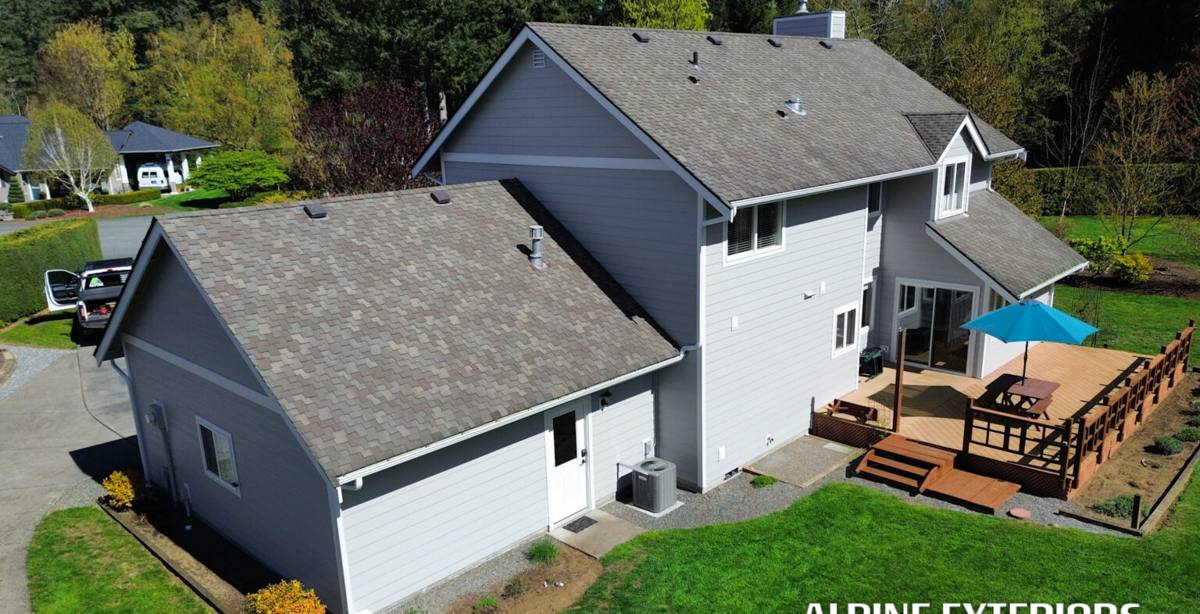
Signs Your La Conner Home Needs Siding Repair
Most siding problems don't announce themselves loudly. They show up as small details that are easy to write off until they become expensive. Walk your exterior and look for these:
- Soft or spongy spots when you press on siding, especially near the bottom courses and around window and door trim
- Paint that's peeling, bubbling, or chalking in patches rather than evenly across the wall
- Visible gaps or separation at butt joints, corners, or where siding meets trim
- Persistent moss or algae growth that keeps returning even after cleaning
- Staining or streaking below nail heads or seams, which usually points to water tracking behind the surface
- Warping, buckling, or a wavy appearance across a panel or plank run
- Interior clues — musty smells, peeling paint on interior walls that back up to exterior siding, or unexplained humidity
Any one of these can be isolated and minor. Several appearing together, especially on the walls that face prevailing wind and rain, usually means water has been getting behind the siding for a while.
What a Correct Siding Repair Actually Involves
Diagnosing the real cause, not just the visible damage
A patch job that ignores why the siding failed in the first place just buys a few more years before the same spot fails again. Before any board is replaced, we look at what's happening behind it — flashing condition, house wrap integrity, caulk joints, and whether water has a path to escape if it does get behind the cladding. In a wet, salt-exposed environment like La Conner, skipping this step is how homeowners end up paying for the same repair twice.
Matching material, reveal, and finish
Siding repair only looks right if the replacement section matches the existing plank width, reveal, and color. Mismatched repairs are one of the most common complaints homeowners have after hiring an unfamiliar crew for a "quick patch." We take the time to match the existing product line and finish so the repaired section blends in rather than standing out.
Flashing and moisture management done right
Every repair is an opportunity to correct whatever moisture path caused the original damage. That means proper head flashing above windows and doors, correctly lapped house wrap, and a drainage plane that lets any incidental moisture drain out instead of pooling against the sheathing. This is the part of a repair that isn't visible once the job is done, but it's the part that actually determines whether the repair lasts.
Repair or Replace? How We Make That Call
Not every problem calls for full replacement, and not every problem should be patched. The honest answer depends on how much of the wall is affected and what's happening behind the surface.
| Situation | Repair usually makes sense | Replacement usually makes more sense |
|---|---|---|
| Damage location | Isolated to one or two boards, corners, or a single wall section | Spread across multiple walls or repeated in the same areas over time |
| Underlying moisture barrier | House wrap and flashing behind the damage are still intact | House wrap is degraded, missing, or failing in multiple spots |
| Age of existing siding | Siding is relatively young and otherwise performing well | Siding is near or past its expected service life |
| Cause of failure | A single identifiable event — impact damage, one bad seam, isolated flashing failure | A systemic issue — original installation defects, chronic moisture intrusion |
We'll tell you plainly which category your home falls into. If a repair will genuinely hold up, we'll say so. If the underlying problem is bigger than the visible damage suggests, we'll explain why and let you make the call with full information.
Why We Only Repair With James Hardie Fiber Cement
We install James Hardie exclusively — not vinyl, not LP SmartSide, not cedar or primed spruce — and that standard applies to repair work too. When we patch into existing Hardie siding, or replace a failing product with Hardie during a repair, it's because fiber cement holds up to exactly the conditions La Conner deals with: salt air, sustained moisture, and long stretches of damp weather that encourage moss and mildew.
James Hardie's fiber cement is non-combustible and doesn't rot, swell, or feed insects the way wood-based products can. The ColorPlus factory finish is baked on under controlled conditions, which gives it better color retention and resistance to fading than field-applied paint — a real advantage when a home is getting constant sun-and-salt exposure off the water. Hardie's HZ5 product line is specifically engineered for higher-moisture climates, which describes coastal Skagit County well. And because Hardie backs its products with a strong transferable warranty, a properly executed repair or replacement holds real long-term value, not just a fresh coat of paint.
We won't patch failing vinyl with more vinyl, or repair rotting wood siding with more wood, because we don't think either product is a good long-term answer for this climate. If your home currently has a different siding material, we'll be straightforward about what a Hardie repair or partial replacement involves, and what your options are.
Our Repair Process
- On-site inspection. We look at the visible damage plus the surrounding wall assembly — trim, flashing, caulk joints, and any signs of moisture tracking beyond the obvious spot.
- Diagnosis and plan. We identify the root cause, not just the symptom, and explain what we found in plain language before recommending a scope of work.
- Material matching. We source Hardie product that matches the existing plank size, texture, and color line as closely as possible, or plan a broader repair if a clean match isn't realistic.
- Removal and correction. Damaged material comes out, and any underlying issue — flashing, house wrap, sheathing damage — gets corrected before new siding goes back on.
- Installation to spec. New siding goes in following Hardie's installation requirements for fastening, clearances, and joint treatment, because a repair only performs as well as the install behind it.
- Site cleanup and walkthrough. We clear debris and walk the finished repair with you so you know exactly what was done and why.
Cost Factors for a La Conner Siding Repair
Every repair is different, but the same handful of factors drive most of the cost variation we see:
| Factor | Why it matters |
|---|---|
| Extent of visible damage | A single board or corner costs far less than a multi-wall section |
| Condition behind the siding | Sound sheathing and house wrap keep repairs simple; rot or moisture damage adds real labor |
| Access and wall height | Second-story or hard-to-reach sections take more setup time |
| Color and texture matching | Older siding runs may require sourcing a closer match or repainting an adjacent section for a clean blend |
| Trim and flashing scope | Repairs that include correcting flashing or trim take longer than a straight siding swap |
Small, isolated repairs are typically a modest expense measured in a few hundred dollars. Larger sections involving hidden moisture damage, multiple walls, or trim work climb into the low thousands. We'll give you an honest number after we've actually looked at the wall — not a guess over the phone.
Why Hire a Crew That Already Works La Conner
Siding repair in a waterfront community like La Conner isn't identical to repair work ten or fifteen miles inland. The salt exposure, the wind direction during storms, and the moss pressure on shaded, north-facing walls all behave differently near the water than they do further into Skagit County. A crew that already works this area day to day recognizes those patterns quickly — which walls tend to fail first, what a genuine moisture problem looks like versus a cosmetic one, and how to plan a repair that will actually hold up through another wet season.
Being based in Anacortes also means we're not driving in from out of the region for a single job and disappearing afterward. If a question comes up after the repair, or you want a second opinion on another section of the house, we're a local call, not a scheduling gap.
Keeping Your Siding in Good Shape After the Repair
A repair holds up longest when it's followed by basic, regular upkeep — especially in a climate that gives moss and moisture every advantage:
- Rinse siding periodically to clear salt residue, especially on walls facing the water
- Remove moss and algae promptly rather than letting it establish and hold moisture against the surface
- Check caulking around windows, doors, and trim annually and re-seal where it's cracked or pulling away
- Keep gutters clear so overflow doesn't run down and saturate siding below
- Trim back vegetation and tree cover that keeps walls shaded and damp longer than necessary
- Watch previously repaired areas for a season or two to confirm the fix is holding as expected
If you're seeing soft spots, peeling paint, persistent moss, or any of the warning signs above on a La Conner home, we're happy to take a look and give you a straight assessment — no pressure, no obligation. Use the form below to request a free estimate, and we'll walk the exterior with you and tell you exactly what we find.