 Anacortes Siding
 Board & Batten Siding on a Peninsula That Doesn't Forgive Shortcuts
March Point sits out on the peninsula between Fidalgo Bay and Padilla Bay, which means homes there catch weather from more directions than a typical inland Anacortes lot. Salt-laden air moves off the water, wind-driven rain comes in sideways during winter storms, and the damp, low-light stretches of fall and winter keep exterior wood surfaces wet longer than homeowners expect. Board and batten siding has a clean, vertical, farmhouse-and-craftsman look that a lot of homeowners in this area want, but it is also a siding profile with more seams, more exposed edges, and more places for water to find a way in than a standard horizontal lap job. Get it right and it looks sharp for decades. Get it wrong and you are chasing moisture problems behind the battens within a few years.
This page is about that one job, done for that one place: correct board and batten installation on March Point homes, in James Hardie fiber cement, by a crew that already understands what this stretch of Skagit County throws at a house.
Why March Point's Exposure Changes the Job
Every coastal neighborhood in Skagit County deals with moisture, but not every neighborhood deals with it the same way. A few things about March Point specifically shape how we approach a board and batten install there:
- Open water exposure on multiple sides. Being on a peninsula means wind and rain can hit a home from angles that a more sheltered Anacortes lot never sees, so every elevation needs to be treated as a wet-side elevation, not just the prevailing-weather wall.
- Salt air accelerates fastener and metal corrosion. Standard fasteners and flashing that would be fine twenty miles inland can start showing rust streaks and weakening far sooner out here.
- Long moss season. Cool, damp, low-sun months give moss and algae a long runway to establish on north-facing and shaded walls, and board and batten's vertical battens create narrow ledges and shadow lines where organic growth likes to start.
- Wind-driven rain, not just rainfall totals. It is less about how much rain falls in a year and more about how much of it gets pushed horizontally into wall seams during a storm.
None of that means board and batten is a bad choice for March Point. It means the drainage details behind the boards matter more here than they would on a calmer site, and that is where most of the real work in this job actually happens.
What a Correct Board & Batten System Actually Involves
Board and batten looks simple from the street: wide boards, narrow battens covering the seams. What makes it perform in a climate like this happens underneath, where you can't see it.
Drainage Plane and Rainscreen
Every board and batten system on a wet-climate home should be built over a continuous weather-resistant barrier with a drainage gap behind the siding, not fastened directly against the sheathing. That gap lets any water that gets past the surface drain and dry out instead of sitting against the wall assembly. On a peninsula site like March Point, skipping this detail is one of the fastest ways to end up with hidden rot a few years down the road.
Fasteners, Flashing, and Metal
Salt air is hard on ordinary fasteners and flashing metal. We use corrosion-resistant fastening and flashing appropriate for coastal exposure, and we pay close attention to every horizontal transition — window heads, roof-to-wall intersections, deck ledgers — because those are the spots where a cut corner shows up as a stain or a soft spot years later.
Board Spacing, Fastening Pattern, and Expansion
Fiber cement moves slightly with temperature and moisture, and board and batten profiles need the right fastening pattern and joint spacing to accommodate that without cracking caulk lines or pulling fasteners loose. Battens need consistent reveal and secure attachment into framing, not just into the panel below.
James Hardie Board & Batten: What We Install and Why
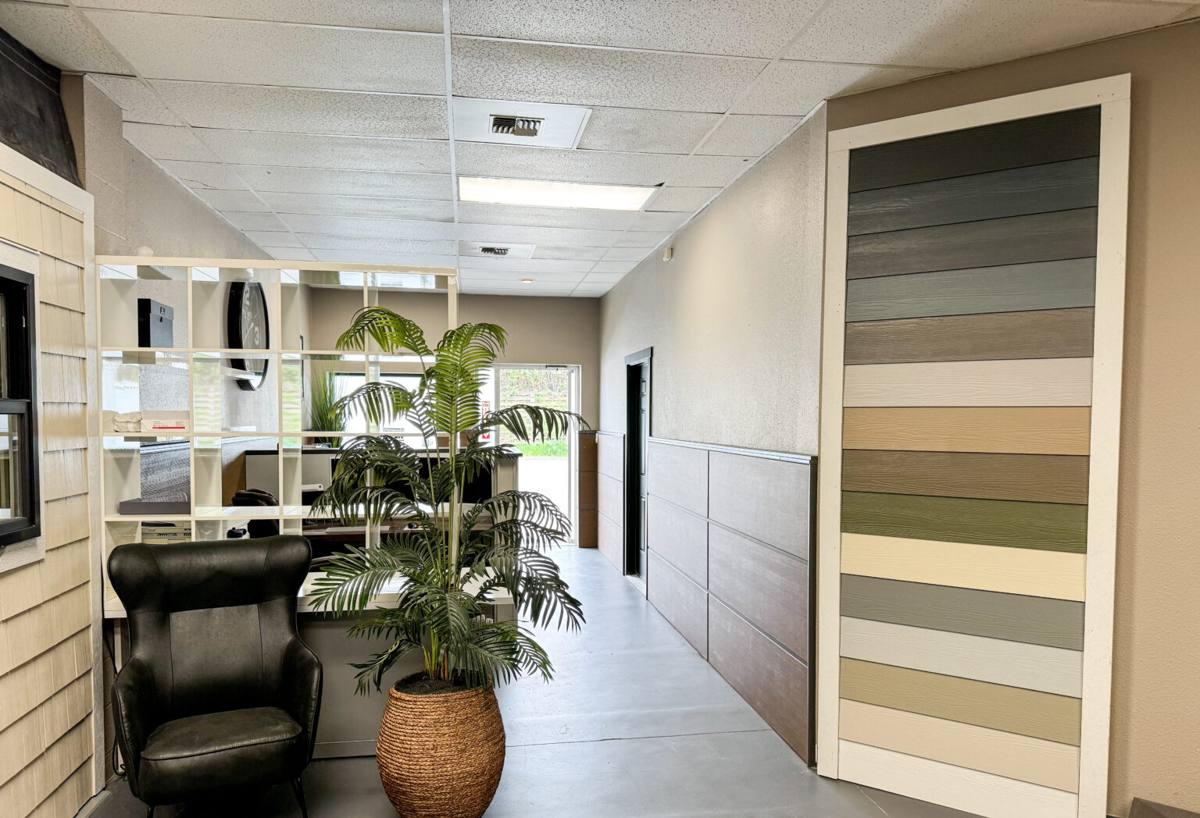
We install James Hardie fiber cement exclusively — no vinyl, no engineered wood, no primed spruce, no cedar. For board and batten specifically, that means HardiePanel vertical siding paired with HardieTrim boards used as the battens, finished in James Hardie's ColorPlus factory-applied color system.
Why Fiber Cement for This Profile
Board and batten has more exposed board edges and more seams than lap siding, and those edges are exactly where wood-based products tend to swell, split, or invite moisture over time. Fiber cement doesn't absorb water the way wood-based siding does, and it doesn't attract the insects that go after real or engineered wood trim. It's also non-combustible, which matters to a growing number of homeowners in this region regardless of coastal exposure.
HardieTrim Battens and ColorPlus Finish
Using HardieTrim boards as battens gives a crisp, consistent line and holds paint far better over time than dimensional wood trim exposed to this much moisture cycling. ColorPlus finish is baked on at the factory under controlled conditions, which gives more even, more fade-resistant color than a field-applied paint job — and it comes backed by James Hardie's finish warranty in addition to the product warranty on the siding itself. James Hardie's HZ product lines are engineered for climate zones like the Pacific Northwest, which is part of why we don't deviate to other brands or materials for homes out here.
How We Approach a March Point Board & Batten Job
The sequence matters as much as the materials. Our process on a board and batten project typically looks like this:
- On-site inspection of existing siding, sheathing, and trouble spots — window and door flashing, deck and porch intersections, roofline transitions — before we quote anything.
- Removal of failing siding and inspection of the sheathing underneath for rot or soft spots, which get repaired or replaced before anything new goes on.
- Weather-resistant barrier and rainscreen installation, sealed and lapped correctly at every penetration.
- Flashing at all horizontal transitions — window heads, roof lines, ledgers — using corrosion-resistant metal suited to coastal exposure.
- HardiePanel installation with correct fastening pattern and joint spacing for the elevation and exposure.
- HardieTrim batten installation over the panel seams, set for consistent reveal and secured into framing.
- Final detailing and cleanup, including inspection of caulk lines, trim, and touch-up where needed.
What Affects the Cost of a Board & Batten Project
Board and batten pricing varies more than people expect, mostly because of what's happening underneath the surface, not the boards themselves. These are the main factors we walk through with March Point homeowners before giving a number:
| Factor | Why It Matters |
|---|---|
| Condition of existing sheathing | Rot or water damage found during tear-off adds repair scope before new siding can go on |
| Number of exposed elevations | Peninsula lots often need full weather-resistant detailing on every wall, not just one prevailing side |
| Trim and batten complexity | Corners, gable ends, and window surrounds take more labor per square foot than flat wall runs |
| Home size and story count | Two-story and multi-gable homes need more staging and time than single-story ranch-style layouts |
| Removal and disposal of old siding | Tear-off scope and disposal add cost separate from the new material and labor |
We give straightforward, written estimates that break these factors out so homeowners can see what they're actually paying for, rather than a single lump number.
Signs Your Current Siding Is Already Telling You Something
Before a full replacement conversation, it helps to know what to look for on a home that's had a few Skagit County winters:
- Soft or spongy spots when you press on siding near the base of walls or under windows
- Persistent moss or algae streaking on north-facing or shaded elevations that comes back shortly after cleaning
- Cracked or peeling paint concentrated around board and batten seams, corners, or trim joints
- Visible gaps, warping, or cupping in board edges, especially on wood or engineered wood siding
- Rust streaking below fasteners or flashing, a common early sign of coastal corrosion
- Musty smell or visible staining on interior walls that back up to exterior siding
Any one of these on its own isn't necessarily an emergency, but a combination of them — especially soft sheathing plus visible seam failure — usually means the drainage plane behind the siding has already been compromised.
Why a Crew That Already Works March Point Matters
Board and batten is not a forgiving profile to learn on. The difference between a job that lasts and a job that fails early almost always comes down to details you can't see once the siding is up: how the rainscreen was built, how the flashing was lapped, what fasteners were used at a salt-air site. A crew that has already worked homes on this peninsula knows which elevations tend to take the worst of the weather, what the local permitting process with Skagit County and the City of Anacortes actually requires, and how the moss and moisture patterns here differ from a drier inland job twenty minutes away. That local familiarity shows up in the quality of the finished wall assembly, not just the finished look.
If you're weighing a board and batten update for your March Point home, we're happy to walk the property, look at what's there now, and give you a straightforward, no-pressure estimate for doing it right with James Hardie materials. Use the form below to get started.