 Anacortes Siding
 Decks on March Point Take a Different Kind of Beating
March Point sits out on Fidalgo Bay, which means most homes here get more direct exposure to open water than decks a few miles inland in Anacortes proper. That combination of salt-laden air, wind-driven rain, and a moss season that can stretch from October through April is hard on any exterior wood structure, and decks take it worse than siding or trim because they're horizontal. Water doesn't run off a deck the way it runs off a wall — it sits, pools in low spots, and works its way into any seam, screw hole, or joint it can find.
We've repaired enough decks around Skagit County to know that a deck built the same way in a sheltered Anacortes neighborhood and one out on March Point will age very differently. The March Point deck usually shows fastener corrosion, ledger board staining, and moss buildup on the north and shaded sides years before the inland deck does. That's not a knock on the original builder — it's just what waterfront and near-waterfront exposure does over time, and it's why repair work out here needs to account for conditions the manufacturer's install manual doesn't fully anticipate.
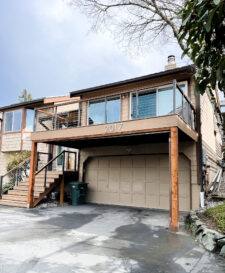
What Salt Air, Rain, and Moss Actually Do to a Deck
Salt Air and Metal Fasteners
Salt in the air accelerates corrosion on anything metal — nails, screws, joist hangers, bolts. Once a fastener starts rusting, it loses holding strength long before it looks obviously bad from a quick glance. A deck can look structurally fine on the surface while the hardware underneath is quietly failing. This is one of the most common issues we find during a March Point deck inspection: fasteners that were fine when installed but have corroded well ahead of the wood around them.
Driving Rain and Water Intrusion
Wind-driven rain off the bay doesn't just fall straight down — it gets pushed sideways into gaps, under flashing, and behind ledger boards. Once water gets behind a ledger board where the deck attaches to the house, it can sit there for months without anyone noticing, slowly rotting the framing and, in worse cases, damaging the house's rim joist. This is the single most serious repair issue we see, and it's almost always hidden until someone pulls a board or the deck starts to feel spongy.
Moss and Surface Decay
A long, wet moss season means moss and algae get a real foothold on shaded deck boards, especially under railings, near the house, or on the north side of the structure. Moss holds moisture against the wood surface constantly, which speeds up surface rot and makes boards slick and unsafe long before they've reached the end of their useful life. Left alone, what starts as a cosmetic problem becomes a structural one.
Signs Your March Point Deck Needs Repair
- Boards that feel soft, spongy, or flex noticeably underfoot
- Visible rust streaks running down from screws, nails, or hardware
- Gaps or dark staining where the deck meets the house (ledger board area)
- Persistent moss or black staining that doesn't clean off easily
- Railings or stair posts that wiggle more than they used to
- Cracked, cupped, or split boards, especially near fastener locations
- A musty smell coming from underneath the deck
- Visible daylight or gaps between deck boards and support beams
Any one of these on its own might just mean a targeted repair. Several at once, especially combined with a deck that's more than 12-15 years old, usually means it's worth having someone look at the whole structure before deciding what to fix.
What a Correct Deck Repair Actually Involves
A lot of deck "repairs" we get called out to fix are patch jobs — a board swapped here, a railing re-screwed there — done without checking what's underneath. That approach works for a season or two and then the same problem comes back, often worse. A repair done right starts with figuring out why the damage happened, not just where it shows up.
Structural Inspection First
Before replacing a single board, we check the framing: joists, beams, posts, and the ledger connection to the house. This is where the real problems usually hide on waterfront-adjacent homes, and it's the part a surface-level repair skips entirely.
Fastener and Hardware Assessment
Given how fast salt air corrodes standard hardware, we check joist hangers, structural screws, and post connections for rust and pull-out strength, not just visible damage. Corroded fasteners get replaced with hardware rated for the exposure, not just matched to what was there before.
Flashing and Water Management
Where the deck meets the house is the most common failure point we find in this area. Proper repair means correcting or adding flashing so water sheds away from the ledger board instead of collecting behind it — this is often the difference between a repair that lasts and one that fails again in a year or two.
Board and Surface Repair
Once the structure underneath is sound, deteriorated decking boards, railings, and stair components get replaced to match the existing deck as closely as possible, or upgraded to a more weather-resistant material where it makes sense for the homeowner.
Deck Materials We Work With — Repair Considerations
Different deck materials hold up differently in a marine climate, and that affects both how we approach a repair and what we recommend for replaced sections.
| Material | Typical Issue in This Climate | Repair Approach |
|---|---|---|
| Pressure-treated wood | Surface checking, moss growth, fastener corrosion over time | Board replacement, hardware upgrade, refinish/seal exposed cuts |
| Cedar | Graying, softening in shaded/wet spots, splintering | Selective board replacement, re-oil or seal, address moisture source |
| Composite decking | Moss film on surface, fastener or clip issues at board ends | Cleaning protocol, clip/fastener repair, board-end inspection |
| Older/mixed materials | Inconsistent aging, hidden rot under later additions | Full structural check before any surface repair |
We don't push homeowners toward a full composite replacement when a wood deck's problem is really just a framing or flashing issue. The honest answer is often that the visible material is fine — it's what's underneath or behind it that needs attention.
Repair vs. Replacement — How We Help You Decide
Not every deck problem means starting over, but sometimes replacement is genuinely the better value. Here's how we walk through that decision with homeowners.
| Factor | Favors Repair | Favors Replacement |
|---|---|---|
| Framing condition | Solid, dry, no rot found | Widespread rot in joists, beams, or ledger |
| Age of structure | Under 12-15 years | Original deck is older with cumulative wear |
| Extent of damage | Isolated boards, hardware, or railing sections | Damage spread across most of the deck surface |
| Code/permit status | Meets current guardrail/attachment standards | Older structure doesn't meet current code requirements |
| Budget goals | Extend usable life at lower cost | Want a long-term reset and material upgrade |
Repairs typically run from a few hundred dollars for a targeted fix up to a couple thousand for more involved structural or ledger work; full replacement is a bigger investment but resets the clock. We'll tell you honestly which side of that line your deck falls on rather than defaulting to the more expensive answer.
Our Deck Repair Process
- Free on-site inspection — we check the deck surface, framing, ledger connection, and hardware, not just what's visible from the top.
- Honest assessment — you get a clear explanation of what's actually wrong, what caused it, and what your realistic options are.
- Written scope and estimate — no vague line items; you know what's being repaired and why.
- Repair work — structural issues addressed first, then hardware, then surface and cosmetic elements.
- Water management check — we confirm flashing and drainage are actually correcting the problem, not just covering it.
- Walkthrough — we show you what was done and what to watch for going forward.
Timing Deck Repairs Around Skagit County's Weather
The wetter months make it harder to properly dry out and repair framing, and harder to get sealants and finishes to cure correctly. Late spring through early fall is generally the better window for deck repair work in this part of Washington, though urgent structural issues — a soft ledger board or a failing post — shouldn't wait for ideal weather. If you notice a serious problem in the middle of moss season, it's better to get it looked at than to let it sit through another wet stretch.
Maintenance That Extends a Repaired Deck's Life
- Sweep moss and debris off the deck surface regularly, especially in shaded areas, through fall and winter
- Keep gutters and downspouts near the deck clear so water isn't dumping directly onto it
- Check for standing water after storms and confirm boards are draining properly
- Inspect fasteners and hardware yearly for early rust, especially on waterfront-facing sides
- Re-seal or re-oil wood decking on the manufacturer's recommended schedule, not just when it looks faded
- Trim back vegetation that's shading the deck and keeping it damp longer than necessary
Why a Crew That Already Works March Point Makes a Difference
A lot of deck problems out here aren't unusual once you've seen enough of them — they're the predictable result of salt air, driving rain, and moss season doing what they do year after year. A crew that already works this specific area recognizes those patterns quickly: where water tends to collect, which fasteners fail first, which shaded corners need extra attention. That familiarity means less time spent guessing and more time spent fixing the actual problem, the first time.
It also means we're not experimenting on your deck with a one-size-fits-all approach built for a drier climate. Repairs here need to account for the exposure March Point homes actually get, and that's the standard we hold every job to.
If your deck is showing rust stains, soft spots, moss buildup, or just doesn't feel as solid as it used to, we're happy to take a look. Fill out the form below for a free, no-pressure estimate — we'll give you a straight answer on what's going on and what it would take to fix it right.