 Anacortes Siding
 Windows Built for March Point's Weather, Not Just the Showroom
March Point sits close enough to the water that homes here take a different kind of beating than houses further inland in Skagit County. Salt-laden air off Fidalgo Bay and the surrounding tidelands works its way into window hardware, fasteners, and cladding faster than most manufacturers' warranty language accounts for. Add driving rain that comes in sideways during winter storms, plus a long moss and mildew season that keeps everything damp for months at a stretch, and you have a climate that will find every weak point in a window installation — usually within the first few winters, not the first few decades.
Energy-efficient windows are marketed on their glass package and their U-factor rating, and those numbers matter. But in a location like March Point, how the window is installed and sealed against the wall assembly matters just as much as what's printed on the NFRC label. A well-rated window installed with a poor flashing detail will leak, fog, and lose its efficiency within a few seasons. A correctly detailed window with a modest glass package will often outperform it long-term.
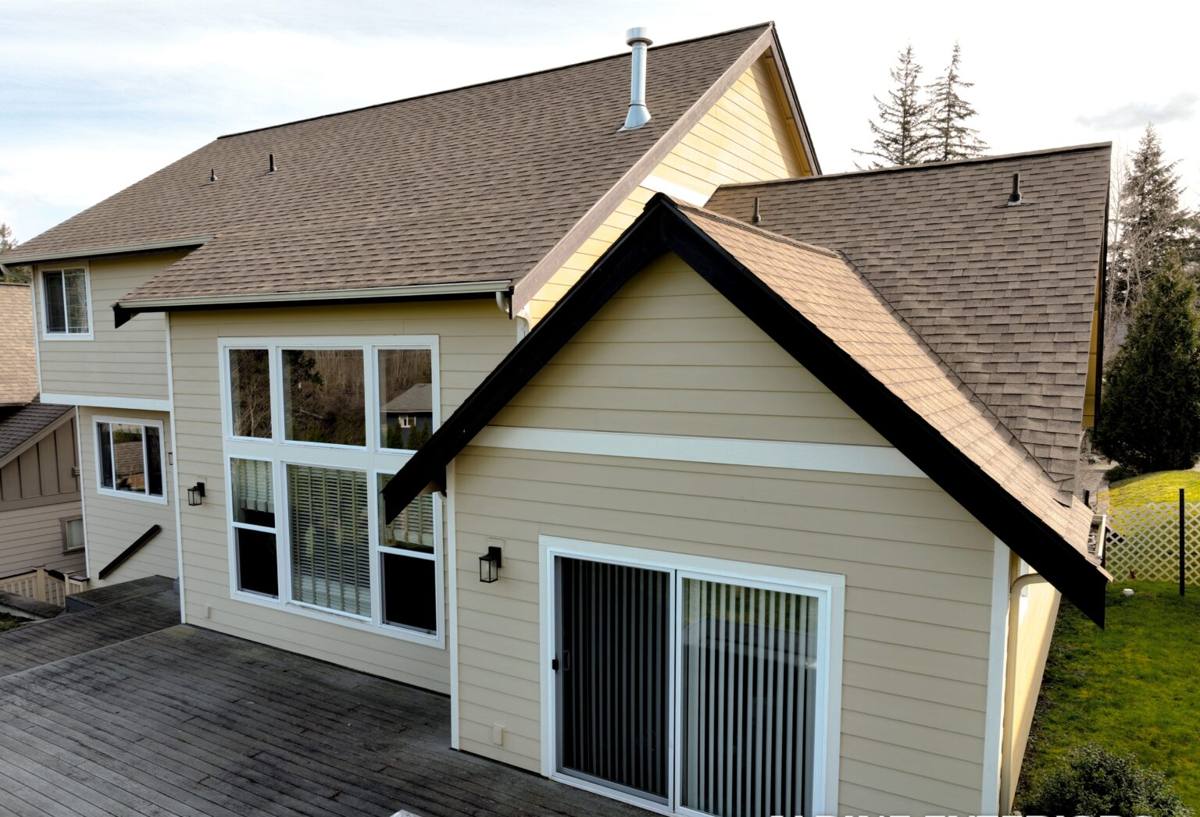
What March Point Homes Actually Need From Their Windows
Most of the older housing stock around March Point and the broader Anacortes area was built with single-pane or early dual-pane aluminum-frame windows — fine for their era, but poor performers against today's energy costs and today's weather patterns. When we evaluate a home here, we're looking at three things together, not in isolation:
Air and Water Sealing
This is the number one issue we find on older homes near the water. Wind-driven rain doesn't just test a window's seal at the sash — it tests the flashing, the sill pan, and the interface between the window frame and the wall sheathing. A window that's watertight on a calm day can still leak during a January storm if the perimeter wasn't properly flashed and sealed when it went in.
Frame Material Durability
Salt air accelerates corrosion on hardware, hinges, and certain frame finishes. We steer homeowners toward frame materials and hardware that hold up to coastal exposure rather than the cheapest option on a builder-grade spec sheet, because replacing corroded hardware five years in costs more than choosing correctly the first time.
Condensation and Moisture Control
With Anacortes' damp, moss-friendly climate, interior condensation on window glass and frames is a common complaint. It's usually a sign of poor glass performance, a cold frame material, or inadequate ventilation in the room — sometimes all three. A properly specified energy-efficient window reduces surface condensation, which in turn reduces the mildew and wood rot risk on surrounding trim.
What a Correct Window Installation Involves
Replacing a window looks simple from the outside — old one out, new one in — but the parts that determine whether it performs for twenty years happen where you can't see them once the trim goes back on.
- Remove the old window and inspect the rough opening for hidden water damage or rot before anything new goes in
- Install a proper sill pan flashing so any water that gets past the window has somewhere to drain, instead of into the wall cavity
- Integrate window flashing with the home's existing water-resistive barrier (house wrap or building paper) in the correct shingle-lap order, not just caulked over top
- Set the window level, plumb, and square, then shim and fasten per the manufacturer's specified pattern
- Seal the interior air barrier separately from the exterior water barrier — these are two different jobs and conflating them is a common source of failure
- Insulate the gap between the frame and the rough opening without overpacking it, which can bow the frame and bind the sash
- Finish exterior trim and caulking with materials rated for direct weather exposure
Skip or rush any one of those steps and you can still end up with a leak, a draft, or premature seal failure — even with a top-shelf window. This is why we treat installation quality as inseparable from product selection.
Our Process for March Point Window Projects
- On-site assessment. We look at the existing windows, the wall assembly where accessible, and any signs of past water intrusion — staining, soft trim, or interior condensation patterns tell us a lot before we even talk product.
- Honest scoping. Not every window on a house needs replacing at the same time. We'll tell you which openings are the priority based on exposure — the sides of the house catching the most wind-driven rain and salt air usually go first.
- Product selection based on exposure, not upsell. We walk through frame material, glass package, and hardware options against your budget and the specific exposure of each opening.
- Installation with full flashing integration. Every opening gets sill pan flashing and proper water-resistive barrier integration, regardless of whether it's one window or a full-house replacement.
- Final walkthrough. We check operation, seal, and finish on every window before we consider the job done.
Comparing Frame Materials for This Climate
There's no single "best" window frame material for every situation — each has trade-offs worth understanding before you decide, especially given March Point's salt air and moisture exposure.
| Frame Material | Coastal Durability | Maintenance | Typical Trade-Offs |
|---|---|---|---|
| Vinyl | Good — resists corrosion well | Low | Limited color/finish options; can expand/contract with temperature swings |
| Fiberglass | Very good — dimensionally stable, corrosion-resistant | Low | Higher upfront cost than vinyl |
| Wood (clad exterior) | Depends heavily on cladding integrity and upkeep | Higher — exposed wood needs ongoing attention | Best appearance for period homes; more sensitive to installation quality |
| Aluminum | Poor in salt air unless specifically treated/finished | Moderate | Conducts cold, more prone to condensation and corrosion near the water |
For most homes in the March Point area, we lean toward vinyl or fiberglass for their resistance to salt-driven corrosion and their low maintenance demands. Wood-clad windows can still be the right call on a home where appearance is a priority, but we're upfront that they ask more of the homeowner in terms of upkeep in this climate.
Cost Factors Worth Understanding
We won't quote a number here that doesn't mean anything without seeing your home, but the variables that actually move the price are worth knowing going in:
- Number and size of openings — the most obvious factor, but also the difference between a full-house project and a phased approach
- Frame material — vinyl generally costs less than fiberglass or clad-wood options
- Rough opening condition — hidden rot or framing repair adds cost, but it's not optional if we find it; sealing a window into a compromised opening just delays a bigger problem
- Glass package — low-E coatings and gas fills add cost but pay back over time in comfort and energy use
- Trim and finish work — matching existing exterior trim details, especially on older homes, takes more labor than a standard trim-out
We'll always separate "what this window needs to function correctly" from "what's optional upgrade" so you can make that call with real information.
Why Hire a Crew That Already Works This Area
March Point's exposure to salt air and wind-driven rain isn't something you learn from a manufacturer's install manual — it's something you learn from working on homes in this specific pocket of Skagit County over time. We know which orientations on a March Point property tend to take the worst weather, what the local moss and moisture buildup does to trim and siding around window openings, and how the rough openings in this area's housing stock tend to be framed. That local knowledge changes how we flash an opening and which materials we recommend, not just how fast we can get the job done.
We're an Anacortes-based siding and exterior contractor, and windows are part of the same envelope we work on every day — flashing, water management, and moisture control don't stop at the wall and start at the window frame. Treating them as one connected system, rather than separate trades working in isolation, is how you avoid the leaks that show up two winters after a "successful" window replacement.
Signs It's Time to Look at Your Windows
A few honest signals that it's worth having your windows assessed, rather than waiting for a full failure:
- Visible condensation or fogging between the panes of a dual-pane window — this means the seal has failed and the insulating gas is gone
- Drafts you can feel near the frame on a windy day, even with the window fully latched
- Difficulty opening, closing, or latching windows — often a sign of frame corrosion, warping, or settling
- Soft or discolored trim around the window exterior, which can point to water getting behind the flashing
- Noticeably higher heating bills relative to similar homes, with no other clear cause
None of these mean you need to replace every window in the house immediately. They're worth a look so you can prioritize based on actual condition and exposure rather than guesswork.
If you're weighing whether your windows need attention or a full replacement makes more sense, we're happy to take a look and give you a straight answer — no pressure, no upsell. Fill out the form below and we'll set up a free estimate for your March Point property.