 Anacortes Siding
 Why March Point Homes Take a Different Kind of Beating
March Point sits out on the water side of Anacortes, close enough to Fidalgo Bay and the surrounding shoreline that homes here deal with a combination of stresses most inland Skagit County properties never see. Salt-laden air moves in off the water, wind-driven rain hits siding at angles that flat-on-flat exposure never accounts for, and the shaded, damp stretches of the year give moss and algae plenty of time to take hold before summer sun ever dries things out. Any one of those factors is manageable. Together, over years, they expose weak points in siding materials and installations that would hold up fine somewhere drier and calmer.
We install James Hardie fiber cement siding, and we install it specifically with March Point's exposure in mind. This page covers what that means in practice — not generic siding talk, but what actually matters for a home in this part of Anacortes.
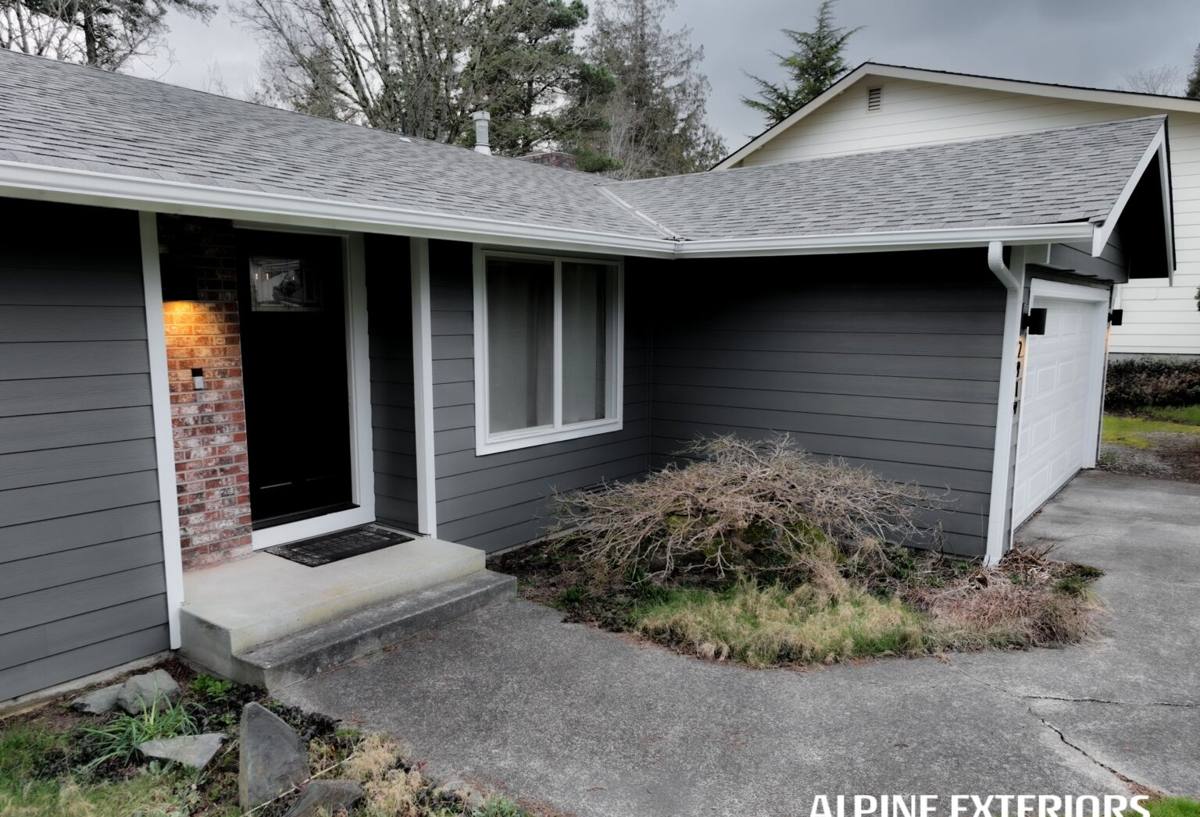
What Salt Air, Rain, and Moss Actually Do to Siding
Salt Air
Airborne salt is corrosive to exposed metal fasteners, trim, and flashing, and it accelerates the breakdown of paint films and lower-grade composite materials over time. Siding that isn't engineered to resist that kind of chemical exposure tends to chalk, fade, or degrade faster near the water than it would a few miles inland.
Wind-Driven Rain
March Point's open exposure means rain doesn't always fall straight down — it gets pushed sideways into wall assemblies, seams, and butt joints. Siding systems depend on correct lap, flashing, and drainage detailing to shed that water. When those details are shortcut, water finds its way behind the siding rather than off of it, and that's where rot and hidden damage start.
Moss and Algae
Shaded north and west-facing walls in this climate stay damp for extended stretches, especially through fall and winter. Organic growth on siding isn't just a cosmetic problem — sustained moisture against a wall surface, combined with the wrong substrate, can soften material or trap water against the sheathing behind it.
None of these problems are unique to March Point, but the combination — salt, wind exposure, and moss season stacked together — is more concentrated here than in many other Anacortes neighborhoods, and it's why we treat material choice and installation detail as connected decisions, not separate ones.
Why We Only Install James Hardie Here
We don't install vinyl, LP SmartSide, Cemplank, Allura, or bare wood siding, and that's a deliberate standard, not a lack of options. Each of those products has legitimate use cases elsewhere, but for a marine-exposed property like the ones around March Point, they carry trade-offs we're not willing to put our name on:
- Vinyl expands and contracts with temperature swings and can warp or crack under sustained wind load, and it has no real fire resistance — a real consideration this close to dry brush and wooded lots.
- Wood-based engineered siding (LP SmartSide) uses a wood strand substrate that, once its factory-applied coating is compromised at a cut edge or fastener point, is vulnerable to moisture intrusion — a real risk in a climate that stays damp as long as this one does.
- Bare or primed wood demands a repainting and caulking schedule most owners can't keep up with, and it's the material most susceptible to the moss and rot problems described above.
James Hardie fiber cement is cement, sand, and cellulose fiber — it doesn't rot, it isn't a food source for moss or insects, and it holds a factory-baked ColorPlus finish that's formulated to resist fading and chalking from UV and salt exposure far longer than field-applied paint. It's also non-combustible, which matters more every year in this region. That's the whole reason we standardized on it rather than offering a menu of options.
Which Hardie Products Fit a March Point Home
James Hardie builds its siding in climate-specific formulations called HZ10 and HZ5, engineered for different combinations of moisture and freeze-thaw exposure. Western Washington, including Anacortes and Skagit County, falls in the HZ10 zone, and product manufactured for this region is what should be going on these homes — not a formulation engineered for a drier or colder climate.
| Product | Best Use | Why It Fits March Point |
|---|---|---|
| HardiePlank lap siding | Most single-family homes, traditional lap look | Widest color and texture range; proven track record in marine/coastal PNW conditions |
| HardiePanel vertical siding | Accent walls, gables, modern or board-and-batten looks | Fewer horizontal laps means fewer water-shedding joints on exposed elevations |
| HardieTrim boards | Corners, window and door casing, fascia | Resists the swelling and rot that wood trim shows first in damp, shaded areas |
| ColorPlus factory finish | All exposed siding and trim | Baked-on finish resists fading and chalking better than field-applied paint in salt air |
The right mix depends on the home's design, sun exposure, and which elevations take the worst weather — something we walk through on site rather than guessing from a photo or a generic package.
What a Correct Installation Actually Involves
Fiber cement siding is only as good as the installation behind it. In a wind-driven-rain environment like March Point, the details that don't show once the job is finished are the ones that determine whether the wall stays dry for the next thirty years.
Water Management Comes First
Before any siding goes up, the wall needs a correctly lapped weather-resistive barrier, properly integrated flashing at every window, door, and penetration, and a drainage plane that lets any incidental moisture escape rather than pool behind the cladding. Siding is the last layer of a system, not a standalone waterproofing product.
Fastening and Gaps
James Hardie specifies exact fastener types, spacing, and placement, along with minimum gaps at butt joints, trim, and any point where siding meets a dissimilar material. Those gaps aren't a workmanship shortcut — they're what allows the material to move slightly with temperature and moisture changes without cracking or trapping water.
Cut Edges and Field Painting
Every field-cut edge needs to be sealed per manufacturer spec, because a raw cut edge is the one place ColorPlus's factory protection doesn't reach. Skipping this step is a common shortcut that shows up as premature wear at corners and openings years later.
Clearances
Siding needs proper clearance from grade, roof lines, decks, and other transitions so water has somewhere to go and the bottom edge of the siding isn't sitting in standing moisture. This is a detail that's easy to get wrong on additions or homes with grade changes, which are common on the sloped lots around March Point.
Our Process, Start to Finish
- On-site assessment — we look at your home's specific exposure: which walls take the worst wind and rain, where moss and staining already show, and the condition of the sheathing and water barrier underneath the current siding.
- Product and color selection — walking through HardiePlank, HardiePanel, and trim options and ColorPlus color choices suited to the home's design and exposure.
- Written estimate — a clear scope covering removal, any sheathing or barrier repair found once old siding comes off, and the full installation.
- Tear-off and inspection — removing existing siding gives us a direct look at the wall assembly before anything new goes up, which is when hidden moisture damage, if any, gets found and addressed.
- Installation to manufacturer spec — correct flashing, gapping, fastening, and edge sealing, not shortcuts that only show up as problems later.
- Final walkthrough — reviewing the finished work with you before we consider the job done.
Living With Fiber Cement Siding in a Moss-Prone Climate
Correctly installed Hardie siding is low-maintenance, not no-maintenance. A little routine attention keeps it looking and performing the way it should for the long haul:
- Rinse siding with a garden hose once or twice a year, focusing on shaded, north-facing walls where moss and algae tend to establish first
- Keep gutters clear and downspouts directed away from the wall so runoff isn't repeatedly washing down one section of siding
- Trim back landscaping and tree limbs that keep a wall section shaded and damp longer than the rest of the house
- Check caulking at trim joints and penetrations periodically, since caulk (unlike the siding itself) does have a service life
- Address any small impact damage or chipped edges promptly, since an exposed cut edge is the one spot vulnerable to moisture intrusion
What Affects Cost on a March Point Project
| Factor | Why It Matters |
|---|---|
| Condition of existing sheathing/barrier | Hidden rot or moisture damage found at tear-off adds repair scope before new siding goes on |
| Home size and wall complexity | More corners, gables, and trim details mean more labor and material |
| Product mix | Lap siding, panel siding, and trim carry different material costs |
| Access and site conditions | Sloped lots, tight setbacks, or limited equipment access affect labor time |
| Color and finish selection | Standard ColorPlus colors versus premium options can shift material pricing |
We give a firm, written number after seeing the actual house — not a phone estimate — because the factors above vary enough house to house that a ballpark figure isn't useful to you.
Why It Matters That We Already Work This Area
A crew that mostly works drier, inland jobs can still install Hardie siding competently on paper and still get water management wrong for a site like March Point, because the failure points here — wind-driven rain angles, salt exposure on fasteners and trim, prolonged damp shade — aren't the same ones that show up on an inland Skagit County job. Working this part of Anacortes regularly means we've seen where March Point homes actually take on water and wear, and we build the installation around that, not around a generic checklist.
If you're planning a siding project on a March Point home, we're glad to walk the property with you, look at what your current siding is telling us, and put together a straightforward, no-pressure estimate. There's a form below — reach out and we'll set up a time to take a look.