 Anacortes Siding
 Siding in March Point Has to Answer to the Water
March Point sits close enough to Fidalgo Bay and the surrounding saltwater to make wind-driven salt air part of daily weather, not an occasional event. Combine that with Skagit County's long wet season and the moss and algae growth that comes with months of shade and moisture, and you have a siding environment that punishes anything not built for it. This isn't a page about siding in general — it's about what correctly installed James Hardie fiber cement siding does for homes specifically in this stretch of exposure, and what a correct installation actually involves.
We install James Hardie exclusively. That's a deliberate standard, not a sales pitch, and it matters most in areas like March Point where marine air and moisture are constant rather than occasional.
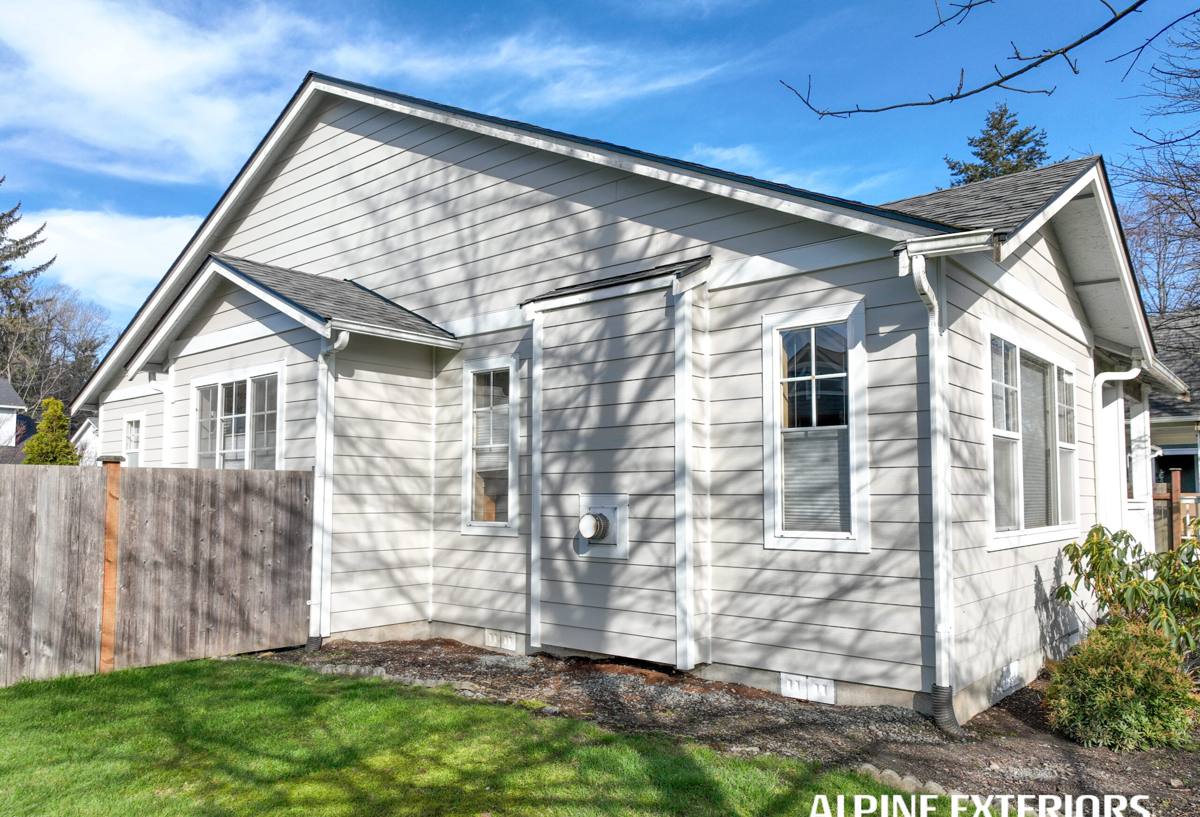
What Salt Air, Driving Rain, and Moss Actually Do to Siding
Salt Air
Airborne salt is corrosive and hygroscopic — it pulls moisture out of the air and holds it against whatever surface it lands on. On wood-based siding, that means longer periods of surface dampness, which accelerates rot and paint failure. On fasteners and trim hardware, salt exposure speeds up corrosion unless the materials and fastener specs are chosen correctly. Homes closer to open water or facing prevailing wind off the bay see this faster than homes tucked further inland.
Driving Rain
Western Washington's rain isn't just frequent — a good share of it arrives sideways, driven by wind off the water. Driving rain finds every weak seam, unsealed joint, and poorly lapped course. Siding systems that rely on paint film alone to keep water out, rather than being engineered from the substrate up to resist moisture intrusion, are the ones that fail first in this kind of weather.
Moss and Algae
Shaded, north-facing, and tree-adjacent walls in this part of Skagit County stay damp for extended stretches, especially fall through spring. That's exactly the environment moss and algae need. On porous or absorbent siding materials, organic growth isn't just cosmetic — it holds additional moisture against the surface and can accelerate underlying decay if left unaddressed.
Why We Install Only James Hardie
James Hardie fiber cement is manufactured from cement, sand, and cellulose fiber — it does not have the wood content that makes traditional wood-based sidings vulnerable to rot, swelling, and insect damage. It's non-combustible, dimensionally stable across wet and dry cycles, and holds its factory-applied ColorPlus finish far longer than field-applied paint on porous substrates. For a location dealing with constant marine moisture and a long moss season, those properties aren't bonus features — they're the baseline requirement.
Hardie also engineers specific product lines (HZ5, HZ10) for different climate zones, accounting for regional moisture and temperature patterns. That climate-specific engineering, paired with a strong transferable warranty when installed to spec, is why we standardized on this one manufacturer rather than offering a menu of siding materials with different long-term outcomes.
What a Correct Installation Involves in This Climate
Fiber cement siding is only as good as the water management system behind it. In an area with regular driving rain, the details behind the panels matter as much as the panels themselves.
- Weather-resistive barrier: A continuous, properly lapped water-resistive barrier behind the siding, installed shingle-style so water sheds down and out rather than behind the plane.
- Rainscreen or drainage gap: A ventilated gap between the siding and the wall assembly lets bulk water drain and lets the wall breathe, which matters more here than in drier climates.
- Flashing at every penetration: Windows, doors, hose bibs, vents, and any other wall penetration need proper flashing so driving rain can't work its way behind the siding at these weak points.
- Correct fastening: Hardie specifies fastener type, placement, and penetration depth for a reason — done wrong, fasteners become entry points for moisture and corrosion, especially in a salt-air environment.
- Proper clearances: Minimum gaps at grade, roof lines, decks, and other transitions keep siding out of standing water and prolonged direct wetting.
- Caulking and sealant discipline: Sealed only where Hardie's specifications call for it — over-caulking traps moisture just as badly as under-caulking lets it in.
Skip any one of these and the siding material itself stops mattering — water will find the gap. This is the actual difference between a siding job that holds up through a March Point winter and one that starts showing problems in a few years.
Cost Factors for a March Point James Hardie Project
| Factor | Why It Affects Cost |
|---|---|
| Home size and wall complexity | More corners, gables, and dormers mean more cutting, flashing, and labor time |
| Existing siding removal | Tear-off and disposal of old material adds cost versus installing over new sheathing |
| Sheathing and moisture barrier condition | Rot or moisture damage found underneath needs repair before new siding goes on |
| Product line and profile | HardiePlank lap, HardiePanel, and HardieShingle carry different material and labor costs |
| Trim and accessory scope | Corner boards, trim, soffit, and fascia work add to the total project |
| Access and site conditions | Steep grades, tight lot lines, or limited staging area affect labor time |
We won't quote a number without seeing the home, but these are the variables that actually move a project's cost — not the siding material itself, which is a relatively fixed line item once you've chosen it.
How Our Process Works
1. On-Site Assessment
We walk the exterior, check the condition of existing siding and any visible moisture damage, and look at exposure — which walls take the most direct rain and salt air, and where moss and algae are already showing up.
2. Scope and Estimate
You get a written estimate that covers material, prep, tear-off if needed, and the water management details specific to your home — not a vague per-square-foot number.
3. Prep and Substrate Check
Before any Hardie product goes up, we confirm the sheathing and weather barrier underneath are sound. This is where problems from a previous installation often get found and fixed.
4. Installation to Manufacturer Spec
Flashing, fastening, clearances, and joint treatment follow James Hardie's published installation guidelines — the same guidelines that keep the manufacturer's warranty intact.
5. Final Walkthrough
We go over the finished work with you before calling the job done.
Why a Crew That Already Works March Point Matters
Marine-exposure siding work isn't the same job as siding a home twenty miles inland. A crew that regularly works this part of Skagit County already knows which wall orientations take the worst of the driving rain, where moss tends to establish first, and how much clearance and drainage detail actually holds up through a full wet season here — not just on paper. That local pattern recognition shows up in the small decisions: where to add extra flashing attention, which corners need tighter joint work, how aggressive the rainscreen gap should be on the shaded side of a house near the water.
It also means less guesswork on your end. You're not explaining your climate to a crew that primarily works somewhere drier — you're hiring people who already understand what March Point weather does to a wall assembly over ten or twenty years.
Maintaining Hardie Siding in a Moss-Prone Area
James Hardie siding is low-maintenance, not zero-maintenance. In a moss-season climate like this one, a periodic soft wash to clear organic growth off shaded walls and trim keeps the ColorPlus finish looking right and prevents buildup from holding moisture against the surface longer than it needs to. This is a light, infrequent task compared to the scraping, sanding, and repainting cycle that wood-based or field-painted sidings require in the same conditions.
Signs Your Current Siding Isn't Holding Up
- Soft or spongy spots when you press on siding, especially near the bottom courses or below windows
- Persistent moss or algae that returns quickly after cleaning
- Visible gaps, warping, or cupping at panel seams
- Paint that's peeling or bubbling rather than just fading
- Rust streaks around fasteners or trim hardware
- Rising energy bills that may point to a compromised weather barrier
Any of these are worth a look before they turn into sheathing or framing repairs — catching moisture problems early is a lot cheaper than catching them late.
If you're seeing any of these signs on a March Point home, or you're planning ahead for a siding replacement, we're happy to walk the exterior with you and give you a straight assessment — no pressure, no obligation. Use the form below to request a free estimate.