 Anacortes Siding
 Siding Installation Built for March Point's Exposure
March Point sits out on the water, and that changes what a siding job needs to hold up to. Homes here take on more wind, more salt-laden air, and more standing moisture than houses tucked further inland in Anacortes. If you've owned a home out here for more than a few years, you've probably already noticed it: paint that fades faster than it should, trim that stays damp longer after a storm, or moss creeping across north-facing walls that never get a break from the shade and drip line.
None of that is unusual for a point of land exposed to open water in Skagit County. It's just a reality that has to be designed for, not ignored. A siding installation that would hold up fine on a sheltered lot a few miles away can fail early out here if it's installed without accounting for the wind and moisture load this location actually sees.
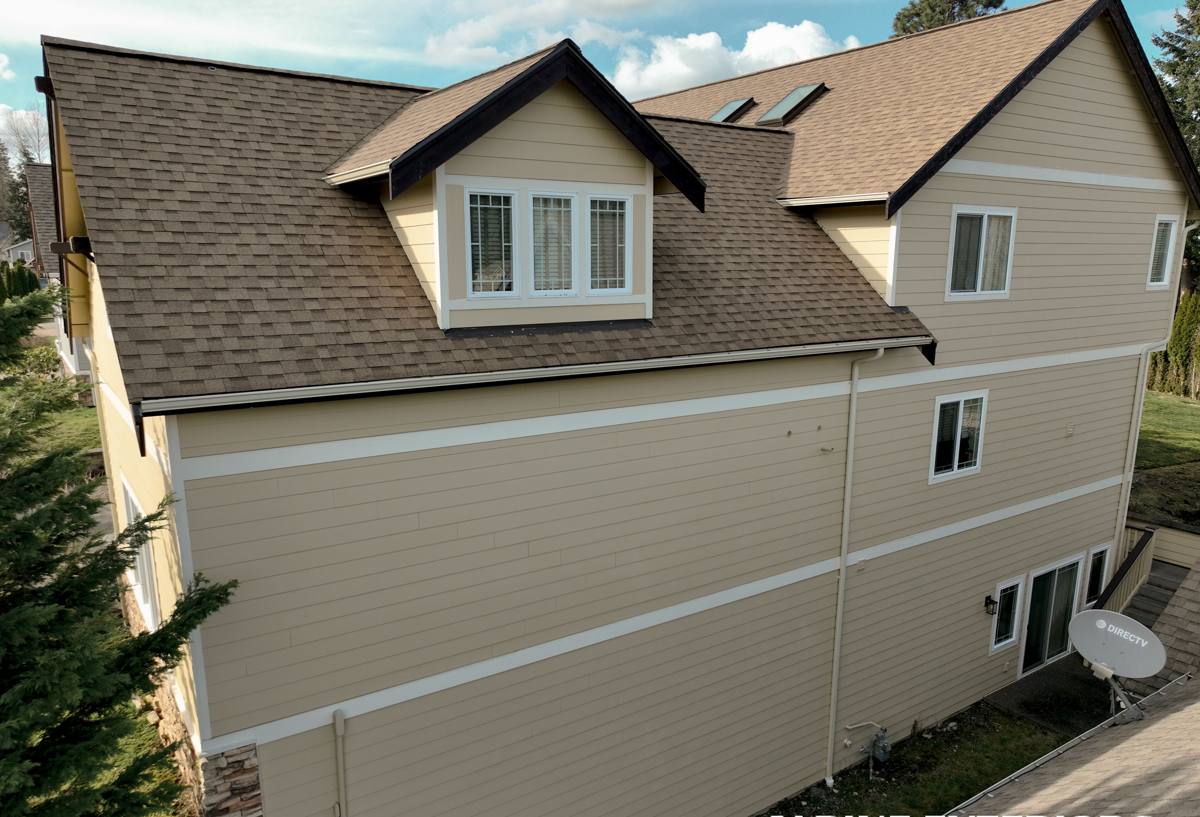
What Makes This Location Different
Salt Air
Airborne salt from the surrounding water settles on exterior surfaces year-round. It's slow and unglamorous damage — no single storm causes it — but salt exposure accelerates the corrosion of exposed metal fasteners, staples, and cheap trim hardware, and it breaks down lower-grade paint and coatings faster than a typical inland installation ever sees. Materials and fasteners that aren't rated for coastal exposure simply don't last as long here.
Wind-Driven Rain
Open exposure means rain doesn't just fall straight down — it gets pushed sideways into wall assemblies with real force. That matters more than most homeowners realize, because most siding doesn't fail from water hitting the face of the wall. It fails from water getting pushed *behind* the cladding at laps, seams, and penetrations, where it's never supposed to be in the first place. A house on a wind-exposed point needs tighter water management than a house in a calm, tree-sheltered yard.
A Long Moss Season
Cool, damp, and often shaded conditions for much of the year give moss and algae plenty of time to establish, especially on north- and west-facing walls that don't get direct sun to dry out between rain events. Moss holds moisture against the siding surface longer than a dry wall would ever experience, which is exactly the kind of prolonged dampness that causes problems for moisture-sensitive materials over time.
What a Correct Installation Actually Involves
Good siding installation is mostly invisible once the job is done — it's what's happening behind the boards that determines whether a home stays dry for decades or starts showing problems in five years.
Water-Resistive Barrier and Flashing
Every wall needs a continuous water-resistive barrier behind the siding, with flashing detailed at every window, door, deck ledger, and penetration so that any water that does get behind the cladding has a clear path back out — not into the wall cavity. On a wind-exposed site, this detailing isn't optional trim work; it's the difference between a wall that sheds water and one that traps it.
Rainscreen Gap
A small air gap between the back of the siding and the water-resistive barrier lets any moisture that gets past the cladding drain and dry out instead of sitting against the sheathing. This matters more on exposed sites where wind-driven rain pushes more water into that gap in the first place.
Fastener Selection
Fasteners need to be corrosion-resistant and rated for the material and exposure — not just whatever's fastest to run through a nail gun. In a salt-air environment, the wrong fastener is often the first thing to fail, well before the siding material itself shows any wear.
Caulking and Sealant Practices
Sealant should be used at penetrations and transitions, not as a substitute for proper flashing. Over-reliance on caulk to "seal up" a poorly flashed detail is a common shortcut that fails quietly over a few years, right around the time it's least convenient to discover.
Why We Install James Hardie Fiber Cement — Not Vinyl, LP, or Cedar
We standardized on James Hardie fiber cement siding for every home we work on, including here in March Point, and we don't install vinyl, LP SmartSide, cedar, or primed spruce. That's not a marketing position — it's a decision based on how those materials actually perform in a marine, wind-exposed climate over the long haul.
HardiePlank and the HZ5 Climate Profile
James Hardie engineers its HZ product lines for specific climate zones, and the HZ5 profile is built for exactly this kind of environment — regions with sustained moisture, freeze-thaw cycling, and coastal exposure. Fiber cement doesn't absorb water the way wood-based products can, doesn't rot, and won't feed moss and algae growth the way some organic materials do.
ColorPlus Factory Finish
Hardie's ColorPlus finish is baked on at the factory under controlled conditions, which gives it better fade and UV resistance than field-applied paint — a real advantage in a spot where sun, salt, and moisture are all working against a finish at the same time. It also comes with a longer finish warranty than most site-painted siding can offer.
Non-Combustible
Fiber cement doesn't burn, which matters for insurance considerations and simple peace of mind, regardless of proximity to water.
We won't pretend other products don't have their own advantages — vinyl is inexpensive, cedar has real natural character, LP has an easier install in some situations. But once you weigh those against moisture behavior, maintenance burden, and long-term performance in a wind-exposed marine climate, fiber cement is what we're willing to put our name behind and what we install on every home, March Point included.
Our Installation Process
- On-site assessment. We look at wall orientation, existing moisture damage, wind exposure, and any areas already showing moss or paint failure.
- Tear-off and sheathing check. Old siding comes off and the sheathing underneath gets inspected for rot or soft spots before anything new goes up — a step that's easy to skip and expensive to regret.
- Water-resistive barrier and flashing installation. This is the layer that actually protects the house long-term, done before a single piece of visible siding is installed.
- Rainscreen and fastening. Proper gap spacing and corrosion-resistant fasteners rated for the exposure.
- Hardie installation to manufacturer spec. Correct fastener placement, joint treatment, and clearances — installed to the standard that keeps the warranty valid.
- Trim, caulk, and touch-up. Sealant applied at the right places, not as a substitute for flashing.
- Final walkthrough. We go over the finished work with the homeowner before calling the job done.
Cost Factors for a March Point Siding Project
| Factor | Why It Affects Cost |
|---|---|
| Home size and wall area | More square footage means more material and labor, the biggest baseline driver of total cost. |
| Tear-off and disposal | Removing old siding, especially if multiple layers exist, adds labor and disposal costs. |
| Sheathing or moisture repair | Damage found once old siding comes off — rot, mold, or soft sheathing — needs to be repaired before new siding goes on. |
| Wind exposure and access | Wind-exposed walls and difficult access points can slow installation and require extra care with flashing and staging. |
| Trim and architectural detail | Corners, window trim, and design features add labor beyond flat wall coverage. |
| Siding profile and finish | Lap width, texture, and color options affect material cost within the Hardie product line. |
Signs a March Point Home May Need New Siding
- Moss or algae buildup that keeps returning after cleaning, especially on shaded walls
- Paint that's peeling, chalking, or fading noticeably faster than expected
- Soft spots, warping, or visible gaps at seams and corners
- Persistent damp or musty smells near exterior walls
- Visible rust staining around fasteners or trim
- Cracked or missing caulk at window and door trim
- Siding that's original to a home built more than 20-25 years ago
Why Local Experience on This Point Matters
A crew that's already worked on homes out on March Point knows what to expect before they even pull up: which walls take the brunt of the wind, how long moisture tends to linger on shaded sides, and what flashing details actually hold up out here versus what looks fine on paper but fails in year three. That experience shows up in the small decisions made on-site — where to add extra flashing, which walls need closer attention to the rainscreen gap, how to sequence the work around weather that can turn quickly on an exposed point.
It also means fewer surprises with permitting and inspection through Skagit County and the City of Anacortes, since the process is already familiar. For a homeowner, that translates into a job that gets done right the first time, without paying twice to fix water intrusion problems a few years down the road.
If you're weighing a siding project for your March Point home, we're happy to come take a look, walk the exterior with you, and give you a straightforward, no-pressure estimate — no invented urgency, just an honest read on what your home actually needs.