 Anacortes Siding
 Metal Roofing Built for the Skagit Valley, Not Just Sold Into It
Mount Vernon sits inland along the Skagit River, a few miles from Anacortes and the saltwater shoreline. That location matters for roofing decisions. Homes here don't take the same direct salt-air exposure as houses right on Fidalgo Island, but they get plenty of their own punishment: heavy valley rain, long stretches of overcast humidity, and a moss season that can run most of the year on shaded or north-facing slopes. A metal roof installed correctly for this climate can outlast two or three asphalt re-roofs. One installed without attention to local conditions can develop the same moss, fastener, and moisture problems as any other roof — just with a bigger price tag attached to the mistake.
This page covers what actually matters for a metal roof on a Mount Vernon home: what the climate does to a roof over time, what a correct installation includes, and how we approach these projects as a crew that works this part of Skagit County regularly.
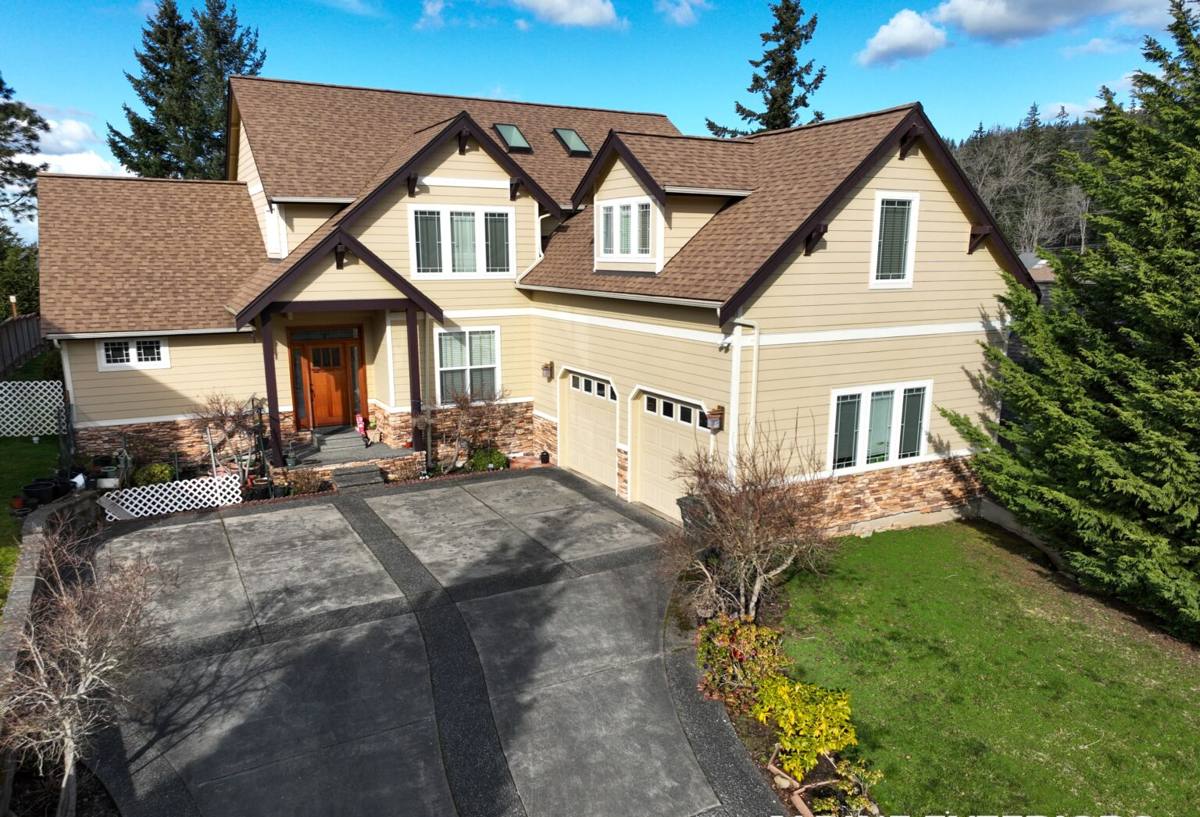
What the Local Climate Actually Does to a Roof
The Skagit Valley gets a lot of rain, and it tends to arrive as sustained, driving weather rather than short bursts. That means water spends more time in contact with roofing seams, flashing, and fastener penetrations than it would in a drier climate. Every seam and fastener on a roof is a potential entry point, and in a climate like this, "potential" becomes "actual" faster than most homeowners expect.
The other big factor is moss. Shaded roof sections, tree cover, and consistent moisture create ideal moss conditions for much of the year. Moss doesn't just look bad — it holds water against roofing material, works its way under lapped edges, and on the wrong roofing system can accelerate coating breakdown or trap moisture against fasteners. A metal roof doesn't stop moss from landing on it, but a properly detailed system gives it far fewer places to take hold and far less ability to cause damage if it does.
Temperature swings here are moderate compared to inland Washington, but metal roofing still expands and contracts with daily and seasonal temperature changes. Panels and fastening systems that don't account for that movement are one of the more common causes of premature failure we see on poorly installed metal roofs, regardless of the material quality.
Choosing the Right Metal Roofing System
Standing Seam vs. Exposed-Fastener Panels
Not all metal roofing is the same product wearing different colors. The two systems most homeowners in this area choose between are standing seam and exposed-fastener panels, and the difference matters more here than in drier climates.
| Feature | Standing Seam | Exposed-Fastener Panel |
|---|---|---|
| Fastener exposure | Concealed under the seam | Screws penetrate the panel face |
| Typical lifespan | 40–60+ years with proper install | 25–40 years, fastener-dependent |
| Maintenance | Minimal; no gasket replacement | Gaskets/screws may need attention over time |
| Upfront cost | Higher | Lower |
| Best fit | Long-term ownership, low-maintenance goals | Budget-conscious projects, outbuildings, secondary roofs |
In a climate with as much sustained rain as the Skagit Valley, concealed fasteners are a real advantage — there's simply less surface area where water can find a way through over a few decades. Exposed-fastener panels aren't a bad product; they're a different trade-off. We'll walk you through both honestly rather than pushing whichever is easier to install.
Steel vs. Aluminum
Steel panels (typically with a protective coating) offer strength and a lower cost per square foot. Aluminum won't rust even if the coating is scratched, which is worth considering on roofs with heavy tree cover or moss contact, since aluminum simply doesn't corrode the way bare steel can once a coating is compromised. Neither is the "wrong" answer — it depends on your roof's exposure, budget, and how long you plan to own the home.
What a Correct Installation Actually Involves
The panels themselves get most of the attention, but on a metal roof, the details underneath and around the panels determine whether it performs for decades or develops problems in five years. A correct installation in this climate includes:
- A synthetic underlayment rated for the exposure, properly lapped so water sheds downhill at every seam
- Ice-and-water shield or equivalent protection at eaves, valleys, and any low-slope transitions where water can back up
- Proper attic and roof ventilation, so moisture from inside the home doesn't condense against the underside of the panels
- Flashing detailed and sealed at every penetration — vents, chimneys, skylights — not just caulked over as an afterthought
- Fasteners matched to the panel and structural substrate, driven to the correct depth and pattern
- Panel expansion accounted for at ridges, eaves, and long runs so thermal movement doesn't stress seams or fasteners over time
- Clean, consistent trim work at edges and transitions, which is both a performance detail and the difference between a roof that looks finished and one that doesn't
Any one of these done poorly can undermine an otherwise good panel system. This is where a rushed installation shows up years later, usually as a leak that's hard to trace back to its actual cause.
Mistakes We See on Mismatched or Rushed Installations
A few patterns come up repeatedly on metal roofs that were installed without enough attention to this region's conditions:
Underlayment skipped or under-spec'd. Some installers treat the metal panel as the only water barrier. In a climate that gets sustained driving rain, that's not a safe assumption — wind-driven water can work its way under panel edges, and a proper underlayment is the backup layer that keeps that from becoming an interior leak.
Poor ventilation. Metal roofs installed over an unventilated or poorly ventilated attic can trap condensation against the underside of the panels, which leads to corrosion or rot in the roof deck — a problem that has nothing to do with the panel quality and everything to do with how the system was installed.
Generic flashing details. Flashing that isn't custom-fit to the specific panel profile tends to rely on sealant to close the gap. Sealant degrades; properly formed flashing doesn't depend on it to keep water out.
Ignoring moss-prone areas at design time. Roofs with heavy shade or tree overhang benefit from panel choices and detailing that make moss harder to establish and easier to manage. Treating every roof section identically, regardless of exposure, misses that.
Our Process for Mount Vernon Metal Roofing Projects
We approach every metal roofing job the same structured way, adjusted for the specific home:
- On-site assessment. We look at the existing roof structure, decking condition, ventilation, and any problem areas — shaded sections, valleys, low-slope transitions — before recommending a system.
- System and material selection. Based on the roof's exposure, your budget, and how long you plan to be in the home, we walk through the real trade-offs between panel types, gauges, and finishes.
- Written estimate. A clear, itemized quote so you know what's included — underlayment, flashing, ventilation work, tear-off if needed — not just a single number for "the roof."
- Installation. Deck inspection and repair as needed, underlayment, flashing, panels, and trim, installed in sequence so every layer does its job.
- Final walkthrough. We go over the finished roof with you, including what routine maintenance (if any) it needs going forward.
Maintenance and Long-Term Care in This Climate
One of the real advantages of metal roofing in the Skagit Valley is how little ongoing maintenance a well-installed system needs compared to asphalt shingles. That said, "low maintenance" isn't "no maintenance." A yearly visual check for debris buildup in valleys, moss growth on shaded sections, and clear gutters goes a long way toward protecting the investment. Standing seam systems in particular tend to shed moss and debris more readily than textured or lapped materials, simply because there are fewer places for organic matter to catch and hold moisture.
If moss does establish on a metal roof, it should be removed with methods appropriate to the panel's finish — not pressure-washed aggressively or scraped in ways that damage the coating, since a compromised coating is what actually opens the door to corrosion over time.
What Affects the Cost
| Factor | Why It Matters |
|---|---|
| Panel type (standing seam vs. exposed fastener) | Standing seam costs more upfront but needs less long-term attention |
| Material (steel vs. aluminum) | Aluminum typically costs more but resists corrosion even if coatings are scratched |
| Roof complexity | Valleys, dormers, and multiple roof planes add labor and flashing detail |
| Existing roof condition | Deck repair or a full tear-off adds cost beyond a straightforward re-cover |
| Ventilation upgrades | Adding or correcting attic ventilation is sometimes needed for the roofing warranty to apply |
We don't quote metal roofing off a square-footage guess. A firm number comes after we've actually looked at your roof's condition and layout.
Why a Crew That Already Works Mount Vernon Matters
Metal roofing isn't a product you can install the same way everywhere and expect the same result. A crew that regularly works Mount Vernon and the broader Skagit County area already knows what this climate does to a roof over time — where moss tends to build up, how much water valleys and low-slope sections actually see in a wet winter, and which details are worth the extra time versus which are overkill for this area. That local pattern recognition is hard to replace with a generic installation checklist, and it's the difference between a roof that's technically installed correctly and one that's actually built for where it sits.
If you're weighing a metal roof for your Mount Vernon home, we're happy to take a look and give you a straight, no-pressure estimate — what we'd recommend, why, and what it would cost. There's a form below to get started.