 Anacortes Siding
 Roofing for Mount Vernon's Particular Climate
Mount Vernon sits inland from Anacortes but still gets the full package of Skagit County weather: damp marine air carrying trace salt off the Sound and the Strait, long stretches of driving rain in fall and winter, and a mossy, shaded microclimate wherever trees or north-facing slopes keep a roof from drying out. None of that is dramatic on its own. It's the combination, repeated year after year, that wears down a roof that was installed without those specifics in mind.
An asphalt shingle roof that's correctly built for this area doesn't look different from one built for a dry inland climate. The difference is underneath — in the underlayment, the flashing details, the ventilation, and the small decisions installers make at valleys, penetrations, and eaves. Those choices are what decide whether a roof gives you twenty-plus years of quiet service or starts showing leaks and moss damage inside a decade.
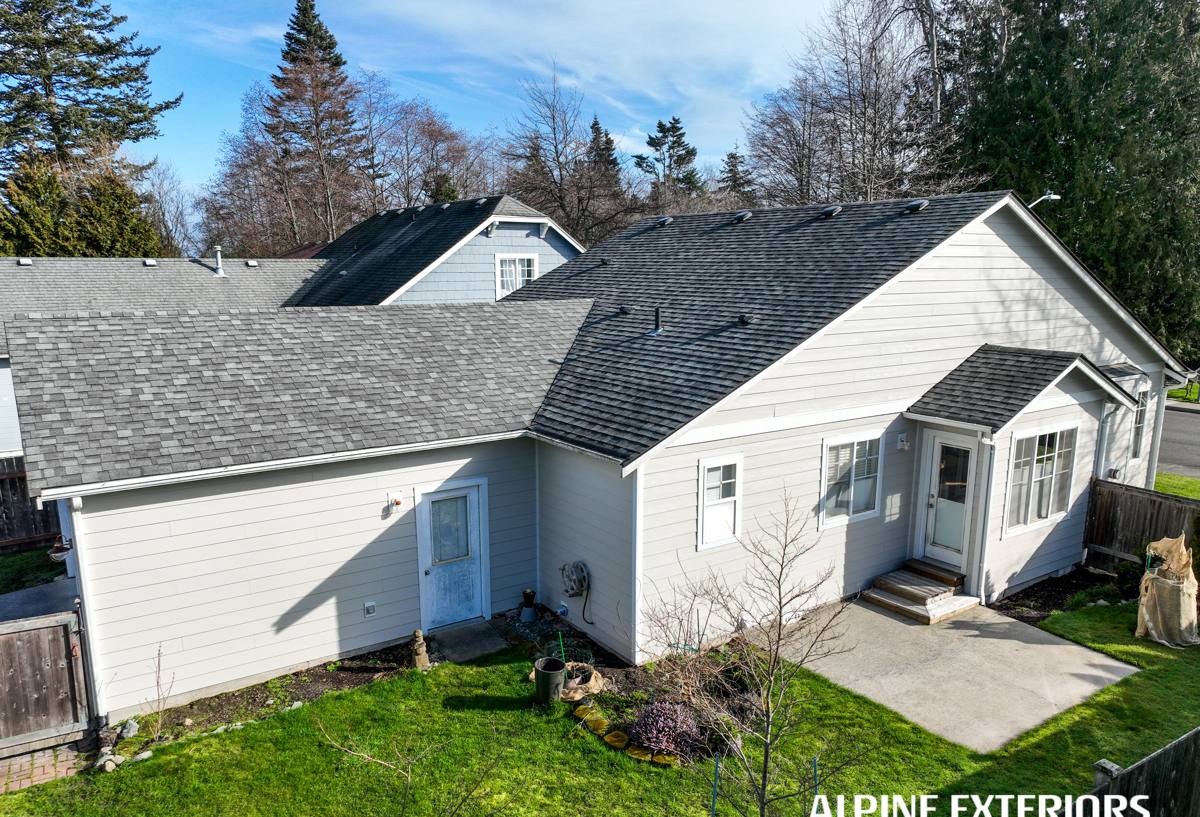
What Local Homes Actually Need From a Shingle Roof
Moisture Management First
Skagit County doesn't get the heaviest rainfall in the state, but it gets a lot of steady, low-intensity rain over long periods, plus wind-driven rain that pushes water sideways under shingle tabs and around flashing. A correct installation assumes water will find its way to every seam, valley, and penetration at some point, and is built so that water always has a path back out rather than a way in.
That means self-adhering ice-and-water membrane in valleys and along eaves, properly lapped underlayment (not just stapled flat sheets), and step flashing at every wall intersection rather than caulk doing a flashing detail's job. Caulk fails; correctly lapped metal doesn't.
Airflow Second
A shingle roof needs a balanced intake-and-exhaust ventilation system so the attic stays close to outdoor temperature and humidity. Skip this and you get two problems specific to our climate: condensation building up on the underside of the roof deck during cold, damp stretches, and moss and algae getting a head start because the roof surface never fully dries between rain events.
Moss, Algae, and Salt Air: The Slow Damage
Moss is the signature roofing problem in this part of Washington, and it's often misunderstood. Moss itself doesn't puncture a shingle — but its root structure holds moisture directly against the shingle surface for weeks at a time, and as it spreads it lifts shingle edges, breaking the seal that keeps wind-driven rain out. A roof with a moss problem for a few seasons running usually has water intrusion starting at the edges of the moss patches, not underneath the thickest growth.
Salt air is a quieter factor. It doesn't attack asphalt shingles directly the way it does bare metal, but it accelerates corrosion on exposed fasteners, flashing, and any metal roof accessories (vents, caps, drip edge) that aren't rated for coastal exposure. Over years, that corrosion is what turns a small flashing leak into a bigger one.
- Shaded, north-facing roof sections and anything under overhanging trees moss up fastest and should be checked first
- Valleys and low-slope sections hold water longer and show algae streaking before the rest of the roof does
- Exposed nail heads, vent flashing, and metal drip edge are where salt-air corrosion shows up first
- Gutters clogged with moss and needles back water up under the shingle edge during heavy rain
- Granule loss (visible as bald or shiny patches) usually shows up first on south and west-facing slopes from sun exposure, separate from moss damage
Signs a Mount Vernon Roof Needs Attention
Most shingle roof failures here don't announce themselves with a dramatic leak. They show up as small, easy-to-miss signs first:
- Dark streaking or green-black patches, especially on shaded slopes — early algae and moss growth
- Granules collecting in gutters or at downspout outlets
- Curling or lifting shingle edges, particularly where moss has been growing
- Soft spots or slight sagging when walked on (a sign of deck moisture underneath)
- Rust staining running down from nail heads, vent boots, or flashing
- Daylight visible through the roof deck from inside the attic, or damp insulation
- Interior ceiling stains that appear or worsen after a heavy, sustained rain event rather than a single storm
Catching these early is almost always cheaper than waiting. A moss problem caught in year three is a cleaning and a few shingle repairs. The same problem ignored until year eight is often a partial or full re-roof.
Our Asphalt Shingle Roofing Process
Inspection and Assessment
We start by getting on the roof, not just looking at it from the ground. We check the shingle field, all valleys and flashing, vent boots, the condition of the decking where accessible, and attic ventilation. On a repair or partial replacement, we're also checking how much of the existing roof is still sound so we're not replacing more than needed — or missing damage that's spreading underneath.
Scope and Materials
We walk through what we found, what it means for the roof's remaining life, and the realistic options — spot repair, partial replacement, or full tear-off — with the trade-offs of each laid out plainly. Underlayment, ice-and-water shield coverage, and ventilation upgrades are priced as part of the job, not treated as optional extras, because on a coastal Skagit County roof they're not optional if you want the shingle warranty to mean anything.
Tear-Off and Deck Check
On a full re-roof, we tear off down to the deck rather than layering over old shingles. That's the only way to actually inspect the decking for rot or soft spots caused by long-term moisture — problems that are common on older roofs in this area and impossible to see or fix from on top of existing shingles.
Installation
Ice-and-water membrane goes into valleys, around penetrations, and along eaves per manufacturer and code minimums for our climate. Underlayment is lapped correctly, not just tacked down. Step and counter-flashing go in at every wall and chimney intersection. Shingles are nailed to manufacturer spec — not gun-happy overdriving, which is a common cause of early failure that isn't visible until years later. Ridge and intake ventilation are balanced before we call the job finished.
Cleanup and Walkthrough
We clear the site of old material and debris, do a magnetic sweep for stray nails, and walk the finished roof with you so you know what was done and what to expect going forward.
Choosing a Shingle for This Climate
Not every asphalt shingle product performs the same way under sustained damp conditions and moss pressure. The table below covers the general categories worth understanding before you choose, without tying you to one brand's marketing language.
| Shingle Type | Typical Lifespan | Moss/Algae Resistance | Best Fit |
|---|---|---|---|
| Standard 3-tab | 15–20 years | Low unless treated | Budget-focused re-roofs, less shaded lots |
| Architectural/laminate | 25–30 years | Moderate; better with algae-resistant granules | Most Mount Vernon homes — good balance of cost and durability |
| Algae-resistant (copper/zinc granule) laminate | 25–30 years | Higher — granules actively resist algae/moss growth | Shaded lots, north-facing roofs, homes with a history of moss |
| Premium/designer laminate | 30+ years | Moderate to high depending on line | Homeowners prioritizing longevity and appearance over lowest upfront cost |
For most Mount Vernon properties, an architectural laminate shingle with algae-resistant granules is the practical middle ground — meaningfully better moss resistance than a standard shingle, without paying premium-tier prices for features a given roof doesn't need.
What Drives Cost Beyond the Shingle Itself
- Roof pitch and complexity — steep or cut-up roofs with many valleys and penetrations take longer and use more flashing and membrane
- Layers to remove — tearing off two existing layers costs more than one
- Deck repair — any rotted sheathing found during tear-off is priced as it's found, not guessed upfront
- Ventilation upgrades — adding proper intake/exhaust venting where it's missing or undersized
- Access — steep sites, limited driveway access, or tall roofs affect labor and equipment needs
Why a Crew That Already Works Mount Vernon Matters
A roofing crew that works Skagit County regularly already knows which details matter here and doesn't need to relearn them on your roof. That shows up in practical ways: knowing which shingle lines actually hold up to years of Pacific Northwest damp rather than just a manufacturer's lab rating, sizing ventilation correctly for our humidity rather than a generic national spec, and treating ice-and-water shield and step flashing as standard practice rather than an upsell.
It also matters for follow-up. A crew based in the area is available for a warranty question or a post-storm check without a long drive being part of the equation, and has a track record in the community that's easy to verify with neighbors rather than only online reviews.
Maintenance That Actually Extends Roof Life Here
A correctly installed shingle roof in this climate still benefits from basic upkeep — it's a moss and moisture environment, not a dry one, and skipping maintenance shortens the life of even a well-built roof.
- Keep gutters and downspouts clear, especially going into fall when leaves and needles build up fastest
- Trim back overhanging branches to reduce shade and debris on the roof surface
- Have moss physically removed (not just chemically treated) before it spreads under shingle edges
- Schedule a roof check every year or two rather than waiting for a visible leak
- Address small flashing or granule-loss issues promptly — they're inexpensive to fix early and expensive to ignore
Get a Straight Answer on Your Roof
If you're not sure whether your Mount Vernon-area roof needs a repair, a partial replacement, or a full tear-off, the honest answer usually only takes a proper inspection to figure out. We'll take a look, tell you what we actually find, and lay out your options plainly — no pressure, no upsell. Use the form below to request a free estimate.