 Anacortes Siding
 Decking Built for Mount Vernon's Weather, Not Just the Showroom
Mount Vernon sits in the Skagit River valley, close enough to the Salish Sea that salt-tinged air, long wet winters, and a moss season that seems to run from October through May all show up in how a deck ages here. A deck that looks great going in but wasn't built for this climate usually tells on itself within a couple of seasons — cupped boards, black-green staining in the shaded corners, fasteners bleeding rust, or a substructure that's holding moisture it should be shedding. Composite decking, installed correctly for this region, is one of the more reliable ways to get ahead of that.
This page is specifically about composite decking for homes in and around Mount Vernon. We're not going to give you a generic decking pitch — we'll walk through what the local conditions actually demand, what a correct installation looks like, and how our process works when we build a deck for a Skagit County home.
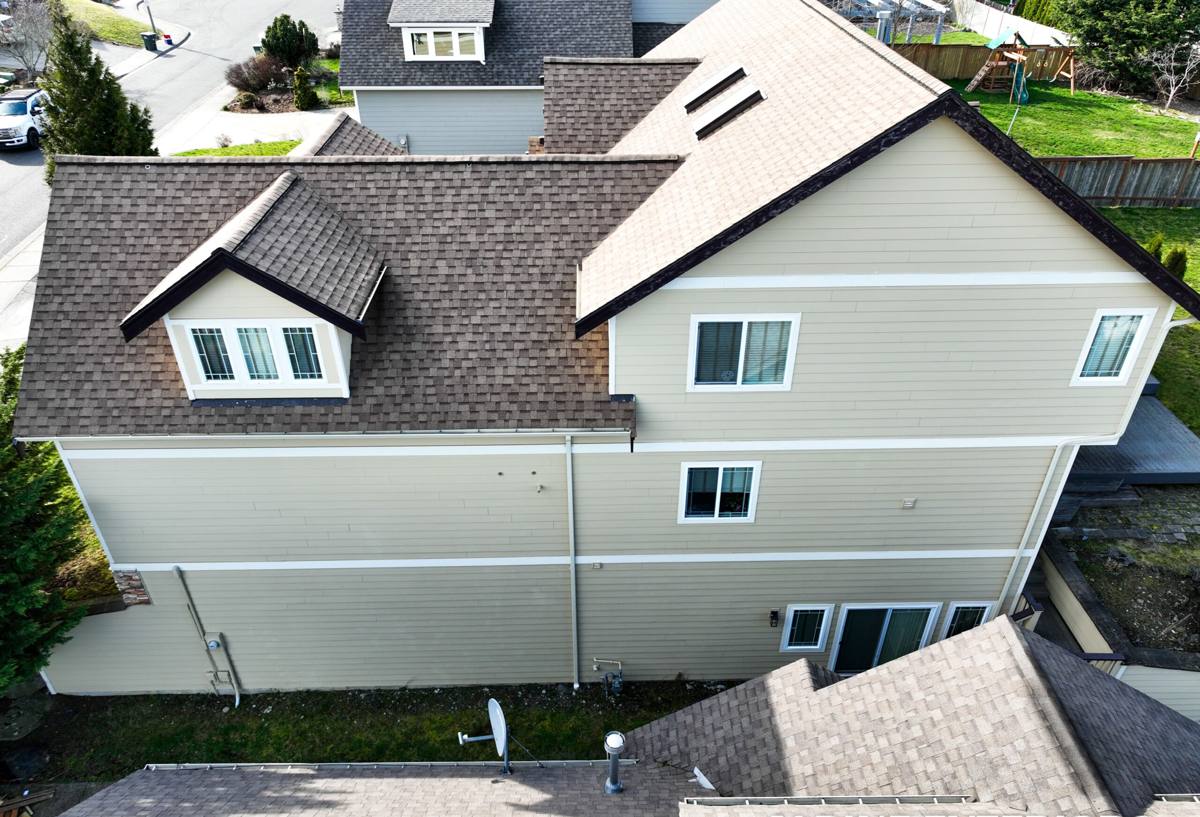
What Driving Rain and Moss Season Do to a Deck
Three regional factors drive most of the deck problems we get called out to fix or prevent:
- Salt air: Proximity to the water means airborne salt settles on exposed metal and finishes over time, accelerating corrosion on fasteners, brackets, and railing hardware that weren't rated for it.
- Driving rain: Wind-driven rain in this area doesn't just fall straight down — it gets pushed sideways into ledger connections, under poorly flashed rim joists, and into any gap where end grain or fastener heads are exposed.
- Moss season: Shaded, north-facing, or tree-covered decks stay damp for months at a time. Moss and algae take hold in the grain of untreated or poorly sealed wood and in any spot where composite boards are laid without enough airflow underneath.
None of these are exotic problems — they're just the baseline conditions any deck in this part of Skagit County has to survive, year after year, not just the first one.
Why Composite Makes Sense Here
Composite decking (a blend of wood fiber and recycled plastic, capped with a protective outer layer on most modern boards) is popular in this region for good reason: it doesn't absorb water the way solid wood does, it doesn't need annual staining or sealing, and a quality capped board resists the moss and mildew staining that plagues shaded wood decks. That said, composite isn't magic — it's still a manufactured product, and how it's installed matters as much as the material itself. A composite deck with inadequate substructure ventilation or poor drainage detailing can still trap moisture, develop mold underneath, or fail at the fastener points. The product buys you a head start; the installation is what determines whether that head start holds up.
What Homeowners in This Area Usually Want Solved
When Mount Vernon homeowners call us about decking, the conversation usually centers on one or more of these:
- Wanting to stop the annual sanding-staining-sealing cycle on an aging wood deck
- Dealing with a deck that's slick or green with moss for half the year
- Rot found at the ledger board, stair stringers, or post bases during an inspection
- Wanting a deck that will actually hold up to the wet season without babysitting
Composite vs. Wood: An Honest Comparison for This Climate
There's no single "best" decking material for every home — it depends on budget, how much upkeep you want to do, and how exposed the deck is. Here's how the two most common options actually compare for a Skagit County property:
| Factor | Composite Decking | Pressure-Treated / Cedar Wood |
|---|---|---|
| Upfront cost | Higher material cost | Lower material cost |
| Annual maintenance | Occasional cleaning; no staining/sealing | Sanding, staining, or sealing every 1-2 years |
| Moss/algae resistance | Good on capped boards, especially in shaded areas | Requires diligent sealing to resist staining |
| Moisture behavior | Doesn't absorb water into the board; substructure still needs to manage it | Absorbs and releases moisture; prone to cupping and checking |
| Long-term appearance | Consistent color if properly capped and installed | Grays and weathers unless refinished regularly |
| Repair approach | Board-by-board replacement, matched to product line | Easier to patch with standard lumber |
For a shaded, rain-exposed deck close to the water, most homeowners in this area lean composite once they've lived through a season or two of wood maintenance. For a smaller, low-use deck with plenty of sun exposure, wood can still be a reasonable choice — we'll give you a straight answer either way when we look at your specific site.
What a Correct Composite Deck Installation Actually Involves
The board itself is the visible part, but most of the long-term performance comes from what's underneath and how the whole system is detailed. For this climate, we pay particular attention to:
Substructure and Framing
Joist spacing appropriate to the specific composite product (many require tighter spacing than traditional lumber, especially on angled or diagonal patterns), and framing lumber that's rated for ground contact or elevated exposure where relevant.
Ventilation Underneath
Low-clearance or ground-level decks need adequate airflow beneath the boards. Skip this and you're building a moisture trap — composite boards don't rot, but the framing underneath still can, and trapped humidity is exactly what feeds moss and mildew growth.
Flashing and Ledger Connections
Where a deck attaches to the house, proper flashing keeps driving rain from working its way behind the ledger board and into the wall assembly. This is one of the most common failure points we find on older decks in this area, and it's not something you can see once the deck boards are down.
Fasteners and Hardware
Given the salt exposure this region gets, we use fasteners and structural hardware rated for coastal or high-corrosion environments — not standard interior-grade hardware that looks fine for the first year and starts staining or weakening after that.
Drainage and Grading
Water needs somewhere to go. That means correct board spacing, a slight slope away from the house, and — on multi-level or covered decks — sometimes an underdeck drainage system so the space below stays usable and dry.
Our Process, Start to Finish
- On-site assessment: We look at sun/shade exposure, existing structure (if replacing an old deck), drainage path, and how the deck ties into the house.
- Material selection: We walk you through composite product options and go over trade-offs honestly — color retention, board profile, warranty structure, and cost — rather than pushing whatever has the best margin.
- Structural plan: Framing, ventilation, and flashing details get worked out before any boards are ordered, based on the specific product's spec sheet and this site's exposure.
- Demo and prep (if applicable): Removal of the old deck, inspection of ledger and post connections to the house, and repair of any rot or damage found before new framing goes in.
- Installation: Framing, flashing, decking, and railing installed to manufacturer spec and local code.
- Final walkthrough: We go over the finished deck with you, including what maintenance (if any) the specific product needs going forward.
Common Mistakes We See on Decks in This Region
A lot of the deck problems we're called to fix didn't come from bad materials — they came from installation shortcuts that don't show up until the wet season stress-tests them:
- Composite boards installed with standard interior fasteners that corrode and streak the boards
- No ventilation gap under low-clearance decks, leading to trapped moisture and mold on the framing
- Ledger boards attached without proper flashing, allowing rain to migrate into the house wall
- Joist spacing too wide for the specific composite product, leading to sagging or bounce over time
- Deck boards butted too tightly with no expansion gap, causing buckling as the material moves seasonally
Maintaining a Composite Deck in the Skagit Valley
Composite decking is genuinely low-maintenance, not zero-maintenance. In this climate, a simple seasonal routine keeps it performing the way it should:
- Sweep off debris and standing leaves regularly, especially in fall when moss spores and organic matter accumulate fastest
- Wash the surface once or twice a year with mild soap and water (or a manufacturer-approved deck cleaner) to prevent moss and algae from taking hold in shaded spots
- Check that gaps between boards stay clear so water can drain rather than pool
- Inspect railing posts and stair connections annually for any movement or loosening
- Keep gutters and downspouts near the deck clear so runoff isn't dumping extra water onto the deck surface
Why Hire a Crew That Already Works in Mount Vernon and Skagit County
A deck built to a generic national spec sheet doesn't automatically account for what this valley throws at it — the combination of salt air drift, wind-driven rain off the water, and a moss season that outlasts most other regions'. We're based nearby in Anacortes and do this work throughout Skagit County, so the flashing details, fastener choices, and ventilation approach we use aren't guesswork — they're based on what actually holds up on decks we've built and serviced in this specific climate. That local track record is worth something when you're making a decking decision that's supposed to last fifteen-plus years.
If you're planning a new composite deck or replacing an aging one in Mount Vernon, we're happy to take a look and give you a straightforward assessment — no pressure, no upsell script. Use the form below to request a free estimate and we'll go from there.