 Anacortes Siding
 Mount Vernon's Climate Puts Real Demands on Siding
Homes in Mount Vernon sit in one of the wetter corners of Skagit County, and the exterior of a house here works harder than most homeowners realize. Long stretches of driving rain roll in off the Sound and settle into the valley, salt-tinged marine air moves through with the weather, and shaded north- and west-facing walls stay damp long enough each winter to grow a genuine moss problem. None of that is dramatic on its own, but stacked together year after year, it's exactly the kind of slow, steady exposure that finds every weakness in a siding system.
Siding that isn't built for this climate doesn't usually fail all at once. It shows up as soft spots near the bottom courses, paint that won't hold past a few seasons, caulk lines that crack and let water behind the wall, and moss that keeps coming back no matter how many times it's washed off. This page is about what it actually takes to get fiber cement siding right on a Mount Vernon home — not a generic overview of siding in general.
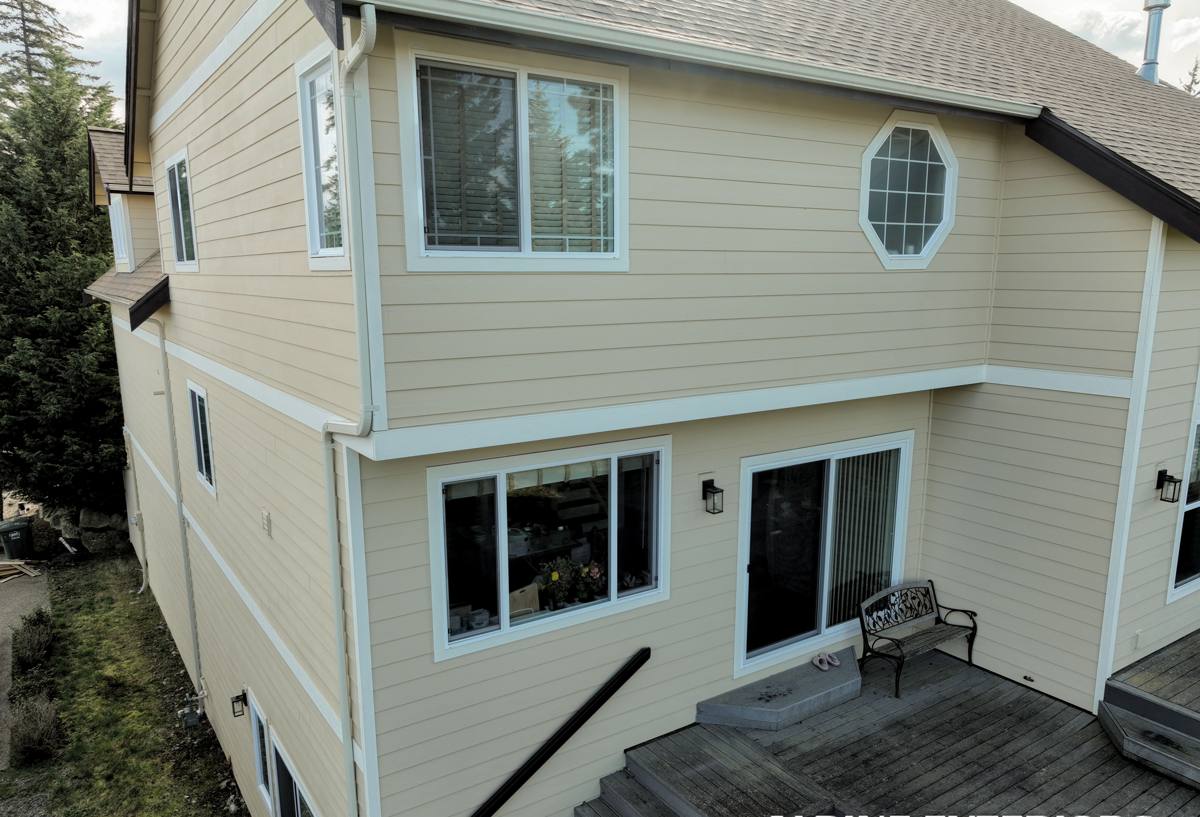
Why Fiber Cement Handles This Environment Better Than the Alternatives
Fiber cement is a mix of cement, sand, and cellulose fiber, pressed and cured into planks and panels. That composition matters directly for a climate like this one:
It doesn't rot or feed moss the way wood-based products can
Wood and wood-composite sidings are organic material, and organic material in a wet, shaded climate is exactly what moss, mildew, and rot organisms are looking for. Fiber cement has no wood fiber for them to feed on, so a properly installed and maintained fiber cement wall resists the constant moss pressure Mount Vernon homes deal with far better than wood-based siding does.
It holds paint and factory finish through wet-dry cycling
Skagit Valley homes go through repeated wet-to-dry cycles most of the year. Materials that expand and contract with moisture put stress on paint film, which is why field-painted wood and composite siding often needs repainting well ahead of schedule here. Fiber cement is dimensionally stable, and factory-applied finishes bond to it in a way that holds up far longer under this kind of cycling.
It's non-combustible
Wildfire smoke and dry-season fire risk have become a bigger part of Pacific Northwest summers, and fiber cement's non-combustible composition is a genuine advantage that vinyl and wood products can't match.
Why We Only Install James Hardie — Not Other Fiber Cement Brands
Not all fiber cement is engineered the same way, and we don't install every brand that falls under that label. We standardized on James Hardie specifically because their HZ5 product line is engineered for climate zones like ours — cold, wet Pacific Northwest weather — rather than a one-size-fits-all national spec. Their ColorPlus factory finish is baked on under controlled conditions, which gives it far better color retention and adhesion than field-applied paint, and it carries a stronger, better-documented warranty structure than most competing fiber cement products. We'd rather install one product system correctly and stand behind it than offer a menu of siding brands with inconsistent quality and warranty coverage. That's a deliberate standard, not a limitation.
The James Hardie Product Lines We Use on Mount Vernon Homes
Different parts of a house call for different profiles. Here's how the main James Hardie lines get used on the kind of homes common in this area:
| Product | Typical Use | Why It Fits This Climate |
|---|---|---|
| HardiePlank lap siding | Primary wall siding on most homes | Widest color and texture range; the workhorse product for full re-sides |
| HardieShingle | Accent gables, dormers | Traditional shingle look without the moisture vulnerability of cedar shingle |
| HardiePanel | Porch ceilings, board-and-batten accents | Clean vertical lines for modern or farmhouse-style facades |
| HardieTrim | Corners, window and door trim, fascia | Matches the siding's moisture resistance so trim doesn't become the weak point |
What a Correct Installation Actually Involves
Fiber cement is only as good as the installation behind it. Most of the siding failures we get called out to inspect in this region trace back to installation shortcuts, not the material itself. A correct job includes:
- A properly lapped weather-resistant barrier behind the siding, with all seams and penetrations sealed
- Correct flashing at every window, door, and roofline intersection — this is where the majority of hidden water intrusion starts
- Manufacturer-specified fastening pattern and fastener type, not whatever happens to be on the truck
- Proper clearance between the bottom of the siding and grade, decks, and roof lines so water can't wick up into the material
- Correct minimum gaps at butt joints and trim, caulked with a product rated for the movement and moisture involved
- Factory-cut and factory-primed edges kept intact wherever possible, with field cuts sealed per Hardie's specifications
- Ventilation gaps maintained where the wall assembly calls for a rainscreen or drainage plane
Skip any one of these steps and the siding can still look fine for a season or two before problems show up behind the wall, which is often long after the crew that installed it has moved on.
Our Process, Start to Finish
- On-site inspection. We look at your current siding, the condition of the sheathing and trim underneath where accessible, drainage around the foundation, and any areas showing moss, staining, or soft spots.
- Honest scope and product recommendation. We walk you through which Hardie products and colors fit the home and the budget, and explain the reasoning rather than just handing you a quote.
- Tear-off and substrate check. Once old siding comes off, we inspect the sheathing and framing underneath. Any rot or water damage gets addressed before new siding goes on — covering damaged sheathing is how small problems become expensive ones.
- Weather barrier and flashing installation. This is the step that determines how the wall performs for the next several decades, and we don't rush it.
- Siding installation to manufacturer spec. Correct fastening, gapping, and lapping, with trim and accent details installed to match.
- Caulking, touch-up, and cleanup. Seams get sealed, any factory-finish touch-up is applied, and the site is cleared of debris and old material.
- Final walkthrough. We go over the finished work with you directly so you know what was done and what maintenance, if any, to expect.
What Affects the Cost of a Mount Vernon Siding Job
Every home is different, but the same handful of factors drive most of the cost variation we see on jobs in this area:
| Factor | Why It Matters |
|---|---|
| Home size and wall complexity | More corners, dormers, and roof intersections mean more flashing detail and labor time |
| Condition of existing sheathing | Hidden rot from prior water intrusion adds repair scope that isn't visible until tear-off |
| Siding profile mix | Combining lap siding with shingle or panel accents costs more than a single profile throughout |
| Access and site conditions | Steep lots, mature landscaping, or tight setbacks slow staging and scaffolding |
| Color and finish selection | Standard ColorPlus colors versus special-order options can shift material lead time and cost |
We give straight, itemized numbers up front rather than a vague ballpark, so you know what you're paying for and why.
Signs Your Current Siding Is Already Losing the Fight
If you're not sure whether it's time to replace, these are the warning signs we see most often on homes in this climate:
- Moss or dark streaking that returns within months of cleaning
- Paint that's peeling, chalking, or bubbling rather than fading evenly
- Soft or spongy spots when you press on lower courses of siding
- Visible gaps, warping, or buckling boards
- Cracked or missing caulk at seams, corners, and trim
- Rising energy bills that suggest the wall assembly is no longer sealing properly
Catching these early usually means a smaller, less expensive job than waiting until water has reached the sheathing.
Why a Crew That Already Works This Area Matters
Skagit County's permitting requirements, typical framing practices, and moisture patterns aren't identical to what you'd find on the other side of the mountains or even in drier parts of western Washington. A crew that regularly works Mount Vernon and the surrounding Anacortes area already knows what local building departments expect, how local homes are typically framed and sheathed, and which details — flashing at valley roofs, clearance at grade, ventilation behind siding — matter most given how much moisture this area sees. That familiarity shows up in fewer surprises during tear-off and a tighter, more predictable installation.
Living With Your New Siding
Fiber cement asks very little of you once it's installed correctly. Periodic rinsing to keep moss and organic buildup from taking hold is the main upkeep item in this climate, along with a visual check of caulk lines every year or two. Because the finish is factory-applied rather than field-painted, you're not on a repainting schedule the way you would be with wood siding — the color is engineered to hold up under exactly the wet-dry cycling this region puts it through.
If your Mount Vernon home's siding is showing its age, or you're planning ahead rather than waiting for a problem, we're happy to take a look and give you a straightforward, no-pressure estimate. There's no obligation — just an honest read on where things stand and what your options are, using the form below.