 Anacortes Siding
 Why Mount Vernon Roofs Wear Differently
Mount Vernon sits in the Skagit Valley, where the mix of river moisture, tree cover, and the damp, salt-tinged air that moves in off Puget Sound and the Sound-facing coastline near Anacortes creates a roofing environment that's tougher on materials than drier parts of the country. It isn't one dramatic storm that takes a roof down out here — it's the slow, steady cycle of driving rain, humidity, and shade that never quite lets a roof fully dry out between weather systems.
That constant dampness is what drives moss and algae growth, softens underlayment over time, and quietly rots decking and fascia in spots that look fine from the ground. A roof replacement in Skagit County has to account for all of that, not just match what was there before. We've built our process around the specific way roofs fail in this region, not a generic checklist.
What the Climate Actually Does Over Time
- Prolonged moisture exposure breaks down shingle granules faster, especially on north-facing and shaded slopes
- Moss and algae hold water against the roof surface long after rain stops, accelerating wear underneath
- Freeze-thaw cycles in winter can widen small cracks in flashing and sealant
- Poor attic ventilation combined with our humidity leads to trapped moisture, which shortens the life of decking from the inside out
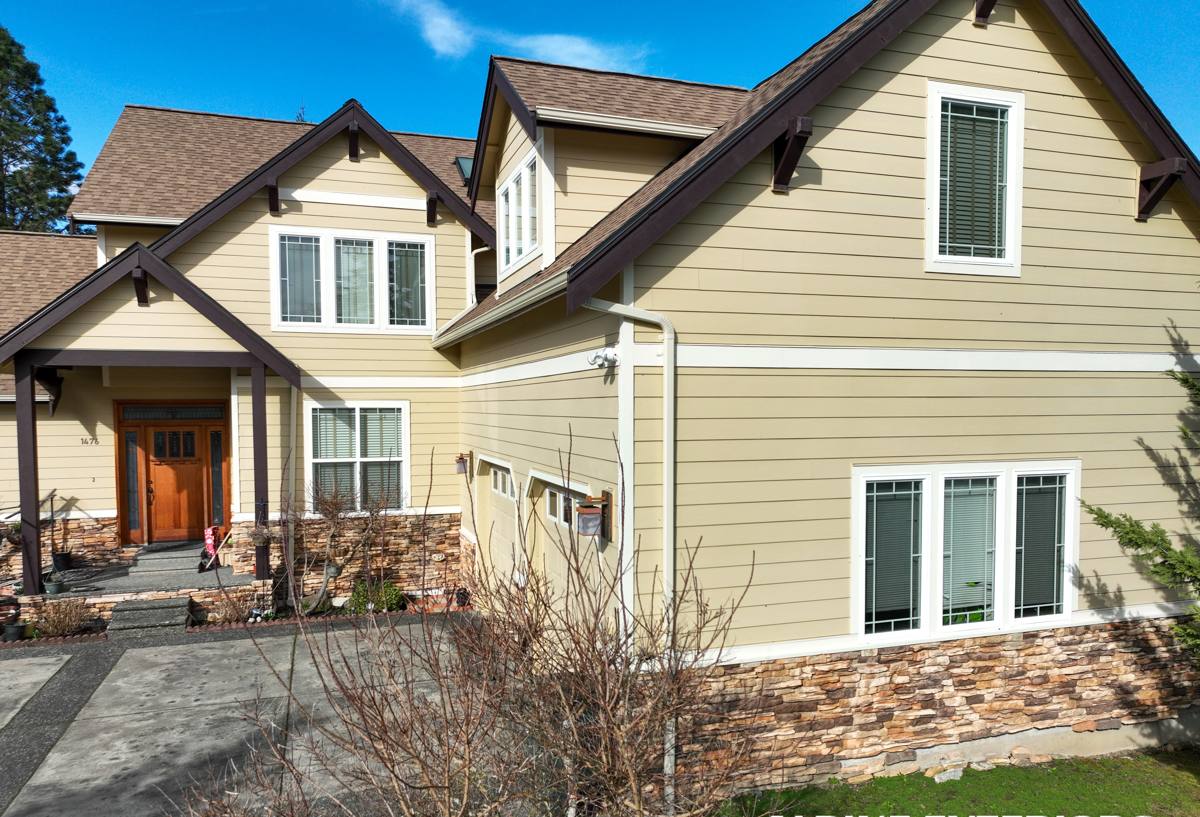
Repair or Replace? Signs It's Time
Not every roofing problem in Mount Vernon means a full replacement. But there's a point where patching becomes a waste of money, and recognizing that point early saves homeowners from paying for the same repair twice. A few signs consistently show up on Skagit County homes when a roof has reached the end of its useful life:
- Shingles that are cupping, curling, or losing granules in large patches rather than isolated spots
- Moss that keeps returning within a season or two of cleaning, especially in shaded areas
- Soft spots or sagging when walked on, which usually points to decking damage underneath
- Daylight visible through the attic roof boards, or water stains on interior ceilings
- A roof approaching or past 20-25 years old for asphalt shingle, regardless of how it looks from the street
- Repeated leaks around the same penetration points — chimneys, vents, skylights — even after repairs
If a roof is showing two or more of these at once, replacement is almost always the more honest recommendation, and a straightforward inspection will tell you which situation you're in before any money changes hands.
What a Correct Roof Replacement Includes
A roof replacement is more than stripping off old shingles and nailing down new ones. In a climate like ours, the parts underneath the visible surface matter as much as the shingle itself.
Tear-Off and Deck Inspection
A full tear-off exposes the decking, which is the only real way to find rot, soft spots, or old water damage that's been hidden under the previous roof. Any damaged sheathing gets replaced before anything new goes down — covering over compromised decking is how roofs fail early, and it's not something we skip to save time.
Underlayment and Ice-and-Water Protection
Given how much rain the Skagit Valley sees, underlayment isn't a place to cut corners. Self-adhering ice-and-water shield along eaves, valleys, and around penetrations gives an extra layer of protection in the spots where water is most likely to find a way in, even when the primary roofing material is doing its job.
Flashing
Flashing around chimneys, skylights, walls, and roof-to-roof transitions is one of the most common failure points on older roofs. New flashing, properly integrated with the underlayment and roofing material rather than just caulked over old metal, closes off the leak points that cause the most damage over time.
Ventilation
Proper intake and exhaust ventilation keeps the attic space at a consistent temperature and moisture level, which reduces condensation buildup on the underside of the decking. This is one of the most overlooked parts of a roof job and one of the biggest factors in how long a roof actually lasts here.
Roofing Material Options for Mount Vernon Homes
Most homes in this area are well suited to asphalt composition shingles, but the right tier and the right details matter more than the brand name on the wrapper. Here's how the common options compare for a Skagit County home:
| Material | Typical Lifespan | How It Handles Our Climate | Cost Position |
|---|---|---|---|
| 3-Tab Asphalt Shingle | 15-20 years | Adequate but wears faster under sustained moisture and moss pressure | Lowest upfront cost |
| Architectural (Dimensional) Shingle | 25-30 years | Thicker profile sheds water better and holds up longer against moss and wind-driven rain | Moderate |
| Metal Roofing | 40-50+ years | Sheds moisture quickly and resists moss growth well, though installation is more specialized | Higher upfront, lower lifetime cost |
| Synthetic/Composite Shingle | 30-40 years | Good moisture resistance; installation quality matters more than with standard asphalt | Moderate to higher |
We'll walk through which option makes sense for a specific roof pitch, tree coverage, and budget rather than steering every homeowner toward the same product. A steep, shaded roof under conifers has different needs than an open, low-pitch roof on the valley floor.
Ventilation and Moss: The Two Most Overlooked Factors
Homeowners often ask us why their old roof developed moss so quickly, and the answer is usually shade combined with poor airflow rather than a bad shingle. Moss needs moisture that lingers, and a roof that can't dry out between rain events — because of tree cover, north-facing exposure, or blocked ventilation — will grow moss no matter what material sits on top.
During a replacement, we install proper ridge and soffit ventilation sized correctly for the attic space, and we can discuss zinc or copper strips at the ridge, which release trace metals that discourage moss regrowth as rain washes over them. None of this eliminates moss maintenance entirely — nothing does in this climate — but it meaningfully slows how fast it comes back.
Our Roof Replacement Process
- Inspection and honest assessment — we get on the roof and in the attic, not just a look from the driveway, and tell you plainly whether you need a replacement or a repair
- Written estimate — a clear scope of work and price before any commitment, with material options explained in plain terms
- Scheduling around weather — we plan installs around Skagit County's rain patterns to protect your home during the tear-off window
- Tear-off and deck repair — full removal of old roofing, with any damaged decking replaced and documented
- Underlayment, flashing, and ventilation installation — the parts that determine how long the roof actually lasts
- New roofing material installed to manufacturer specifications, with attention to valleys, penetrations, and edges
- Cleanup and walkthrough — magnetic sweep for nails, hauling of debris, and a final walkthrough so you know exactly what was done
Why Hire a Crew That Already Works in Mount Vernon
Roofing crews who don't work this region regularly tend to treat every job the same way they would in a dry climate, which shows up later as ventilation that's undersized, underlayment that's minimal, or moss protection that was never discussed. A crew that works Mount Vernon and the surrounding Skagit County area on a regular basis knows which roof lines in this valley hold moisture the longest, how local permitting and inspection typically go, and how to schedule around the rainy stretches that define our building season.
That local familiarity isn't a marketing point — it changes real decisions on the job, from where extra ice-and-water shield gets placed to how ventilation is sized for a shaded, tree-heavy lot versus an open one.
Questions Worth Asking Before You Hire
- Will you inspect the decking during tear-off, not just replace what's visibly damaged?
- What underlayment and ice-and-water shield do you use, and where does it go on the roof?
- How is attic ventilation calculated for my specific roof, not just added as a standard package?
- What's included in the manufacturer warranty versus your own workmanship warranty?
- Can you provide a written scope of work before any deposit is collected?
- How do you handle weather delays once tear-off has started?
A contractor who answers these clearly and without hesitation is usually one who's done the work correctly, and often enough, in this specific climate.
If your roof is showing signs of wear, growing moss faster than it used to, or simply approaching the age where replacement makes more sense than another repair, we're happy to take a look. We offer free, no-pressure estimates for Mount Vernon homeowners — use the form below to get started.