 Anacortes Siding
 Mount Vernon's Climate Is Harder on Siding Than It Looks
Mount Vernon sits inland from Anacortes along the Skagit River, but it doesn't escape the weather patterns that make siding a real engineering problem on this side of the Cascades. Homes here deal with a long, wet fall-through-spring stretch, humid air moving up the valley from the Salish Sea, and enough shade from mature trees and river-bottom fog that north- and east-facing walls rarely get a chance to fully dry out between storms. Add driving rain that comes in sideways during winter systems, and you have a climate that punishes any siding product with a weak point in its water management.
Moss and algae growth is the most visible sign of that moisture load. It's not just cosmetic — moss holds water against the wall assembly, and on porous or poorly sealed siding it accelerates rot, delamination, and paint failure. Salt-tinged air drifting in from the nearby coastline adds a second stressor, especially on homes closer to the water, contributing to fastener corrosion and finish breakdown over time. A siding job that isn't built for these specific conditions tends to show problems within five to ten years, not thirty.
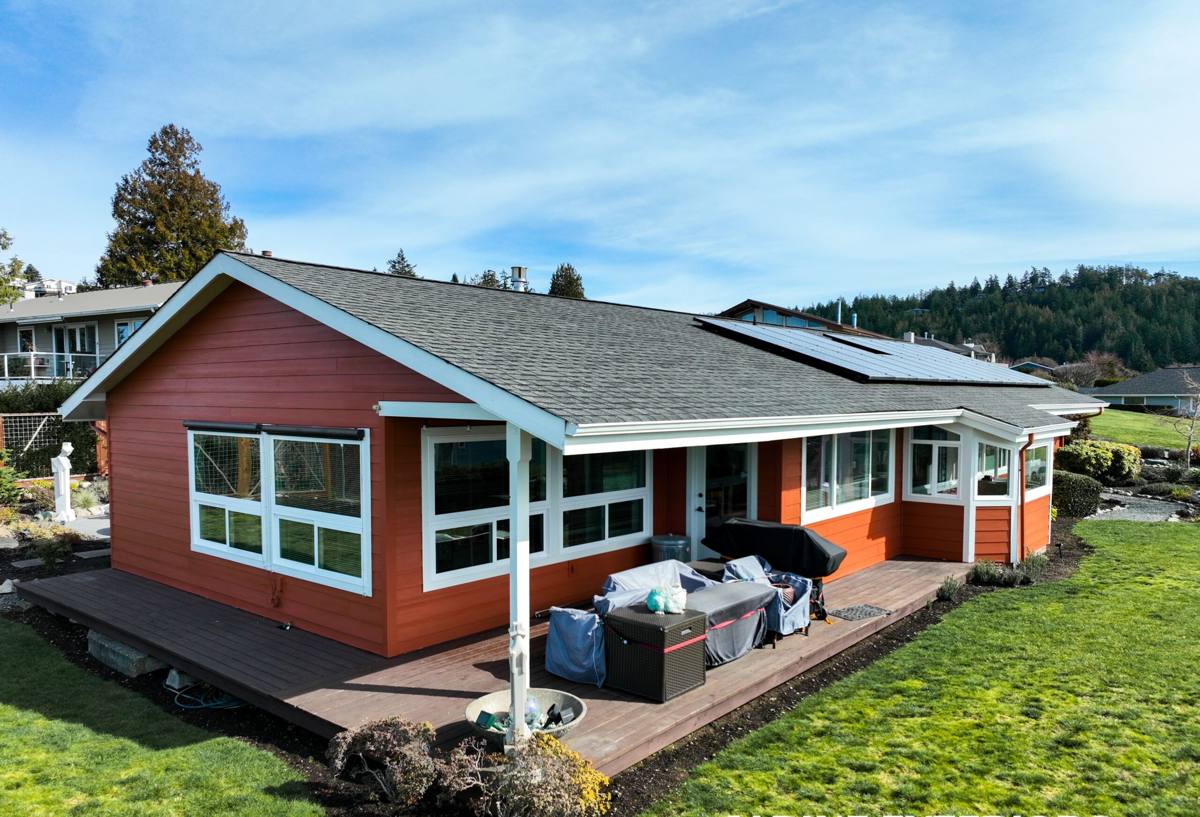
What Correct Siding Installation Actually Requires Here
"Correct" installation isn't about the siding material alone — it's about the whole wall assembly working together to manage water. In Skagit County's climate, that means:
- A continuous weather-resistant barrier (WRB) installed shingle-style so every layer sheds water downward and outward, with no reverse laps
- Properly flashed windows, doors, and any wall penetrations, integrated into the WRB rather than just caulked over it
- Correct fastener type, spacing, and depth — over- or under-driven nails are one of the most common causes of early siding failure we find on older Mount Vernon homes
- Minimum clearance between the bottom of the siding and grade, decks, patios, and roof lines, so splash-back and standing water don't wick into the material
- Proper caulking and sealant only where the manufacturer specifies it — sealing every seam actually traps moisture instead of letting it escape
- Ventilation behind the siding (a rainscreen gap) on walls that see heavy, prolonged wetting, which is common on shaded and north-facing elevations in this area
Skip any one of these steps and the siding itself almost doesn't matter — water will find the gap. This is where a lot of siding problems in the valley actually originate: not a bad product, but a rushed or incomplete install underneath it.
Why We Only Install James Hardie Fiber Cement
We standardized on James Hardie fiber cement siding for every job we take on, including here in Mount Vernon, because it's engineered for exactly the conditions this region produces. Hardie's HZ5 product line is formulated for climates with prolonged moisture exposure and freeze-thaw cycling, which describes the Skagit Valley well. Fiber cement is non-combustible, doesn't swell or rot the way wood-based products can, and holds paint and factory finish far longer than materials that expand and contract heavily with humidity swings.
The ColorPlus factory finish matters specifically for a moss-prone area like Mount Vernon — it's baked on under controlled conditions, so it resists fading and holds up to the repeated wet-dry cycling and occasional pressure washing that moss removal requires. A field-painted product loses that consistency the first time it needs a touch-up, and touch-ups are common on shaded, moisture-heavy walls.
We don't install LP SmartSide, vinyl, Cemplank, Allura, or bare cedar or spruce siding. Each has legitimate uses in the right climate and budget, but we've made a professional call that for this region's rain load and moss exposure, Hardie's combination of moisture performance, factory finish durability, and transferable warranty gives homeowners the best long-term outcome. That's not a knock on every alternative product everywhere — it's what we've decided we're willing to put our name behind here.
Our Installation Process for Mount Vernon Homes
1. Site and Wall Assessment
Before any siding comes off, we walk the exterior and check for existing moisture damage, especially around window and door openings, roof-to-wall transitions, and any area with visible moss or algae staining. Homes in shaded or river-adjacent lots get extra attention on north- and east-facing walls, where drying time is shortest.
2. Tear-Off and Sheathing Check
Old siding comes off and the sheathing underneath gets inspected. Soft spots, rot, or prior water intrusion get repaired before anything new goes up — installing new siding over compromised sheathing just hides the problem for a few more years.
3. Weather-Resistant Barrier and Flashing
We install a new WRB, properly lapped, along with flashing at every window, door, and penetration. This step is where most long-term water problems are prevented or created, and it's not something a homeowner can inspect once the siding goes on — it has to be done right the first time.
4. Rainscreen Where Warranted
On elevations that see prolonged shade or heavy wetting, we install a rainscreen gap behind the siding to let bulk water drain and airflow dry the wall assembly. This is a detail that pays off specifically in valley and shaded lots common around Mount Vernon.
5. Hardie Installation to Manufacturer Spec
Fastener placement, spacing, joint treatment, and clearances are all installed to James Hardie's published specifications — not general best practice, but the specific requirements that keep the manufacturer's warranty valid.
6. Final Walkthrough
We walk the finished job with the homeowner, checking clearances, trim, caulking, and finish consistency before calling it complete.
Failure Points We Commonly Find on Older Mount Vernon Siding
When we're called out to look at an existing home's siding, a handful of issues show up repeatedly in this area:
| Issue | Why It Happens Here | What It Leads To |
|---|---|---|
| Moss and algae buildup on shaded walls | Slow drying time from tree cover and valley humidity | Trapped moisture, finish breakdown, wood rot underneath |
| Siding installed too close to grade or decks | Original construction not accounting for splash-back | Wicking, swelling, rot at the base course |
| Failed or missing flashing at windows | Corners cut on original install or a prior remodel | Hidden water intrusion, sheathing damage |
| Corroded or popped fasteners | Salt-tinged air and repeated wet-dry cycling | Loose panels, staining, accelerated wear |
| Peeling field-applied paint | Humidity undermines paint adhesion over time | Recurring repaint costs, uneven weathering |
Cost Factors for a Mount Vernon Siding Project
Every home is different, but the main variables that move the price of a siding installation in this area are consistent:
| Factor | Why It Matters |
|---|---|
| Extent of sheathing repair needed | Moisture damage found during tear-off adds material and labor before new siding can go up |
| Home size and wall complexity | More corners, gables, and trim details increase both material and labor time |
| Siding profile and trim selection | Lap width, trim boards, and accent details affect material cost |
| Rainscreen installation on shaded elevations | Extra labor and material, but reduces long-term moisture risk |
| Access and site conditions | Landscaping, fencing, or tight lot lines can affect scaffolding and staging time |
We won't quote a number without seeing the home, but we're upfront during the estimate about which of these factors apply to your specific project and why.
Why Hiring a Crew That Already Works Mount Vernon Matters
A siding crew that regularly works Skagit County homes already knows which details matter here — where moss tends to build up, which elevations need extra drying consideration, and how local permitting and inspection processes typically run. That familiarity shows up in fewer surprises during tear-off and a install that's built for the actual conditions the home will face, not a generic checklist.
It also matters for warranty follow-through. James Hardie's warranty coverage depends on correct installation to spec — a crew that's done dozens of installs in this specific climate is far less likely to make the small errors that can complicate a future warranty claim.
Maintaining Your Siding After Installation
Even correctly installed fiber cement siding benefits from basic upkeep in this climate:
- Rinse shaded or moss-prone walls periodically with a garden hose or low-pressure wash — avoid high-pressure washing directly at seams and joints
- Trim back vegetation and tree limbs that keep walls shaded and slow to dry
- Check caulking at trim and penetrations annually, and have any cracked or missing sealant addressed promptly
- Watch for staining or discoloration near the base of walls, which can signal a clearance or drainage issue worth having looked at
- Keep gutters and downspouts clear so roof runoff isn't dumping extra water onto siding below
None of this is heavy maintenance — it's the kind of periodic attention that keeps a correctly installed system performing for decades instead of years.
Get a Straight Answer About Your Home
If your Mount Vernon home's siding is showing moss buildup, peeling paint, or signs of moisture damage, or you're planning ahead for a replacement, we're happy to take a look and give you a straightforward assessment — no pressure, no inflated urgency. Fill out the form below for a free estimate and we'll walk you through exactly what your home needs.