 Anacortes Siding
 Building New in Bow Means Getting the Windows Right the First Time
Bow sits close enough to the water that salt air is part of daily life, and far enough into Skagit County's farmland that long, wet winters and a heavy moss season are just as much a factor. When a home is being framed new — whether it's a full custom build, a shop conversion, or an addition big enough to need its own rough openings — the windows going in are new-construction units, not replacements. That distinction matters more than most people realize, and getting it wrong is expensive to fix once siding and interior finish are on.
New-construction windows come with a nailing fin built into the frame that gets integrated directly into the wall's water-resistive barrier before siding goes on. Done correctly, that fin becomes part of a continuous drainage plane. Done poorly — or skipped in favor of shortcuts because "the opening's already framed" — it becomes the single most common source of hidden water intrusion in new builds anywhere on the Skagit County coastline.
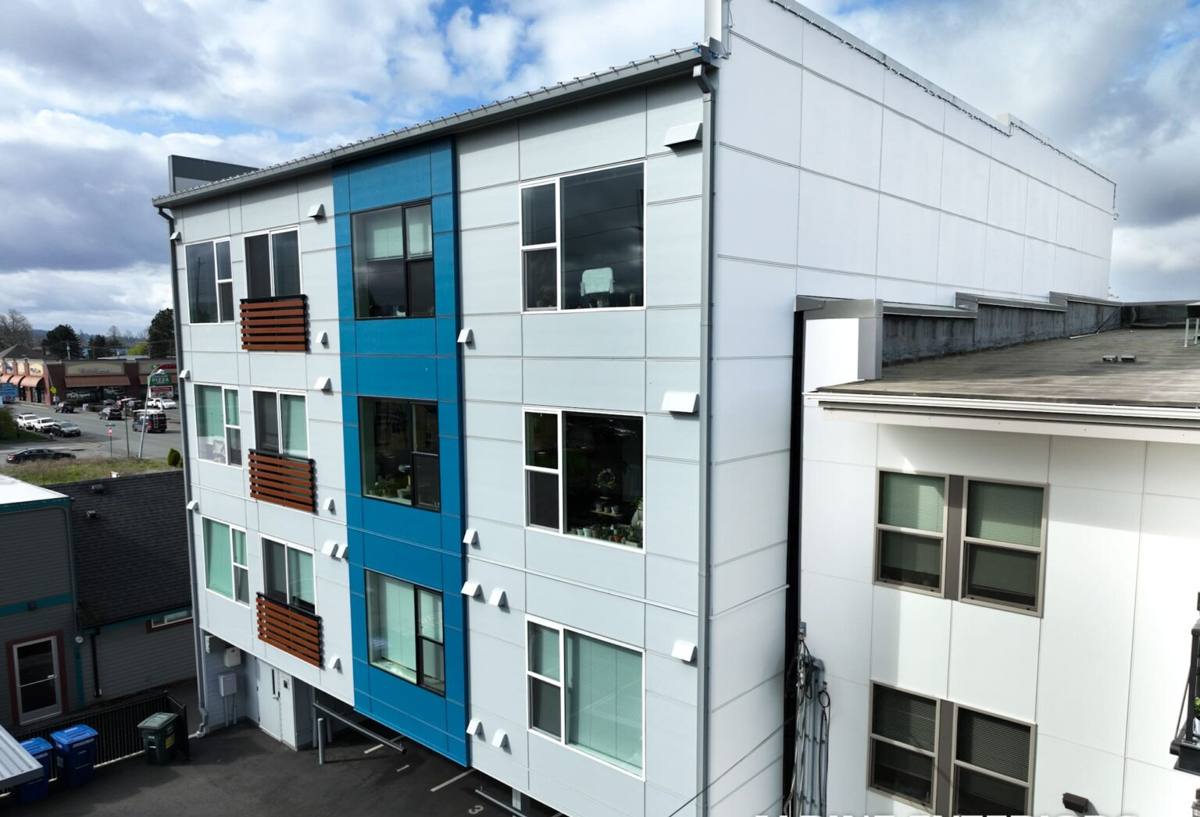
What Bow's Climate Actually Does to a New Window Opening
This isn't a generic "protect against weather" pitch. Three specific conditions show up again and again on jobs in and around Bow:
- Salt air corrosion — proximity to Samish Bay and the Salish Sea means airborne salt reaches hardware, screens, and fasteners faster than it would further inland. Cheap cladding and untreated fasteners pit and streak within a few seasons.
- Driving, wind-pushed rain — storms off the water don't just fall straight down, they push rain sideways into wall assemblies. A window installed with flat, gravity-only flashing will eventually leak; one installed with proper shingle-lap sequencing generally won't.
- Extended moss and mildew season — shaded north and west elevations in this area stay damp for months. Any gap in the sealant or flashing around a new opening becomes a slow-feeding source for rot and mold inside the wall cavity, often invisible until trim or siding comes off years later.
None of this means a home in Bow needs exotic materials. It means the water management details around the window — not just the window itself — have to be right, because this climate doesn't forgive shortcuts the way a drier region might.
Choosing a Frame Material for a Bow Build
Builders and homeowners ask us to weigh in on frame material more than almost anything else. There's no universally "best" choice — it depends on budget, exposure, and how much upkeep the homeowner wants to take on. Here's how the common options actually compare for a coastal Skagit County build:
| Frame Material | Salt Air / Moisture Resistance | Maintenance | Typical Lifespan |
|---|---|---|---|
| Vinyl | Good — won't rust or rot, but can discolor over time in full sun/salt exposure | Low — occasional cleaning | 20–30 years |
| Fiberglass | Excellent — dimensionally stable, resists pitting and warping | Low | 30–40+ years |
| Vinyl-clad wood | Good exterior protection, but any cladding breach exposes wood to rot risk | Moderate — watch seams and joints | 20–30 years if maintained |
| Aluminum | Poor without thermal break — conducts cold and can corrode near salt air | Low, but corrosion risk is real here | Varies widely |
For most Bow builds we see, vinyl and fiberglass cover the vast majority of budgets sensibly. Where a homeowner wants a wood interior look, vinyl-clad or fiberglass-clad wood units make more sense than bare wood exteriors, which simply don't hold up well this close to the water without constant upkeep.
Hardware and Screens Deserve Attention Too
It's easy to focus on the frame and forget the small parts. Locks, hinges, and screen frames on cheaper window lines are often mild steel or basic aluminum — both of which show corrosion within a few years in a salt-air environment. Stainless or corrosion-treated hardware costs a little more up front and holds up dramatically longer.
The Flashing Sequence Is Where Jobs Are Won or Lost
A new-construction window installed without the right sequence will look fine on move-in day and still leak three winters later. The order matters:
- Sill pan flashing installed first, sloped to drain any water that gets past the window back out and over the WRB — never into the framing.
- Window set into the opening, shimmed level, plumb, and square, then fastened through the nailing fin per the manufacturer's schedule.
- Side flashing tape applied over the fins, followed by head flashing lapped over the top — always shingle-style, so every layer sheds water onto the one below it, never the reverse.
- Housewrap integrated over the head flashing to complete the drainage plane before siding is installed.
- Interior and exterior sealant and backer rod placed only where the manufacturer specifies — sealing the wrong joint can trap moisture instead of shedding it.
Skip or reverse any one of these steps and the window can still pass a casual glance at final walkthrough. The failure shows up later, as staining, soft trim, or a musty smell — right in line with the slow-moisture pattern this climate is known for.
Energy Performance and Code Requirements
Washington's energy code sets minimum performance requirements for new windows, and Skagit County follows the state code for permitting new construction. In practical terms, that means paying attention to two numbers on the NFRC label:
- U-factor — how well the window resists heat loss. Lower is better for our cool, wet climate.
- Solar Heat Gain Coefficient (SHGC) — how much solar heat passes through. Less critical here than in sunnier climates, but still worth matching to the home's orientation.
Double-pane, low-E, argon-filled units meet current code minimums in most standard configurations, and that's what we spec by default unless a builder's plans call for something higher-performing. Triple-pane is available and does add both cost and performance, and can be worth it on north- or water-facing walls that take the brunt of Bow's weather — but it's not a requirement most homes here need to justify the extra expense.
Our Process for New-Construction Window Installs
On a new build or addition, we coordinate around the framing and dry-in schedule rather than working as a standalone trade:
- Review the rough openings against the ordered window sizes before they arrive — catching a framing error before install day, not after.
- Confirm flashing materials and sequence match both the window manufacturer's instructions and the wall assembly the builder has designed.
- Install sill pans, set windows, and complete the shingle-lap flashing sequence before housewrap and siding close in the wall.
- Walk each opening for level, plumb, square, and proper operation before signing off — swollen or racked openings are caught here, not after drywall.
- Coordinate timing with the builder's schedule so windows go in at the right point in the sequence — too early risks job-site damage, too late holds up siding and interior work.
Checklist: What a Correct Install Should Include
Whether you're a homeowner overseeing a builder or a general contractor bringing in a window sub, this is what to confirm on any new-construction window job in this area:
- Sill pan flashing present and properly sloped to drain outward
- Flashing tape shingle-lapped in the correct order — sill, sides, then head
- Window fastened through the nailing fin per manufacturer schedule, not just caulked in place
- Housewrap integrated over the head flashing, not tucked underneath it
- Hardware and screen frames rated for coastal/corrosive exposure
- NFRC label matches the U-factor and SHGC specified for the project
- Unit checked for level, plumb, and square with smooth operation before trim goes on
- Sealant placed only at manufacturer-specified joints, not applied as a blanket fix
Why It Matters to Hire a Crew That Already Works in Bow
A lot of window problems we get called to diagnose later trace back to an installer who does great work in a dry climate but hasn't adjusted for what Anacortes-area weather actually does to a wall assembly. Crews unfamiliar with this stretch of Skagit County sometimes treat flashing as optional or use standard sealant schedules that don't account for driving rain off the water. A crew that already works Bow regularly has seen which details fail here and builds every install around avoiding them — not from a manual, but from having gone back to fix jobs that didn't.
There's also a practical scheduling advantage: local crews know the weather windows that make sense for opening up a wall in this area, and they're not guessing at permit or inspection expectations for Skagit County new construction.
Get a Free, No-Pressure Estimate
If you're framing a new home, an addition, or a shop conversion in the Bow area and need new-construction windows installed correctly the first time, we're happy to walk the plans or the framed openings with you and give you a straightforward estimate — no pressure, no upsell. The form below is the fastest way to get started.