 Anacortes Siding
 Building New in Conway Means Building for This Climate
Conway sits down in the Skagit River delta country, close enough to the estuary and Skagit Bay that salt-tinged air is a fact of life, not an occasional nuisance. Add in the driving rain that comes off the water most of the fall and winter, plus a moss and algae season that can stretch six months or more on shaded north- and west-facing walls, and you've got a climate that's genuinely hard on window openings. If you're framing a new home or addition in the Conway area, the windows aren't just a finish item — they're one of the first weatherproofing decisions you make, and it's a lot cheaper to get them right the first time than to chase leaks after drywall is up.
New-construction windows are installed differently than replacement windows, and the stakes are different too. On a replacement job, the existing wall assembly is already proven — you're working within it. On new construction, you're building the water management system from scratch: the window is one layer in a stack that has to work with the weather-resistive barrier, the flashing, and the siding that goes on top of it. Get that stack wrong in a place like Conway, and the mistake doesn't show up right away. It shows up two or three winters later as a soft spot under a sill or a stain creeping down an interior wall.
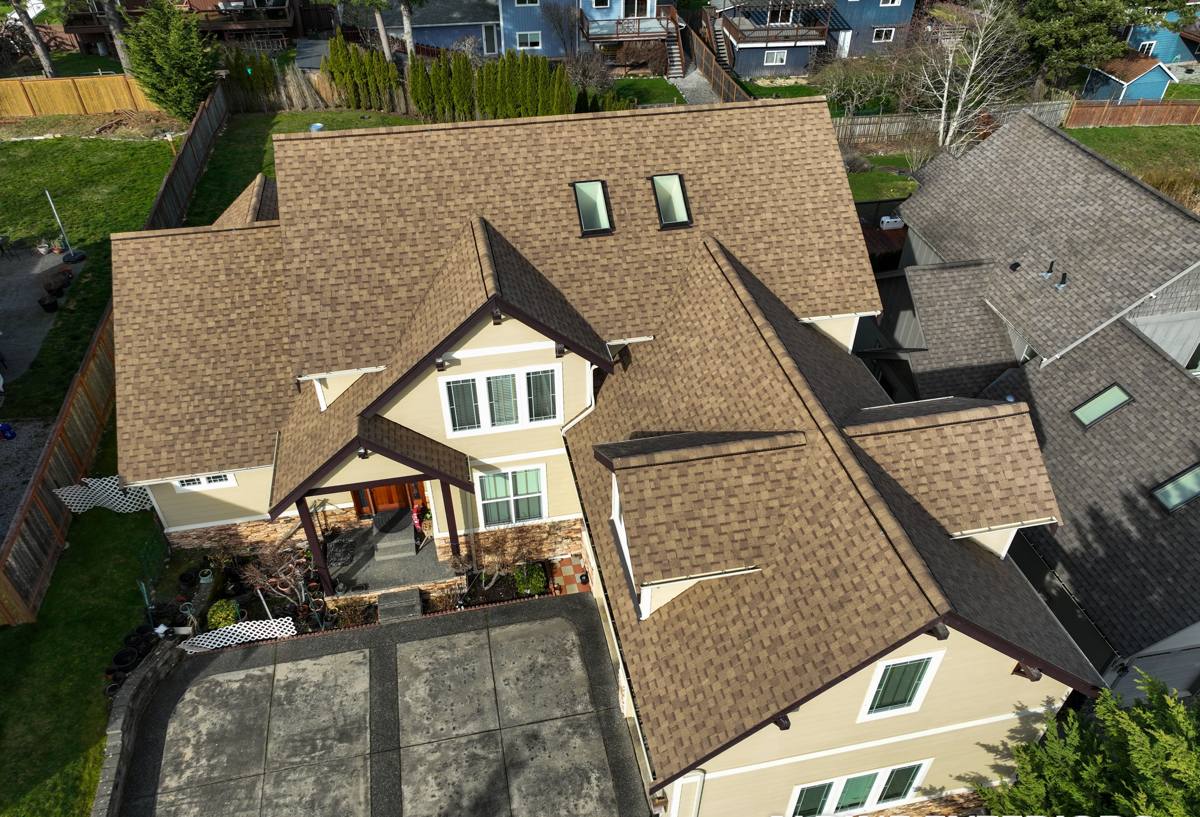
New-Construction vs. Replacement: Why the Distinction Actually Matters
The term "new-construction window" refers specifically to a window with a nailing fin (also called a nail flange) built around the frame. That fin gets integrated into the wall's weather-resistive barrier and flashing system before siding goes on, creating a continuous drainage plane. Replacement windows, by contrast, are typically flangeless "pocket" units designed to slide into an existing frame without disturbing the exterior wall covering.
On a new build in Conway, using the correct window type — and installing it in the correct sequence relative to the house wrap and flashing tape — is what actually keeps wind-driven rain out. This isn't a cosmetic choice. It's the difference between a window opening that sheds water by design and one that's relying on caulk to do a job caulk was never meant to do alone.
What Goes Wrong When the Sequence Is Off
- Flashing tape applied over the nailing fin instead of properly shingled under the WRB above it, so water runs behind the barrier instead of over it
- Sill pan flashing skipped or improvised, leaving no back-dam to catch water that gets past the window itself
- Rough openings cut oversized "for ease of install," leaving gaps that get filled with expanding foam instead of proper shimming and sealant
- Windows set before the WRB is fully lapped and taped, forcing installers to work around housewrap instead of integrating with it
What a Correct New-Construction Installation Actually Involves
A proper install follows a specific order, and every step matters more here than it would in a drier climate:
- Rough opening check — verified square, plumb, and sized correctly before anything else happens.
- Sill pan flashing — a sloped, back-dammed pan at the bottom of the opening so any water that reaches the sill drains back outside instead of pooling against the framing.
- Jamb and head flashing — self-adhered flashing tape at the sides and top, shingle-lapped so each layer sheds water onto the one below it.
- Window set and shimmed — leveled, plumbed, and shimmed at the manufacturer's specified points so the frame doesn't rack or bow under fastening.
- Nailing fin fastened and integrated with the WRB — the house wrap laps over the top flange and is taped to the sides, keeping the drainage plane continuous.
- Interior and exterior sealant — appropriate sealant at the frame-to-framing joint, with the exterior joint left able to drain rather than fully sealed airtight, which traps moisture.
Skip or shortcut any one of these and the window can still look fine on move-in day. The failures we see in this climate are almost always slow ones — moisture that gets behind the barrier and sits there through a wet Skagit County winter before anyone notices.
Window Materials: What Holds Up Near Salt Air and What Struggles
Material choice matters more in Conway than it would further inland. Salt-laden air accelerates corrosion on hardware and fasteners, and constant damp cycles punish anything prone to swelling or rot. Here's the honest tradeoff picture:
| Material | Salt Air / Moisture Behavior | Maintenance | Typical Fit |
|---|---|---|---|
| Vinyl | Won't corrode or rot; UV can chalk the surface over many years | Low — occasional cleaning | Most new builds; good value, wide size range |
| Fiberglass | Very stable dimensionally, excellent moisture and salt resistance | Low | Larger openings, coastal exposure, higher-end builds |
| Wood-clad | Good if cladding and flashing details are done correctly; the wood core is vulnerable if water gets behind the cladding | Moderate — cladding needs to stay sealed, sills need attention | Interior-visible wood look where the exterior is fully protected by cladding and overhangs |
| Aluminum | Conducts cold and can corrode without a quality finish; less common in residential new-construction here | Moderate | Specific architectural applications, not typical for standard homes |
We don't push one material on every job. A lot of it comes down to how exposed the elevation is, what the siding and trim details look like, and what the homeowner wants long-term maintenance to look like. What we won't do is install a wood-clad window on a wall with poor overhang protection and call it fine — that's setting the window up to fail regardless of how good the unit itself is.
Glass Packages Worth Paying For in This Climate
Skagit County's climate zone calls for glass that manages both heat loss and condensation, not just one or the other. For new construction in Conway, we generally steer people toward:
- Dual-pane, Low-E coated glass as the baseline — triple-pane where budget allows on north-facing or particularly exposed elevations
- Argon or krypton gas fill between panes for better insulating performance
- Warm-edge spacer systems, which reduce condensation risk at the glass edge — a real issue in our damp, cool winters
- NFRC-rated U-factor and SHGC numbers appropriate for our climate zone, not a generic national default
None of this is exotic — it's standard performance glass that's simply matched to the conditions the window will actually face here, rather than a one-size-fits-all spec.
How We Work Conway New-Construction Jobs
Because new-construction windows go in during a specific window in the build schedule — after framing and WRB, before siding — timing and coordination with the general contractor matter as much as the install itself. Our process:
- Walk the framed openings with the builder before windows arrive, checking rough opening sizes against the window schedule
- Confirm WRB and flashing tape compatibility so every layer bonds and drains as intended
- Install sill pans, flashing, and windows in sequence, elevation by elevation
- Photograph flashing details at each opening before siding closes them up — because once siding's on, nobody can see that work again
- Final walk-through with operation checks on every unit before we sign off
Moss, Mildew, and What Long-Term Maintenance Looks Like
Even a correctly installed window needs a homeowner to do a little upkeep in this climate. North- and west-facing sills and trim in shaded parts of a Conway lot will grow moss and algae faster than sun-exposed elevations — that's a fact of living this close to the water, not a sign anything was done wrong. A properly detailed sill sheds water and dries out between rains, which keeps organic growth from getting a foothold. What we watch for on maintenance visits: sealant joints starting to crack or pull away, any soft spots in trim near the sill, and hardware that's started to bind — often an early sign of frame movement or fastener corrosion worth catching early.
Checklist: What to Ask Before Your Windows Go In
- Is a sill pan being installed at every opening, not just the ones that seem exposed?
- What brand and type of flashing tape is being used, and is it compatible with the housewrap?
- What NFRC U-factor and SHGC ratings are specified for this climate zone?
- Will flashing details be photographed before siding covers them?
- Who's coordinating timing between the framer, the window installer, and the siding crew?
- What's the warranty structure — on the window unit itself, and separately on the installation labor?
Why a Crew That Already Works Conway Is Worth Something
There's no substitute for having actually installed windows on enough Conway and greater Anacortes-area homes to know how a given elevation, exposure, and framing style tends to behave. A crew that's only ever worked drier inland builds may not think twice about a detail that matters a lot here — like how much drainage capacity a sill pan needs when driving rain off the bay hits a wall at an angle for three days straight. We coordinate directly with builders and general contractors on new-construction schedules in this area regularly, which means fewer surprises, fewer callbacks, and windows that are doing their job long after the framing crew has moved on to the next lot.
If you're planning a new build or addition in Conway and want windows specified and installed to hold up to Skagit County's salt air, rain, and moss season, we'll walk the plans with you and give you a straightforward, no-pressure estimate — just fill out the form below to get started.