 Anacortes Siding
 Building Windows Right the First Time in Similk Beach
Similk Beach sits close enough to the water that every window on a new build is doing more than letting in light — it's standing between a wood-framed house and a marine climate that doesn't let up. Salt-laden air off the strait, driving rain that comes in sideways during winter storms, and a moss season that runs longer here than almost anywhere else in Skagit County all put steady stress on window openings. On a new-construction job, the window installation isn't a finishing touch — it's part of the house's structural weather barrier, and it only gets one chance to be done correctly before siding, trim, and interior finishes cover it up.
We install new-construction windows on homes throughout the Anacortes area, including Similk Beach, and the difference between a window that performs for thirty years and one that starts leaking at year five almost always comes down to what happens at the rough opening — not the window unit itself.
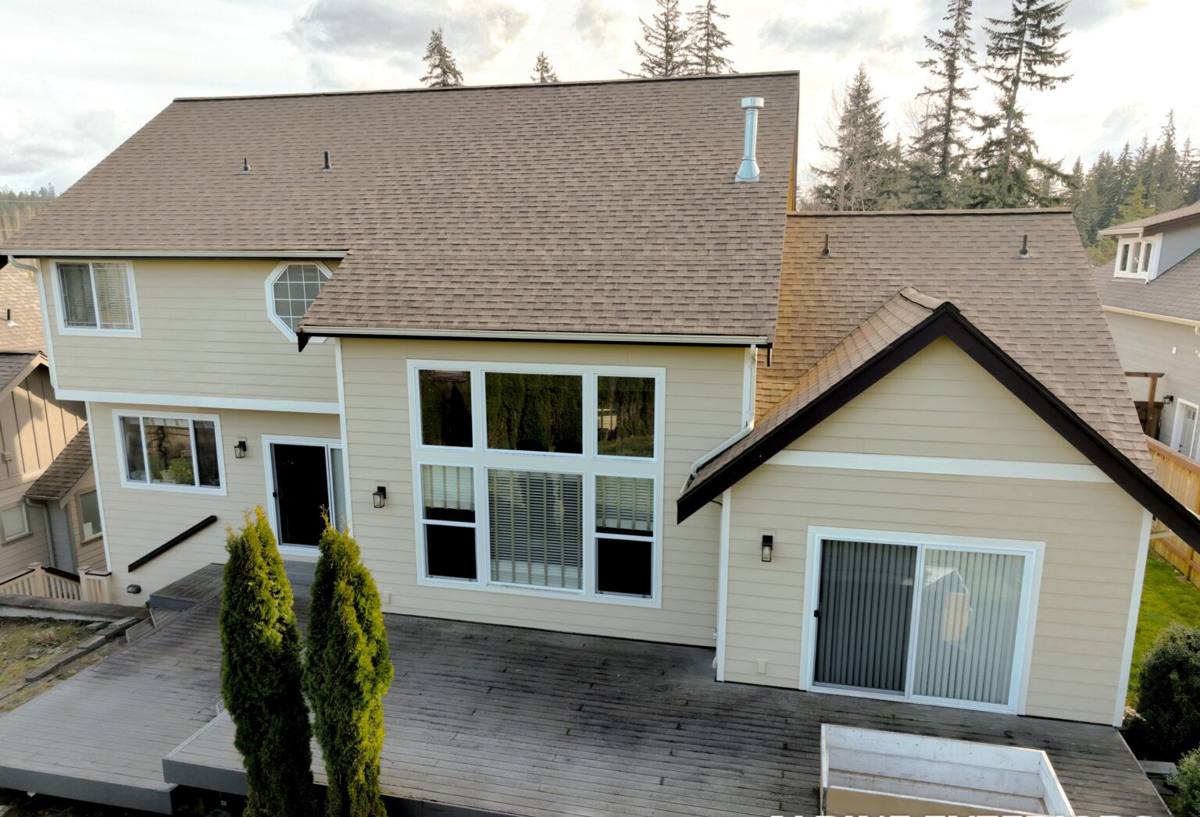
What "New-Construction" Windows Actually Means
New-construction windows are built with a nailing flange (also called a nail fin) around the perimeter of the frame. That flange gets fastened directly to the wall sheathing and integrated into the water-resistive barrier before siding goes on. This is different from a replacement or "insert" window, which is sized to fit inside an existing frame with no flange and relies on the old frame and trim for its weatherproofing.
On a ground-up build or an addition in Similk Beach, flanged new-construction windows are the correct choice almost every time, because they let us build a proper layered water management system around each opening rather than patching one together after the fact. That layered system — not the window brand — is what actually keeps wind-driven rain out of the wall cavity.
Why This Distinction Matters Here Specifically
In a drier inland climate, a slightly imperfect flashing job might never get tested hard enough to fail. Near Similk Beach, wind off the water pushes rain sideways into wall assemblies regularly enough that any shortcut in the opening prep tends to show up as a stain, soft trim, or interior moisture within a few winters. New-construction framing gives us the chance to get every layer right before it's covered.
What a Correct Installation Involves
A properly installed new-construction window is really a sequence of overlapping steps, each one shedding water onto the layer below it — like shingles on a roof. Skipping or reversing the order is the single most common cause of window-related water intrusion we get called out to diagnose in older homes.
- Rough opening is checked for square, level, and correct dimensions before the window ever arrives on site
- Sill pan flashing is installed first, sloped slightly outward so any water that gets past the window drains back out, not into the wall
- Window is set, shimmed plumb and square, and fastened through the nailing flange per the manufacturer's schedule — not just at the corners
- Jamb and head flashing integrate with the weather-resistive barrier in strict shingle-lap order: sides, then head, always lapping over the layer beneath
- Sealant is applied at manufacturer-specified points only — sealing the entire flange can trap water instead of releasing it
- Interior and exterior gaps are insulated and air-sealed without over-packing, which can bow the frame
- Exterior trim and siding are installed to shed water away from the window head and jambs
Every one of these steps matters more in a coastal wind-driven-rain environment than in a sheltered inland lot, which is exactly the condition most Similk Beach sites present.
Frame Material: What Holds Up Near the Water
Frame material choice affects how a window handles moisture cycling, salt exposure, and the moss and algae growth that's common on north- and shade-facing walls in this part of Skagit County. There's no single "best" material for every situation — it depends on the home's design, budget, and exposure.
| Frame Material | Moisture & Salt-Air Behavior | Maintenance | Typical Fit |
|---|---|---|---|
| Vinyl | Doesn't corrode or rot; performs well in salt air | Low — occasional cleaning | Cost-conscious builds, rentals, most standard new construction |
| Fiberglass | Very stable dimensionally, resists moisture and UV well | Low | Higher-exposure walls, larger openings, longer-term ownership |
| Aluminum-clad wood | Attractive, but wood interior needs the seal to stay intact to avoid rot at cut edges | Moderate — watch for finish wear at joints | Design-driven projects where interior wood look is a priority |
| Bare wood | Highest maintenance burden in a wet, salt-influenced climate; we recommend it only with a clear maintenance plan | High — regular refinishing | Historic or architecturally specific projects |
We'll talk through these trade-offs honestly rather than steering every job toward one product — the right frame material depends on how exposed the wall is, how the home will be maintained over time, and what the design calls for.
Glass Performance for a Marine Climate
Window glass on the Washington coast has two jobs: keeping heat in during the long wet winters and controlling condensation, which is a bigger issue here than in drier climates because of how consistently humid the air is.
What to Look For
- U-factor — measures how well the window resists heat loss; lower is better for our winters
- SHGC (Solar Heat Gain Coefficient) — matters less here than in sunnier climates, but still worth checking on south-facing openings
- NFRC label — look for the National Fenestration Rating Council label on any window quoted for the job; it's the only way to compare performance numbers across brands honestly
- Argon-filled double or triple pane — standard for new construction in this region; triple pane is worth discussing for exposed or north-facing walls
Condensation resistance is worth asking about directly. A window that's rated well for U-factor but has a weak edge seal can still fog or sweat on cold mornings, which over years contributes to the same moss and mildew growth issue that affects siding and trim in Skagit County's damp air.
Where New-Construction Windows Fail — and Why
Most window failures we find during repair calls trace back to a handful of repeatable mistakes, almost none of which are the window manufacturer's fault.
| Failure Point | Common Cause | Typical Consequence |
|---|---|---|
| Missing or reversed flashing lap | Head flashing installed before jamb flashing, or skipped | Water tracks behind the WRB into the wall cavity |
| No sill pan | Treated as optional to save time | Water pools at the sill and rots framing over years |
| Fully sealed flange | Sealant applied around the entire perimeter instead of manufacturer's pattern | Trapped moisture with no path to drain out |
| Over-shimmed or racked frame | Rushed set without checking square | Operable sashes bind, seals stress and fail early |
| Poor siding-to-trim detailing | Trim installed flush with no drip edge | Water runs directly down the face into the window head |
Our Process for a Similk Beach New-Construction Job
We coordinate closely with builders and homeowners so window installation lines up cleanly with the framing and weather-barrier schedule rather than being squeezed in as an afterthought.
- Site visit and rough-opening review before windows are ordered, confirming sizes and any structural details specific to the lot's exposure
- Product selection walkthrough covering frame material, glass package, and performance ratings suited to a marine, high-moisture site
- Sill pan and flashing installation following manufacturer instructions and shingle-lap sequencing, inspected before siding covers the work
- Window setting, fastening, and air-sealing to spec
- Final exterior trim coordination so water is directed away from every opening
- Walkthrough with the builder or homeowner before we move off the job
Because we work regularly in this specific pocket of Anacortes, we already know how wind and rain typically hit lots near Similk Beach, which sides of a house tend to take the worst of the weather, and where moss and algae growth shows up first on shaded elevations. That local pattern recognition shapes small decisions — flashing details, trim choices, even which openings we double-check hardest — that a crew unfamiliar with the area might not think to make.
Questions Worth Asking Before You Hire
Whether you're a homeowner working with a builder or managing your own new-construction project, these are reasonable questions for any contractor bidding window installation near the water:
- Do you install sill pan flashing on every opening, or only when specifically requested?
- Can you show me the flashing sequence you follow and why it's ordered that way?
- What frame materials do you recommend for this specific wall's sun and wind exposure?
- How do you handle sealant placement on the nailing flange — full perimeter or per manufacturer spec?
- Will the same crew that installs the windows also be around during the siding phase to confirm the details line up?
A contractor who answers these clearly and specifically, without vague reassurances, is generally one who's done this enough times in this climate to know why the details matter.
Timeline and Coordination
Window installation on a new build typically happens after the home is framed, sheathed, and wrapped with the weather-resistive barrier, and before siding begins. In Skagit County, weather windows can be tighter in the fall and winter months, so we work with builders to schedule window sets during dry stretches whenever the framing timeline allows — installing flashing components in the rain is avoidable and worth avoiding. For most single-family homes, window installation itself takes a matter of days once the openings are ready; the surrounding framing and siding schedule is usually the bigger factor in overall project timing.
If you're planning new construction or an addition near Similk Beach and want windows installed with this climate actually in mind, we're happy to walk the site, look at your plans, and give you a straightforward, no-pressure estimate — just fill out the form below.