 Anacortes Siding
 Why Guemes Island Roofs Age Differently
Guemes Island sits out in the water where Rosario Strait, Guemes Channel, and Bellingham Bay all meet, and that location shapes everything about how a roof performs there. A roof on the island is doing a different job than a roof a few miles inland in Anacortes proper, even though the two are only a short ferry ride apart.
Three things drive most of the wear we see on Guemes Island roofs:
- Salt air. Airborne salt from the surrounding water settles on roofing surfaces and metal components. Over years it accelerates corrosion on exposed fasteners, flashing, and anything made from lower-grade metal.
- Driving rain and wind exposure. With water on multiple sides and few large landforms to break the wind, storms coming through the San Juans and Strait of Georgia hit the island with more force and more sideways rain than a sheltered inland lot would see. That pushes water into places a calmer roof would never test.
- A long moss season. Cool, wet, shaded conditions under fir and cedar canopy give moss months to establish itself, especially on north-facing slopes and anywhere shade lingers into the afternoon.
None of these are exotic problems — they're the same forces every roof in Skagit County deals with — but Guemes Island gets a heavier dose of each one, which is why a roof built to a generic spec often underperforms out there compared to the same materials installed on the mainland.
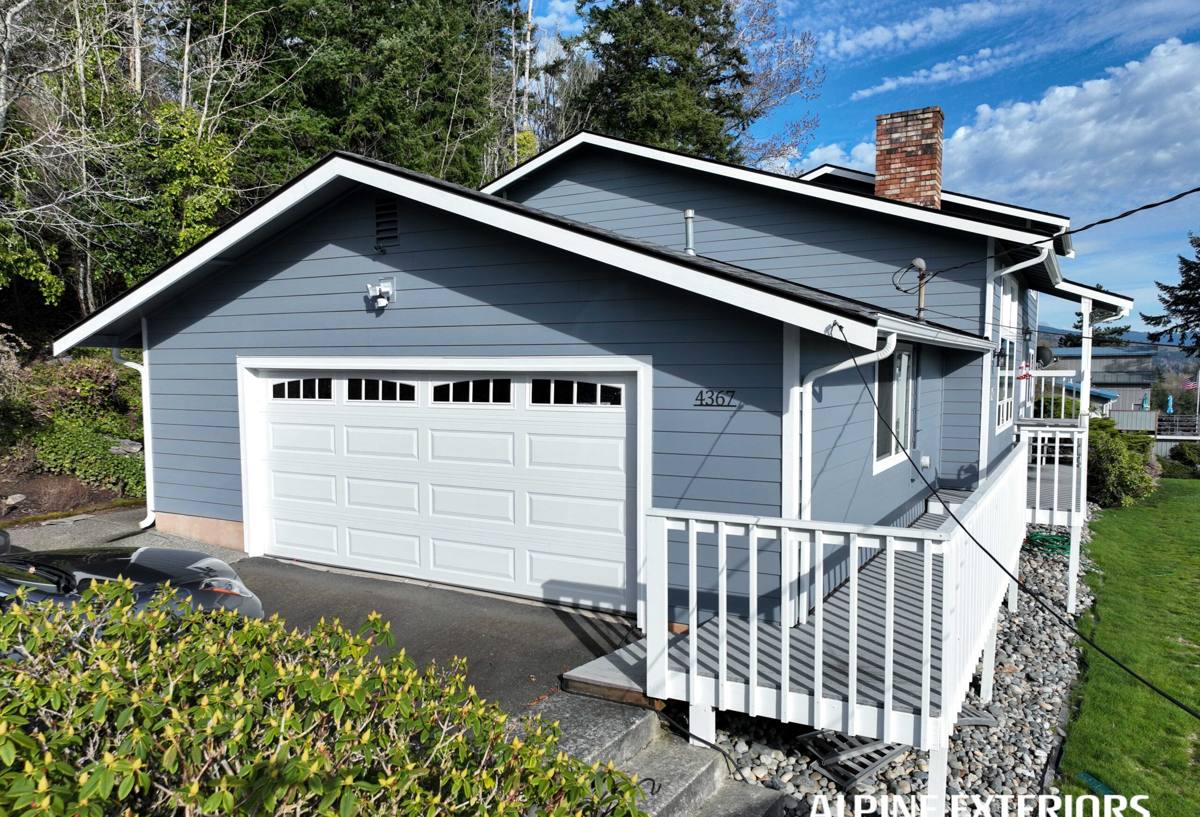
What a Correct Installation Actually Involves
A roof replacement is only as good as what's underneath the shingles or panels. On Guemes Island, we treat several details as non-negotiable rather than optional upgrades, because the environment doesn't give a roof much margin for shortcuts.
Tear-off and deck inspection
We remove the old roofing down to the deck rather than layering over it. That lets us actually see the sheathing — check for soft spots, delamination, or water staining around old flashing points — and replace any damaged panels before new material goes down. Covering over a compromised deck just hides the problem for a few more years.
Underlayment and ice-and-water protection
Given how much wind-driven rain the island sees, we pay close attention to underlayment at eaves, valleys, and any roof-to-wall transitions — the places where water is most likely to be pushed backward under standard shingle coverage. A synthetic underlayment paired with self-adhering membrane at vulnerable areas gives the roof a real second line of defense, not just a formality.
Flashing and fasteners rated for salt air
This is one of the biggest differences between a roof built for Guemes Island and a roof built to a minimum-code inland spec. We favor corrosion-resistant flashing and fastener materials in this environment rather than the cheapest option that happens to meet code, because standard galvanized hardware simply corrodes faster this close to salt water.
Ventilation
Proper intake and exhaust ventilation keeps moisture from building up in the attic space, which matters even more in a marine climate where the air itself carries a lot of humidity. Poor ventilation shortens the life of a new roof from the inside out, regardless of how good the shingles are.
Choosing a Roofing System for Island Conditions
There isn't one "correct" material for every home on Guemes Island — it depends on the roof's pitch, the home's style, budget, and how much long-term maintenance the owner wants to take on. Here's how the common options stack up against island conditions specifically.
| Material | How it handles salt air & wind | Moss resistance | Maintenance |
|---|---|---|---|
| Architectural asphalt shingles | Good, with corrosion-resistant flashing and fasteners | Moderate — benefits from periodic cleaning | Low to moderate |
| Standing seam metal | Excellent when finished and fastened correctly | Very good — sheds moss more easily than shingles | Low |
| Cedar shake | Traditional look, but needs disciplined upkeep in a wet climate | Poor without regular treatment and cleaning | High |
| Composite/synthetic shake or slate | Good — engineered for moisture and UV exposure | Moderate to good | Low to moderate |
For most Guemes Island homes we recommend architectural asphalt or standing seam metal as the practical choices — both perform well against wind uplift and driving rain when installed correctly, and neither demands the ongoing maintenance schedule that cedar shake requires to avoid moisture problems in a marine climate. We're happy to walk through the trade-offs for your specific roof and let you make the call based on look, lifespan, and budget rather than pressure toward one product.
Getting the Job to the Island: Logistics That Actually Matter
A roof replacement on Guemes Island has a layer of planning that a mainland job doesn't: everything — crew, tear-off dumpster, material delivery, equipment — has to move through the county ferry from Anacortes. This sounds like a small detail until you've watched a contractor unfamiliar with the island underestimate it.
Things we plan around before the first shingle comes off:
- Ferry schedule and vehicle capacity — timing crew and material trips so the job isn't stalled waiting on a sailing
- Staging space at the home — island lots vary widely in how much room there is for a dumpster, material pallets, and work vehicles
- Weather windows — with more wind and rain exposure, we watch forecasts closely so a deck isn't left open when a system is moving through
- Debris hauling — getting torn-off roofing material back off the island efficiently rather than letting it sit
A crew that hasn't done this before tends to lose time — and sometimes leaves a roof partially open longer than they should — simply because they didn't plan the logistics ahead of the ferry schedule. That's avoidable with experience, and it's one of the quieter reasons the right contractor matters more here than it does for a job three miles inland.
Permitting on Guemes Island
Guemes Island is unincorporated — it falls under Skagit County jurisdiction rather than the City of Anacortes, even though Anacortes is the closest town and the ferry landing. That means permitting, inspection scheduling, and code requirements run through the county, not the city. We handle that distinction as part of the job rather than treating it as an afterthought, so the permit process doesn't become a surprise delay partway through the project.
Our Process, Start to Finish
- On-site assessment. We look at the existing roof, deck condition, ventilation, and any problem areas — moss buildup, soft spots, flashing wear — and take measurements.
- Written estimate. You get a clear scope of work and pricing before anything is scheduled, with material options explained honestly, including trade-offs.
- Scheduling around ferry and weather. We build the timeline around sailing times and a realistic weather window so the roof isn't left exposed longer than necessary.
- Tear-off and deck repair. Old roofing comes off, the deck gets inspected, and any damaged sheathing is replaced.
- Underlayment, flashing, and installation. New roofing goes on with attention to the eaves, valleys, and wall transitions that take the brunt of driving rain.
- Cleanup and haul-off. Debris and fasteners are cleared from the property and hauled off the island — we don't leave that to the homeowner.
- Final walkthrough. We go over the finished roof with you before calling the job done.
Signs a Guemes Island Roof Needs Replacing Rather Than Patching
Roof repair makes sense for isolated issues. Full replacement becomes the smarter call once problems are spread across the roof or point to failure below the surface. Watch for:
- Shingles that are cupping, cracking, or losing granules across large sections rather than one isolated spot
- Persistent moss growth that comes back quickly after cleaning, especially on shaded north-facing slopes
- Rusting or corroded flashing, fasteners, or metal valleys — a common early sign in this salt-air environment
- Soft or spongy spots when walking the roof, indicating deck damage underneath
- Daylight visible through the roof deck from inside the attic
- Water staining on interior ceilings, especially after wind-driven storms
- A roof approaching or past the expected lifespan of its material, particularly if it's never been re-flashed or re-vented
If you're only seeing one or two of these, a repair may still be the right move — we'll tell you honestly if that's the case rather than pushing a full replacement you don't need yet.
Moss, Algae, and What Happens After Installation
A new roof doesn't make an island immune to moss — the climate that grew moss on the old roof is still there. What changes is how well the new roof is set up to resist and shed it. Proper ventilation, tight flashing, and (where appropriate) zinc or copper strips near the ridge all reduce how aggressively moss re-establishes itself. We'll talk through what makes sense for your roof's exposure and shade pattern, since a heavily shaded north slope needs a different maintenance rhythm than a sun-exposed south-facing roof.
Simple, periodic maintenance — clearing debris from valleys and gutters, keeping overhanging branches trimmed back, and addressing moss early rather than letting it mat down — goes a long way toward protecting the investment in a new roof, especially in a climate that stays damp for months at a stretch.
Why It Matters to Hire a Crew That Already Works the Island
Guemes Island roofing isn't a different trade than roofing anywhere else in Skagit County — the materials and installation standards are the same. What's different is everything around the installation: ferry-dependent scheduling, county rather than city permitting, weather windows shaped by open water on multiple sides, and a heavier corrosion and moss burden than most mainland jobs face. A crew that's done this before builds all of that into the plan up front instead of discovering it mid-project. That shows up as fewer delays, a deck that isn't left exposed longer than it should be, and a finished roof that's actually specced for the environment it has to survive rather than a generic inland standard.
If you're weighing repair versus replacement, or just want an honest read on where your roof stands, we're glad to come take a look. Reach out for a free, no-pressure estimate using the form below — we'll walk the roof, answer your questions straight, and give you a clear picture of what it would take to do the job right.