 Anacortes Siding
 Why Oak Harbor Decks Wear Differently
Decks in the Oak Harbor area take a different kind of beating than decks inland. The combination of salt-laden air off the water, long stretches of driving rain, and a moss season that can run from fall through spring puts a lot of stress on wood, fasteners, and framing that never really gets a chance to fully dry out. A deck that would last two or three decades in a drier climate can start showing real problems in half that time here if it wasn't built or maintained with that reality in mind.
This isn't a knock on any particular deck or builder — it's just what this part of Washington does to exterior wood structures. Salt air accelerates corrosion on fasteners and hardware. Persistent moisture works its way into end grain, joints, and any spot where two boards meet. And moss, once established, holds water against the surface far longer than open air ever would. Repairing a deck correctly here means addressing all three of those factors, not just replacing whatever board looks worst.
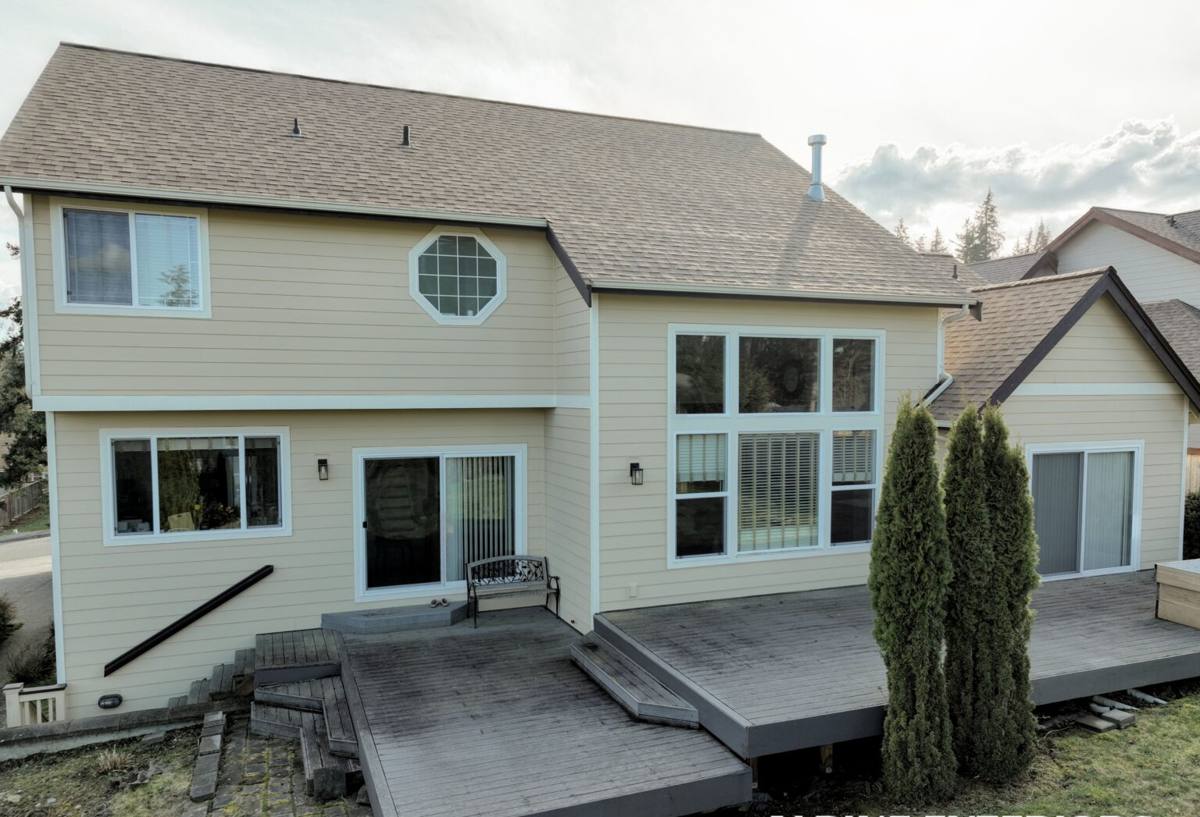
Signs Your Deck Needs Repair — Not Just a Pressure Wash
Surface-Level Wear
Some problems are cosmetic and some are structural, and it's easy to mistake one for the other. Graying, minor splintering, and surface mildew are usually cosmetic — they affect appearance and can shorten the life of the wood over time, but they don't mean the deck is unsafe today.
Structural Red Flags
Other signs mean it's time for a real inspection, not just cleaning:
- Soft or spongy spots underfoot, especially near the house or at board ends
- Visible gaps opening up where the deck ledger meets the house wall
- Rust streaks bleeding from fasteners or connectors
- Railings or posts that flex more than they used to
- Persistent dark staining or moss growth that comes back within weeks of cleaning
- Stairs that feel different from step to step
If you're seeing any of the structural signs, it's worth having someone look underneath the deck, not just at the walking surface. A lot of the damage that actually matters happens where you can't see it from the top.
What a Correct Deck Repair Actually Involves
The Ledger and House Connection
The ledger board — where the deck attaches to the house — is the single most common failure point on decks in wet coastal climates. Driving rain pushes water behind flashing that's undersized, missing, or was never properly lapped in the first place. When we repair a deck with ledger issues, we check the flashing detail itself, not just the fasteners, because replacing bolts without fixing the water path just buys a few more years before the same problem comes back.
Fasteners and Hardware
Salt air is hard on metal. Standard fasteners that hold up fine forty miles inland can start corroding noticeably faster this close to the water. A proper repair means matching hardware to the environment — corrosion-resistant fasteners and connectors rated for the exposure the deck actually gets, not whatever was on the shelf when it was first built.
Decking Boards and Framing
Individual board replacement is straightforward when the framing underneath is sound. The harder call is knowing when surface rot on a few boards is actually telling you the joists or beams underneath have taken on moisture too. We check moisture content and probe suspect framing members before deciding whether a repair is a board swap or something bigger.
Repair or Replace? What Actually Drives That Decision
Homeowners often assume more visible damage means the whole deck needs to come out. Sometimes that's true, but often a deck with real problems in a few specific areas can be repaired properly and get another decade or more of life. Here's how we think through it:
| Factor | Leans Toward Repair | Leans Toward Replacement |
|---|---|---|
| Framing condition | Joists and beams are dry and solid | Widespread soft or rotted framing |
| Ledger connection | Isolated flashing or fastener issue | Long-term water intrusion into the house rim joist |
| Age of structure | Under 15-20 years, built to code | Original construction predates current fastener and flashing standards |
| Extent of damage | Localized to a few boards or posts | Damage spread across most of the deck surface |
| Design | Layout and size still work for the home | Deck no longer fits how the space is used |
We'll always tell you honestly which side of this table your deck falls on, including when a repair is the right call even if a full replacement would be more profitable for us. A deck that's repaired correctly the first time is worth more to us long-term than one we oversold.
Our Process for Oak Harbor Deck Repairs
- Full inspection — we check the walking surface, but also crawl underneath to look at framing, ledger flashing, footings, and hardware condition.
- Moisture and structural assessment — probing suspect wood and checking connection points, not just a visual look.
- Written scope — a clear explanation of what needs repair, what's optional, and what we'd recommend prioritizing if budget is a factor.
- Repair work — addressing the root cause first (flashing, framing, connections) before cosmetic work like board replacement or refinishing.
- Final walkthrough — going over what was done and what to watch for going forward.
We don't start with the boards that look bad and work backward. We start with the water path and the structure, because that's what determines whether the repair actually holds up through another wet season.
Materials: What We Use and Why
Material choice matters more here than in drier parts of the state. For framing and structural repairs, we use lumber rated for exterior exposure and treat cut ends in the field, since a factory-treated board that gets cut on site has raw, untreated wood at that cut unless it's sealed. For fasteners and structural connectors, we use hardware rated for the corrosion exposure the deck actually sees — this is a small cost difference upfront that avoids a much bigger problem five or ten years down the road.
For decking surfaces, both quality wood and composite materials have a place, and the right choice depends on the home, the budget, and how much upkeep the homeowner wants to take on. Wood decking looks great and can be repaired board-by-board, but it needs regular sealing or staining to hold up against constant moisture. Composite decking needs less routine maintenance but behaves differently at fastener points and butt joints, and it needs to be installed with the manufacturer's moisture and gapping specs followed exactly — cutting corners on installation is where composite decks actually run into trouble, not the material itself. We'll walk through the honest trade-offs for your situation rather than pushing one option across the board.
Living With Moss, Mildew, and Salt Air Between Repairs
A repaired deck still needs some upkeep to get its full lifespan out of this climate. A few habits make a real difference:
- Sweep leaves and debris off the deck regularly, especially in fall — trapped organic matter is what feeds moss and holds moisture against the surface
- Keep gutters and downspouts near the deck clear so runoff isn't dumping directly onto it
- Rinse salt residue off the surface periodically if the deck is exposed to direct sea spray
- Re-seal or re-stain wood decking on the schedule the product calls for, not just when it looks faded
- Check under railings and around posts once a year for early rot or fastener corrosion, since these areas hide problems longer
- Address any standing water or slow-draining spots on the deck surface promptly — pooling is almost always a sign of a leveling or drainage issue, not just an inconvenience
None of this requires a lot of time, but skipping it is exactly how a five-year repair job turns into a two-year one in this climate.
Why It Matters to Hire a Crew That Already Works This Area
Deck repair advice that works for a dry inland climate doesn't always translate directly to a deck exposed to salt air and constant coastal moisture. Flashing details, fastener choices, and even how aggressively you need to manage moss all shift once you're this close to the water. A crew that regularly works on homes in and around Anacortes and the surrounding Puget Sound communities has already seen which repair shortcuts fail here and which materials actually hold up, rather than learning that on your deck.
We also know that a deck repair isn't an isolated project — it interacts with the siding, trim, and flashing where the deck meets the house, and problems in one area often show up as symptoms in another. Approaching the repair with that whole-house view, rather than treating the deck as disconnected from everything around it, is part of doing the job right the first time.
Get a Straight Answer on Your Deck
If your deck has soft spots, rust stains, a stubborn moss problem, or just doesn't feel as solid as it used to, we're happy to take a look and give you an honest read on what it actually needs. There's no pressure and no obligation — just a clear picture of the repair options, so you can decide what makes sense for your home and your budget. Fill out the form below to request a free estimate.