 Anacortes Siding
 The Climate Oak Harbor Siding Has to Survive
Homes near the water around Oak Harbor deal with a different set of stresses than siding fifty miles inland. Wind carries salt spray onto exterior walls, rain arrives sideways as often as it falls straight down, and shaded, damp corners of a lot can stay wet for weeks at a stretch during the gray months. Siding that looks fine on a spec sheet can still fail early here if it wasn't chosen and installed with this specific exposure in mind.
Salt Air and Corrosion
Salt-laden air doesn't just affect boats and hardware. It accelerates the breakdown of unprotected wood fiber, degrades cheap fasteners, and works into any gap in a paint or coating system faster than it would in a drier, inland location. Over years, that steady low-grade exposure is what separates siding that still looks sharp at year fifteen from siding that's chalking, swelling, or rusting at the nail heads by year eight.
Driving Rain and Wind-Driven Moisture
Open water exposure means wind-driven rain is a regular event, not an occasional storm. That kind of rain doesn't just wet the siding surface — it pushes water sideways and upward into seams, laps, and trim joints that would stay dry in a more sheltered yard. Siding systems and installation details that work fine in a calm inland subdivision can leak here if the water-resistive barrier, flashing, and lap details aren't built for wind-driven exposure specifically.
Moss, Shade, and Prolonged Dampness
Anacortes and the surrounding waterfront communities get a long stretch of overcast, damp weather every year, and shaded north and east walls, tree-covered lots, and areas with poor airflow hold onto that moisture the longest. That's where moss and algae take hold on siding surfaces, and where organic growth can trap moisture against the material for extended periods if it isn't addressed.
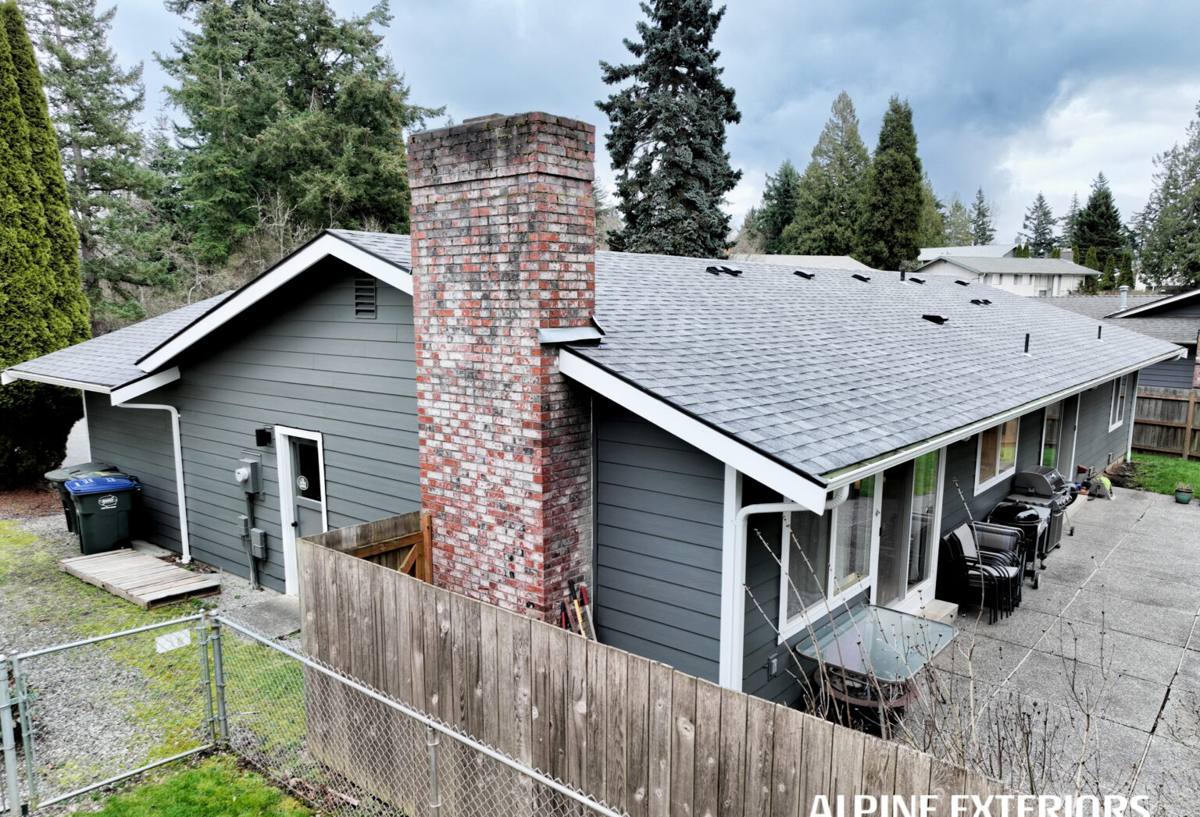
Why We Install Only James Hardie Fiber Cement
We don't offer LP SmartSide, vinyl, Cemplank, Allura, primed spruce, or cedar. That's a deliberate standard, not a limited product line. Every one of those products has legitimate uses somewhere, but for the exposure Oak Harbor homes see — salt air, sustained wind-driven rain, and long damp seasons — we've concluded James Hardie fiber cement is the product we're willing to warranty our labor against.
Hardie's fiber cement is non-combustible, dimensionally stable in wet-dry cycling, and factory-finished with ColorPlus coating that's baked on and cured before it ever reaches a jobsite — which means better, more consistent adhesion than a coating applied on-site in variable weather. Hardie also engineers specific product lines (HZ5, HZ10) for different climate zones, so the boards on a given house are matched to the moisture and temperature swings of that region rather than being a one-size-fits-all product. Combined with a strong transferable warranty, that's the combination we stand behind.
What Correct Fiber Cement Installation Actually Involves
Fiber cement siding is only as good as the assembly behind it. The board itself is durable, but a poor installation — wrong fasteners, missing flashing, boards nailed too tight — will cause problems no matter how good the product is. A correct job includes several details that aren't visible once the project is done, which is exactly why they matter.
Water-Resistive Barrier and Flashing
Every wall gets a continuous water-resistive barrier underneath the siding, with flashing integrated at windows, doors, and any horizontal trim or transition where water can collect. In a wind-driven rain climate, this layer is what actually keeps the wall assembly dry — the siding itself is the first line of defense, not the only one.
Fastening and Clearances
Hardie specifies fastener type, spacing, and placement for a reason: incorrect nailing is one of the most common causes of early siding failure, including cracking, buckling, and moisture intrusion at the fastener point. We also hold proper clearance between the bottom edge of the siding and grade, decks, roof lines, and other hard surfaces, since tight clearances trap moisture and are one of the most common causes of premature rot and paint failure we see on homes we're asked to fix.
Caulking and Paint Lines
Butt joints, trim intersections, and penetrations get sealed with a high-quality, paintable sealant rated for exterior use — not a bead of whatever's on the truck. Cut edges and any field-touched areas get properly primed and coated to match the factory finish, since an exposed, unsealed cut edge is a direct entry point for moisture, and salt air will find it faster than it would inland.
Our Process for an Oak Harbor Siding Project
- On-site assessment. We walk the exterior, note which walls take the worst wind and rain exposure, check for existing moisture damage, moss buildup, and rot, and look at trim, flashing, and grade clearances before quoting anything.
- Tear-off and sheathing check. Old siding comes off and we inspect the sheathing underneath for soft spots or hidden damage before anything new goes up — this is often where problems from the old siding system are found and fixed.
- Water-resistive barrier and flashing installation. A continuous barrier goes on first, with flashing detailed at every window, door, and horizontal transition.
- Hardie board installation to spec. Fastening, spacing, and clearances follow James Hardie's published installation requirements, not shortcuts.
- Sealant and finish detail. Joints, trim, and any field-cut edges are sealed and finished to match the factory coating.
- Final walkthrough. We review the completed work with the homeowner and point out anything worth knowing for future maintenance.
Matching the Right Hardie Line to Your Home
James Hardie makes several product lines, and the right one depends on the look you want and how exposed the wall is. We'll walk through the options during your estimate, but here's a general comparison of what we install most often on waterfront and near-waterfront homes in this area.
| Product | Look | Best suited for |
|---|---|---|
| HardiePlank lap siding | Traditional horizontal lap, smooth or cedar-textured | Most homes; the standard choice for full-exterior replacement |
| HardiePanel vertical siding | Vertical board or board-and-batten | Accent walls, gables, garages, modern or farmhouse styles |
| HardieShingle siding | Staggered or straight-edge shingle profile | Accent areas, gable ends, coastal cottage styles |
| HardieTrim boards | Smooth trim for corners, windows, fascia | Finishing detail on any of the above |
For homes with direct, unobstructed exposure to wind off the water, we'll often recommend HZ5 or HZ10 formulations and a tighter fastening schedule on the windward walls specifically, since that's where wind-driven rain hits hardest.
What Affects the Cost of a Fiber Cement Job Here
Every home is different, so we won't quote a number without seeing the house, but a few factors consistently move the price up or down on projects in this area. We go over all of these during the estimate so there are no surprises.
| Factor | Why it matters |
|---|---|
| Tear-off complexity | Multiple layers of old siding, hidden rot, or extensive trim work add labor before new siding can go on |
| Wall height and access | Multi-story walls, steep lots, and limited equipment access increase staging and labor time |
| Trim and detail level | Corner boards, window casing, and accent siding profiles add material and installation time |
| Sheathing condition | Water damage found during tear-off may require repair before siding can be installed correctly |
| Product line and color | ColorPlus finishes and specialty profiles cost more than standard primed boards |
Common Problem Areas We Find on Oak Harbor Homes
When we're called out to look at an existing siding problem in this area, a handful of issues come up again and again. North and east-facing walls with limited sun exposure tend to hold moss and algae the longest, especially where nearby trees or structures block airflow. Bottom courses of siding installed too close to grade, decks, or roof lines are a frequent source of rot, since that tight clearance keeps the material wet longer than it should ever be. And older or poorly sealed trim joints — especially around windows facing the prevailing wind and rain — are a common entry point for the kind of slow moisture intrusion that isn't obvious until it's already caused damage behind the wall.
Living With Fiber Cement in a Salt-Air, Moss-Prone Climate
Fiber cement is low-maintenance compared to wood, but "low-maintenance" doesn't mean "no maintenance" in this climate. A short list of regular checks goes a long way toward getting the full lifespan out of the material and the finish.
- Rinse siding annually, especially shaded or north-facing walls, to keep moss and algae from taking hold
- Keep gutters clear so overflow doesn't run down the siding face repeatedly
- Trim back vegetation and tree limbs that shade walls and slow drying after rain
- Inspect caulking around windows, doors, and trim every year or two and re-seal where it's cracked or pulled away
- Check that mulch, soil, or plantings haven't crept up over the recommended clearance at the base of the siding
- Look at fastener heads and cut edges periodically for any sign of exposed, unsealed material
Why Local Experience in Oak Harbor Matters
A crew that mostly installs siding in a dry, sheltered inland climate won't automatically get the flashing, fastening, and clearance details right for a home with direct exposure to wind off the water. We work on homes throughout the Anacortes and North Puget Sound area regularly, which means we already know which walls typically take the worst weather, where moss tends to build up first, and which installation details actually matter for the exposure a given lot gets — rather than learning it on your house. That local pattern recognition is part of what a correct installation depends on, alongside following James Hardie's published specifications to the letter.
If you're weighing a siding replacement or want a second opinion on an existing installation, we're happy to take a look and walk you through what your home specifically needs. Request a free, no-pressure estimate using the form below and we'll schedule a time to come out.