 Anacortes Siding
 Metal Roofing Built for Oak Harbor's Coastal Climate
Oak Harbor sits close enough to the water that homes here take a different kind of beating than roofs a few miles inland. Salt-laden air moves through constantly, driving rain comes in sideways during winter storms, and the wet, shaded stretches of the year give moss and moisture plenty of time to work into anything less than a tight, well-fastened roof system. A metal roof, installed correctly with the right fasteners, coatings, and flashing details, handles all three of those problems better than most alternatives. Installed wrong, it fails faster than most alternatives too. The difference is almost entirely in the details of the install, not the metal itself.
We work roofs throughout the Anacortes and greater Skagit County area, including the coastal and island communities where salt exposure is a daily fact of life rather than an occasional concern. That local pattern of work matters more with metal roofing than with almost any other exterior system, because the failure points are small, specific, and easy to miss if you don't already know where to look.
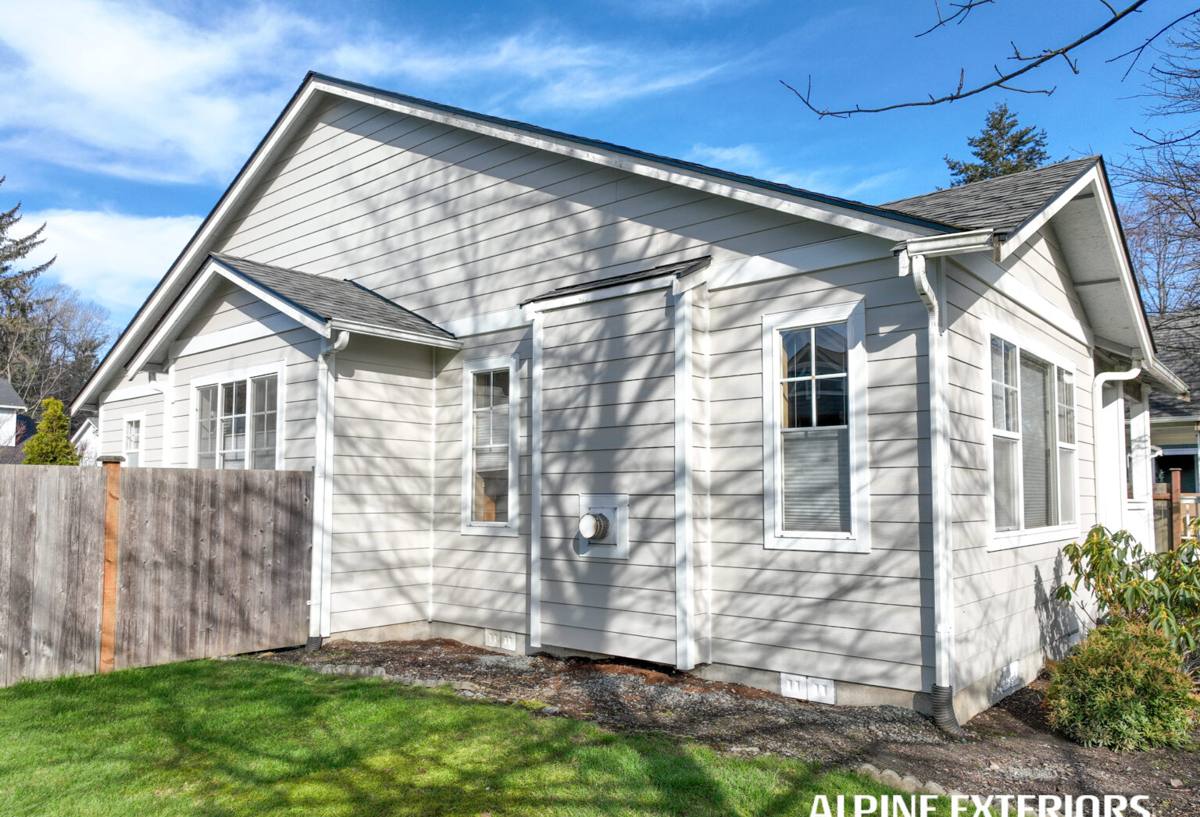
What Oak Harbor's Climate Actually Does to a Roof
Salt Air and Corrosion
Homes near the water deal with airborne salt settling on every exposed surface, including the roof. On metal roofing, that salt accelerates corrosion at any point where the protective coating is thin, scratched, or absent — cut edges, fastener heads, and places where dissimilar metals touch. This is why the specific alloy, coating, and fastener hardware matter so much more here than in a drier, inland install.
Driving Rain
Storms coming off the water don't just fall straight down; wind pushes rain sideways and up under laps, ridge caps, and flashing that would be perfectly adequate in a calmer climate. A metal roof's water resistance depends on overlap, fastener pattern, and underlayment working together as a system. Any one weak point becomes the place water finds its way in during a real storm.
Moss and Sustained Moisture
Shaded roof sections and north-facing slopes stay damp for long stretches of the year in this region. Moss doesn't just sit on top of metal roofing the way it does on shingles, but it can still take hold in seams, around penetrations, and in areas with dust or organic debris buildup, and it holds moisture against the surface longer than it would otherwise sit. Left alone for years, that sustained dampness is what eventually compromises coatings and seals.
What a Correct Metal Roof Job Involves
A metal roof is only as good as the parts of it you can't see once it's finished. For Oak Harbor homes specifically, we pay close attention to:
- Fastener selection matched to the panel metal, to avoid galvanic corrosion between dissimilar metals
- Underlayment rated for high-moisture, high-wind-driven-rain conditions, not a basic builder-grade layer
- Flashing details at every valley, wall intersection, chimney, and vent penetration, since these are the most common failure points
- Proper panel overlap and seam sealing sized for wind-driven rain, not just standard rainfall
- Ventilation that lets the roof deck dry out between wet stretches instead of trapping moisture underneath the metal
- Edge and eave detailing that sheds water cleanly instead of letting it wick backward under the panels
None of this is exotic work. It's standard best practice for metal roofing done properly. The issue is that a lot of installers skip or shortcut these steps because they don't show up as a problem right away — sometimes not for several years. In a coastal climate, those shortcuts show up faster than they would elsewhere.
Choosing the Right Metal Roofing System
Not every metal roofing product performs the same way in salt air and heavy rain. We steer homeowners toward systems and finishes that hold up specifically in this kind of environment, and we're upfront about the trade-offs of each option rather than pushing whatever is easiest to install.
| Option | Best For | Trade-Offs to Know |
|---|---|---|
| Standing seam steel | Long-term durability, clean appearance, strong wind and rain performance | Higher upfront cost; installation quality matters more than with any other option |
| Exposed-fastener metal panels | Budget-conscious projects, outbuildings, secondary structures | Fasteners are a maintenance item and a common leak point over time; not our first recommendation for a primary home roof in this climate |
| Aluminum panel systems | Homes very close to the water with heavy salt exposure | Softer metal, more careful handling required during install; typically a higher material cost |
| Steel with premium coastal-grade coating | Most Oak Harbor homes balancing cost and corrosion resistance | Coating quality varies widely by manufacturer; not all "coastal rated" products are equal |
We'll walk through which of these fits your specific roof, its exposure, and your budget honestly, rather than defaulting to one product for every job.
Our Process for a Metal Roof Installation
1. On-Site Assessment
We start by looking at the existing roof deck, current flashing conditions, ventilation setup, and how exposed the home is to wind and salt spray off the water. This tells us what underlayment, fastener hardware, and panel system actually make sense for that specific roof rather than a one-size-fits-all recommendation.
2. Deck and Structure Prep
Any soft, rotted, or moisture-damaged decking gets addressed before a single panel goes down. Installing new metal roofing over a compromised deck just hides a problem that will resurface later, and in a wet climate it resurfaces faster.
3. Underlayment and Flashing
This is the layer that does the real work of keeping water out. We use underlayment and flashing details rated for the wind-driven rain this area sees, with particular attention to valleys, penetrations, and wall transitions.
4. Panel Installation
Panels go down with fastener spacing and hardware appropriate to the metal type and local wind exposure. Seams and overlaps are set up to shed sideways-driven rain, not just water falling straight down.
5. Final Walkthrough
We check every penetration, ridge cap, and edge detail before calling the job done, and we explain what maintenance — if any — the specific system you chose will need going forward.
What to Expect for Cost
Metal roofing costs more upfront than asphalt shingles, and the range depends heavily on the system you choose, the complexity of the roof, and current material pricing. Standing seam systems run higher than exposed-fastener panels because of the labor and precision involved. Rather than quote a number that won't hold up across different homes, we provide a firm, itemized estimate after seeing the actual roof — but we're happy to talk through general ranges and what drives them during a free estimate visit.
Maintenance in a Salt Air, High-Moss Environment
A correctly installed metal roof needs less maintenance than most roofing systems, but "less" doesn't mean "none," especially this close to the water. A simple seasonal check goes a long way toward catching small issues before they become expensive ones:
- Clear debris from valleys and around penetrations where moss and organic matter tend to collect
- Look for any coating wear at fastener heads or cut edges after major storms
- Confirm gutters and downspouts are clear, since backed-up water sitting against roof edges accelerates wear
- Watch for any signs of staining on the underside of the deck in the attic, which can indicate a flashing issue starting
Most of this can be done from the ground with binoculars or a quick attic check. If anything looks off, it's worth having it looked at before the next storm season rather than after.
Why Hiring a Crew That Already Works Oak Harbor Matters
Metal roofing installation isn't uniform across the country, and it shouldn't be treated that way. A crew that mostly works drier inland regions may not default to coastal-grade fasteners, may underestimate how much wind-driven rain this area actually sees, or may not think twice about ventilation in a climate where moisture sits around for months at a time. None of that shows up as an obvious problem on installation day — it shows up two, five, or ten years later.
Working regularly in Anacortes and the surrounding Skagit County coastal communities means we're not guessing at what this climate does to a roof over time. We've built our fastener choices, underlayment standards, and flashing details around what actually holds up here, not around a generic national spec sheet.
Signs Your Current Roof May Need Attention
If you're weighing a metal roof for an Oak Harbor home, a few signs suggest it's worth getting a professional look sooner rather than later:
- Visible rust streaking or corrosion at fasteners or panel edges on an existing metal roof
- Persistent moss buildup in valleys or shaded sections that keeps returning after cleaning
- Water stains on interior ceilings or in the attic after heavy wind-driven rain
- Loose, lifted, or visibly failing flashing around chimneys, vents, or wall intersections
- A roof deck that feels soft or spongy in isolated spots when walked or inspected
Any one of these on its own isn't necessarily an emergency, but they're worth addressing before the next wet season rather than waiting.
Get a Straight Answer on Your Roof
If you're considering a metal roof for your Oak Harbor home, we're glad to come take a look, talk through what your specific roof needs given its exposure and condition, and give you a straightforward, no-pressure estimate. Fill out the form below and we'll get in touch to schedule a time that works for you.