 Anacortes Siding
 Roofing in Oak Harbor: A Different Climate Than It Looks
Oak Harbor sits close enough to the water that homeowners often assume their roofing needs are the same as anywhere else in Western Washington. They're not, quite. Between the salt-laden air coming off the water, the wind-driven rain that hits roof edges and valleys sideways instead of straight down, and a moss season that can run eight or nine months out of the year in shaded areas, roofs here take on stress that inland Skagit County homes simply don't see as much of. A roof replacement done without accounting for that is a roof that ages faster than it should.
We're based in Anacortes and have worked roofs across Fidalgo Island and into Oak Harbor for years, including jobs just across Deception Pass where the exposure and weather patterns are nearly identical to what we see at home. That familiarity matters more on a roof than on almost any other part of a house, because a roof's job is entirely about managing water, wind, and time.
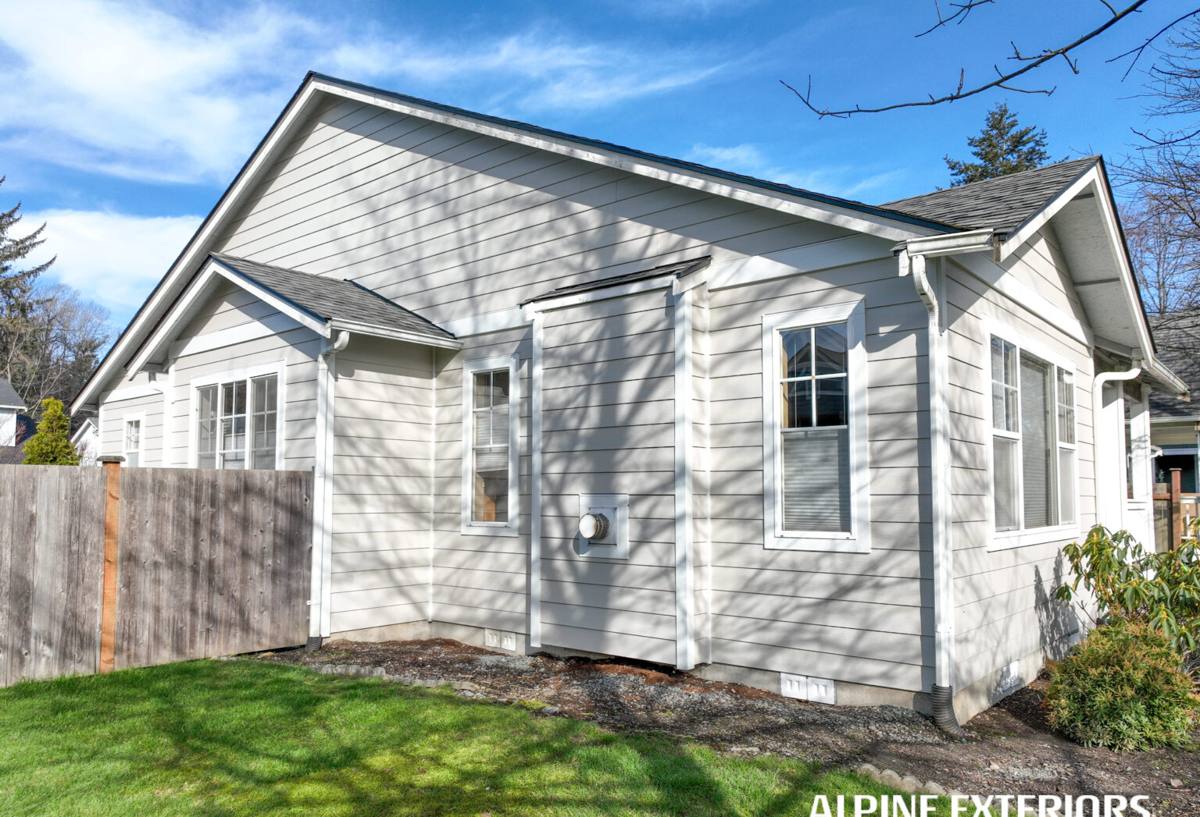
What Salt Air and Driving Rain Actually Do to a Roof
It helps to understand the specific ways this climate wears down roofing systems, because it changes what "correct installation" means here.
Salt Air and Metal Fasteners
Homes within a few miles of the water deal with airborne salt that accelerates corrosion on exposed metal — nails, flashing, vents, and gutter hardware. Standard fasteners and flashing that hold up fine 20 miles inland can start showing rust streaks and pinholes years earlier near the coast. This is why fastener and flashing selection is a real decision on a coastal roof replacement, not an afterthought.
Wind-Driven Rain
Rain that comes in at an angle finds every weak seam, lap, and nail line a straight-down rain never would. Valleys, roof-to-wall transitions, chimney flashing, and low-slope sections are where wind-driven rain causes the most damage, because water gets pushed uphill under shingles or siphoned sideways through gaps that would otherwise shed water fine.
Moss and Shade
North-facing slopes and roofs under tree cover stay damp long after the rest of the roof has dried out. Moss doesn't just look bad — its root structure lifts shingle edges and holds moisture against the roofing material, which shortens the life of the shingle underneath it and can work its way into the decking over time.
Signs a Roof Needs Replacement, Not Just Repair
Not every roof problem means starting over. But there's a point where patching becomes false economy. Some signals worth taking seriously:
- Granule loss heavy enough that you're finding grit in gutters every season, not just after a storm
- Shingles that are curling, cupping, or cracking across multiple areas of the roof, not just one spot
- Soft spots or sagging when walked on, which usually points to decking damage underneath
- Daylight visible through the roof deck from inside the attic
- Repeated leaks in different locations each year rather than one recurring spot
- A roof that's 20+ years old with moss history and no documented ventilation upgrades
- Flashing that's visibly rusted, lifted, or was never properly stepped at wall and chimney transitions
If a roof is showing one or two of these in isolation, a targeted repair can often buy real years. If it's showing several at once, replacement is usually the more honest recommendation, because you end up paying for repairs piecemeal that add up to more than doing it right once.
Material Options for a Coastal Skagit County Roof
There's no single "best" roofing material — the right call depends on budget, roof pitch, how exposed the home is to salt air and wind, and how long you plan to stay in the house. Here's how the common options compare for this specific climate:
| Material | Salt Air / Coastal Performance | Moss Resistance | Typical Lifespan | Maintenance Burden |
|---|---|---|---|---|
| Asphalt composition shingle | Good with corrosion-resistant fasteners and flashing | Moderate — needs periodic cleaning in shaded areas | 20–30 years | Low to moderate |
| Standing seam metal | Very good with proper coastal-grade fastener and coating spec | High — sheds moss more readily due to smooth surface and slope | 40–50+ years | Low |
| Synthetic/composite shingle | Good — resists moisture absorption better than natural wood | Moderate to high depending on product | 30–50 years | Low |
| Cedar shake | Requires diligent maintenance near salt air and damp shade | Lower — natural wood holds moisture and is more moss-prone | 20–30 years with upkeep | High |
We'll walk through the honest trade-offs for your specific roof rather than pushing one material across the board. A steep, sun-exposed south roof has very different needs than a shaded, low-pitch north roof on the same house.
What a Correct Roof Replacement Involves Here
A roof replacement is more than stripping old shingles and nailing down new ones. Done right in this climate, it includes several steps that matter more here than they would in a drier, calmer inland area.
Tear-Off and Deck Inspection
Full tear-off lets us actually see the decking, not guess at its condition from the attic. Any soft, delaminated, or water-stained plywood gets identified and replaced before anything new goes down — covering over damaged decking is one of the most common shortcuts that leads to early failure.
Ice and Water Shield in Vulnerable Zones
Valleys, eaves, and roof-to-wall transitions get self-adhering waterproof membrane underneath the primary underlayment. This is the layer that protects against wind-driven rain that manages to work past the shingles — cheap insurance in a climate where sideways rain is normal, not rare.
Corrosion-Resistant Fasteners and Flashing
Given the salt air exposure this close to the water, we spec fasteners and flashing rated for coastal use rather than the standard-grade hardware that's fine further inland. It costs a little more up front and saves years of premature rust and leak points later.
Proper Ventilation
Trapped moisture is often a bigger long-term threat to a roof deck than surface weather. Balanced intake and exhaust ventilation keeps attic humidity from condensing on the underside of the decking, which matters especially on homes with a moss and shade history where the roof already spends more time damp than dry.
Flashing at Every Penetration
Chimneys, plumbing vents, skylights, and wall transitions are where the vast majority of roof leaks start — not in the open field of shingles. Correct step flashing, counter-flashing, and pipe boots at every one of these get the same attention as the shingles themselves.
Our Process for an Oak Harbor Job
Because we're coming over from Anacortes for these jobs, we plan them deliberately rather than squeezing them in as an afterthought.
- On-site assessment — we walk the roof, check the attic for moisture and ventilation issues, and look at exposure direction (which slopes get the most wind-driven rain and shade)
- Written scope and material recommendation — a clear breakdown of what's being replaced, what materials we recommend and why, and a firm price
- Weather-window scheduling — we plan tear-off days around forecasts, since an open roof deck can't sit exposed to Skagit County rain overnight
- Tear-off, deck repair, and dry-in — old roofing removed, decking inspected and repaired, underlayment and ice/water shield installed the same day where possible
- Installation — shingles or metal installed per manufacturer spec with coastal-grade fasteners and flashing
- Final walkthrough — we go over ventilation, gutters, and any moss-prevention measures relevant to your specific roof
Why a Crew That Already Works Oak Harbor Matters
A roof replacement is a big investment, and where the crew is based affects more than convenience. A local Anacortes crew that regularly works Oak Harbor and the surrounding Fidalgo and Whidbey Island area already understands the exposure patterns specific to this stretch of water — which slopes take the worst of the wind-driven rain, how much moss pressure to expect based on tree cover and orientation, and what fastener and flashing grade actually holds up here versus what's spec'd for a catalog-standard inland install.
There's also the practical side: a crew that knows the area plans logistics — material delivery, dump runs, weather timing — more efficiently than an out-of-area contractor learning the terrain for the first time. That translates into fewer surprises and a tighter schedule.
Choosing a Roofing Contractor: What to Actually Check
- Washington State contractor license and current liability insurance — ask to see it, not just hear about it
- A written, itemized estimate that names materials and fastener/flashing specs, not just a lump-sum number
- Manufacturer certification if you're going with a product that offers an enhanced warranty for certified installers
- A clear tear-off and dry-in plan for how they handle an open roof if weather turns mid-job
- Willingness to explain material trade-offs honestly rather than steering you toward the highest-margin option
- References or past work you can actually see, ideally in a similarly exposed coastal location
Cost Factors Worth Understanding Up Front
Every roof is priced individually, but the same handful of factors drive most of the variation between quotes:
| Factor | Why It Affects Price |
|---|---|
| Roof size and number of facets | More squares and more valleys/hips mean more material and labor time |
| Pitch and accessibility | Steep or hard-to-access roofs require more safety setup and slow the work |
| Decking condition | Rot or delamination found during tear-off adds material and labor to replace it properly |
| Material choice | Metal and premium synthetic products cost more up front but last significantly longer |
| Ventilation upgrades | Adding proper intake/exhaust venting where none existed is worth the added cost long-term |
| Number of penetrations | Each chimney, skylight, and vent stack adds flashing labor |
We'd rather walk you through where your money is actually going than hand over a vague number and hope it works out. Broad ballpark ranges depend heavily on the size and complexity of the roof, which is why an on-site look is worth more than a phone estimate.
Ready for a Straight Answer on Your Roof?
If your Oak Harbor roof is showing its age, or you just want an honest opinion on whether repair or full replacement makes more sense, we're glad to come take a look. Use the form below to request a free, no-pressure estimate — we'll assess the roof, explain what we find in plain terms, and give you a clear, written recommendation with no obligation attached.