 Anacortes Siding
 Windows Take a Different Beating Out Here
Homes around Oak Harbor sit close to open water, which means windows here deal with a combination most inland houses never see: salt-laden air, wind-driven rain that hits glass and trim sideways instead of straight down, and a long stretch of the year — roughly October through April — when moss, algae, and constant dampness sit against every north- and west-facing surface. Individually, none of these are dramatic. Together, over years, they're exactly what breaks down seals, swells frames, and lets water find its way behind trim that looked fine from the driveway.
Window replacement in this part of the north Puget Sound region isn't just a cosmetic upgrade. It's a chance to correct the moisture path around each opening, upgrade the seal and glass package to something built for coastal exposure, and stop small leaks before they turn into rot in the wall framing behind the window. We work throughout Anacortes and the surrounding Skagit County area, and Oak Harbor — just across the water via Highway 20 and the Deception Pass bridge — is regularly part of our service route, so we see the same conditions and the same failure patterns house after house.
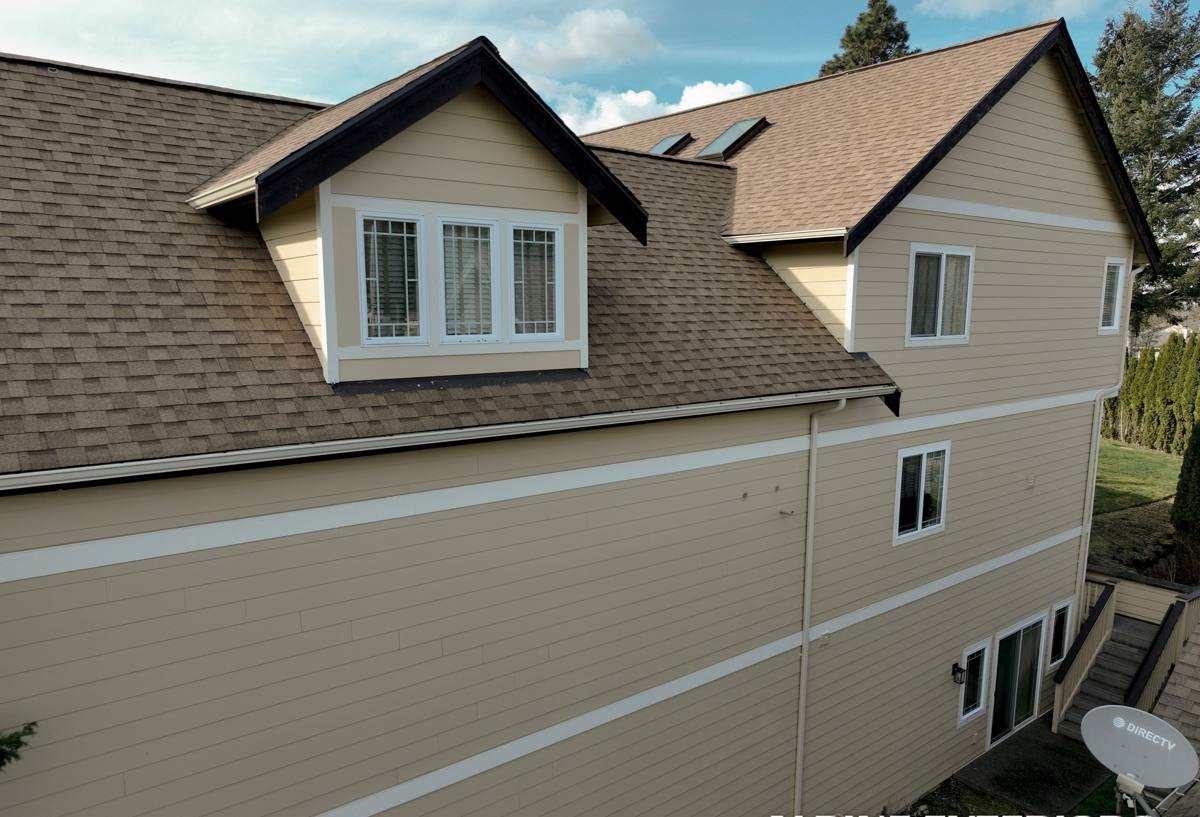
Signs Your Oak Harbor Home's Windows Are Overdue
Windows rarely fail all at once. They give warning signs for a season or two before the damage becomes expensive. Homeowners often live with these longer than they should simply because none of them feel urgent on their own.
- Condensation building up between the panes of a double-pane window — a sign the seal has failed and the insulating gas is gone
- Visible daylight or a draft you can feel with your hand along the frame edge, especially on the sides that catch prevailing wind and rain
- Wood trim or sills that feel soft, spongy, or discolored, particularly at the bottom corners where water collects and drains slowest
- Windows that are difficult to open, close, or lock — frames can swell or warp slightly from repeated wetting and drying
- Green or black staining on exterior trim that keeps coming back within weeks of being cleaned
- Noticeably higher heating bills in winter with no other explanation, which often points to failed seals or thin, outdated glass
- Paint that keeps peeling or bubbling on the interior sill even after repainting
Any one of these is worth a look. Several at once, especially on the same wall, usually means moisture has already gotten past the window and into the surrounding wall assembly — which changes the scope of the job from "replace the window" to "replace the window and repair what's behind it."
What a Correct Window Replacement Actually Involves
It's Not Just Swapping Glass
A window replacement done to a proper standard is as much about what happens around the window as the window unit itself. The frame opening has to be checked for square and for hidden rot before anything new goes in. Old caulk and failed flashing tape get removed rather than caulked over. New flashing is integrated with the house wrap or building paper in the correct shingle-lap order — top piece last, bottom piece first — so that any water that does reach the wall sheds outward and downward instead of pooling behind the new window.
Sealing for Wind-Driven Rain
In a location that gets rain pushed sideways by wind off the water, a bead of caulk on the outside face of the trim is not adequate weatherproofing on its own. Correct practice uses self-adhered flashing membrane at the sill and jambs, a sloped or back-dammed sill pan to direct incidental water back outside, and low-expansion foam or backer rod plus sealant at the interior gap — not just spray foam alone, which can trap moisture against wood if it's the only barrier used.
Fastening and Support
Windows need to be shimmed plumb, level, and square, then fastened per the manufacturer's schedule — not just "however many screws seemed like enough." An improperly shimmed frame can bind, leak at flex points, or stress the glass unit over time, none of which show up on day one but all of which show up within a couple of winters.
Choosing Window Materials for Coastal Skagit County Conditions
Material choice matters more here than in a drier, inland climate, because whatever you pick will spend years in salt air and near-constant seasonal dampness. There's no single "best" option for every home — it depends on your budget, your home's style, and how much upkeep you want to take on.
| Material | Coastal Performance | Maintenance | Typical Trade-Off |
|---|---|---|---|
| Vinyl | Good — won't rot or corrode, handles moisture well | Low — occasional cleaning | Limited color/finish options; can flex slightly in extreme heat, rarely an issue here |
| Fiberglass | Very good — dimensionally stable, resists salt exposure well | Low | Higher upfront cost than vinyl |
| Aluminum | Fair — durable but conducts cold and can pit or corrode near salt air over time | Moderate | Less thermally efficient unless thermally broken |
| Wood / Wood-Clad | Fair to good depending on cladding — the wood core is the vulnerable point | High — exterior finish and seals need regular attention | Best appearance for period-style homes; highest long-term maintenance burden in a wet coastal climate |
As a matter of professional standard, we lean toward vinyl and fiberglass for most Oak Harbor and Anacortes-area replacements because they hold up to salt air and driving rain with the least ongoing maintenance. That's not a knock on wood-clad windows — they can look great and perform fine — but we're upfront that they ask more of a homeowner in a climate that keeps surfaces wet for months at a stretch. We'll walk through what fits your home and your tolerance for upkeep rather than pushing one answer.
Cost Factors Homeowners Should Actually Weigh
Window replacement pricing varies widely based on a handful of real factors, not marketing tiers. Understanding these helps you compare quotes on an apples-to-apples basis rather than just looking at a bottom-line number.
| Factor | Why It Moves the Price |
|---|---|
| Number and size of openings | More glass area and more units means more material and labor |
| Material (vinyl, fiberglass, wood-clad) | Fiberglass and wood-clad run higher than standard vinyl |
| Condition of the existing opening | Rot repair or reframing adds labor beyond a straightforward swap |
| Glass package | Upgraded low-E coatings or laminated glass for sound/UV add cost but improve comfort |
| Access and site conditions | Second-story windows, tight landscaping, or limited staging area affect labor time |
| Trim and finish work | Matching existing exterior trim profiles or repainting after install adds scope |
We don't quote a job without seeing the actual openings — a fair, accurate estimate depends on knowing what's really behind the existing trim, not just the size of the window.
How Our Process Works
1. On-Site Assessment
We look at every window being considered, check for soft wood or existing moisture damage, and talk through which units genuinely need replacement versus which might have a few more good years left.
2. Straightforward Estimate
You get a written quote that breaks out material, labor, and any anticipated repair work, so there are no surprises mid-project.
3. Careful Removal and Opening Prep
Old units come out cleanly, the opening gets inspected and repaired if needed, and flashing is rebuilt correctly rather than reused if it's compromised.
4. Installation to Manufacturer Spec
New windows are set plumb, level, and square, sealed and flashed for wind-driven rain, and fastened per spec — not rushed to hit a daily unit count.
5. Cleanup and Final Walkthrough
We clean up debris and old materials, then walk the job with you so you can operate every window and see the finished trim before we consider it done.
Why It Matters to Hire a Crew That Already Works This Area
A window that's correctly detailed for a drier climate can still leak in a location that gets sustained wind-driven rain and salt exposure. Crews who mainly work inland or in milder microclimates sometimes under-detail flashing or skip a sill pan because it's never bitten them before. Working Oak Harbor and the broader Anacortes and Skagit County area regularly means we're used to building in the extra margin this climate demands — because we're the ones who get the call back if it isn't there.
There's also a practical scheduling side to it: a contractor who already routes through the area doesn't need to treat your job as a special trip, which tends to keep both estimates and timelines more realistic.
Energy Efficiency and Moisture Control
Beyond stopping leaks, updated windows change how a house feels to live in day-to-day. Modern low-E glass and tighter seals cut down on the cold-glass draft that makes rooms near old windows feel chilly even when the furnace is running. They also reduce interior condensation on the glass itself, which matters in a climate where indoor humidity is already fighting an uphill battle for most of the year. Less condensation on the glass means less moisture finding its way into the sill and surrounding trim over time.
After Installation: What Upkeep Looks Like
New windows still need a small amount of seasonal attention, especially here:
- Rinse salt residue off exterior glass and frames periodically, particularly after storms
- Check exterior caulk lines once a year for cracking or separation, most likely at corners
- Keep moss and organic growth cleared from surrounding trim and siding so it doesn't hold moisture against the frame
- Operate each window a few times through the winter so mechanisms don't seize from disuse
None of this is heavy maintenance — it's the kind of routine check that catches a small issue while it's still a small issue.
If your windows in Oak Harbor are showing any of the signs above, or you're just ready to stop dealing with drafts and condensation another winter, we're happy to come take a look. The estimate is free, there's no pressure to sign anything on the spot, and you'll get a straight answer about what your home actually needs — use the form below to get started.